
Nail hardeners can boost your nails’ strength and reduce breakage if used correctly, but harsh ingredients like formaldehyde can cause irritation or brittleness over time. To stay safe, choose formulas with gentle ingredients, follow application instructions, and avoid overusing. When applied properly, they can improve your nail health without harm. Keep exploring how to choose and use them wisely to keep your nails strong and healthy.
Key Takeaways
- Nail hardeners can strengthen nails but may cause harm if they contain harsh ingredients like formaldehyde.
- Proper use involves applying on clean, dry nails and avoiding overuse to prevent damage.
- Check ingredients and opt for formaldehyde-free formulas, especially for sensitive or weak nails.
- Always perform a patch test before regular application to minimize allergic reactions.
- Natural remedies and good nail care habits can support nail strength without risking chemical exposure.
Top picks for "nail hardener help"
Open Amazon search results for this keyword.
As an affiliate, we earn on qualifying purchases.
How Nail Hardeners Work and Their Benefits
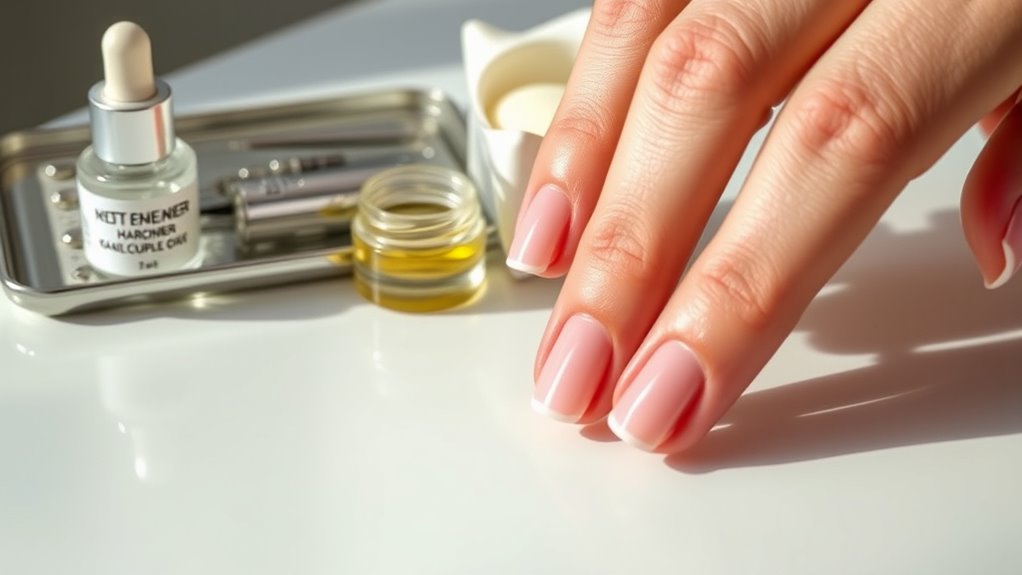
Nail hardeners work by strengthening the nail’s keratin structure, making them less prone to breakage and splitting. This process enhances nail strengthening, helping your nails become more durable over time. When choosing a nail hardener, ingredient safety is vital; look for products with safe, well-tested ingredients that won’t harm your nails or skin. Many formulations contain proteins, resins, or formaldehyde derivatives designed to reinforce nails. By applying regularly, you can enjoy the benefits of stronger, less brittle nails, which are less likely to peel or chip. Proper use and understanding of ingredient safety guarantee you get the desired effects without unnecessary risks. Ultimately, nail hardeners offer a practical way to improve nail health and resilience when used correctly.
Potential Risks and Side Effects of Nail Hardeners

While nail hardeners can strengthen your nails effectively, they also come with potential risks and side effects that you should be aware of. One major concern is allergic reactions, which can cause redness, itching, and swelling. The chemical composition of these products varies, often containing formaldehyde or other harsh ingredients that may irritate sensitive skin. Prolonged use can weaken nails over time, leading to brittleness or peeling. Additionally, understanding home safety tips can help prevent accidental exposure to harmful chemicals. Here’s a quick overview:
| Ingredient | Potential Effect | Precautions |
|---|---|---|
| Formaldehyde | Nail strengthening | Use sparingly, avoid if sensitive |
| Resins | Allergic reactions | Test before full application |
| Solvents | Drying and damage | Use in well-ventilated areas |
Stay cautious to prevent damage and reactions.
Choosing the Right Nail Hardener for Your Nails
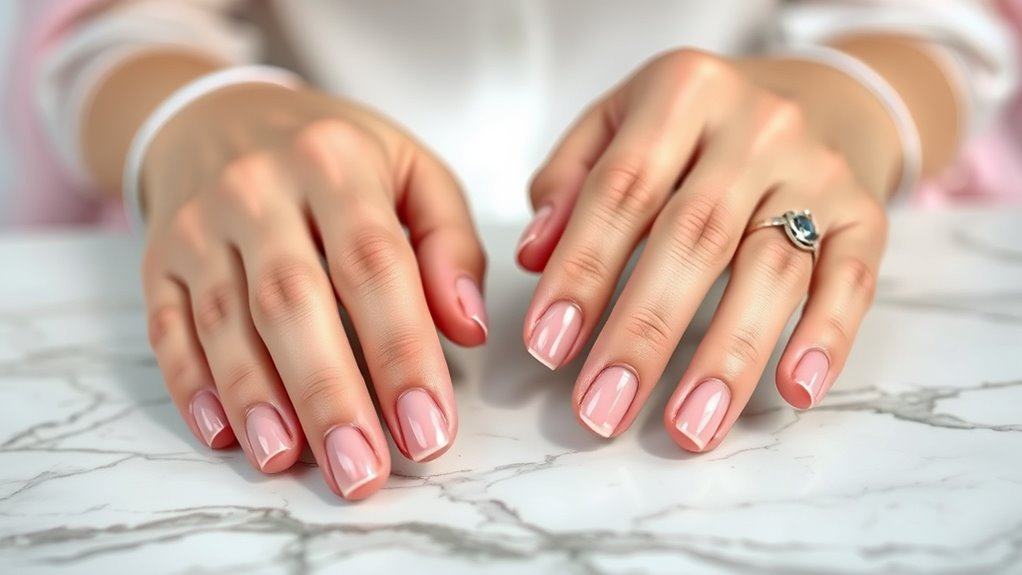
Choosing the right nail hardener depends on your specific nail needs and sensitivities. Start by examining nail hardener ingredients; look for formulas with keratin, calcium, or proteins that strengthen without causing damage. Be aware of common misconceptions about nail hardeners, like the idea that all are harsh or damaging—many contain gentle ingredients suitable for sensitive nails. If your nails are weak or peeling, opt for a product labeled for strengthening and repair. If you have allergies or sensitivities, choose formulas free from formaldehyde or harsh chemicals. Always read labels carefully, and consider patch-testing new products before regular use. Selecting a hardener tailored to your needs helps improve nail strength without risking unnecessary damage. Additionally, understanding nail health fundamentals can help prevent overuse and potential damage from improper hardener application.
Tips for Safe and Effective Use of Nail Hardeners
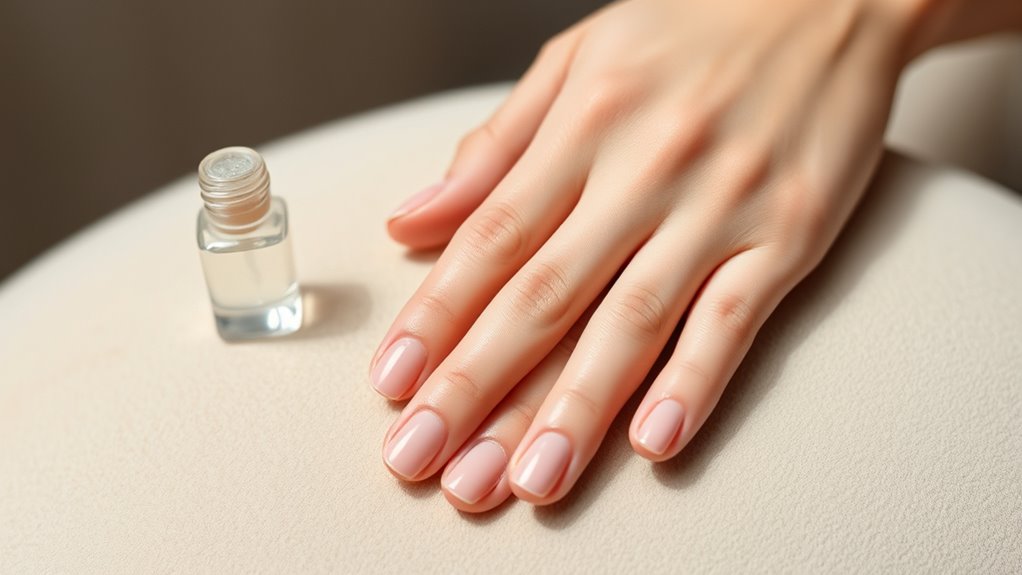
Using nail hardeners safely and effectively requires following proper application routines and paying attention to your nails’ responses. Always start with clean, dry nails, removing old nail polish thoroughly to prevent lifting or damage. When applying the hardener, avoid overuse; follow the product instructions and allow your nails to breathe between coats. Be gentle with nail polish removal, opting for acetone-free removers when possible to prevent dryness and weakening. Regular cuticle care is essential—keep cuticles moisturized and avoid cutting or damaging them, as healthy cuticles support stronger nails. If you notice increased brittleness or irritation, discontinue use and consult a professional. These practices help maximize benefits while minimizing potential harm from nail hardeners. Proper nail health habits can also improve your nails’ resilience over time.
Alternatives to Nail Hardeners for Stronger Nails
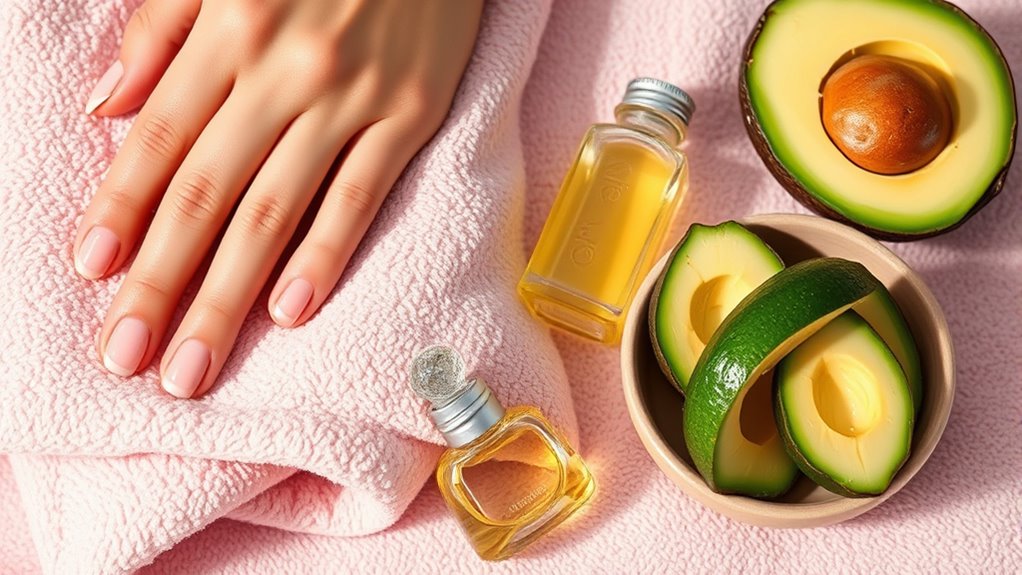
Are nail hardeners really the only way to strengthen your nails? Not at all. You can try natural remedies and dietary supplements to boost nail strength safely. For example, biotin, a popular supplement, supports keratin production, making nails less brittle. You might also incorporate oils like castor or coconut oil, which hydrate and nourish nails naturally. Eating a balanced diet rich in vitamins and minerals, such as zinc and iron, can improve nail health from within. Here’s a quick comparison:
| Natural Remedies | Dietary Supplements |
|---|---|
| Coconut oil for hydration | Biotin for strength |
| Olive oil for nourishment | Zinc and iron supplements |
| Aloe vera for healing | Vitamin E capsules |
Choose these options for healthier, sturdier nails without harsh chemicals. Incorporating nutritional balance is essential for optimal nail health.
Frequently Asked Questions
Can Nail Hardeners Cause Allergic Reactions or Sensitivities?
Yes, nail hardeners can cause allergic reactions or ingredient sensitivities. You might experience redness, itching, or swelling if you’re sensitive to certain ingredients like formaldehyde or toluene. To avoid issues, check labels carefully and perform a patch test before full application. If you notice any adverse reactions, stop using the product immediately and consult a dermatologist. Being cautious helps protect your nails and skin from potential sensitivities.
How Often Should I Apply Nail Hardener for Optimal Results?
For ideal results, you should apply nail hardener twice a week, following the recommended application frequency. Consistency is key, so stick to a regular schedule to strengthen your nails effectively. Avoid overusing it, as excessive application can cause dryness or damage. By maintaining a balanced application frequency and adhering to the perfect schedule, you’ll enhance your nails’ health without risking brittleness or sensitivity.
Are There Natural or Homemade Alternatives to Commercial Nail Hardeners?
Yes, you can try DIY remedies and herbal solutions as natural alternatives to commercial nail hardeners. For example, soaking your nails in olive oil or applying a mixture of crushed garlic and lemon can strengthen nails. You might also use herbal oils like castor or tea tree oil. These natural remedies nourish nails, boost strength, and are gentle, making them a safe, affordable option for healthier nails.
Can Nail Hardeners Be Used on Artificial or Gel Nails?
Think of your artificial nail tips and gel nail overlays as delicate glass sculptures. Nail hardeners can sometimes be used on them, but you must select formulas specifically made for artificial or gel nails. Using the wrong hardener can cause lifting or damage. Always check the product instructions and consult your nail technician to make certain compatibility, so your beautiful art stays intact and strong.
What Ingredients Should I Avoid in Nail Hardening Products?
You should avoid nail hardening products with chemical additives and toxic ingredients like formaldehyde, toluene, and dibutyl phthalate. These substances can weaken your nails over time, cause allergic reactions, or even damage your health. Always check labels carefully, choose products labeled as free from harmful chemicals, and opt for natural or acetone-based hardeners. Protect your nails and health by making informed, cautious choices when selecting nail hardening products.
Conclusion
Remember, nail hardeners can be a double-edged sword—strengthening your nails like armor or making them brittle if misused. To keep your nails happy and healthy, choose the right product and follow safety tips like a treasure map. Think of your nails as delicate flowers; with gentle care and the right approach, they’ll flourish rather than wither. So, treat your nails with love and patience—they’ll reward you with strength and beauty.