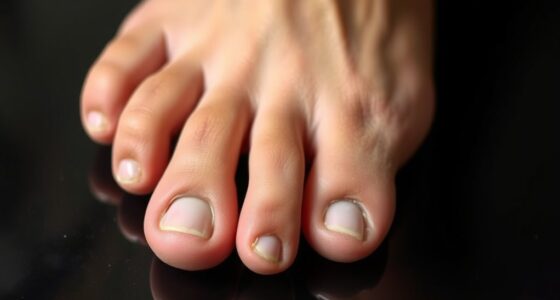
Many nail care myths are misleading. Frequent trimming doesn’t speed up growth, and white spots aren’t a sign of calcium deficiency—they’re just minor injuries. Nail polish isn’t harmful if you remove it properly, and vinegar or lemon juice won’t strengthen your nails—just cause dryness. Avoid cutting cuticles; instead, push them back gently for healthy nails. To maintain strong, beautiful nails, understanding these facts can make a real difference—you’ll discover more tips that truly work.

Get beauty and skincare favorites delivered free — and shop member deals
- Fast, free delivery on millions of items
- Access to Prime Big Deal Days deals on October 6–7
- Prime Video, Amazon Music and more included
Key Takeaways
- Frequent nail trimming does not speed up nail growth; genetics and health are the main factors.
- White spots on nails are typically from minor injuries, not calcium deficiency.
- Nail polish does not cause long-term damage if removed properly and with proper nail care.
- Vinegar and lemon juice do not strengthen nails; overuse can cause dryness or irritation.
- Cutting cuticles can harm nail health; gentle pushing back is safer and more effective.
The Myth That Frequent Nail Trimming Makes Nails Grow Faster

Many people believe that trimming your nails more often will make them grow faster, but this isn’t true. Nail growth factors are primarily influenced by genetics, age, and overall health, not how frequently you trim. Trimming frequency doesn’t impact the rate at which your nails grow; it only affects their length and appearance. Cutting nails regularly helps prevent breakage and keeps them neat, but it doesn’t stimulate faster growth. If you trim too often, you might weaken the nail tips, making them more prone to damage. Instead of focusing on trimming frequency for faster growth, prioritize maintaining a healthy diet, staying hydrated, and caring for your nails properly. These factors will support ideal nail growth more effectively than simply trimming more often. Additionally, understanding how Nail growth factors work can help set realistic expectations and promote better nail health.
The Belief That White Spots on Nails Indicate a Calcium Deficiency
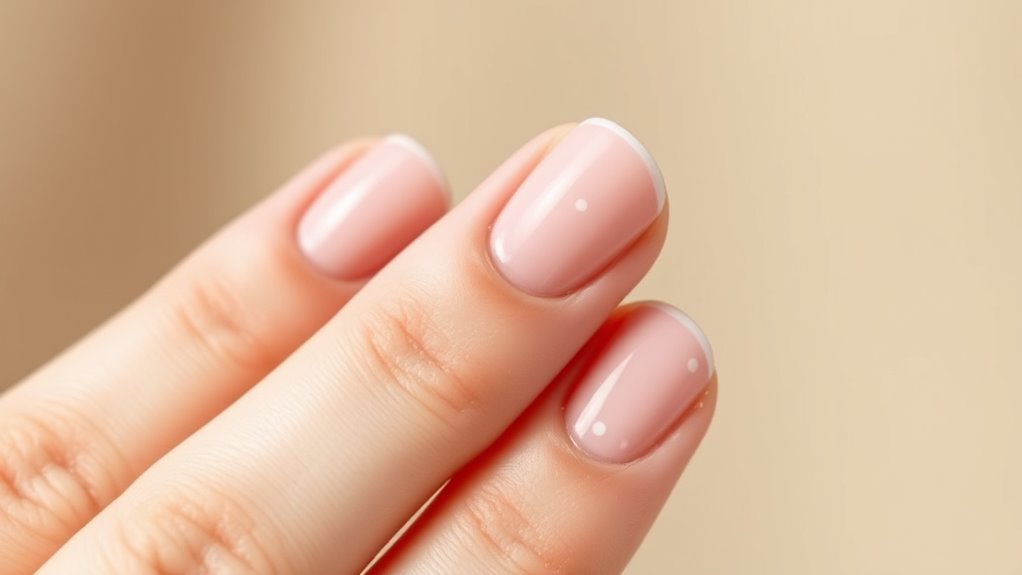
White spots on your nails are often misunderstood as signs of a calcium deficiency, but in reality, they rarely indicate nutritional issues. Most nail spots are caused by minor injuries or trauma to the nail matrix, not a lack of calcium. While people believe calcium deficiency leads to nail problems, scientific evidence shows that white spots are usually harmless and temporary. These nail spots tend to grow out with your nail, disappearing over time without treatment. Focusing on a balanced diet rich in essential nutrients is more beneficial for overall nail health than obsessing over calcium alone. Remember, white spots on your nails don’t necessarily reflect your calcium levels or nutritional status. Instead, they are common, benign, and simply part of your nail growth process.
The Misconception That Nail Polish Causes Long-Term Damage to Nails
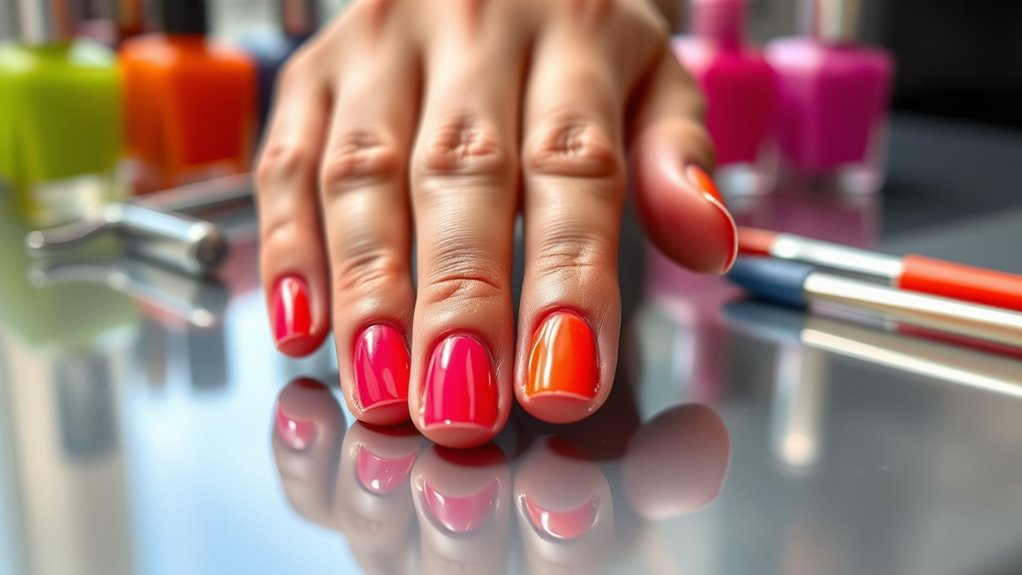
Some people believe that frequent use of nail polish causes long-term damage to nails, but this isn’t true when proper care is taken. The key is how you remove nail polish; harsh nail polish removal, especially with acetone, can dry out nails and cause brittleness. However, this isn’t due to the polish itself, but rather the removal process. Nail polish ingredients like solvents and resins don’t harm nails if used properly. To protect your nails, always use gentle, acetone-free removers and moisturize afterward. Applying a base coat can also shield nails from staining and damage. As long as you’re careful with nail polish removal and keep your nails hydrated, frequent polish use won’t cause long-term damage. Additionally, choosing sulfate-free nail products helps maintain nail health and prevents over-drying.
The Idea That Soaking Nails in Vinegar or Lemon Juice Strengthens Them
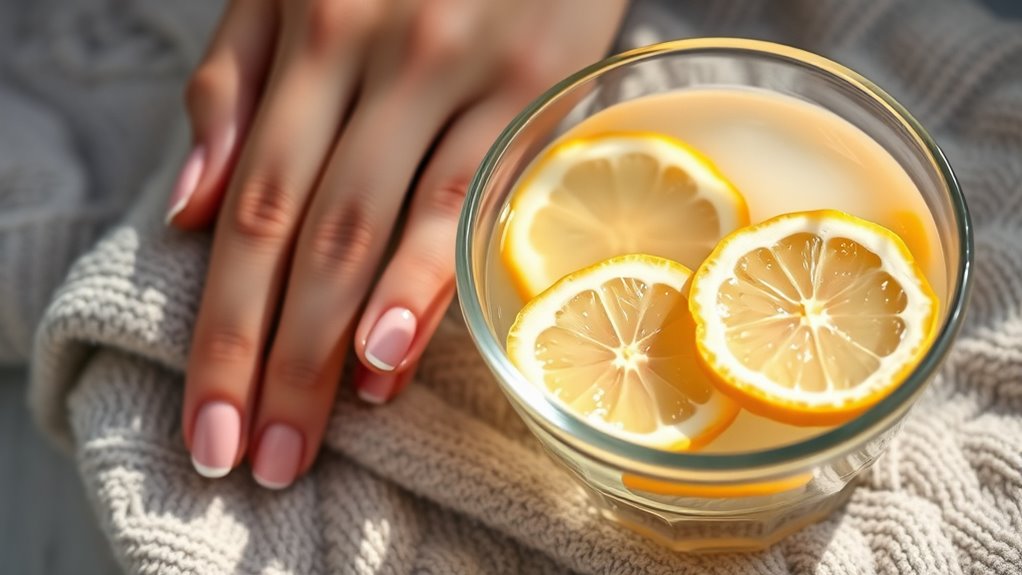
While proper nail care can prevent long-term damage from polish removal, misconceptions about natural remedies persist. Many believe soaking nails in vinegar or lemon juice will strengthen them, but this isn’t true. These DIY remedies might temporarily improve appearance, but they don’t boost nail strength. Vinegar and lemon juice are acidic, which can actually dry out or irritate your cuticles and nails if overused. Instead, focus on balanced diets and moisturizing natural treatments for healthier nails. Here’s a quick comparison:
| Benefit | Reality |
|---|---|
| Strengthening nails | Not proven by scientific evidence |
| Natural remedies | May improve appearance temporarily but won’t strengthen |
| DIY remedies | Can cause dryness or irritation if misused |
| Overall health | Better achieved through diet and proper hydration |
Additionally, proper nail hydration plays a crucial role in maintaining nail health.
Stick to proven nail care practices for real results.
The False Notion That You Should Always Cut Cuticles to Maintain Healthy Nails

Many people believe that cutting cuticles is essential for healthy nails, but this is a common misconception. Cutting or removing cuticles can actually harm cuticle health and compromise nail safety. Instead of trimming them, gentle pushing back with a cuticle pusher is enough to keep nails looking neat. Over-cutting can lead to infections, inflammation, and weakened nails. Remember, cuticles protect the new nail growth and prevent bacteria entry. Proper hydration and moisturizing are also vital for maintaining healthy cuticles. Here are some key points to consider:
- Cuticle health supports overall nail strength.
- Over-trimming increases infection risk.
- Push back cuticles gently rather than cutting.
- Proper nail safety involves avoiding unnecessary cuts.
- Understanding skin barrier function helps explain why maintaining cuticle integrity is important for overall nail health.
Treat your cuticles with care to ensure healthier, stronger nails in the long run.
Frequently Asked Questions
Can Using Nail Hardeners Actually Improve Nail Strength?
Yes, using nail hardeners can improve nail strength, but only if you avoid common nail hardener misconceptions. Many think they’re a quick fix, but they’re actually strengthening treatments that work gradually. Look for formulas with keratin or calcium, and don’t overuse them, as excessive use can cause brittleness. When used correctly, nail hardeners can help prevent breakage and promote healthier, stronger nails over time.
Are Gel Manicures More Damaging Than Traditional Nail Polish?
Gel manicures can be more damaging than traditional nail polish because they often require stronger removal techniques that can weaken your nails. While gel offers longer-lasting nail polish longevity, improper gel removal techniques, like peeling or scraping, can cause nail thinning and damage. To protect your nails, opt for professional removal and give your nails time to recover between gel manicures.
How Does Diet Influence Overall Nail Health?
Think of your nails as tiny gardens, thriving on the nutrients you feed them. Your diet directly influences your nail health by improving nutrient absorption, which strengthens and nourishes your nails. Eating a balanced diet rich in biotin, zinc, and vitamins supports growth, while dietary supplements can fill in gaps. When you nourish your body, your nails flourish, becoming less brittle and more resilient—your personal garden in full bloom.
What Are Signs of Fungal Infections Versus Common Nail Issues?
You can spot a fungal infection by looking for fungal symptoms like thickened, brittle nails, and nail discoloration, often yellow or white. Unlike common nail issues, fungal infections usually cause the nail to lift or crumble, and you might notice a foul odor. If your nails show these signs and don’t improve with basic care, it’s time to see a dermatologist for proper diagnosis and treatment.
Is It Better to Avoid Nail Polish Entirely for Healthier Nails?
You don’t have to avoid nail polish entirely to promote natural nail growth. Just choose formulas with fewer chemicals and give your nails regular breaks from polish to reduce chemical exposure. This allows your nails to breathe and stay healthy. Using nourishing treatments in between can also strengthen your nails, supporting natural growth. So, enjoy your favorite shades responsibly while keeping your nails healthy and strong.
Conclusion
Now that you’ve uncovered these nail care myths, imagine your nails as a delicate garden—each healthy, well-cared-for nail like a blooming flower. By letting go of false beliefs, you nurture true strength and beauty from within. It’s not about quick fixes or harsh tricks, but about gentle, consistent care. Embrace the truth, and watch your nails flourish naturally—vivid, resilient, and vibrant, reflecting your confidence and the care you give them every day.
Fall Picks
fall essentials
As an affiliate, we earn on qualifying purchases.