
Source capture ventilation removes pollutants right at their source, like welding or cooking, and is more energy-efficient while preventing contaminants from spreading. Room air cleaning filters the air throughout a space but often requires higher energy and may leave lingering pollutants. Combining both methods can optimize indoor air quality and system efficiency. To understand how these strategies work together and which might suit your needs best, there’s more to explore below.

Get beauty and skincare favorites delivered free with Prime
- Fast, free delivery on millions of items
- Prime Video, Amazon Music and more included
- Member-only deals all year
Key Takeaways
- Source capture ventilation removes pollutants at their origin, preventing dispersion into the indoor environment.
- Room air cleaning filters and purifies air throughout the entire space, addressing dispersed pollutants.
- Source capture is more energy-efficient and reduces the load on overall ventilation systems.
- Room air cleaning is less effective for immediate removal of high concentrations of pollutants at the source.
- Combining both methods offers a comprehensive approach to indoor air quality management.
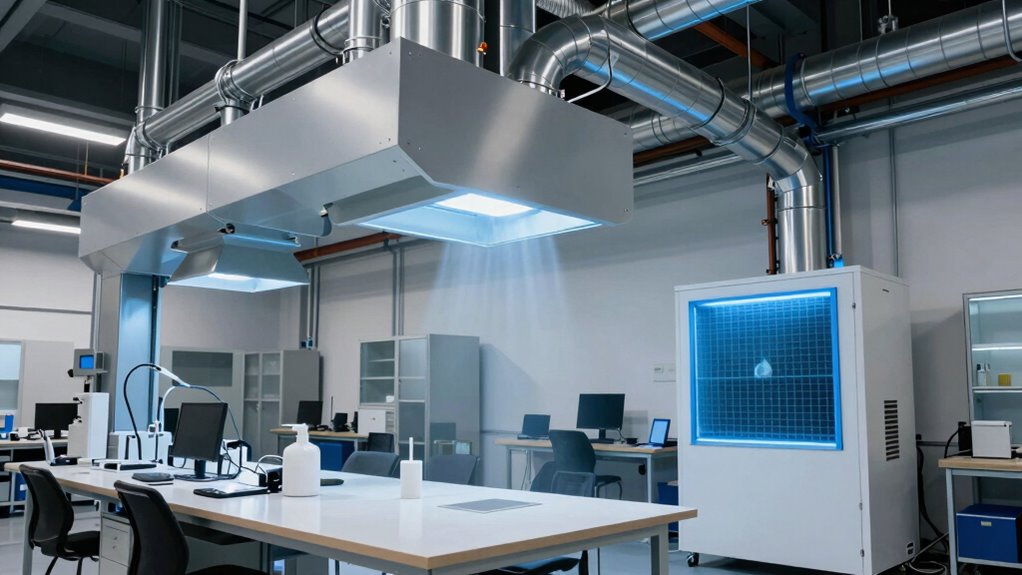
Have you ever wondered which method better protects indoor air quality—capturing contaminants at their source or cleaning the air throughout the room? When it comes to maintaining a healthy environment, understanding the differences between source capture ventilation and room air cleaning is vital. Source capture ventilation focuses on removing pollutants right where they originate, which can greatly boost airflow efficiency and contaminant removal. By positioning local exhaust hoods or vents close to the source of emissions—like welding stations, cooking areas, or chemical processes—you prevent contaminants from dispersing into the entire space. This targeted approach minimizes the burden on the room’s overall ventilation system, making it more effective and energy-efficient. When you prioritize capturing pollutants at their source, you’re fundamentally stopping harmful particles from spreading, which simplifies the task of maintaining good air quality and reduces the load on filters and air purifiers.
On the other hand, room air cleaning involves filtering and purifying the air throughout the entire space. Devices like HEPA filters, air purifiers, and UV sterilizers work to remove or deactivate contaminants present in the room’s air. While this method can improve indoor air quality, especially in areas where source capture isn’t feasible, it often requires higher airflow rates and more energy to be effective. The efficiency of contaminant removal depends heavily on the placement, capacity, and maintenance of these devices. If you rely solely on room air cleaning, dust, volatile organic compounds, and other pollutants can linger in the air, especially in poorly ventilated spaces. It’s like trying to clean the entire room after the dust has already spread—less efficient and often more costly in the long run. Additionally, understanding airflow efficiency is essential for optimizing the overall air quality strategy and reducing operational costs. Properly designed ventilation systems can enhance both source capture and room air cleaning methods, leading to a comprehensive approach to indoor air quality. Incorporating air filtration techniques effectively helps to address indoor pollutant sources more comprehensively, creating healthier indoor environments. Furthermore, selecting the appropriate air cleaning devices based on specific pollutants can improve overall effectiveness and energy use.
As an affiliate, we earn on qualifying purchases.
Frequently Asked Questions
How Do Installation Costs Compare Between Source Capture and Room Air Cleaning Systems?
The cost comparison shows that source capture ventilation systems usually have higher installation costs because they require ductwork, specialized placement, and more complex setup, which can pose installation challenges. In contrast, room air cleaning systems tend to be more affordable and easier to install, as they don’t need extensive ductwork or modifications. However, consider long-term efficiency and maintenance costs when choosing, as initial expenses aren’t the only factor.
Which System Is More Effective for Removing Specific Hazardous Airborne Chemicals?
You’ll find source capture ventilation more effective for removing specific hazardous airborne chemicals because it captures contaminants at their source, preventing them from spreading. Chemical filtration plays a key role here, trapping harmful chemicals before they disperse. To maximize efficiency, you should optimize airflow in the system, ensuring it pulls contaminants directly into the capture hood or filter. This targeted approach minimizes exposure and enhances overall safety in your workspace.
What Maintenance Is Required for Each Ventilation Approach Over Time?
To keep your ventilation systems running smoothly, you should regularly inspect and clean filters, fans, and ducts, ensuring ideal performance. For source capture ventilation, maintenance involves checking the capture hoods and exhaust fans more frequently, typically every few months. Room air cleaning units need less frequent attention but still require filter replacements and system checks annually. Proper upkeep extends the system lifespan and minimizes maintenance frequency, keeping your environment safe and efficient.
How Do These Systems Perform in Different Types of Industrial Environments?
You’ll find that source capture ventilation performs best in environments with localized emissions, as it directs airflow patterns efficiently to contain contaminants at their source. Room air cleaning systems are more versatile, suitable for larger or varied spaces, but might struggle with airflow patterns that don’t prevent contaminant spread. Both systems can be scaled to match your needs, but source capture ventilation generally offers more targeted control in complex industrial environments.
Are There Any Health Risks Associated With Using Either System?
You might think these systems pose no health risks, but ironically, poor maintenance can lead to indoor air becoming more contaminated. Both systems can spread chemical hazards if filters aren’t replaced regularly or if ventilation ducts are clogged. Indoor air quality suffers, exposing you to chemical hazards that could cause respiratory issues or allergies. Proper upkeep and monitoring are essential to minimize health risks regardless of which system you choose.
HEPA air purifier for indoor air quality
As an affiliate, we earn on qualifying purchases.
As an affiliate, we earn on qualifying purchases.
Conclusion
Think of source capture ventilation and room air cleaning as two tools in your safety toolbox. While room air cleaning is like a net catching airborne contaminants after they’ve spread, source capture ventilation acts like a shield, blocking hazards right at their source. For the best protection, you should use both together—like a swimmer relying on both a kickboard and goggles—to create a safer, cleaner environment. Don’t wait—combine these strategies to maximize your indoor air quality today.
As an affiliate, we earn on qualifying purchases.
As an affiliate, we earn on qualifying purchases.
Halloween Picks
halloween
As an affiliate, we earn on qualifying purchases.