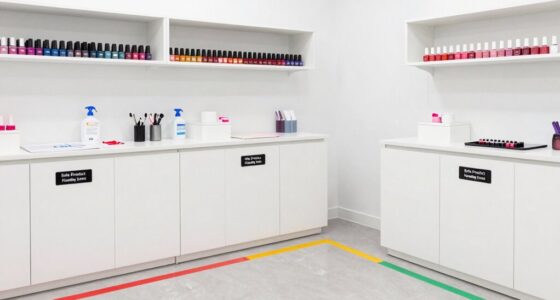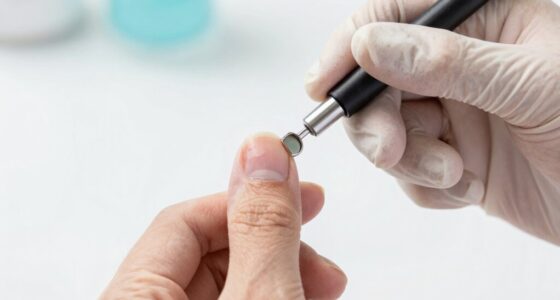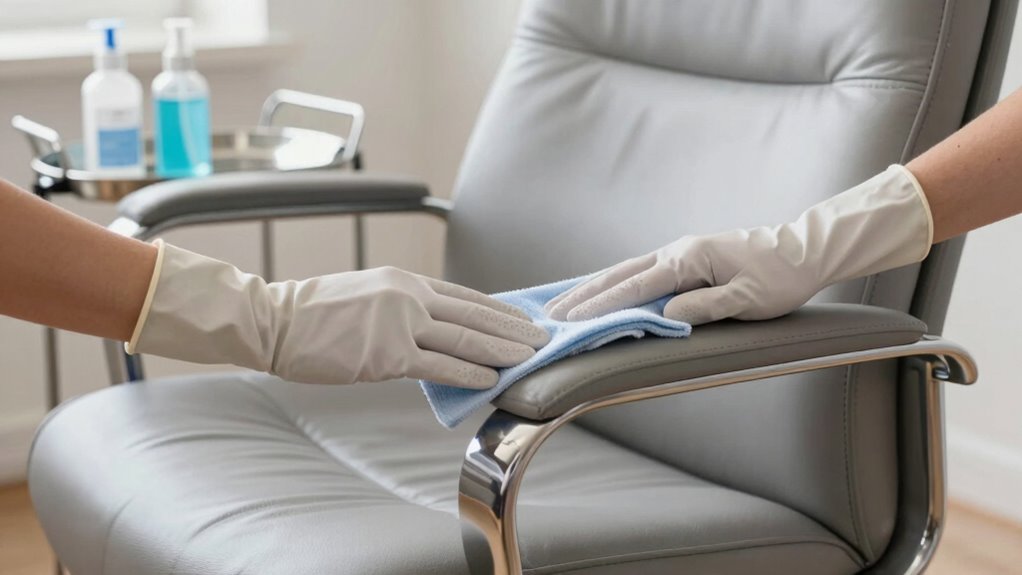
To sanitize client seating and shared touchpoints, start by removing debris with a clean cloth or vacuum. Use EPA-approved disinfectants on all surfaces, focusing on high-touch areas like armrests, doorknobs, and shared equipment. Allow disinfectants to sit for the recommended contact time to guarantee effectiveness. Consider using disposable covers or barriers for added safety. If you want to discover more effective techniques and maintenance tips, keep exploring the best sanitation practices.

Get beauty and skincare favorites delivered free with Prime
- Fast, free delivery on millions of items
- Prime Video, Amazon Music and more included
- Member-only deals all year
Key Takeaways
- Remove debris and dirt with a clean cloth or vacuum before applying disinfectant.
- Use EPA-approved disinfectants suitable for the surface material on all touchpoints.
- Focus on crevices, seams, and underneath cushions to eliminate hidden bacteria.
- Allow disinfectants to sit for the recommended contact time for effective sterilization.
- Regularly replace or launder microfiber cloths and use disposable barriers on shared surfaces.

Have you ever considered how often your clients’ seating and touchpoints are actually cleaned? If not, it’s time to rethink your approach. Maintaining high hygiene standards isn’t just about appearance; it’s about protecting your clients and your reputation. Consistent, effective cleaning protocols are essential to ensure that every surface your clients touch is safe and sanitized.
Regularly sanitizing client touchpoints safeguards health and enhances your reputation. Prioritize consistent cleaning protocols.
Start by establishing clear cleaning protocols that specify how often each touchpoint should be disinfected. High-touch areas like armrests, headrests, doorknobs, and shared equipment need attention after every client or at least multiple times a day, depending on your volume. Using EPA-approved disinfectants ensures you meet the necessary hygiene standards, providing a reliable barrier against germs and viruses. Proper training for staff is crucial so everyone understands the importance of thorough cleaning and follows the same procedures consistently.
When cleaning client seating, always begin by removing any debris or visible dirt with a clean cloth or vacuum if necessary. Follow up with a disinfectant spray or wipe that’s suitable for the surface material. Pay attention to crevices, seams, and underneath cushions, where bacteria tend to hide. Allow the disinfectant to sit for the recommended contact time to ensure maximum effectiveness before wiping or air drying. For shared touchpoints like armrests or headrests, consider using disposable covers or barriers that can be replaced after each client. This reduces cross-contamination and simplifies the cleaning process. Incorporating effective sanitation methods can further enhance the overall cleanliness and safety of your environment. Additionally, regularly updating your cleaning techniques based on current health guidelines ensures you stay aligned with best practices. Regularly inspecting and maintaining cleaning tools, such as microfiber cloths and mops, prevents the spread of germs via contaminated equipment. Incorporating microplastics in dust knowledge into cleaning routines can also help remove microscopic contaminants that may otherwise go unnoticed.
In addition to routine cleaning, implement a daily deep-cleaning schedule to sanitize all furniture and surfaces thoroughly. This might include steam cleaning or using UV sanitization devices for additional sterilization, especially in high-traffic areas. Integrating advanced cleaning technologies can also help achieve more comprehensive disinfection. Regularly inspecting and maintaining cleaning tools, such as microfiber cloths and mops, prevents the spread of germs via contaminated equipment. Incorporating pressure washers and other specialized cleaning equipment can further enhance the thoroughness of your sanitation routines in certain areas.
EPA-approved disinfectant spray for surfaces
As an affiliate, we earn on qualifying purchases.
As an affiliate, we earn on qualifying purchases.
Frequently Asked Questions
How Often Should Sanitization Be Performed During Business Hours?
You should perform sanitization frequently during business hours, ideally after every client or every few hours, depending on foot traffic. Establish a cleaning frequency that aligns with your sanitization schedule, ensuring high-touch areas are consistently disinfected. Regular cleaning not only maintains hygiene but also reassures clients. Keep a checklist to track when each area was last sanitized, helping you stay on top of your cleaning routine and promote a safe environment.
Are There Specific Cleaning Agents Recommended for Different Surfaces?
Yes, you should choose appropriate disinfectants tailored to different surfaces to guarantee effective cleaning. For example, use alcohol-based cleaners for electronics and non-porous surfaces, while gentle disinfectants work best on upholstery and fabric. Follow safe cleaning protocols by reading labels carefully, wearing gloves, and ensuring proper ventilation. This approach minimizes risks and guarantees thorough sanitation, keeping both clients and staff safe during all cleaning routines.
What PPE Should Staff Wear While Sanitizing?
Did you know that proper use of PPE can reduce contamination risks by up to 99%? When sanitizing, you should wear gloves, masks, and eye protection to follow strict sanitization protocols. These items shield you from harmful germs and guarantee thorough cleaning. Always change gloves between clients and wash your hands afterward. Using appropriate PPE not only keeps you safe but also maintains a clean environment for everyone.
How Do I Prevent Cross-Contamination During Cleaning?
To prevent cross-contamination during cleaning, you should follow strict hand sanitizer protocols before and after touching surfaces. Use contactless cleaning methods whenever possible, like spray bottles or microfiber cloths, to minimize contact. Change cleaning cloths frequently and properly dispose of used materials. Always wear appropriate PPE, and wash your hands thoroughly afterward. These steps guarantee you avoid transferring germs between surfaces and maintain a safe environment.
Can Sanitizing Products Damage Certain Upholstery or Materials?
Imagine your upholstery as a delicate canvas, vulnerable to harsh brushes. Sanitizing products can cause damage if they’re not compatible with your material. Always check the label for material compatibility and cleaning solution safety. Using the wrong product can fade colors, weaken fibers, or cause cracking. To protect your furniture, select gentle, approved disinfectants designed specifically for your upholstery, ensuring cleanliness without compromising the material’s integrity.
disposable barrier covers for furniture
As an affiliate, we earn on qualifying purchases.
As an affiliate, we earn on qualifying purchases.
Conclusion
By regularly sanitizing client seating and shared touchpoints, you’re not just cleaning surfaces—you’re weaving a protective shield around every visitor. Think of it as tending a delicate garden, where each careful touch prevents weeds of germs from taking root. With consistent effort, you transform your space into a sanctuary of safety and trust, where cleanliness blossoms into confidence. Remember, in this dance of hygiene, your vigilance is the steady rhythm that keeps everyone safe and secure.
microfiber cleaning cloths for sanitizing
As an affiliate, we earn on qualifying purchases.
As an affiliate, we earn on qualifying purchases.
UV sanitization device for high-touch surfaces
As an affiliate, we earn on qualifying purchases.
As an affiliate, we earn on qualifying purchases.
Fall Picks
fall essentials
As an affiliate, we earn on qualifying purchases.