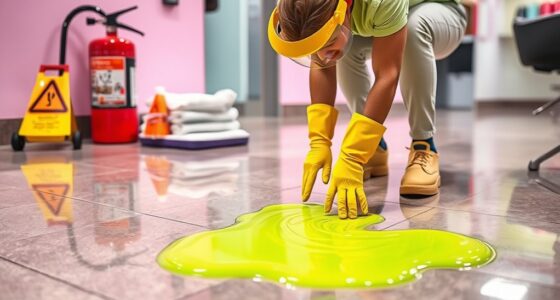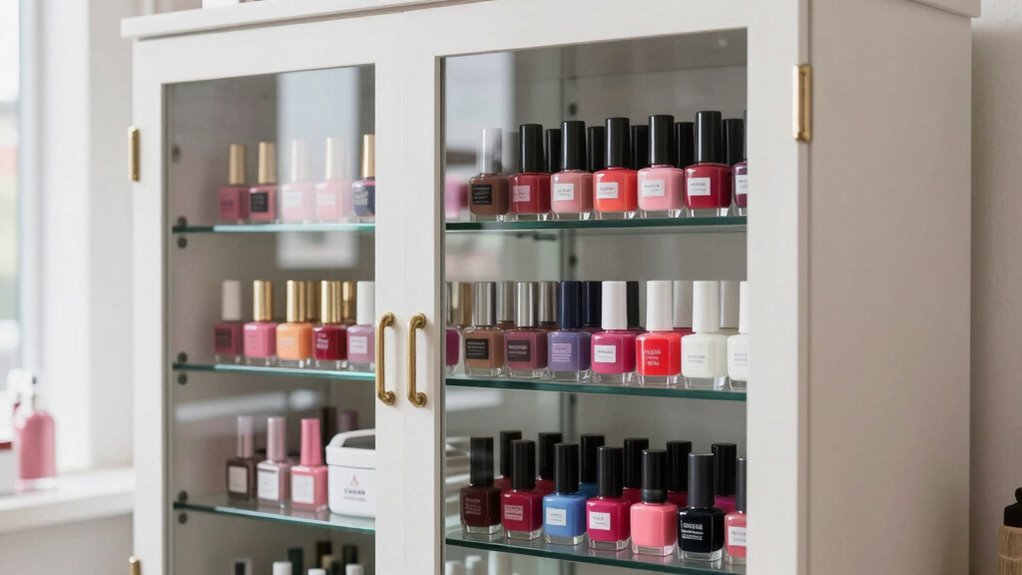

To guarantee safety in your nail salon, store chemicals in designated, secure, and well-ventilated areas, keeping incompatible substances apart to prevent dangerous reactions. Use fire-resistant cabinets for flammable products and regularly inspect for leaks or spills. Label everything clearly with legible, durable labels, and train your staff on proper handling and storage procedures. Maintaining a detailed inventory helps manage potential hazards effectively. Keep these practices in mind, and you’ll be better prepared to create a safer salon environment.

Get beauty and skincare favorites delivered free with Prime
- Fast, free delivery on millions of items
- Prime Video, Amazon Music and more included
- Member-only deals all year
Key Takeaways
- Store chemicals in designated, secure, and well-ventilated areas away from heat, flames, and sunlight.
- Keep incompatible chemicals separated, such as acids from bases, to prevent dangerous reactions.
- Use fire-resistant cabinets for flammable solvents like acetone and formaldehyde.
- Regularly inspect storage areas for leaks, spills, or expired products, and clean promptly.
- Maintain an accurate inventory to monitor chemical types, quantities, and potential hazards.
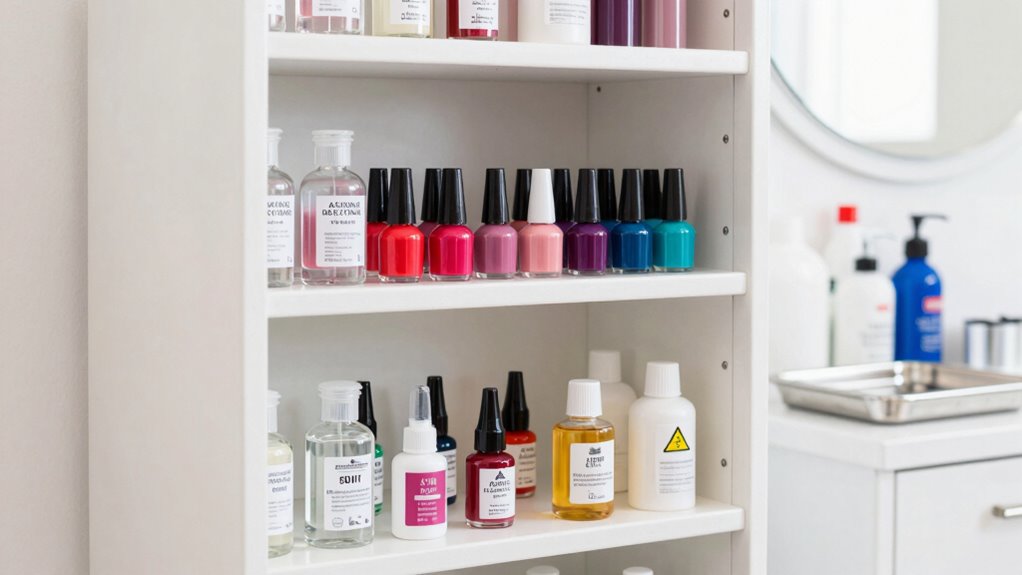
Have you ever wondered how to store chemicals safely and effectively? In a nail salon, where various products like acetone, formaldehyde, and other solvents are common, proper storage is vital to protect both your staff and clients. This process begins with guaranteeing that every chemical container is properly labeled. Proper labeling includes clear identification of the chemical, its concentration, and any hazard warnings. This practice helps prevent accidental misuse or dangerous mixing and ensures compliance with safety regulations. Labels should be legible, durable, and resistant to spills or splashes, so they remain intact over time. Without proper labeling, accidental misuse or dangerous mixing can occur, leading to health hazards or fires.
Beyond labeling, ventilation systems play an essential role in maintaining a safe environment. Chemicals like acetone and formaldehyde release fumes that can pose health risks if inhaled over time. Installing an effective ventilation system ensures these fumes are promptly removed from the workspace, reducing indoor air pollution. It’s important to regularly inspect and maintain these systems to keep them functioning properly. Proper airflow not only minimizes chemical odors but also prevents the buildup of vapors that could ignite or cause respiratory issues. Ventilation should be designed to direct fumes away from workstations and exhaust them outside, rather than recirculating contaminated air back into the salon. Ensuring proper chemical storage practices is fundamental in minimizing exposure risks and maintaining a safe environment.
You should also store chemicals in designated, secure areas that are well-ventilated and away from heat sources, open flames, or direct sunlight. Keep incompatible chemicals separated to prevent dangerous reactions. For example, store acids away from bases, and keep flammable solvents in approved fire-resistant cabinets. Regularly check storage areas for leaks, spills, or expired products, and clean them promptly to avoid contamination or accidents. Use secondary containment trays to catch leaks and prevent spills from spreading. Implementing proper chemical segregation can significantly reduce the risk of accidental reactions or hazards. Additionally, understanding chemical compatibility can help prevent dangerous interactions during storage or use. Maintaining a comprehensive inventory of stored chemicals allows for better management and quick identification of potential hazards.
Creating a detailed chemical storage plan helps you stay compliant with safety regulations and reduces the risk of accidents. Train your staff on proper handling, labeling, and storage procedures, emphasizing the importance of ventilation and secure areas. Reinforcing these practices creates a safer environment for everyone in your nail salon. By paying attention to proper labeling, maintaining effective ventilation systems, and organizing storage areas carefully, you guarantee a safer workspace that minimizes hazards and promotes health for both your team and clients. Additionally, regularly training staff on safety protocols keeps everyone informed and vigilant about potential hazards.
fire-resistant chemical storage cabinet
As an affiliate, we earn on qualifying purchases.
As an affiliate, we earn on qualifying purchases.
Frequently Asked Questions
How Often Should Chemical Storage Areas Be Inspected?
You should inspect your chemical storage areas at least once a month to maintain chemical safety and guarantee storage guidelines are followed. Regular inspections help identify leaks, expired products, or improper labeling, reducing risks. By staying vigilant, you prevent accidents and keep your salon safe for clients and staff. Consistent checks also ensure compliance with safety regulations, making chemical management seamless and secure for everyone involved.
Are There Specific Ventilation Requirements for Chemical Storage?
Yes, there are ventilation standards you should follow for chemical storage. Proper ventilation helps maintain safe storage safety by reducing the buildup of fumes and vapors. You should guarantee your storage area has adequate airflow, such as exhaust fans or ventilation systems that meet local regulations. Regularly inspect and maintain these systems to prevent chemical hazards, and always keep storage areas well-ventilated to protect both staff and clients from potential health risks.
What Are the Best Practices for Labeling Chemical Containers?
Think of chemical containers as book covers—clear labels tell you exactly what’s inside. Use bold, legible chemical labeling and container identification to prevent mix-ups. Include important details like chemical name, hazard warnings, and date of receipt. Store labels on all containers, especially if transferred to smaller bottles. Regularly check labels for damage or fading, ensuring your salon stays safe and compliant with proper chemical storage practices.
How Should Expired Chemicals Be Disposed of Safely?
You should dispose of expired chemicals as chemical waste following proper disposal procedures. First, wear protective gear to avoid contact. Check local regulations for hazardous waste disposal, and never pour chemicals down the drain. Use designated containers for chemical waste, and label them clearly. Contact a licensed hazardous waste disposal service if needed. Proper disposal prevents environmental contamination and keeps your salon safe for clients and staff alike.
Can Chemicals Be Stored Together if They Are Compatible?
Think of your chemical storage as a well-orchestrated symphony—when compatible chemicals are stored together, the harmony is maintained. Yes, if they’re chemically compatible, they can be stored in close proximity, but always prioritize storage safety. Check labels and Safety Data Sheets to confirm chemical compatibility, and guarantee containers are sealed and stored in a cool, dry place. Proper organization minimizes risks and keeps your salon safe.
chemical labeling supplies for salons
As an affiliate, we earn on qualifying purchases.
As an affiliate, we earn on qualifying purchases.
Conclusion
By mastering these chemical storage basics, you’re setting your salon up for success and safety. Keep chemicals organized and clearly labeled, and always follow proper handling procedures. Think of it as keeping your house in order—you wouldn’t leave your valuables lying around, right? The same applies here: a tidy, well-maintained storage space prevents accidents and keeps your clients and staff safe. When you stay vigilant, you’re truly covering all your bases for a smooth-running, safe salon environment.
ventilation system for nail salons
As an affiliate, we earn on qualifying purchases.
As an affiliate, we earn on qualifying purchases.
chemical spill containment trays
As an affiliate, we earn on qualifying purchases.
As an affiliate, we earn on qualifying purchases.
Halloween Picks
halloween
As an affiliate, we earn on qualifying purchases.