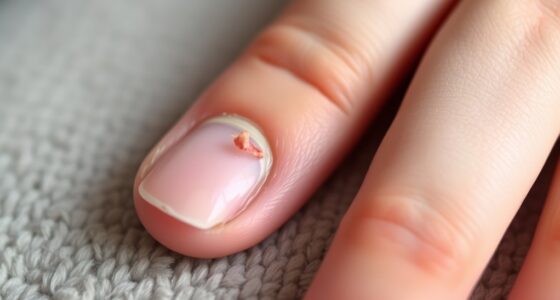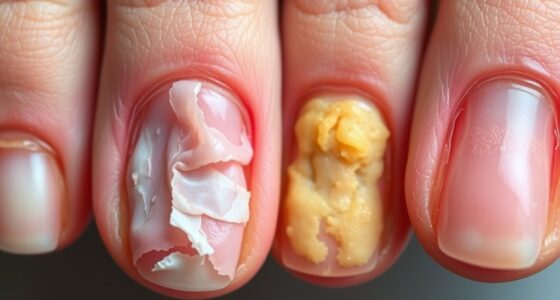
Daily water exposure softens your nails by seeping into tiny spaces, causing keratin to swell and weaken. Repeated swelling and shrinking break down the nail’s structure, making it brittle, prone to splitting, and losing its natural shape. Over time, this damage reduces flexibility and resistance, increasing the risk of cracks and infections. If you want to understand how to protect your nails and prevent long-term harm, keep exploring the details ahead.

Get beauty and skincare favorites delivered free — and shop member deals
- Fast, free delivery on millions of items
- Access to Prime Big Deal Days deals on October 6–7
- Prime Video, Amazon Music and more included
Key Takeaways
- Repeated water exposure softens keratin, making nails more prone to splitting and breaking over time.
- Water infiltrates between nail layers, weakening structural integrity and causing brittleness.
- Constant moisture strips natural oils, reducing nail flexibility and increasing vulnerability to damage.
- Long-term water contact can lead to nail bed separation and increased risk of infections.
- Lack of moisture resistance leads to dull, uneven nails with increased chipping and peeling.
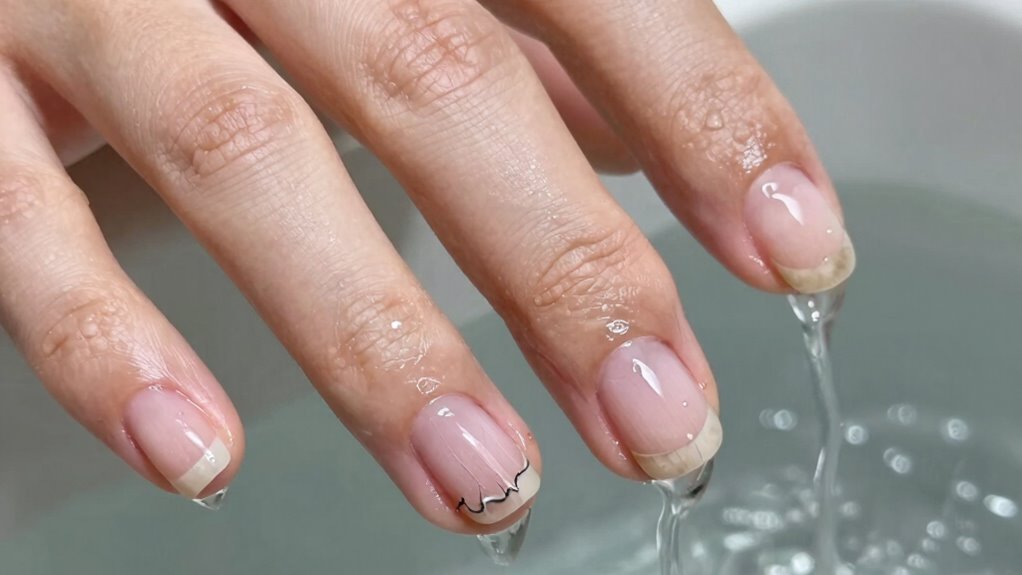
Exposure to water can substantially weaken your nails over time, especially if you frequently immerse your hands in liquids. When your nails are constantly exposed to moisture, their structure starts to break down, leading to compromised nail health. Water damage isn’t just temporary; it can cause long-term issues that make your nails more prone to splitting, peeling, and breaking. As water seeps into the tiny spaces between the nail plate and the underlying layers, it causes the keratin to soften and swell. This repeated swelling and shrinking weaken the nail’s overall integrity, making it less resilient against everyday activities.
Constant water exposure weakens nails, causing them to soften, swell, and become more prone to damage over time.
You might notice that your nails become brittle or develop ridges when exposed to water regularly. This brittleness is a clear sign that water damage is taking its toll on your nail health. The constant exposure also strips away essential oils and natural moisture, which are vital for maintaining strong, flexible nails. Without proper nourishment, your nails become more vulnerable to cracks and tears, especially during tasks that involve pulling or twisting. Over time, this weakens the entire nail structure, increasing the risk of infections or fungal issues because water can carry bacteria and fungi into the tiny gaps created by damage. Recognizing how water-resistance can help prevent further damage is crucial for long-term nail health.
If you work with your hands in water often—whether washing dishes, cleaning, or gardening—you may notice that your nails begin to look dull and uneven. The softening caused by water damage makes it difficult for your nails to maintain their natural shape and smooth surface. This not only affects how they look but also how they feel. Your nails might become more prone to chipping or splitting, which can be painful and unsightly. Moreover, the repeated exposure can cause the nail bed to separate from the nail plate, leading to further weakening and potential discomfort. Recognizing the importance of water-resistant nail care can help you implement better protective measures. Additionally, choosing nail products formulated with moisture barrier ingredients can provide extra protection against water damage. Proper hydration and a balanced diet can also support the keratin structure, making your nails more resilient to moisture damage.
As an affiliate, we earn on qualifying purchases.
Frequently Asked Questions
How Long Does It Take for Water Damage to Appear on Nails?
Water damage on your nails can appear within just a few hours to a couple of days of frequent exposure. You might notice nail discoloration, such as yellowing or whiteness, and your cuticle health could weaken, leading to peeling or cracking. Over time, prolonged water contact causes nails to become brittle and prone to breakage. To prevent this, limit water exposure and keep your nails dry to maintain their strength and appearance.
Can Wearing Gloves Prevent Nail Weakening From Water Exposure?
Wearing gloves can definitely help prevent nail weakening from water exposure by creating a protective barrier. When you use gloves, you reduce the amount of water that contacts your nails, which helps maintain their strength. This practice supports nail strengthening over time, especially if you frequently handle water. Just make sure your gloves are snug and breathable to avoid trapping moisture inside, which could cause other nail issues.
Does Frequent Handwashing Affect Nail Strength Long-Term?
Imagine your nails as delicate bridges, vulnerable to water’s relentless tide. Frequent handwashing causes water absorption, stripping away essential nail hydration. Over time, this weakens the structure, making nails more prone to breakage and peeling. Each wash acts like a small storm, gradually eroding strength. To protect your nails, limit water exposure when possible, and keep them moisturized, reinforcing their resilience against the constant waves of daily hygiene routines.
Are There Specific Nail Treatments to Counteract Water Damage?
Yes, you can use nail strengthening treatments and protective coatings to counteract water damage. Look for products with keratin or biotin, which help reinforce your nails. Applying a clear protective coating, like a base coat, forms a barrier against water, reducing damage. Regularly moisturizing your cuticles and nails also helps maintain flexibility and strength, preventing water-induced brittleness and breakage over time.
Does Hydration Level Influence Water’s Impact on Nails?
Your hydration level directly influences water’s impact on your nails. When you’re well-hydrated, your nails maintain a balanced hydration, preventing excessive water absorption that can weaken them. Imagine your nails as sponges—if your hydration balance is off, they soak up too much water, becoming brittle and prone to damage. Staying properly hydrated helps regulate water absorption, keeping your nails strong, flexible, and less vulnerable to daily water exposure.
As an affiliate, we earn on qualifying purchases.
Conclusion
So, next time you spend hours in water without protection, remember it’s slowly weakening your nails. While occasional exposure isn’t harmful, constant contact can cause nails to become brittle, peel, and break more easily. Some say wearing gloves or applying moisturizer helps prevent damage — and there’s truth to it. Protecting your nails from excessive water isn’t just about appearances; it’s about keeping them strong and healthy in the long run.
As an affiliate, we earn on qualifying purchases.
nail repair kit for brittle nails
As an affiliate, we earn on qualifying purchases.
As an affiliate, we earn on qualifying purchases.
Fall Picks
fall essentials
As an affiliate, we earn on qualifying purchases.