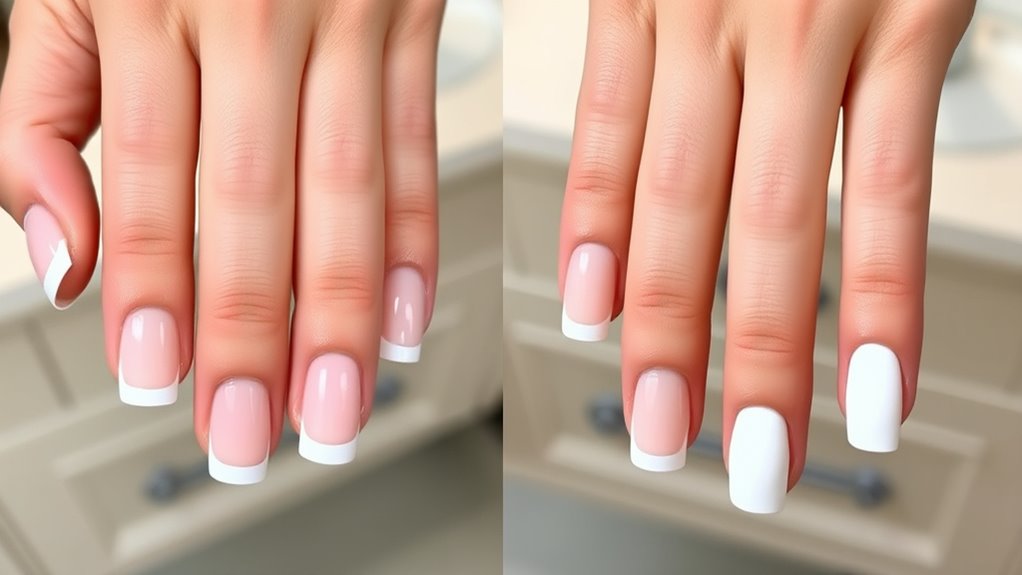

A classic French manicure features a precise, thin white tip with a natural pink or beige base, offering a polished, timeless look that’s ideal for formal occasions. An American French manicure is more relaxed, with wider or curved tips and softer, blended colors, making it versatile and easier to maintain for everyday wear. If you want to discover more about these styles and how to choose the right one, keep exploring the details below.
Key Takeaways
- Classic French manicures feature crisp, narrow white tips with a pink or beige base, emphasizing precision and timeless elegance.
- American French manicures have softer, wider, or curved tips with more natural transitions and varied color options.
- Classic style requires meticulous maintenance to keep white tips bright and chip-free; American style is more relaxed and forgiving.
- Classic French is ideal for formal or professional settings, while American French offers versatile, casual, or personalized looks.
- Overall, the main differences lie in the tip shape, color transition, maintenance level, and suitability for different occasions.

When choosing between a classic and an American French manicure, understanding their key differences can help you pick the look that best suits your style. Both styles have their charm, but they vary in subtle ways that can influence your overall appearance. One of the first things to contemplate is how each manicure fits into your nail care routines. Classic French manicures typically involve a crisp, clean look with a white tip and a natural pink or beige base. To achieve this, you need a steady hand and patience to guarantee the white tip lines are even and smooth. Maintaining this look requires regular upkeep, especially to keep the white tips bright and free of chips, which means incorporating specific nail care routines like cuticle hydration and proper moisturizing. The nail care routine for a classic French manicure is more meticulous due to the precise lines and color consistency needed.
On the other hand, American French manicures tend to be more relaxed and versatile. They often feature a softer, more natural transition between the tip and the base, sometimes with a slightly wider or curved white tip. Because of this, your nail care routines might be less strict, allowing for more flexibility in how you maintain the look. The color palette choices for American French manicures are generally more subdued and varied. While the classic style sticks to traditional pinks and whites, the American version may incorporate pastel shades, muted nudes, or even gradient effects, giving you a broader spectrum of options to match your personal style or wardrobe.
Color palette choices play a significant role in how each style complements your overall look. The classic French manicure’s neutral tones make it timeless and suitable for formal occasions or professional settings. Its clean, polished appearance conveys sophistication without drawing too much attention. Meanwhile, American French manicures often experiment with softer or more playful hues, making them more adaptable for casual wear or when you want your nails to subtly stand out.
Your choice might also depend on how much effort you want to put into nail care routines. Classic French manicures typically demand meticulous attention to detail—clean lines, perfect color application, and regular touch-ups. American French manicures, by contrast, can be more forgiving, especially if you opt for softer shades or blended tips. Whichever style you choose, understanding these nuances guarantees you can maintain your manicure easily and select color palettes that resonate with your personal style, helping you look polished and confident every day.

Born Pretty French Manicure Kit, Nail Stamper and 2Pcs Gel Nail Polish, Include Jelly Milky Pink White Colors for French Tip, U V Light Cure
【Package Contents】Born Pretty French Tip Nail Stamps Set contains 1PCS Long French Tip Nail Stamp, 1PCS White Gel…
As an affiliate, we earn on qualifying purchases.
As an affiliate, we earn on qualifying purchases.
Frequently Asked Questions
Which Manicure Lasts Longer: Classic or American French?
You’ll find that gel manicures generally last longer than traditional polish, regardless of whether it’s classic or American French. Gel durability resists chipping and provides a shiny finish for up to two weeks or more. Additionally, gel’s strength minimizes the effects of nail growth, helping your manicure look fresh longer. So, if longevity is your goal, gel polish on either style will outperform traditional options, keeping your nails looking polished and flawless.
Are There Specific Nail Shapes Better Suited for Each Style?
You’ll find that certain nail shapes enhance each manicure style’s versatility and nail shape compatibility. For classic French, oval or almond shapes work well, offering a refined look. American French suits square or stiletto nails, highlighting the bold contrast. Choosing the right shape depends on your style preference and desired durability. Ultimately, experimenting with different shapes helps you discover the most flattering and versatile options for your preferred manicure style.
Can I Customize Colors in Either French Manicure Style?
You can definitely customize colors in either French manicure style, which adds to their design versatility. Whether you prefer a traditional white tip or a modern twist with bold or pastel shades, salons often offer a variety of custom color options. This flexibility allows you to personalize your look, making your manicure unique and suited to your style or occasion, regardless of the specific French manicure style you choose.
How Do Maintenance Routines Differ Between the Two Styles?
You should know that maintenance routines vary depending on the style you choose. For cutting-edge trends and seasonal color options, both styles require regular touch-ups to keep the nail tips looking fresh. American French manicures often need more frequent visits because of the painted tips, while classic styles may last longer between fills. Keep your nails healthy by moisturizing and using gentle products, regardless of your chosen look.
Are There Any Skin Tone Considerations for Each Manicure Type?
When choosing a manicure, you should consider skin tone compatibility to guarantee the look complements your complexion. Lighter shades or nude tones work well for fair skin, while deeper or more vibrant colors suit darker skin tones. Also, keep nail health considerations in mind; gentle products help prevent damage regardless of your skin tone. Ultimately, selecting colors that enhance your natural beauty boosts confidence and ensures your nails stay healthy.

Finea Nail Art Brushes and Dotting Tools 6pcs Set for Builder Gel Polygel Gel Polish Paint Design with Flat, Round, Thin Liner, French Tip, Small Detail Painting, 3D Acrylic Flower Brushes, Gold Blue
Versatile Brush Set: This versatile brush set includes everything needed for various nail art styles, from solid color,…
As an affiliate, we earn on qualifying purchases.
As an affiliate, we earn on qualifying purchases.
Conclusion
So, now you know the key differences between the classic and American French manicures. Whether you prefer the subtle elegance of the classic or the modern twist of the American style, choosing the right look depends on your personality and occasion. Did you know that French manicures remain one of the top nail trends worldwide, with over 60% of women opting for them at least once a year? Now, go ahead and pick the one that best expresses your unique style!

Beetles French Tip Gel Polish Set – White Nude Pink Gel Nail Polish Set Soak Off UV LED with 2 Styles Bubble French Manicure Nail Art Sticker Sheets for DIY Home & Salon Summer Gift for Women
Nude Pink & White French Manicure Set: This French tip gel polish set includes 2 essential colors: soft…
As an affiliate, we earn on qualifying purchases.
As an affiliate, we earn on qualifying purchases.
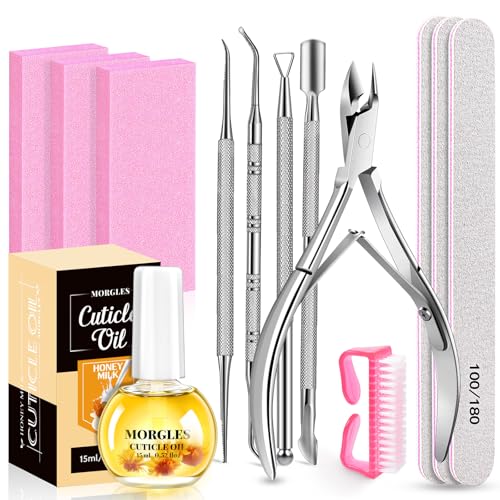
MORGLES Nail File and Buffer Blocks with Nail Care Kit, 13 Pcs Manicure Kit for Women with Milk and Honey Cuticle Oil and Cuticle Trimmer Set
Complete Cuticles Care Set: 1 pcs milk and honey nail cuticle oil, 3 pcs new-style rectangular nail buffer…
As an affiliate, we earn on qualifying purchases.
As an affiliate, we earn on qualifying purchases.