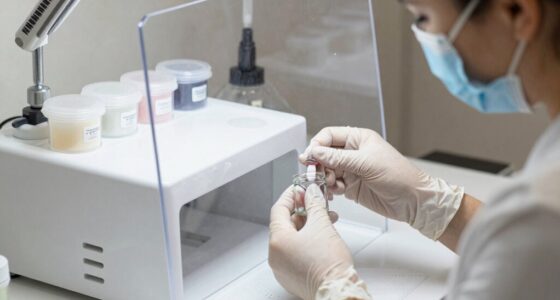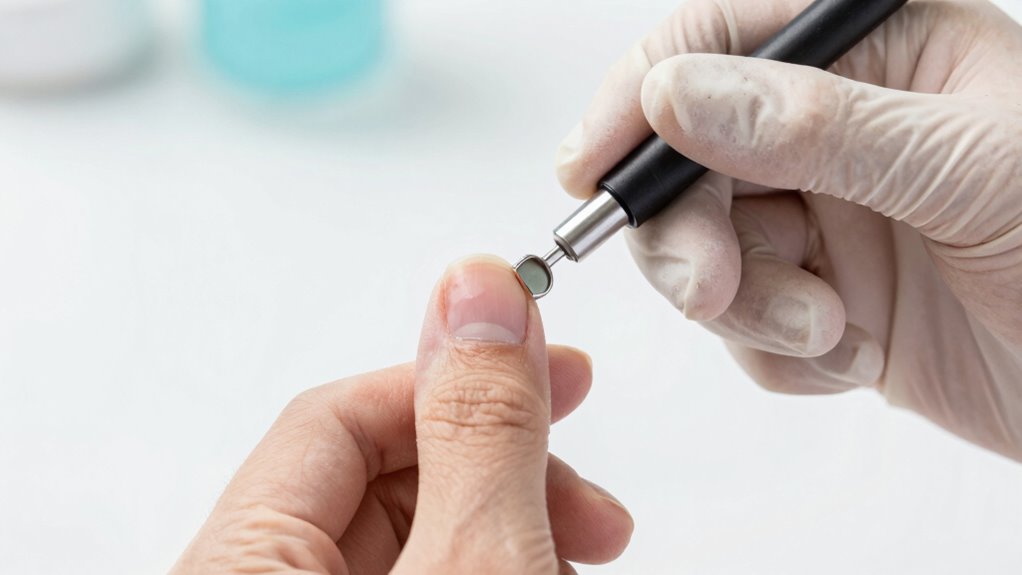

To handle visible nail infections professionally and safely, you should see a healthcare provider or a licensed nail technician for an accurate diagnosis. Follow their treatment plan, which may include topical or oral antifungals, and keep the nails clean and dry. Avoid sharing tools and disinfect them thoroughly after use. Practice good hygiene and environmental cleanliness to prevent spreading. Staying vigilant and proactive will help protect your nail health, and you’ll discover more tips for effective care as you continue.

Get beauty and skincare favorites delivered free with Prime
- Fast, free delivery on millions of items
- Prime Video, Amazon Music and more included
- Member-only deals all year
Key Takeaways
- Consult a healthcare professional or licensed nail technician for accurate diagnosis and appropriate treatment options.
- Follow prescribed treatments diligently, including topical or oral antifungal medications, and complete full courses.
- Maintain good hygiene by keeping nails dry, avoiding sharing tools, and disinfecting instruments after each use.
- Keep nails trimmed short and gently file affected areas to prevent fungal spread and debris buildup.
- Implement environmental measures like wearing breathable shoes, disinfecting surfaces, and avoiding communal showers without protection.
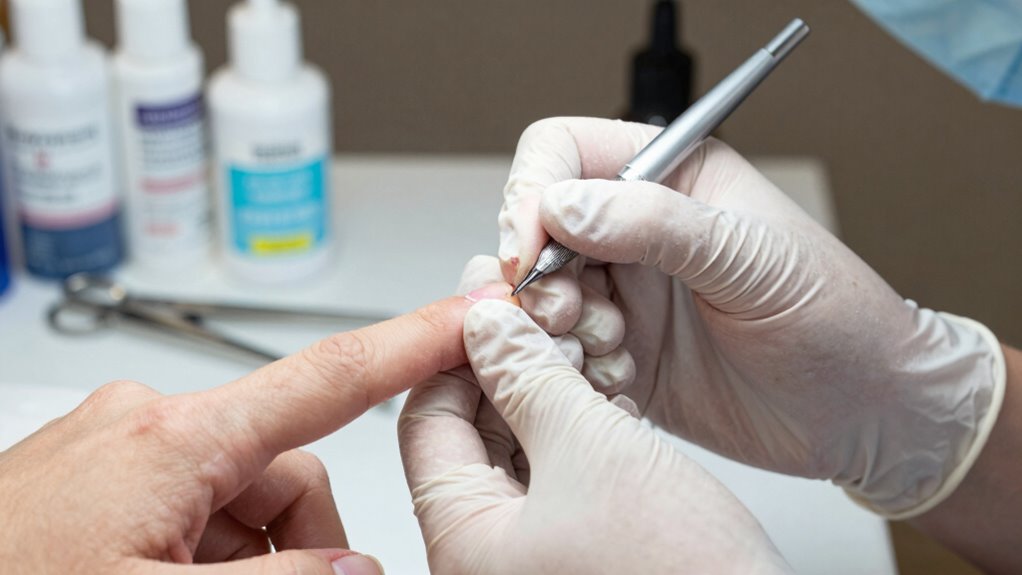
Nail infections can be uncomfortable and potentially serious if not handled properly. If you notice any changes in your nails—such as discoloration, thickening, or crumbling—it’s essential to address them promptly. Many times, these signs indicate nail fungus, a common cause of nail infections. Ignoring the issue can lead to more severe complications, spreading the infection to other nails or even skin. To handle a visible nail infection professionally and safely, start by maintaining good hygiene. Clean your hands and feet thoroughly and keep your nails dry, as moisture promotes fungal growth. When dealing with infected nails, avoid sharing nail clippers or tools, as this can transfer the infection to others or worsen your condition.
Infection prevention is key to managing nail fungus and preventing future issues. If you suspect a fungal infection, consider visiting a healthcare professional or a licensed nail technician who can diagnose the problem accurately. They might recommend topical antifungal treatments or, in more severe cases, oral medication. It’s crucial to follow their instructions closely, completing the full course of treatment even if your symptoms improve early. This ensures that the fungus is fully eradicated and reduces the risk of recurrence. Additionally, understanding the importance of color accuracy and proper lighting conditions can help in monitoring the progression or improvement of nail infections visually. If you’re handling the infection at home, disinfect your nail tools after each use with alcohol or boiling water. Be gentle when trimming or filing the affected nails, avoiding aggressive removal that could cause further damage or pain. Keep your nails trimmed short to prevent debris from accumulating under the nail, which can worsen the infection. Wearing breathable shoes and moisture-wicking socks can also help prevent nail fungus from developing or worsening, especially if you’re prone to sweaty feet.
Knowing how nail biology differs between males and females can also influence the approach to treatment and care, as nail structure and growth patterns vary. Proper environmental hygiene also plays a vital role in managing and preventing nail infections, so regularly cleaning and disinfecting your surroundings can make a significant difference. For example, increased awareness of microplastics in dust and their potential impact on health highlights the importance of maintaining a clean and contaminant-free environment. A comprehensive understanding of the fungal lifecycle can assist in choosing the most effective treatment strategies. Pay attention to your environment—keep your shoes and socks clean and dry, and regularly disinfect surfaces like bathroom floors and shower stalls. Wearing flip-flops in communal showers or pool areas can significantly reduce your risk of infection. If you notice any signs of worsening infection, such as increased pain, spreading redness, or pus, seek medical advice immediately. Self-treatment with over-the-counter remedies might be effective for mild cases, but a professional evaluation ensures you’re using the right approach and prevents complications.
Handling nail infections safely requires a combination of good hygiene, professional guidance, and infection prevention strategies. By staying vigilant and proactive, you can protect your nails from persistent fungal infections and maintain healthy, strong nails long-term.
As an affiliate, we earn on qualifying purchases.
Frequently Asked Questions
Can I Treat Nail Infections at Home Without Professional Help?
You can try home remedies and natural treatments for minor nail infections, but it’s important to be cautious. Keep your nails clean and dry, soak them in warm salt water, and apply antifungal oils like tea tree oil. However, if symptoms worsen or don’t improve within a week, consult a healthcare professional. Home treatments may help, but professional care guarantees proper diagnosis and effective treatment for more serious infections.
How Long Does It Take for a Nail Infection to Fully Heal?
Nail fungus can take anywhere from 6 months to a year to fully heal, depending on infection severity. Surprisingly, up to 35% of nail infections resolve with proper treatment, but severe cases may need longer. The healing time varies based on nail growth rate and treatment consistency. You should expect patience, as it often takes time for new, healthy nail to completely replace the infected part.
Are There Specific Medications for Different Types of Nail Infections?
Yes, different nail infections require specific medications. For fungal infections, you’ll typically use antifungal medications like terbinafine or itraconazole, either topically or orally. Bacterial infections, on the other hand, need bacterial treatments such as antibiotics like mupirocin or cephalexin. It’s crucial to get a proper diagnosis from a healthcare professional so they can prescribe the right medication, ensuring effective and safe treatment tailored to your infection type.
When Should I See a Doctor for My Nail Infection?
You should see a doctor if your nail infection worsens, causes significant pain, or doesn’t improve after a week of good nail hygiene. Ignoring signs can lead to complications, so don’t delay seeking professional help. Timely treatment helps prevent the infection from spreading. Prioritize infection prevention by keeping your nails clean and dry, and avoid self-medicating. Seeing a doctor guarantees proper diagnosis and effective treatment.
Can Nail Infections Spread to Other Parts of My Body?
Yes, nail infections can spread to other parts of your body if you don’t practice good nail hygiene and infection prevention. Bacteria or fungi under your nails can enter your bloodstream or nearby tissues, especially if you scratch or pick at the infected area. To prevent this, keep your nails clean and dry, avoid sharing nail tools, and seek medical care promptly if you notice signs of spreading.
As an affiliate, we earn on qualifying purchases.
Conclusion
By addressing nail infections promptly and professionally, you’re steering your health ship through turbulent waters. Think of your nails as tiny flags signaling your body’s wellbeing; ignoring them can lead to stormy seas. Always seek expert advice, keep your nails clean, and follow treatment plans diligently. With the right approach, you’ll navigate back to calm, clear waters—restoring your confidence and health, one careful step at a time.
nail fungus treatment oral medication
As an affiliate, we earn on qualifying purchases.
As an affiliate, we earn on qualifying purchases.
As an affiliate, we earn on qualifying purchases.
Halloween Picks
halloween
As an affiliate, we earn on qualifying purchases.