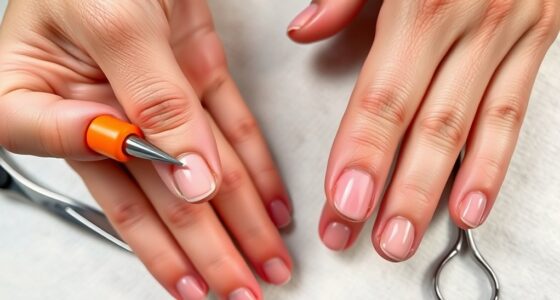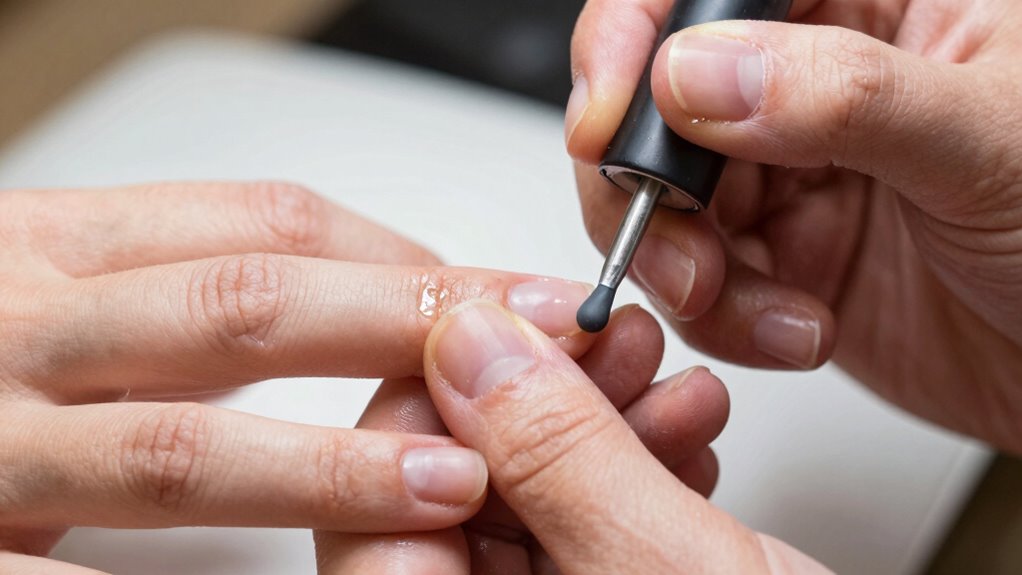

To improve retention on clients with oily nail plates, you should start with thorough cleaning to remove oils, dust, and debris, then gently buff the surface for better adhesion. Use a dehydrator followed by an acid-based primer for maximum bonding, making sure it’s fully dry before applying gel or acrylic. Carefully avoid over-priming or flooding cuticles. Mastering these steps can make a noticeable difference; stay with us to learn more proven techniques for long-lasting results.

Get beauty and skincare favorites delivered free with Prime
- Fast, free delivery on millions of items
- Prime Video, Amazon Music and more included
- Member-only deals all year
Key Takeaways
- Use a dehydrator before primer to thoroughly remove residual oils and moisture from the nail surface.
- Choose and apply a suitable primer designed specifically for oily nails, allowing proper drying time.
- Gently buff the nail surface to create a rough texture, enhancing adhesion without over-buffing.
- Avoid flooding the cuticle area with primer to prevent lifting and ensure better bond strength.
- Follow manufacturer instructions carefully and incorporate proper nail prep products consistently.
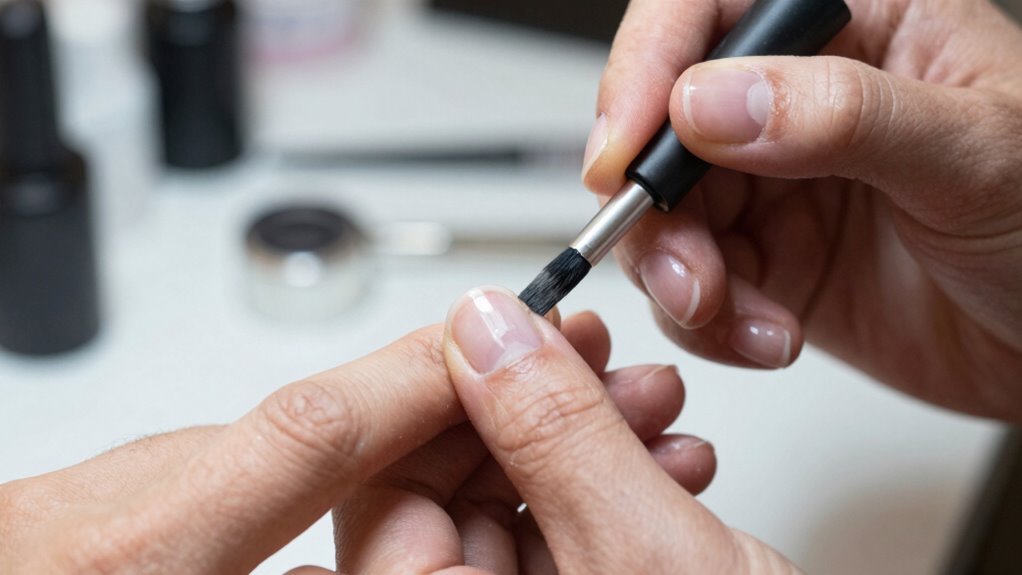
If you frequently work with clients who have oily nail plates, you know how challenging it can be to achieve long-lasting nail enhancements. Oily nails tend to resist adhesion, leading to lifting, cracking, or premature chipping. To combat this, proper nail prep is vital. You need to start by thoroughly cleaning the nails to remove any oils, dust, or debris. Use an appropriate cleanser or nail wipe that’s designed for prepping nails. After cleaning, gently buff the surface to create a slightly rough texture, which helps improve adhesion. Be careful not to over-buff; you want to avoid thinning the nail or creating deep scratches that could weaken it.
Once the nails are clean and prepped, the next essential step is primer application. You should choose a primer formulated specifically for oily nails, as these are designed to break down residual oils and increase the surface’s porosity for better bonding. Apply a thin, even layer of primer over the entire nail plate, making sure not to flood the cuticle area. The key is to use just enough product to improve adhesion without excess, as too much primer can cause lifting or curing issues. Allow the primer to air dry for a few seconds or follow the manufacturer’s instructions before proceeding with your application of gel or acrylic. Incorporating techniques for adhesion enhancement can further improve your success on oily nail plates.
Apply a thin, even layer of primer, avoiding cuticles, and let it air dry for optimal adhesion.
In addition to proper nail prep and primer application, consider the type of primer you’re using. Some primers are acid-based, while others are non-acid. Acid primers can be more effective on oily nails, but they also require careful handling due to their potency. Non-acid primers are gentler but might need to be applied more meticulously or in multiple thin layers for best results. Regardless of which you choose, always confirm it’s fully dry before continuing. Using a dehydrator prior to primer application can further enhance adhesion by removing residual moisture from the nail surface. Understanding adhesion principles can help you improve your techniques and results over time. Incorporating the proper use of nail prep products and techniques is essential for achieving long-lasting enhancements, especially on oily nail plates. Paying close attention to each step will maximize the effectiveness of your prep routine and ensure your work endures.
nail prep dehydrator for oily nails
As an affiliate, we earn on qualifying purchases.
As an affiliate, we earn on qualifying purchases.
Frequently Asked Questions
Can Dietary Changes Affect Oily Nail Plates?
Yes, dietary impact and nutritional influence can affect oily nail plates. When you adjust your diet to include more vitamins like biotin, zinc, and omega-3 fatty acids, you support healthier nail growth and help regulate oil production. Eating a balanced diet with plenty of fruits, vegetables, and lean proteins can improve your nail health over time, reducing excess oil and enhancing nail retention and appearance.
Are There Specific Products That Work Best for Oily Nails?
Think of your nails as a garden needing the right tools. For oily nails, choose products with de-greasing ingredients like isopropyl alcohol or primer designed for oily cuticle care. These help control excess oil, improving nail hydration and adhesion. Look for formulations that balance oil control and moisture, ensuring your clients’ nails stay strong and long-lasting. Regularly using these targeted products transforms oily nails into a canvas ready for beautiful, lasting manicures.
How Often Should I Recommend Nail Plate De-Greasing?
You should recommend nail plate de-greasing before every manicure, especially for clients with oily nails. This helps remove excess oils that hinder nail polish compatibility. Incorporate proper cuticle care techniques to prepare the nail surface effectively. Regular de-greasing ensures better adhesion, reduces chipping, and prolongs wear. Make it a standard part of your routine to achieve maximum results for clients with oily nail plates.
Do Certain Nail Shapes Influence Oil Retention?
Yes, nail shape can influence oil retention. For example, wider or more curved nail shapes may trap oils more easily, leading to increased oil retention. Conversely, narrower or flatter shapes tend to have less surface area prone to oil buildup. When working with oily nail plates, consider these shape factors and adjust your prep and product application accordingly to enhance adhesion and improve retention for your clients.
Is There a Long-Term Solution for Consistently Oily Nail Plates?
Yes, there’s a lasting solution for consistently oily nail plates. You should focus on managing oil absorption and nail hydration by implementing a routine of proper prep, including using oil-absorbing primers and hydrating cuticle oils. Regularly de-oiling and nourishing nails helps balance oil production over time, reducing excess oil and improving retention. Consistency in these care steps creates a clear, confident, and long-lasting finish for your clients’ oily nails.
As an affiliate, we earn on qualifying purchases.
Conclusion
Remember, nurturing clients with oily nail plates is like tending to a delicate garden—you need patience and the right tools. By applying proper prep, using specialized primers, and choosing the best products, you can turn these tricky nails into a canvas that holds beauty beautifully. Stay consistent, and don’t be discouraged by setbacks; persistence is the key to transforming oily challenges into stunning results. Keep your approach steady, and watch your clients’ confidence flourish like a well-watered flower.
As an affiliate, we earn on qualifying purchases.
As an affiliate, we earn on qualifying purchases.
Halloween Picks
halloween
As an affiliate, we earn on qualifying purchases.