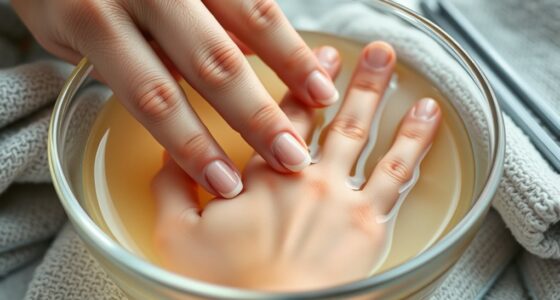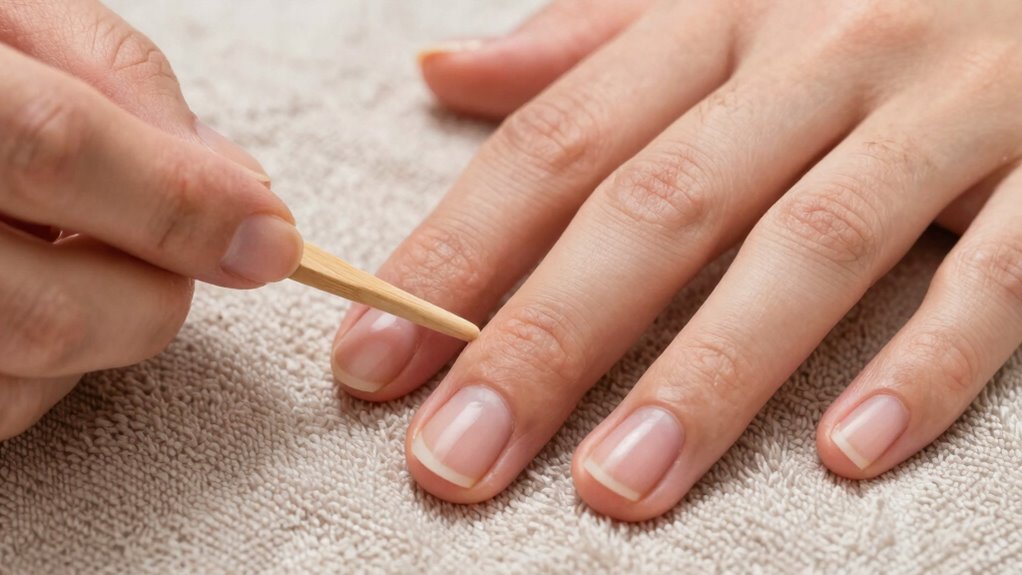

To perfect your cuticle prep without overworking the skin, soak your fingertips in warm water to soften the cuticles first. Gently push them back with a wooden or silicone tool, avoiding harsh or metal implements. Apply nourishing cuticle oil regularly to keep the skin healthy and hydrated. Be patient, focus on gentle, controlled movements, and only trim loose or excess skin. If you follow these steps, you’ll maintain healthy cuticles and nails, and there’s more to discover for ideal results.

Get beauty and skincare favorites delivered free — and shop member deals
- Fast, free delivery on millions of items
- Access to Prime Big Deal Days deals on October 6–7
- Prime Video, Amazon Music and more included
Key Takeaways
- Soak fingertips in warm water to soften cuticles before gentle pushing back.
- Use nourishing cuticle oils with vitamin E or jojoba for hydration and flexibility.
- Gently push back cuticles with a wooden or silicone tool, avoiding excessive force.
- Trim only loose or hanging skin, avoiding aggressive removal of healthy cuticle tissue.
- Maintain regular moisturizing to support natural cuticle health and prevent overworking.

Proper cuticle prep is essential for a flawless manicure, but overworking the skin can lead to irritation and damage. To keep your nails healthy and look their best, you need to find the right balance between effective prep and gentle care. Nail health depends on maintaining healthy cuticles, which act as a barrier against infections and support nail growth. When you push or trim your cuticles too aggressively, you risk damaging the skin and weakening this protective layer. Instead, focus on a gentle, nourishing approach that promotes cuticle hydration and overall nail health.
Gentle, nourishing cuticle care supports healthy nails and prevents damage for a flawless manicure.
Start by soaking your fingertips in warm water for a few minutes. This softens the cuticles, making them easier to manage without force. Use a cuticle oil or serum rich in nourishing ingredients like vitamin E or jojoba oil. These products penetrate the skin, hydrating the cuticles and preventing dryness or cracking. Proper cuticle hydration is key because dry, brittle cuticles are more prone to tears and infections, which can compromise nail health. After soaking, gently push back the cuticles with a wooden or silicone cuticle pusher. Be careful not to press too hard; the goal is to loosen the cuticles without causing trauma. If you encounter stubborn areas, don’t try to force them—soak again or apply more cuticle oil and wait a few minutes before proceeding.
Avoid using metal tools or sharp implements to trim or scrape the cuticles. Overworking the skin with harsh tools can create microtears, increasing your risk of infection and damaging the nail matrix. Instead, focus on maintaining the natural shape of your cuticles with gentle pushing and trimming only the excess skin that’s already loosened or hanging. Remember, healthy cuticle maintenance isn’t about removing every bit of skin but about supporting its natural function and keeping it hydrated. Maintaining cuticle health through gentle care is essential for overall nail strength and appearance. Incorporating essential oils, such as lavender or tea tree oil, can further support healthy, hydrated cuticles and prevent infections. Additionally, research suggests that sound vibrations are believed to enhance cellular regeneration and overall health, which could complement your cuticle care routine.
Throughout the process, keep your hands moisturized with a nourishing lotion or oil. Hydrated skin is more resilient and less likely to become irritated. Additionally, understanding the importance of proper technique can help prevent damage and promote healthier nails over time. If you notice redness or soreness, pause and give your skin time to recover. Consistent, gentle care will improve your nail health over time, resulting in stronger, smoother nails and a cleaner, more polished look. The key is patience and moderation—by respecting your skin’s limits, you’ll achieve a flawless manicure without the setbacks caused by overworking or damaging your cuticles.
As an affiliate, we earn on qualifying purchases.
Frequently Asked Questions
Can Cuticle Prep Be Done Daily?
Cuticle removal shouldn’t be done daily because it can irritate your skin and damage the nail matrix. Instead, focus on gentle nail hydration daily to keep your cuticles healthy and soft. Regular moisturizing prevents buildup and makes cuticle care easier without overworking your skin. If you notice dryness or hangnails, do a mild cuticle treatment once a week, avoiding aggressive removal to maintain healthy, strong nails.
What Tools Are Best for Gentle Cuticle Care?
For gentle cuticle care, you need the right tools that prioritize safety. A soft, high-quality cuticle pusher is your best bet for pushing back cuticles without causing damage. Pair it with a gentle cuticle exfoliator or a soft brush to remove dead skin delicately. These tools help you achieve smooth, healthy cuticles while avoiding overworking or irritating your skin, giving you that flawless manicure every time.
How Do I Prevent Cuticle Damage?
To prevent cuticle damage, focus on maintaining cuticle health by avoiding aggressive pushing or cutting. Use gentle tools designed for sensitive skin, and always moisturize afterward to keep skin hydrated. Be mindful of your skin sensitivity, and don’t rush the process—overworking can cause tearing or inflammation. Regularly nourish your cuticles with cuticle oils or creams, and give your skin time to recover between manicures, ensuring healthy, damage-free cuticles.
Is Cuticle Oil Necessary After Prep?
Yes, applying cuticle oil after prep is necessary. It helps with cuticle hydration, keeping the skin soft and healthy. Oil absorption prevents dryness and promotes faster healing. When you use cuticle oil, you’re nourishing the cuticles and surrounding skin, which reduces the risk of damage. It also creates a protective barrier, ensuring your nails stay moisturized and look polished longer. Make it a regular part of your manicure routine for best results.
How Long Should Cuticle Prep Take?
Think of cuticle prep like tending a garden—patience and care are key. It should take about 5-10 minutes, enough to gently push back and clean without overdoing it. Proper cuticle care promotes nail health, so rushing can cause damage. Focus on a delicate touch, and avoid rushing through the process. When done right, your nails will flourish with strength and beauty, just like a well-tended garden.
As an affiliate, we earn on qualifying purchases.
Conclusion
Remember, patience is a virtue when it comes to cuticle prep. By gently pushing back and avoiding harsh scrapes, you protect your skin while achieving a clean look. Don’t rush the process; overworking can do more harm than good. Keep in mind, “slow and steady wins the race,” especially when caring for delicate skin. With practice, you’ll master the art of perfect cuticle prep without causing damage or irritation.
As an affiliate, we earn on qualifying purchases.
As an affiliate, we earn on qualifying purchases.
Halloween Picks
halloween
As an affiliate, we earn on qualifying purchases.