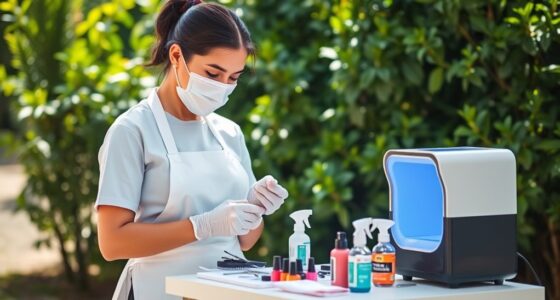
To build a written exposure response plan for your nail salon, start by identifying all chemicals used and reviewing safety data sheets. Develop procedures for handling, storing, disposing, and responding to spills or exposures. Train your staff on these safety practices, including proper PPE use and emergency response. Regularly update your plan to stay compliant with regulations and incorporate new hazards. Keep detailed records of safety measures; if you want to guarantee you’re covered, continue exploring the key steps involved.

Get beauty and skincare favorites delivered free — and shop member deals
- Fast, free delivery on millions of items
- Access to Prime Big Deal Days deals on October 6–7
- Prime Video, Amazon Music and more included
Key Takeaways
- Identify all chemicals used and review Safety Data Sheets to understand hazards and necessary precautions.
- Develop clear procedures for safe handling, storage, disposal, and spill response tailored to salon operations.
- Train staff regularly on chemical hazards, PPE use, emergency response, and proper safety protocols.
- Include procedures for managing chemical exposures, such as fumes, skin contact, or ingestion.
- Regularly review and update the plan to comply with regulations and incorporate new safety information.
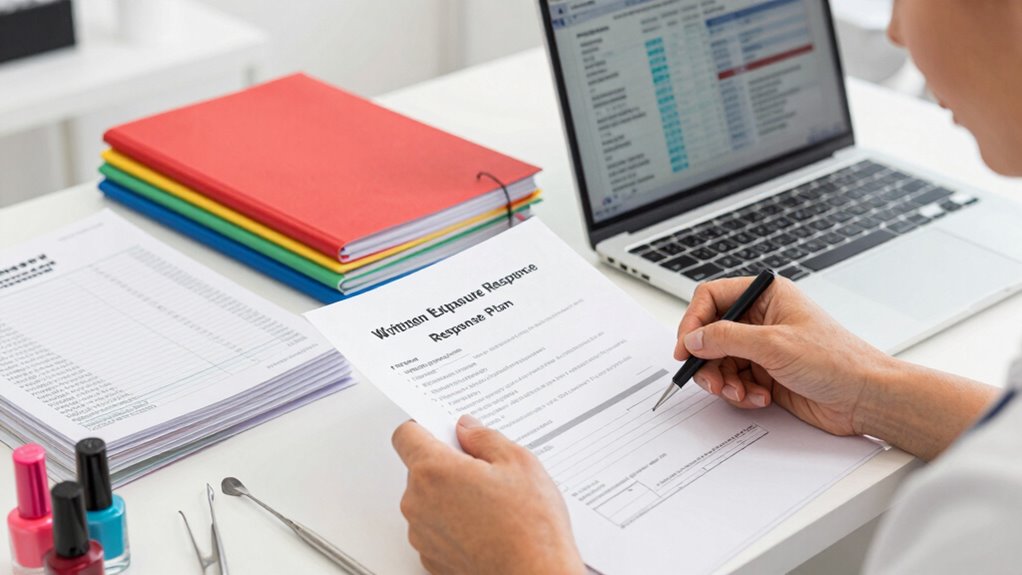
Creating a written exposure response plan is crucial for nail salons to protect both employees and clients from chemical hazards. This plan isn’t just a formality; it’s an essential tool that helps you comply with health department regulations and ensures safety protocols are in place. When you develop this plan, you demonstrate your commitment to a safe working environment and reduce the risk of chemical-related incidents. It’s your guiding document for how to respond if a hazardous exposure occurs, covering everything from initial response steps to proper cleanup procedures.
To build an effective exposure response plan, start by identifying all the chemicals used in your salon. Review safety data sheets (SDS) for each product to understand potential hazards and recommended safety measures. Incorporate specific procedures for handling these chemicals safely, including proper storage, disposal, and spill response. Your plan should clearly outline steps to take if a client or employee is exposed to fumes, skin contact, or accidental ingestion. Being precise about these actions helps minimize health risks and ensures quick, effective responses. Additionally, understanding chemical hazards is vital for implementing appropriate safety measures and training your staff effectively, especially considering the impact of color accuracy and other technological factors on safety protocols. Regularly reviewing your chemical inventory is also important to stay updated on any new or changing hazards. Implementing proper safety protocols can significantly reduce the likelihood of exposure incidents occurring in the first place. Furthermore, aligning your safety procedures with regulatory requirements ensures your salon remains compliant and avoids potential penalties.
Compliance with health department regulations is non-negotiable. These agencies often have detailed requirements for chemical safety, including mandated training and documentation. Make sure your plan aligns with these regulations by regularly updating it and keeping detailed records of training sessions and safety audits. Regularly reviewing and revising your plan ensures it stays current with any new regulations or changes in your salon’s chemical inventory. Overlooking these guidelines could result in fines or legal issues, so staying proactive is essential.
Employee training is a cornerstone of your exposure response plan. You need to educate your staff thoroughly on the hazards associated with their work and how to respond appropriately in case of an exposure. Training should cover proper handling procedures, the importance of wearing personal protective equipment (PPE), and how to use emergency equipment like eyewash stations and spill kits. Conduct drills periodically to ensure everyone knows their role and can act swiftly during an emergency. Well-trained employees not only reduce the likelihood of accidents but also respond more effectively if one occurs, protecting everyone involved. Recognizing chemical safety training as an ongoing process helps maintain a high level of preparedness among your staff.
Nail salon chemical safety data sheets
As an affiliate, we earn on qualifying purchases.
As an affiliate, we earn on qualifying purchases.
Frequently Asked Questions
How Often Should the Exposure Response Plan Be Reviewed and Updated?
You should review and update your exposure response plan at least annually to guarantee chemical safety and emergency procedures stay current. Regular reviews help identify new hazards, outdated procedures, or changes in regulations. After any chemical spill, exposure incident, or significant process change, update the plan promptly. Keeping your plan current ensures effective response to chemical exposures, safeguarding your staff and clients while maintaining a safe salon environment.
What Training Is Necessary for Nail Salon Staff Regarding Exposure Plans?
Imagine your nail salon as a ship steering through tricky waters—you need a skilled crew. Staff training in chemical safety is essential, equipping your team to recognize hazards and respond effectively during exposure incidents. You should make sure all staff understand the exposure plan, proper handling of chemicals, and emergency procedures. Regular training keeps everyone prepared, just like a well-trained crew, ensuring a safe environment for both workers and clients.
Are There Specific Regulations for Exposure Response Plans in Different States?
Yes, there are specific regulations for exposure response plans that vary by state. You need to make certain your plan complies with state-specific regulations and regional safety standards, which may dictate certain procedures or documentation requirements. It is crucial to research your state’s occupational safety agency guidelines, as compliance ensures legal adherence and enhances safety protocols. Regularly updating your plan to meet evolving regional safety standards helps protect both staff and clients effectively.
How Should a Nail Salon Handle an Accidental Chemical Spill?
When handling an accidental chemical spill in your nail salon, you should act quickly to guarantee safety. First, contain the spill by using absorbent materials or barriers to prevent it from spreading. Then, follow proper spill cleanup procedures—wear protective gear, ventilate the area, and clean up the spill thoroughly. Proper chemical containment and effective spill cleanup are essential to protect your staff, clients, and the environment.
What Resources Are Available for Developing an Effective Exposure Response Plan?
You need unbeatable resources for an effective exposure response plan. Start with OSHA’s guidelines on chemical safety and emergency preparedness—they’re the gold standard. Consult the CDC’s safety manuals for nail salons’ specific risks. Don’t forget to explore local health department programs and industry associations—they often offer tailored training and templates. These tools will help you craft a plan so strong, it could withstand anything, keeping everyone safe from chemical hazards.
Personal protective equipment for nail salons
As an affiliate, we earn on qualifying purchases.
As an affiliate, we earn on qualifying purchases.
Conclusion
By crafting a solid exposure response plan, you’re planting seeds of safety that will grow strong roots in your nail salon. Think of it as your shield, ready to spring into action like a vigilant guardian whenever hazards lurk nearby. With each step you take to prepare, you’re weaving a safety net that catches mishaps before they fall. In this dance of diligence, your salon transforms into a fortress—protecting your team and clients alike, one thoughtful move at a time.
As an affiliate, we earn on qualifying purchases.
As an affiliate, we earn on qualifying purchases.
Fall Picks
fall essentials
As an affiliate, we earn on qualifying purchases.