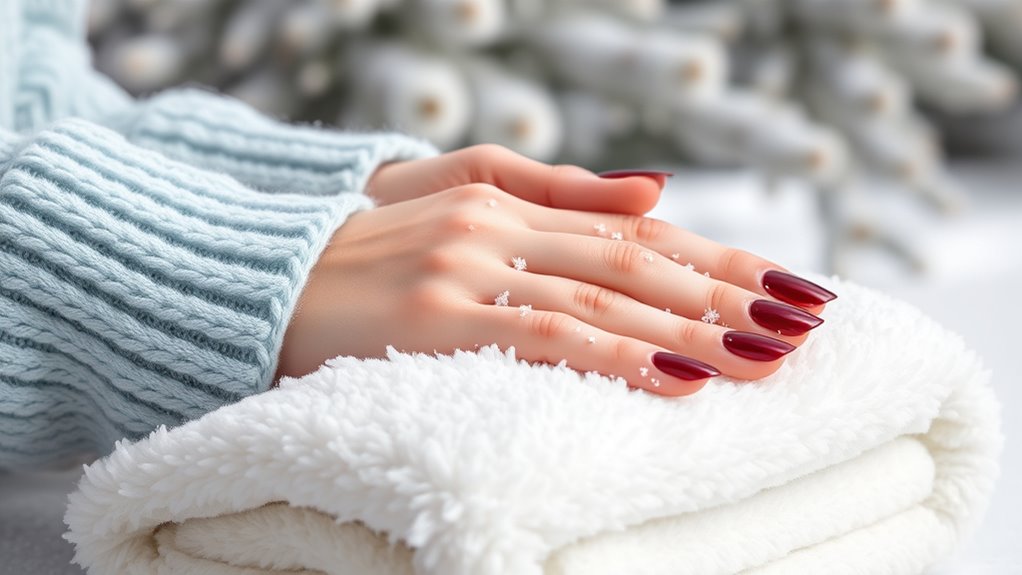

In cold weather, your nails and skin can become dry and brittle, causing cracking and breakage. To keep them healthy, moisturize your cuticles and hands daily, avoid hot water, and wear gloves outdoors. Use nourishing oils, gentle polish removers, and protective base coats to strengthen your nails. Limiting water exposure and trying DIY remedies like olive oil or vitamin E can also help. Continue exploring tips and product suggestions to maintain strong, beautiful nails all winter long.
Key Takeaways
- Moisturize cuticles and hands daily with nourishing oils to prevent dryness and cracking.
- Wear gloves outdoors and avoid hot water to protect nails from cold, dry air.
- Use gentle, acetone-free nail polish removers and apply nourishing base coats regularly.
- Trim and file nails regularly to prevent splits caused by dryness and brittleness.
- Incorporate DIY treatments like olive oil soaks and vitamin E to strengthen and hydrate nails.
Understanding the Impact of Cold Weather on Nails
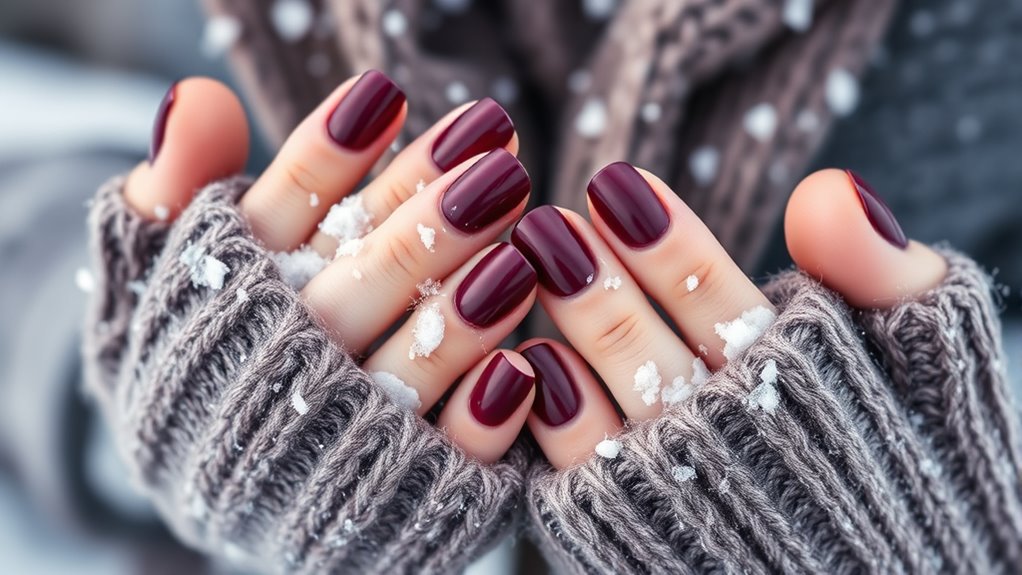
Have you ever noticed how your nails become more brittle and prone to cracking during the winter months? Cold weather dries out your skin and nails, leading to increased brittleness. When your skin loses moisture, it can’t support healthy nail growth, making nails more susceptible to splitting and breakage. Dry skin around your cuticles can also cause painful hangnails and infections. The chilly air depletes natural oils that keep nails flexible and strong, resulting in fragile, easily damaged nails. Additionally, indoor heating strips moisture from your skin and nails, exacerbating the problem. Recognizing how cold weather impacts your nails helps you understand why they’re more vulnerable in winter, emphasizing the importance of protecting and nourishing your nails during these months. Implementing proper hydration and using nourishing oils can help maintain nail strength and flexibility in cold weather.
Essential Winter Nail Care Routine
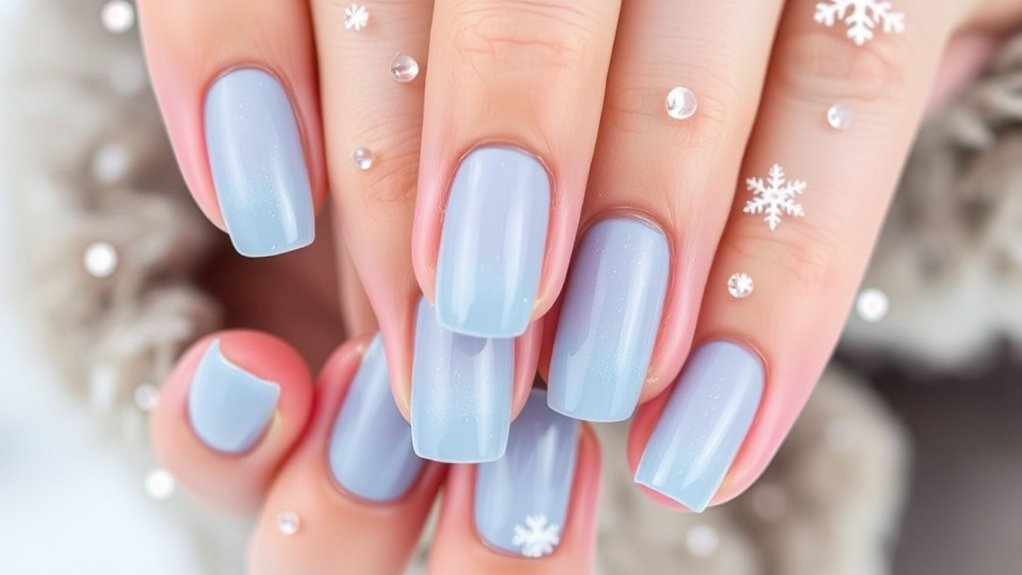
What’s the best way to protect your nails during the harsh winter months? Start with a nourishing routine that includes moisturizing cuticles and hands daily. Keep your nails trimmed and filed to prevent splits caused by dryness. When you’re doing nail art or seasonal fashion-inspired designs, use a good base coat to safeguard your nails from staining and damage. Avoid excessive exposure to hot water, which can weaken nails, and wear gloves when outside to shield them from cold air. Incorporate cuticle oil regularly to maintain flexibility, and always finish with a protective top coat to extend your manicure’s lifespan. A consistent winter nail care routine helps keep your nails healthy, resilient, and ready for any seasonal fashion trend or nail art you want to try. Recognizing the importance of spiritual guidance can also inspire you to adopt a mindful approach to self-care during the colder months.
Best Products for Nourishing and Protecting Nails

Choosing the right products is essential for effectively nourishing and protecting your nails during winter. Look for rich cuticle oils to keep your cuticles moisturized and prevent cracking. Use gentle, acetone-free nail polish removal to avoid drying out your nails. Incorporate nourishing base coats that strengthen and shield nails from cold, harsh elements. A good hand cream with keratin can also boost nail resilience. Don’t forget to apply cuticle oil regularly to promote healthy growth and prevent hangnails. These products work together to maintain moisture and prevent damage caused by winter dryness.
- Moisturizing cuticle oils
- Gentle, acetone-free nail polish removers
- Strengthening base coats
- Hydrating hand creams with keratin
- Cuticle oil application routine
Tips for Preventing Nail Damage in Winter

Proper nail care during winter goes beyond just using the right products; it also requires adopting habits that prevent damage. Start by avoiding harsh nail polish removal, which can dry out your nails and cuticles. Opt for gentle, acetone-free removers, and don’t peel or pick at your polish. Additionally, cuticle trimming should be done carefully—never cut too deep or aggressively, as this can cause tears or infections. Keep your cuticles moisturized with nourishing oils to prevent cracks. Protect your nails from cold, dry air by wearing gloves when outside, especially when doing chores. Limit exposure to water, as prolonged contact weakens nails. Using specialized vacuums for LVP floors can help keep your floors—and your nails—free from debris and damage. These habits help maintain nail strength and prevent winter-related damage, ensuring your nails stay healthy and resilient throughout the season.
DIY Remedies to Strengthen and Moisturize Nails
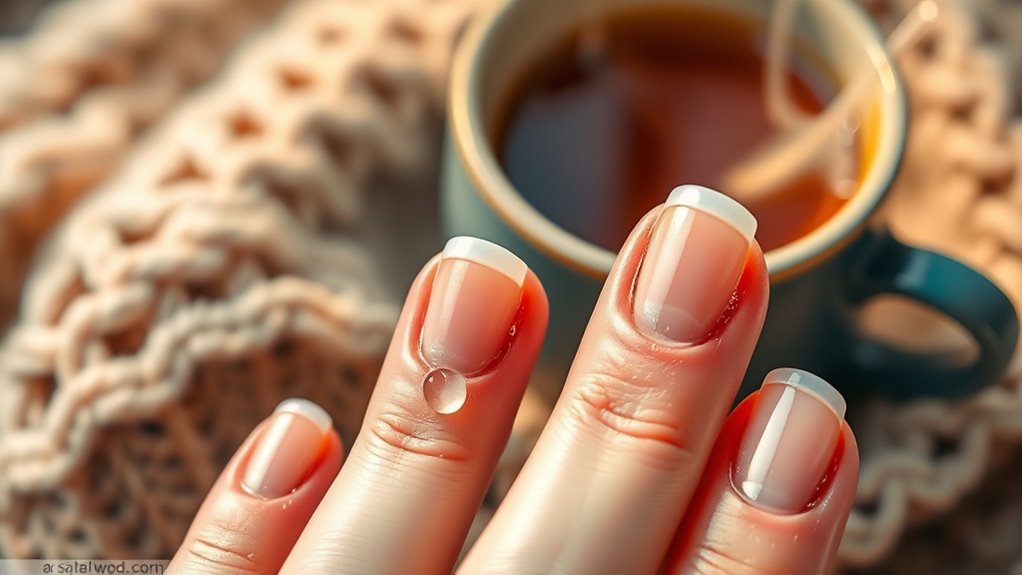
If your nails feel brittle or dry during winter, DIY remedies can help restore their strength and moisture. Natural treatments are a simple, cost-effective way to improve nail health at home. You can try soaking your nails in nourishing oils or applying homemade masks to boost hydration and resilience. These DIY remedies target dryness and fragility, giving your nails the care they need during cold months. Regular use of natural treatments can prevent splitting and peeling, leaving your nails healthier and more durable. Incorporate these easy, effective ideas into your routine for stronger, moisturized nails:
- Olive oil or coconut oil soak
- Honey and olive oil mask
- Vitamin E oil application
- Aloe vera gel treatment
- Biotin-rich homemade serum
Frequently Asked Questions
How Often Should I Trim My Nails During Winter?
You should trim your nails every one to two weeks during winter to maintain nail health and prevent breakage. Regular nail trimming frequency is essential for avoiding snags and splits, especially in cold weather when nails can become more brittle. Follow winter manicure tips by keeping nails slightly rounded or squared, and avoid over-trimming. Consistent trimming helps keep your nails strong, healthy, and looking tidy throughout the season.
Can Cold Weather Cause Nail Discoloration?
Cold weather can turn your nails into a winter landscape, causing discoloration that looks like faint frost on glass. It weakens your nails, making nail polish removal trickier and dulling their natural shine. To prevent this, focus on cuticle care, keeping them moisturized, and avoid harsh chemicals. Properly caring for your nails guarantees they stay vibrant and healthy, even when the temperature drops.
Are Gel or Acrylic Nails Safer in Winter?
Gel and acrylic nails can be safe in winter if you prioritize proper nail polish removal and cuticle care. Be sure to avoid harsh chemicals that can weaken your nails, and always use gentle removers. Keep your cuticles moisturized to prevent dryness and cracking. Regularly give your nails a break from extensions to prevent damage, and consult a professional for safe application and removal techniques.
What Foods Promote Stronger Winter Nails?
Did you know that a nutrient-rich diet can boost nail strength by up to 80%? To promote stronger winter nails, focus on foods high in biotin, zinc, and omega-3 fatty acids, like eggs, nuts, and salmon. Also, maintain good hydration habits—drink plenty of water—since dryness weakens nails. These habits work together to keep your nails healthy and resilient through the cold months.
How Can I Prevent Nail Fungus in Cold Climates?
To prevent nail fungus in cold climates, you should maintain good nail hygiene practices like keeping your nails clean and dry, and avoid sharing tools. Incorporate moisturizing routines to prevent dryness and cracks that can invite fungi. Wear gloves when exposing your hands to moisture or harsh conditions, and regularly disinfect your nail tools. These steps help protect your nails from fungal infections and keep them healthy during winter.
Conclusion
As the temperature drops, your nails need extra care to stay healthy. Did you know that 60% of people experience brittle nails during winter? By following this guide, you can keep your nails strong, moisturized, and damage-free all season long. Regular nourishment, protective products, and simple DIY remedies make a big difference. Stay consistent, and your nails will thank you for it—beautiful, healthy nails are just a few winter-friendly steps away!