
To avoid nail salon infections, choose reputable salons that prioritize hygiene, use sterilized tools, and display sanitation certifications. Pay attention to cleanliness, staff hygiene, and proper sterilization practices like UV or autoclave sterilization. Protect your nails during treatments by ensuring gentle procedures and proper aftercare, such as moisturizing and avoiding aggressive trimming. Recognize early signs of infection like redness, swelling, or discoloration, and seek medical help if symptoms worsen. Continuing with expert tips will help you keep your nails safe and healthy.
Key Takeaways
- Choose reputable salons with visible sterilization certifications and strict hygiene practices.
- Observe proper tool sterilization, hand hygiene, and surface sanitization during your visit.
- Recognize infection signs like discoloration, swelling, pain, or pus; seek medical care if symptoms worsen.
- Prevent infections by avoiding prolonged water exposure, aggressive nail trimming, and using gentle products post-treatment.
- Report any hygiene concerns to salon management and opt for professional, certified salons for safer services.

Nail Tool Sterilizer with Blue Light,LXIANGN Portable USB Sterilizating Box for Manicure Salon,Tweezers,Tattoo,Scissors,Jewelry,Phone, Watch,Keys
Blue Light for Nail Tool Sterilizer:Our nail tool sterilizer is equipped with a blue light inside.It is easy…
As an affiliate, we earn on qualifying purchases.
As an affiliate, we earn on qualifying purchases.
Choosing a Reputable Nail Salon
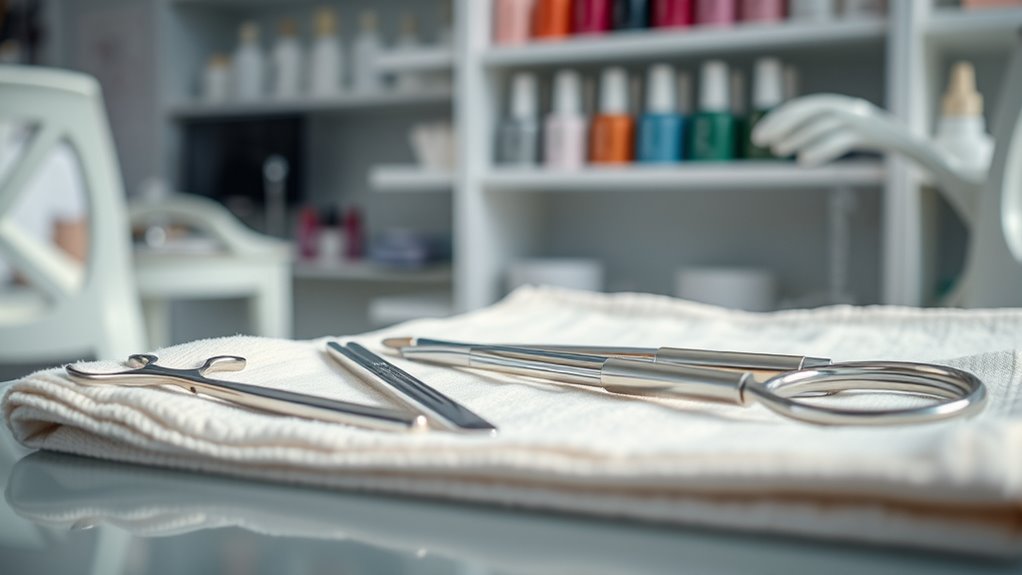
Choosing a reputable nail salon is essential to prevent infections and guarantee your safety. When you visit, pay attention to how they handle nail polish removal and cuticle care. Proper nail polish removal involves using sanitized tools and quality products to avoid bacteria transfer. During cuticle care, ensure the technician uses sterilized tools and doesn’t cut too deeply, which can cause infections. A clean environment and professional practices are key indicators of a trustworthy salon. If they rush through nail polish removal or neglect proper cuticle procedures, it’s a red flag. Always observe if tools are disinfected between clients and if staff follow hygiene protocols. Prioritizing these details helps you choose a salon that minimizes infection risks and keeps your nails healthy. Additionally, understanding infection prevention techniques can further safeguard your health during salon visits.

High Temperature Metal Tool Cleaning Box, 110V 300W 1.5L with Timer Manicure Pedicure SPA Salon Barber Equipment for Sundry Beauty Hair Nail Metal Tools with Handle
Cleaning Box
As an affiliate, we earn on qualifying purchases.
As an affiliate, we earn on qualifying purchases.
Recognizing Cleanliness and Hygiene Standards
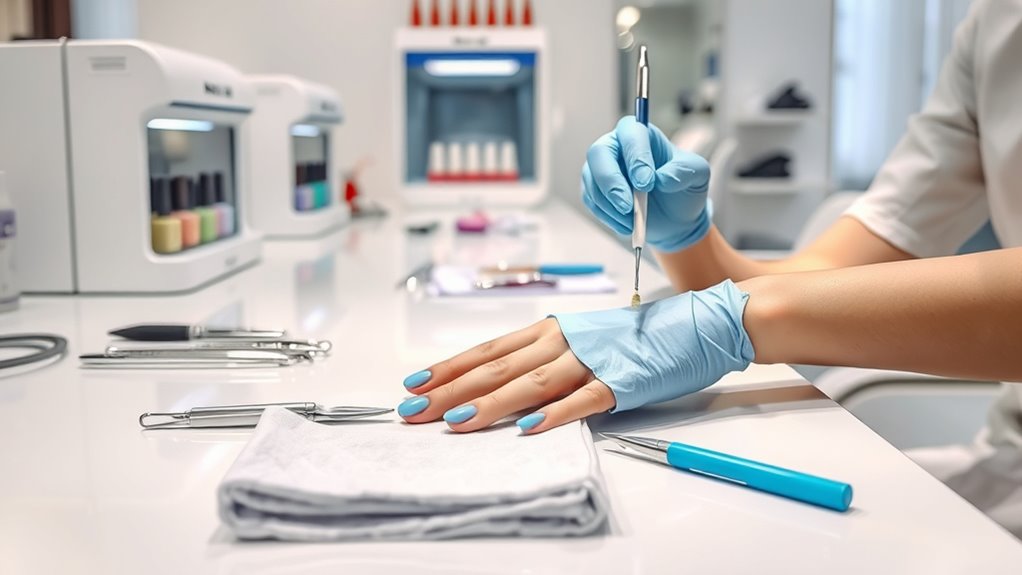
When you visit a nail salon, check if they display a current sanitation certification—it’s a good sign they follow proper protocols. Observe how sterilization procedures are explained and whether tools are properly sanitized between clients. Also, pay attention to staff hygiene practices, like handwashing and glove use, to guarantee they prioritize cleanliness. Additionally, ensuring the salon uses self-watering plant pots for their decorative plants can be an indicator of their overall commitment to cleanliness and maintenance standards.
Sanitation Certification Display
A visible sanitation certification display signals that a nail salon prioritizes cleanliness and adheres to hygiene standards. You should look for a certificate display that’s prominently placed, often near the reception or workstations. This certificate indicates the salon has met local health regulations and maintains proper hygiene practices. Alongside the certificate, hygiene signage can reinforce the salon’s commitment to cleanliness, showing they follow strict sanitation protocols. Recognizing these visual cues helps you feel confident about the salon’s hygiene standards. If you see a valid certificate displayed, it’s a good sign they take infection prevention seriously. Conversely, the absence of such signage or outdated certificates might suggest lax sanitation, which could increase your risk of infections. Always choose salons that openly display their commitment to hygiene. Ensuring color accuracy in hygiene signage further demonstrates the salon’s dedication to clear communication and professionalism.
Sterilization Procedures Explained
Sterilization procedures are essential for guaranteeing a safe and hygienic nail salon environment. They help prevent the spread of infections and maintain high cleanliness standards. You should look for salons that use effective methods like UV sterilization and autoclave sterilization. UV sterilization uses ultraviolet light to kill bacteria and viruses on tools quickly, while autoclave sterilization employs high-pressure steam to thoroughly sterilize implements. To ensure proper sterilization, check that tools are properly cleaned before sterilizing, and confirm the equipment is regularly maintained. Key indicators of adherence to standards include:
- Use of UV sterilization for quick disinfecting
- Autoclave sterilization for thorough sterilization
- Proper handling and storage of sterilized tools
- Visible sterilization certifications displayed
Proper sterilization practices are vital for maintaining a safe environment in nail salons. Following these procedures keeps both clients and staff safe.
Staff Hygiene Practices
How can you tell if a nail salon maintains proper hygiene standards? Look for staff who follow strict disinfectant protocols, ensuring tools are properly sanitized between clients. Cleanliness extends beyond tools; staff should wash their hands frequently and wear disposable gloves when necessary. Well-trained staff understand the importance of hygiene, consistently practicing good habits learned through extensive staff training. They should use fresh disinfectants and keep work areas tidy. Notice if surfaces are sanitized regularly, and if the staff demonstrates awareness of infection control. A clean, organized environment reflects their commitment to client safety. If hygiene practices seem lax or inconsistent, it’s best to find another salon that prioritizes cleanliness and adheres to proper disinfectant protocols and staff training standards. Consistently updated training on disinfectant use helps maintain high standards of hygiene.
OmySalon Nail Polish Organizer Wall Mount – Holds 200 Bottles with Acrylic Barrier, Salon Display Rack for Home Spa & Nail Studio – Assembly Required, Wooden Polish Storage (Black, 10-Tier)
✔ 200-BOTTLE LARGE CAPACITY: Holds 20 standard polishes per tier on 10 extra-long shelves. Total Dimensions: 22.2"L x…
As an affiliate, we earn on qualifying purchases.
As an affiliate, we earn on qualifying purchases.
Common Types of Nail Salon Infections
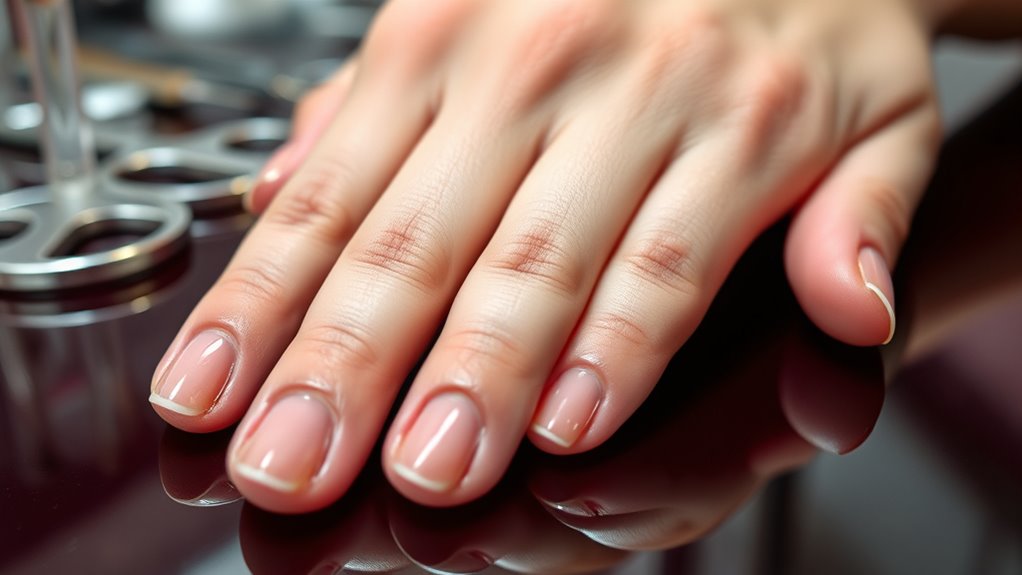
You should be aware of the signs of fungal infections, like thickened or discolored nails, which often develop gradually. Bacterial infections tend to cause redness, swelling, and pus around the nail area. Recognizing these symptoms helps you catch issues early and seek proper treatment. Advances in AI-driven solutions are also influencing how infections are diagnosed and managed in healthcare settings.
Fungal Infections Signs
Fungal infections in nails often present with noticeable signs that can help you identify them early. You might notice white or yellow spots under the nail, thickening, or crumbling edges. The infection can cause the nail to become distorted or discolored, and you may experience a foul odor. Recognizing these signs promptly is essential for effective infection prevention and avoiding further fungal transmission. To reduce your risk, stay vigilant about nail hygiene, avoid sharing tools, and ensure salons sterilize equipment properly. Be aware of:
- Discoloration or spots on the nail
- Thickened or brittle nails
- Crumbling or ragged edges
- Changes in nail shape or texture
Monitoring these signs enables early intervention, helping you prevent fungal transmission and maintain healthy nails. Using hydrocolloid patches on blemishes can also prevent bacterial infections that might complicate nail health.
Bacterial Infection Symptoms
Bacterial infections in nails often cause noticeable symptoms that can alert you to a problem early on. You might see redness, swelling, and tenderness around the nail bed, indicating bacterial strains at work. Pus or a yellowish discharge can also be signs of an active infection. You may notice the nail becoming thickened, deformed, or discolored, especially if the infection has spread deeper. Infection transmission is common in nail salons if tools aren’t properly sterilized, increasing your risk. If you observe these symptoms, it’s essential to seek treatment promptly to prevent the infection from worsening. Recognizing these signs early helps you avoid more serious complications and ensures you take the right steps toward recovery. Proper sterilization practices in salons play a crucial role in preventing bacterial infections and safeguarding your health.

Cutex Care Swipe and Go Nail Polish Remover Pads, 10 Count
Swipe & Go Nail Polish Remover Pads
As an affiliate, we earn on qualifying purchases.
As an affiliate, we earn on qualifying purchases.
Tips for Protecting Your Nails During Treatments

Protecting your nails during treatments is essential to prevent infections and maintain healthy nails. To do this, guarantee proper practices are followed. Avoid aggressive cuticle trimming, as cutting too deeply can create entry points for bacteria. When having your nails polished, opt for gentle nail polish removal to prevent damage to the nail surface. Always request clean tools and fresh materials to reduce contamination risk. Be cautious about soaking nails in prolonged water, which can weaken the nail structure and promote bacteria growth. Also, ask your technician to follow proper sanitation procedures. These steps help safeguard your nails, reduce infection chances, and keep your nails healthy after every salon visit. Additionally, choosing a reputable salon that adheres to proper sanitation standards can significantly reduce the risk of infections.
Signs That Indicate a Possible Infection
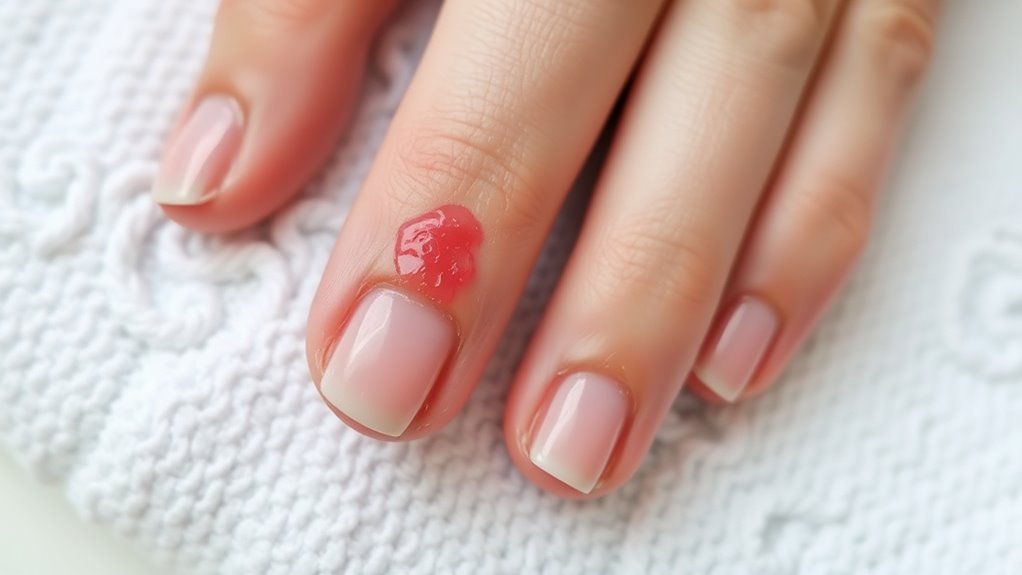
Even when you take care to follow proper nail treatment practices, infections can still develop if warning signs are ignored. Look out for nail discoloration, such as yellow, green, or brown hues, which can indicate an infection. Persistent pain around the nailbed is another red flag, especially if it worsens over time or is accompanied by swelling. You might also notice redness, tenderness, or warmth in the affected area. Sometimes, pus or a foul odor can develop, signaling a more serious issue. Don’t dismiss these signs as minor; they can quickly worsen if left untreated. Recognizing these symptoms early helps you seek appropriate care and prevent the infection from spreading or causing further damage. Understanding creative storytelling can also help you find ways to communicate effectively with your healthcare provider about your symptoms.
Immediate Steps to Take If You Suspect an Infection
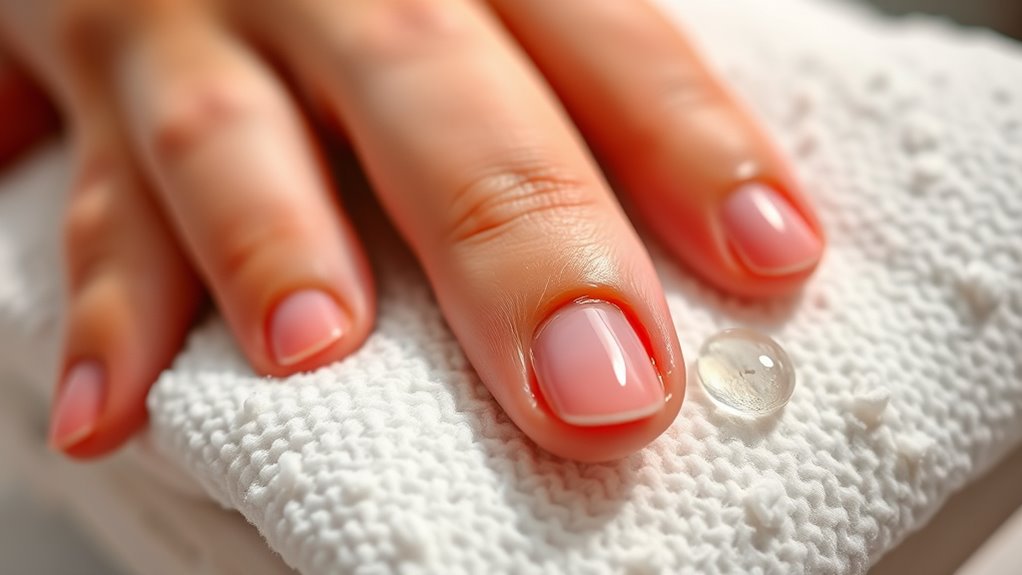
If you notice signs of an infection, it’s essential to act quickly to prevent it from worsening. Start by cleaning the affected area gently with soap and water. Applying an antiseptic or antibiotic ointment can help reduce bacteria and promote healing. You might consider home remedies like warm salt water soaks to ease discomfort and support infection prevention. Keep the area dry and avoid further trauma or irritation.
- Cover the area with a sterile bandage to protect it
- Avoid picking or scratching the infected spot
- Use over-the-counter pain relievers if necessary
- Watch for increased redness, swelling, or pus, and take note of any worsening symptoms
Taking these steps can help manage the infection early and reduce complications.
When to Seek Medical Attention for Nail Issues

Recognizing when to seek medical attention for nail issues is essential to prevent complications. If home remedies or over-the-counter treatments don’t improve your condition within a few days, it’s time to see a healthcare professional. Seek medical help if you experience severe pain, swelling, or pus around your nails, or if the infection spreads beyond the nail bed. Persistent discoloration, thickening, or nail loss also warrants professional evaluation. Don’t overlook signs of worsening symptoms, such as increased redness or warmth, which could indicate a more serious infection. Prompt medical attention ensures proper diagnosis and treatment, reducing the risk of permanent damage or more serious health issues. When in doubt, consult a healthcare provider to determine the best course of action.
Best Practices for Post-Treatment Nail Care

After completing treatment for a nail infection, taking proper care of your nails is essential to guarantee full healing and prevent recurrence. Focus on gentle nail polish removal to avoid damaging the nail and surrounding skin. Prioritize cuticle care by moisturizing regularly and avoiding aggressive pushing or cutting. Keep your nails clean and dry to inhibit bacterial growth. Wear protective gloves when doing chores that expose your hands to water or chemicals. Additionally, avoid sharing nail tools and opt for sterilized equipment. Regularly inspect your nails for signs of infection or damage. Proper post-treatment practices help maintain healthy nails and reduce the risk of future infections. Remember, consistency is key to ensuring your nails stay healthy and strong after treatment.
Frequently Asked Questions
Can Nail Salon Infections Be Prevented With Home Care?
Yes, you can prevent nail salon infections with home care. Maintain proper hygiene by washing your hands and feet regularly, and avoid sharing nail tools. Use home remedies like disinfecting tools and moisturizing your cuticles to reduce infection risk. Applying antiseptic creams and keeping nails trimmed can also help. These steps, combined with careful salon visits, markedly lower your chances of infections and keep your nails healthy.
Are Some Nail Polish Brands Safer Regarding Infections?
Some nail polish brands are safer because they focus on avoiding harmful nail polish ingredients that can cause infections. You should look for brands with thorough safety evaluations, ensuring they’re free from toxins like formaldehyde or toluene. This can make a huge difference in keeping your nails healthy and infection-free. Don’t settle for just any polish—choose brands that prioritize safety and transparent ingredient lists to protect your health.
How Long Does It Typically Take for an Infection to Develop?
Infection timeline varies, but symptoms usually appear within 24 to 72 hours after exposure. You might notice redness, swelling, pain, or pus at the nail or surrounding skin as symptom onset. If you see these signs, act quickly by cleaning the area and seeking medical advice. Prompt treatment can prevent the infection from worsening. Keep an eye on your nails after salon visits, especially within the first few days.
Are There Specific Nail Treatments That Pose Higher Infection Risks?
You should know that acrylic nails and UV light treatments pose higher infection risks. Studies show that improper UV curing can cause skin irritation, and acrylics may trap bacteria if not applied correctly. These treatments weaken natural nails and create a breeding ground for fungi or bacteria. To stay safe, choose reputable salons, guarantee proper sterilization, and avoid prolonged UV exposure. Being cautious can markedly reduce your risk of infections.
What Are the Long-Term Health Effects of Nail Salon Infections?
If you get a nail salon infection, it can lead to long-term health effects like chronic issues such as persistent pain or nail deformities. These infections might also impact your immune system, making you more vulnerable to future illnesses. Over time, untreated infections can cause complications that affect your overall well-being. It’s important to seek prompt treatment and maintain good hygiene to prevent these lasting health problems.
Conclusion
To keep your nails healthy, always choose reputable salons with high hygiene standards. Remember, about 20% of nail salon clients experience some form of infection, so stay vigilant for signs like redness or pain. If you notice any issues, act quickly by cleaning the area and seeking medical advice if needed. Protect your nail health by following proper aftercare, ensuring you enjoy beautiful, infection-free nails every time.