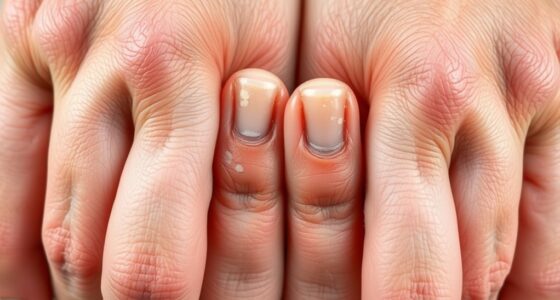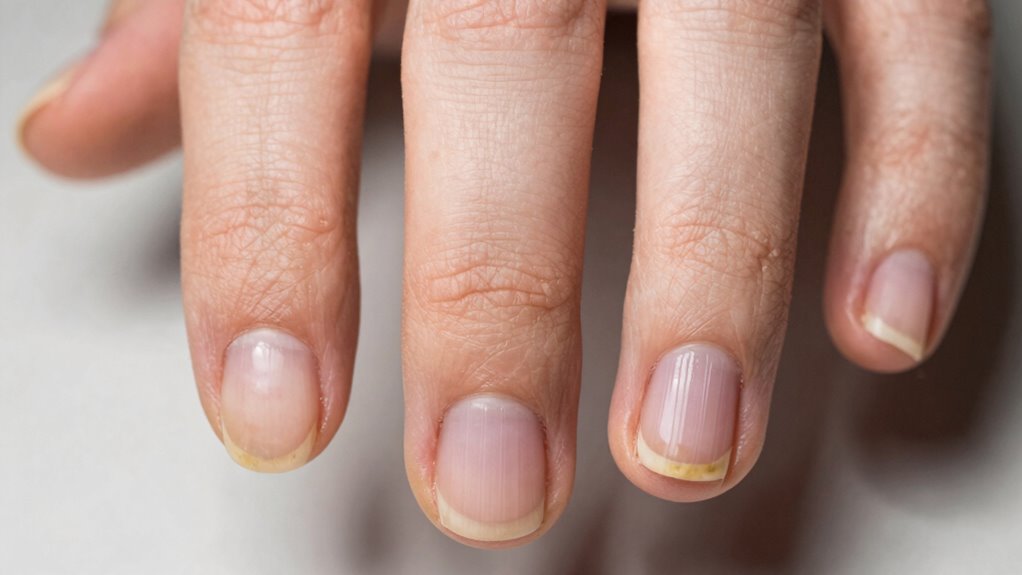

If your nails show unusual signs like dark streaks, lines, or persistent white spots, don’t ignore them, as they could signal serious health issues like melanoma or nutritional deficiencies. Yellowing nails might point to fungal infections or smoking. Brittle, splitting nails could mean thyroid problems or poor nutrition. Keep an eye on changes that don’t fade or worsen over time. Staying aware of these signs is key, and you’ll soon discover more clues to your overall health.

Get beauty and skincare favorites delivered free with Prime
- Fast, free delivery on millions of items
- Prime Video, Amazon Music and more included
- Member-only deals all year
Key Takeaways
- Persistent changes in nail color, texture, or shape may indicate underlying health conditions requiring medical attention.
- Dark streaks or lines could be signs of melanoma and should be evaluated promptly by a healthcare professional.
- Brittle, splitting, or peeling nails may signal nutritional deficiencies or thyroid issues needing diagnosis.
- Unusual nail spots or white patches that persist should be checked to rule out fungal infections or other concerns.
- Ignoring chronic nail abnormalities can delay diagnosis of serious health issues, so timely professional assessment is essential.

Your nails can reveal important clues about your overall health, so paying attention to their appearance is essential. Changes in color, texture, or shape can signal underlying health issues that might need medical attention. For instance, yellowed nails might suggest fungal infections or nicotine use, while ridges could indicate nutritional deficiencies or skin conditions. Recognizing these signs early helps you take appropriate steps to address potential problems.
One common mistake is neglecting the risks associated with nail polish. Nail polish dangers include exposure to chemicals like formaldehyde, toluene, and phthalates, which can lead to allergic reactions, nail damage, or even more serious health concerns over time. If you notice your nails becoming brittle or discolored after using certain polishes, it’s time to cut back or switch to safer, solvent-free options. Remember, giving your nails breaks from polish allows them to breathe and recover, reducing the risk of damage.
Taking good care of your cuticles is equally important. Poor cuticle care tips, such as cutting or tearing the cuticles, can lead to infections, inflammation, or even nail deformities. Instead, gently push back your cuticles after a warm soak and keep them moisturized with cuticle oils or creams. Healthy cuticles serve as a protective barrier against bacteria and fungi, promoting overall nail health. Neglecting this step can cause hangnails or painful cracks, which might require medical intervention.
You should also be aware of other subtle signs. For example, white spots on your nails aren’t usually a cause for concern—they often result from minor injuries. However, dark streaks or lines could indicate more serious issues like melanoma, so don’t ignore them. Similarly, nails that are overly brittle or splitting might signal nutritional deficiencies, dehydration, or thyroid problems.
Paying attention to your nails isn’t just about aesthetics; it’s a vital part of your health monitoring. If you notice persistent changes that don’t resolve with basic care, consult a healthcare professional. Keeping your nails healthy involves more than just regular manicures—it’s about understanding what your nails are telling you and acting accordingly. By being mindful of nail polish dangers, practicing proper cuticle care tips, and observing any unusual signs, you’re taking proactive steps to maintain your overall well-being.
nail health supplement for brittle nails
As an affiliate, we earn on qualifying purchases.
As an affiliate, we earn on qualifying purchases.
Frequently Asked Questions
Can Nail Changes Indicate Underlying Health Conditions?
Yes, nail changes like nail fungus or nail discoloration can indicate underlying health conditions. If you notice thickened, discolored, or brittle nails, it might signal infections or systemic issues like diabetes or circulatory problems. Paying attention to these signs allows you to seek timely medical advice. Ignoring such changes could lead to worsening infections or missed diagnoses, so it is crucial to take nail health seriously and consult a healthcare professional when needed.
How Quickly Should I See a Doctor for Nail Abnormalities?
You should see a doctor immediately if you notice persistent nail abnormalities, especially if they involve nail fungus or trauma. If nail fungus symptoms like discoloration or thickening don’t improve after a few weeks of treatment, seek medical advice. Similarly, if you experience pain, bleeding, or significant nail trauma, don’t delay—prompt action helps prevent infections and further damage, ensuring proper healing and nail health.
Are There Specific Nutrients Essential for Healthy Nails?
Yes, certain nutrients are essential for healthy nails. Nutrient deficiencies, like lacking biotin, zinc, iron, or vitamins A, C, and E, can cause weak or brittle nails. You should consider dietary supplements if your diet lacks these nutrients, but always consult a healthcare provider first. Eating a balanced diet rich in these vitamins and minerals supports nail strength and growth, helping you maintain healthy, resilient nails.
Can Nail Polish or Treatments Cause Health Issues?
Don’t let your guard down—nail polish or treatments can cause health issues. Chemical exposure from frequent use may lead to allergic reactions or skin irritation, especially if you have sensitive skin or allergies. Always check labels for harmful ingredients like formaldehyde or toluene. Using products sparingly and opting for non-toxic options helps minimize risks, ensuring your nails stay beautiful without compromising your overall health.
When Is a Nail Change Considered Normal Aging?
A nail change is considered normal aging when you notice slower nail growth patterns and subtle nail color changes, like slight yellowing or dullness. As you age, your nails may become thinner, more brittle, and grow more slowly. These signs are natural and typically don’t signal health issues. However, if you see sudden or severe changes, it’s best to consult a healthcare professional to rule out underlying conditions.
natural cuticle oil for nail growth
As an affiliate, we earn on qualifying purchases.
As an affiliate, we earn on qualifying purchases.
Conclusion
Pay attention to your nails—they’re like tiny, invisible messengers revealing your health secrets. Ignoring signs like persistent discoloration, ridges, or brittleness could mean you’re missing a major health alarm. Don’t brush off these signals; they could be your body’s way of warning you about serious issues. Stay vigilant, prioritize your nail health, and seek professional advice when needed. Remember, your nails are the tiny superheroes fighting to tell you something’s wrong—don’t ignore their essential messages!
As an affiliate, we earn on qualifying purchases.
As an affiliate, we earn on qualifying purchases.
Halloween Picks
halloween
As an affiliate, we earn on qualifying purchases.