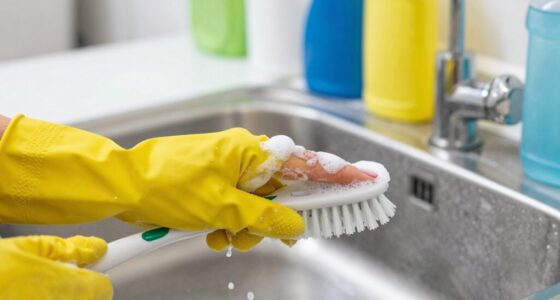
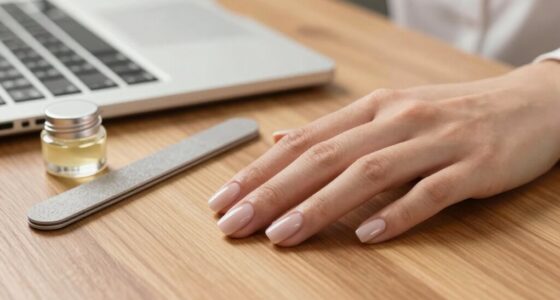
Wearing gloves all day can trap moisture, leading to brittle, peeling nails and increasing the risk of fungal infections. To protect your nails, keep them hydrated with nourishing oils, and use strengthening base coats to boost resilience. Practice good hygiene by ensuring your hands and nails stay dry, and take breaks from gloves whenever possible. If you keep these tips in mind, you’ll find more ways to care for your nails and avoid damage.
Key Takeaways
- Keep nails and cuticles hydrated with regular moisturizing to prevent dryness and cracking.
- Use nail strengthening products containing keratin, biotin, or calcium to enhance resilience.
- Take frequent breaks from gloves to allow nails to breathe and reduce moisture buildup.
- Maintain proper hygiene and dry nails thoroughly after glove removal to prevent fungal infections.
- Ensure a nutrient-rich diet and stay hydrated to support nail health and growth.

If you wear gloves all day, your nails are constantly exposed to moisture, friction, and limited airflow, which can lead to issues like brittleness, peeling, or fungal infections. The repeated exposure to moisture can cause your nails to become soft and prone to damage, while the friction from gloves can weaken the nail surface over time. To keep your nails healthy, focusing on cuticle hydration and nail strengthening becomes essential. Proper cuticle care ensures your nails stay resilient and less prone to cracking or peeling, especially when they’re under constant stress from gloves. Regularly moisturizing your cuticles with nourishing oils or creams helps prevent dryness and cracking, which can serve as entry points for infections.
Protect your nails from moisture and friction with regular cuticle hydration and strengthening.
Nail strengthening is equally important for those who work with gloves daily. Use a quality nail hardener or strengthening base coat to fortify your nails against brittleness. These products often contain ingredients like keratin, biotin, or calcium that help reinforce the nail structure. You also want to avoid harsh chemicals like acetone-based removers or strong detergents, which can strip natural oils and weaken your nails further. Instead, opt for gentle, nourishing nail care routines that promote flexibility and resilience. Additionally, proper nail hygiene is crucial to prevent the buildup of bacteria and fungi that can thrive in moist environments. Incorporating antifungal treatments when necessary can further reduce the risk of infections caused by prolonged glove use. Ensuring adequate airflow around your nails can also help minimize moisture buildup and support healthier growth. Incorporating nutrient-rich foods into your diet can bolster your nails from the inside, promoting strength and resilience.
In addition to topical treatments, paying attention to your overall diet can make a big difference. Nutrients like biotin, zinc, and vitamins A, C, and E support healthy nail growth and strength from the inside out. Staying hydrated is equally crucial, as it helps maintain the moisture balance in your nails and cuticles. If your nails tend to peel or break easily, consider supplementing your diet with biotin or collagen, but consult a healthcare provider first. Incorporating these habits into your routine can significantly improve your nails’ ability to withstand daily glove wear.
Additionally, moisture management and maintaining a dry environment around your nails can prevent fungal infections and further damage. Finally, take breaks when you can and give your nails some breathing room. Whenever possible, remove your gloves and wash your hands thoroughly, then apply a nourishing cuticle oil or moisturizer. Keeping your nails dry and moisturized not only prevents fungal infections but also enhances their overall strength. Consistent care, combined with proper nutrition and hydration, will help your nails stay healthier, stronger, and less susceptible to damage caused by your daily work routine.
nail strengthening base coat with keratin
As an affiliate, we earn on qualifying purchases.
As an affiliate, we earn on qualifying purchases.
Frequently Asked Questions
Can Wearing Gloves Cause Permanent Nail Damage?
Wearing gloves all day won’t cause permanent nail damage if you care for your nails properly. However, it can lead to nail brittleness and cuticle damage if you keep gloves on too tight or don’t moisturize your nails and cuticles regularly. Make sure to take breaks, keep your hands dry, and use nourishing oils. This way, you prevent long-term damage and maintain healthy, strong nails.
What Nail Polish Is Best for Long Glove Wear?
You should choose a nail polish that offers high durability, especially if you wear gloves all day. Look for formulas labeled as long-lasting or chip-resistant. Applying a protective topcoat is essential; it adds a barrier against glove friction, preventing chipping and peeling. Consider gel or hybrid polishes for extra durability. Regularly reapplying a strong topcoat will help maintain your manicure and protect your nails from damage caused by constant glove wear.
How Often Should I Trim My Nails When Wearing Gloves Daily?
You should trim your nails every one to two weeks to maintain good nail hygiene, especially when wearing gloves daily. Regular trimming prevents dirt buildup and reduces the risk of infections. Focus on moisture management by keeping nails slightly shorter to allow better air circulation and prevent moisture from getting trapped beneath. This helps avoid fungal issues and keeps your nails healthy, even with constant glove use.
Are There Specific Nail Treatments Recommended for Glove Wearers?
Ever wonder how to keep your nails healthy while wearing gloves all day? For glove wearers, using specific nail treatments like cuticle oils and strengthening balms helps. Consider glove material considerations—nitrile or latex can cause dryness, so opt for hydrating products. Regularly practicing nail hydration techniques, such as applying moisturizer or cuticle oil after work, keeps nails nourished and resilient against the constant wear and tear from gloves.
Can Gloves Cause Fungal Infections on Nails?
Yes, gloves can cause fungal infections on your nails by trapping moisture, which encourages fungal growth. Poor nail hygiene inside gloves exacerbates this risk. To prevent infections, make sure to keep your nails clean and dry, remove gloves regularly, and dry your hands thoroughly afterward. Using antifungal powders or creams can also help, especially if you notice any signs of fungal growth. Proper care keeps your nails healthy while working with gloves all day.
nourishing cuticle oil for dry nails
As an affiliate, we earn on qualifying purchases.
As an affiliate, we earn on qualifying purchases.
Conclusion
Taking care of your nails while working with gloves all day is like tending a delicate garden hidden beneath a sturdy shield. With gentle cleansing, nourishing oils, and mindful habits, your nails can flourish even in the toughest conditions. Think of each caring step as watering and nurturing your tiny treasures, ensuring they remain strong and vibrant. Keep up this tender routine, and your nails will stand resilient, a proof to your dedication beneath the protective layer.
antifungal nail treatment for moisture-prone nails
As an affiliate, we earn on qualifying purchases.
As an affiliate, we earn on qualifying purchases.
As an affiliate, we earn on qualifying purchases.