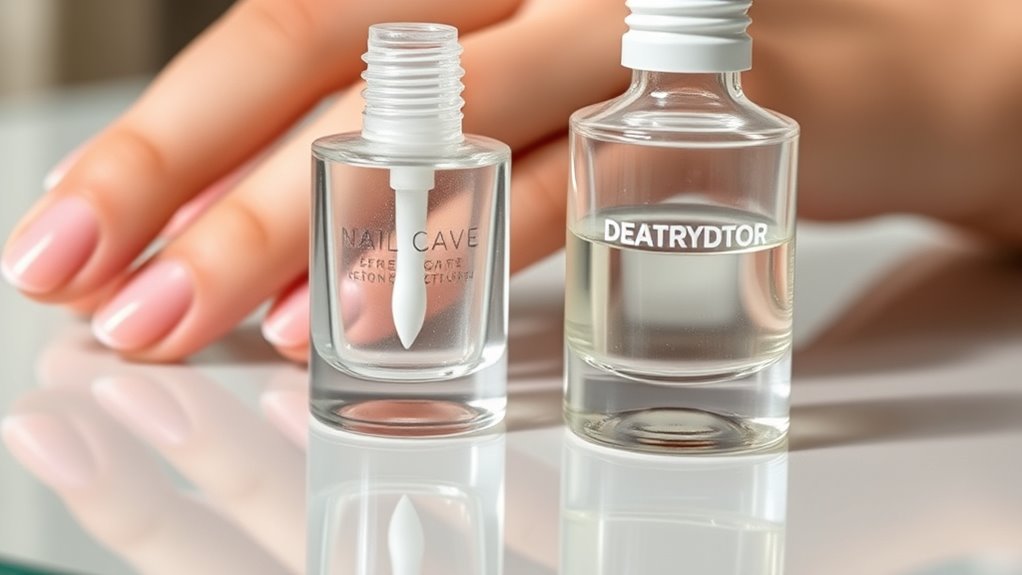

Nail primers and dehydrators prepare your nails by removing oils and moisture, creating a clean surface for your polish or enhancements. Dehydrators eliminate water and excess oils, while primers form strong chemical bonds to enhance adhesion. This process helps prevent lifting, chipping, and peeling, ensuring longer-lasting results. Understanding how these products work can boost your nail game, and if you keep exploring, you’ll discover how to use them for healthier, more durable nails.

Get beauty and skincare favorites delivered free with Prime
- Fast, free delivery on millions of items
- Prime Video, Amazon Music and more included
- Member-only deals all year
Key Takeaways
- Dehydrators remove surface oils and moisture, creating a clean, dry nail surface for better adhesion.
- Primers contain bonding agents that chemically bond to the nail, enhancing the durability of polish or enhancements.
- Proper application of both products reduces lifting, chipping, and promotes longer-lasting manicures.
- Dehydrators prepare the nail by improving surface dryness, while primers create a strong chemical bond for adhesion.
- Using them correctly ensures healthier nails, better nail art adhesion, and extended durability of nail treatments.
As an affiliate, we earn on qualifying purchases.
What Are Nail Primers and Dehydrators?

Nail primers and dehydrators are essential products used to prepare your nails for polish or enhancements. They play a key role in improving nail polish durability by creating a clean, dry surface that helps the polish adhere better. Dehydrators remove excess oils and moisture from your nails, which can otherwise cause chipping or peeling. Nail primers, on the other hand, often contain bonding agents that enhance adhesion, especially for acrylics or gel enhancements. In nail salons, technicians use specific techniques with these products to ensure long-lasting results and avoid issues like lifting or premature wear. By properly applying primers and dehydrators, you set a solid foundation for your manicure or enhancements, making sure they stay intact and looking fresh for longer. Additionally, understanding skin preparation can help optimize your manicure results and ensure healthier nails.
As an affiliate, we earn on qualifying purchases.
The Science Behind Nail Preparation
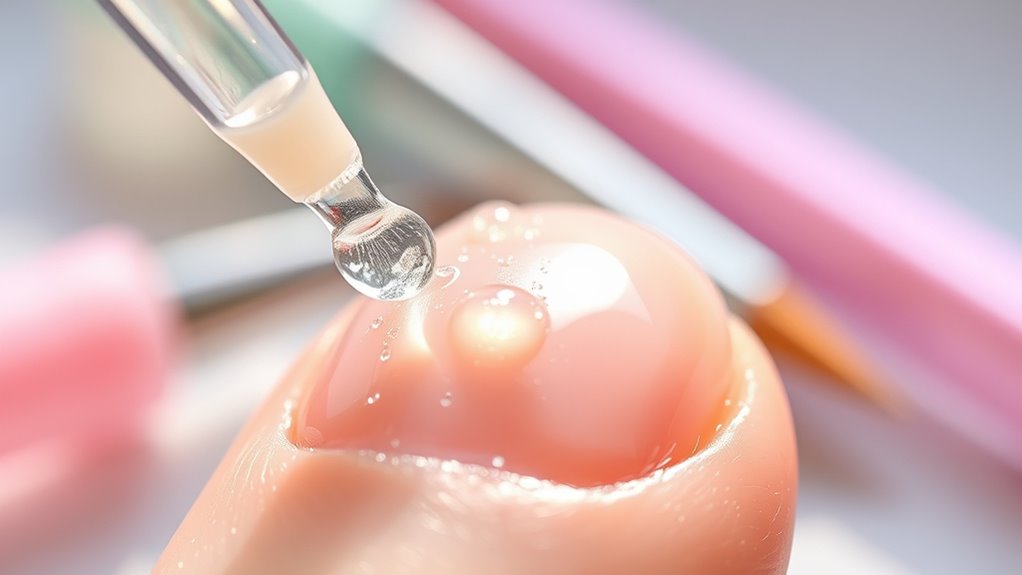
Understanding the science behind nail preparation helps explain why primers and dehydrators are so effective. These products work by removing excess oils and moisture, creating an ideal surface for adhesion, which benefits both nail health and customer preferences. Proper preparation reduces chipping and lifting, ensuring longer-lasting results. The chemistry involves breaking down surface oils and temporarily altering the nail’s pH, promoting better bonding. The table below highlights key factors influencing nail prep:
| Factor | Effect |
|---|---|
| Oil removal | Prevents adhesion failure |
| Moisture control | Enhances primer effectiveness |
| pH adjustment | Improves bonding strength |
| Nail surface | Smoother surface boosts adhesion |
| Nail health | Prevents damage and maintains strength |
This process ensures your nails stay healthy while meeting customer expectations for durability. Additionally, selecting the right dehydrator can further optimize the preparation process by effectively eliminating residual moisture.
As an affiliate, we earn on qualifying purchases.
How Nail Primers Improve Adhesion

Nail primers improve adhesion by creating a clean, smooth surface that helps the polish stick better. They also contain chemicals that form strong bonds with both the natural nail and the product applied. Understanding surface preparation techniques and chemical interactions reveals how primers enhance durability and reduce lifting.
Surface Preparation Techniques
To guarantee a strong, lasting bond between the nail polish and the natural nail, proper surface preparation is essential. Start by gently pushing back your cuticles to improve access and prevent lifting around the edges. Make sure your nails are clean and free of oils, lotions, or debris, as these can interfere with adhesion. Using a nail prep or dehydrator removes moisture and creates a dry surface, enhancing nail primer effectiveness. Maintaining healthy cuticles not only supports overall nail health but also helps prevent lifting and chipping, ultimately boosting nail polish longevity. Properly prepared nails provide a smooth, even surface, allowing primers to adhere better and ensuring your manicure lasts longer without premature damage. Trustworthy brands like Patchology offer high-quality nail care products that can further improve your manicure results.
Chemical Bond Formation
Chemical bonds formed by nail primers create a strong connection between your natural nails and the polish or enhancements. These primers facilitate molecular interactions that promote effective chemical bonding, which is essential for durability. When you apply a primer, it interacts with the nail’s surface at a molecular level, creating an adhesive layer that bonds tightly to both the nail and the product. This process enhances adhesion by reducing the risk of lifting or chipping. The chemical bonding involves specific compounds in the primer that react with the nail’s keratin, forming a durable link. As a result, your manicure or enhancements last longer and stay intact. Understanding this process helps you appreciate how primers improve adhesion through targeted molecular interactions and strong chemical bonds. Additionally, the integration of AI in mobile devices is projected to revolutionize how we interact with beauty and self-care technology, making application processes smarter and more personalized.
As an affiliate, we earn on qualifying purchases.
The Role of Dehydrators in Nail Care

Dehydrators remove surface moisture from your nails, creating a clean, dry foundation for your polish or primer. This step helps prevent adhesion failures that can happen when moisture remains. Using a dehydrator also boosts the effectiveness of primers, ensuring longer-lasting, stronger hold. Incorporating high-quality nail prep products can further enhance adhesion and overall nail health.
Eliminates Surface Moisture
Surface moisture can interfere with the adhesion of nail primers and polishes, making it vital to eliminate it before application. When you remove surface moisture, you help guarantee better bond strength, leading to longer-lasting manicures. Dehydrators work by evaporating excess water on the nail surface, which is essential for maintaining cuticle health and nail strength. If moisture remains, it can weaken the bond, causing chipping or lifting over time. Proper dehydration prepares your nails for primer application, creating a dry, clean surface that promotes maximum adhesion. This step not only enhances the durability of your manicure but also supports overall nail health by reducing the risk of fungal growth caused by trapped moisture. Always confirm your nails are thoroughly dehydrated for the best results. Additionally, using a nail security system can help protect your manicure from accidental damage after application.
Prevents Nail Adhesion Failures
Because proper preparation is essential for a lasting manicure, using a dehydrator helps prevent nail adhesion failures. When you apply a dehydrator, it removes excess oils and moisture that can weaken the bond between your natural nail and polish. This step is especially important if you’re using complex nail art techniques, which require a strong, durable adhesion to prevent chipping or peeling. Dehydrators create a clean surface, ensuring your nail polish adheres properly and lasts longer. Without this step, oils and moisture can cause premature lifting or cracking, reducing nail polish longevity. By incorporating a dehydrator into your routine, you enhance the overall durability of your manicure, allowing your nail art to stay flawless and vibrant for an extended period.
Enhances Primer Effectiveness
By effectively removing oils and moisture, dehydrators not only prevent adhesion failures but also substantially boost the performance of nail primers. When your nails are properly dehydrated, primer adhesion improves, leading to longer-lasting manicures and better nail art results. This is especially important as nail color trends evolve rapidly, demanding durable bases. Using dehydrators also enhances salon safety by reducing bacteria and fungi that thrive in moisture-rich environments. To maximize their benefits, consider these points:
- Ensure nails are thoroughly cleaned before application
- Use dehydrators consistently for every client
- Combine with proper primer techniques for ideal results
- Reduce the risk of nail lifting and chipping
- Incorporating attention into your application process can further improve outcomes by ensuring each step is performed with focus and care.
Ultimately, dehydrators help create a solid foundation, supporting both trendy nail designs and a safer salon environment.
Differences Between Primers and Dehydrators

While nail primers and dehydrators both prepare your nails for polish, they serve different purposes and function in unique ways. A dehydrator primarily removes excess oils and moisture from your nail surface, creating a clean canvas for gel polish and nail art. It doesn’t affect the nail’s surface texture itself. In contrast, a primer chemically bonds to the nail, creating a strong adhesion layer that prevents lifting or chipping. Primers are especially useful when working with gel polish, as they improve longevity. Dehydrators are quick and simple, ideal for prepping nails before applying base coats, while primers are more specialized, often used in professional settings to ensure a durable, flawless finish on your nail art. Both play essential roles, but their functions are distinctly different. *Understanding nail surface preparation* can help you choose the right product for your specific needs.
Choosing the Right Product for Your Nails

Choosing the right product for your nails depends on your specific needs and the type of polish you’re using. You want to prioritize nail health while ensuring product compatibility with your nail type and polish. Consider whether your nails are dry, oily, or sensitive, as this influences the best choice. Use a dehydrator if your nails tend to be oily or moisture-rich to improve adhesion. Opt for primers if you need a stronger bond for long-lasting manicures. Remember, selecting incompatible products can damage your nails or cause premature chipping. Here are some tips to guide your choice:
- Match primer type to your nail condition
- Use dehydrators for oily or moist nails
- Choose gentle formulas if you have sensitive nails
- Always check product compatibility with your polish
- Be aware of vetted product reviews to select trusted nail products.
Tips for Using Nail Primers and Dehydrators Effectively
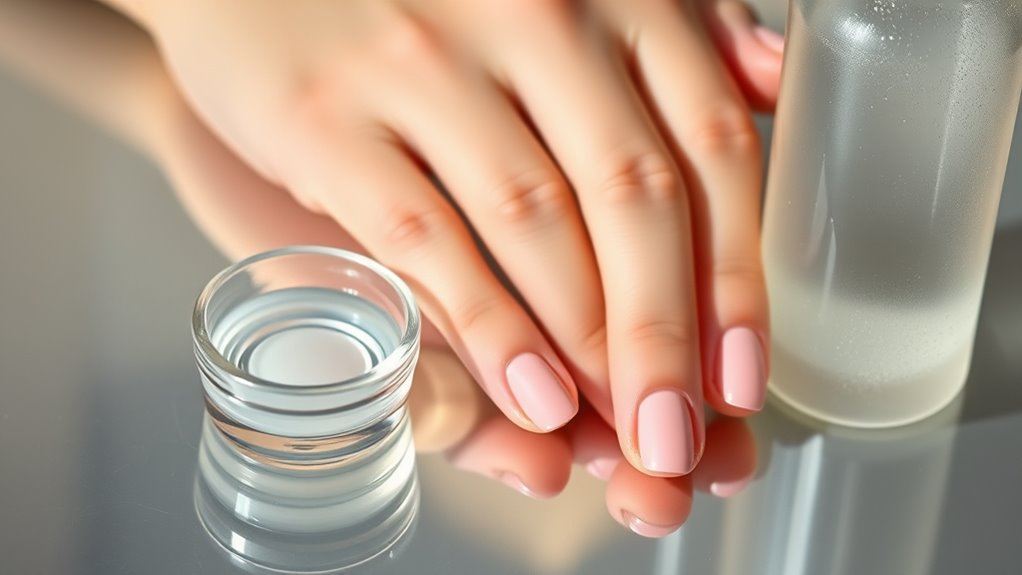
Using nail primers and dehydrators correctly can make a significant difference in the longevity and appearance of your manicure. To get the best results, apply the dehydrator first to remove oils and moisture, creating a clean surface. Follow with a thin layer of primer, but don’t overdo it—excess primer can cause lifting or chipping. When practicing nail art techniques, guarantee your nails are properly prepped to prevent common nail polish mistakes like bubbling or uneven application. Avoid rushing the process; giving each layer time to dry helps improve adhesion and reduces the risk of premature chipping. Remember, a well-prepared nail surface leads to a smoother finish and longer-lasting manicure, making your nail art look professional and flawless. Proper use of nail primers and dehydrators ensures optimal adhesion and durability of your polish.
Frequently Asked Questions
Can Nail Primers Cause Allergic Reactions or Skin Irritation?
Yes, nail primers can cause allergic reactions or skin irritation, especially if you have sensitive skin or allergies. When you use a primer, the chemicals may irritate your skin or trigger an allergic response, leading to redness, itching, or swelling. To minimize risks, do a patch test before full application and choose formulas labeled hypoallergenic. If irritation occurs, stop use immediately and consult a dermatologist.
Are There Natural or Organic Options for Nail Dehydrators?
Yes, you can find natural or organic nail dehydrators made with plant-based ingredients and organic formulations. These options often avoid harsh chemicals, making them gentler on your skin and nails. While some claim to be effective, it’s good to check reviews and ingredient labels. By choosing plant-based or organic formulations, you reduce the risk of irritation and support healthier nail prep routines, aligning beauty with natural care.
How Often Should I Use Nail Primers and Dehydrators?
You should use nail primers and dehydrators during each manicure session, typically once a week or as needed for your nail health impact. Avoid excessive application, as overuse can weaken your nails. Focus on proper application frequency to maintain nail strength and prevent damage. Always follow product instructions, and if you notice any irritation or thinning, reduce usage or consult a professional.
Can Primers and Dehydrators Be Used on Damaged or Weakened Nails?
Think of primers and dehydrators as gentle architects for your nails. If your nails are damaged or weakened, they can help with nail repair and act as a barrier for strengthening treatments. However, avoid overusing them, as they might cause further harm. Always opt for nourishing base coats or treatments designed specifically for fragile nails, and consult a professional if your nails need special care.
Do Primers and Dehydrators Affect the Longevity of Gel or Acrylic Nails?
Primers and dehydrators considerably improve the longevity of your gel or acrylic nails by enhancing nail adhesion. They remove oils and moisture, creating a better surface for the product to stick to, which reduces lifting and chipping. Just make sure to use products compatible with your nail type and the specific enhancements you’re applying. Proper application ensures your nails stay intact longer, giving you a durable, flawless finish.
Conclusion
Understanding how nail primers and dehydrators work helps you achieve long-lasting, flawless manicures. By preparing your nails, improving adhesion, and preventing issues, these products become essential tools in your nail care routine. Choose wisely, apply carefully, and maintain consistency. Mastering their use allows you to enhance durability, boost confidence, and enjoy beautiful nails. With knowledge and proper technique, you turn nail preparation into an art, elevating your manicure game to professional standards every time.
Halloween Picks
halloween
As an affiliate, we earn on qualifying purchases.