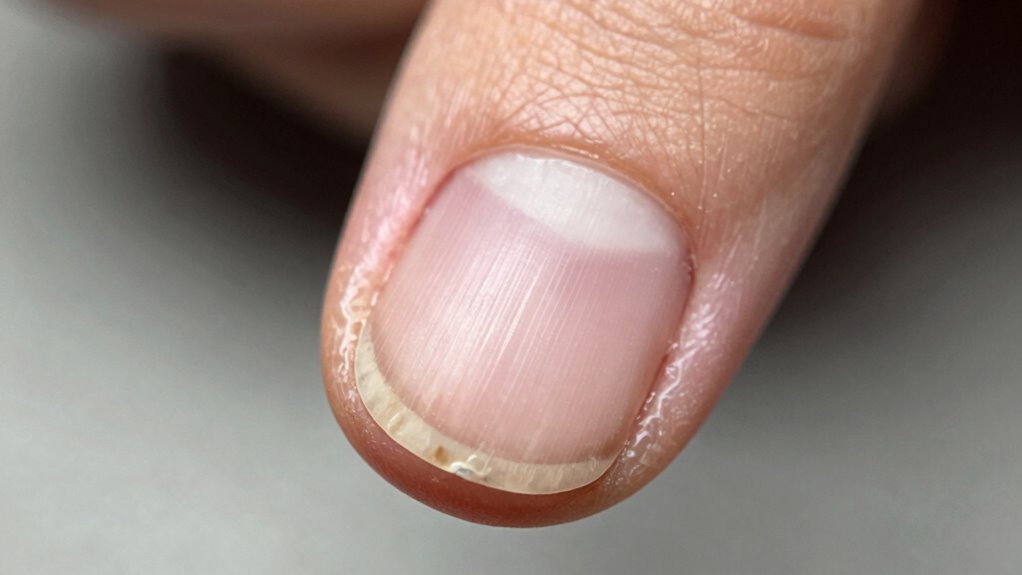

To recover from repeated mechanical stress, focus on gentle care and hydration. Avoid aggressive nail products and limit water exposure to prevent further damage. Use nourishing cuticle oils like vitamin E or jojoba to strengthen and moisturize your nails, and consider taking biotin or omega-3s for internal support. Be patient, as nail growth takes time, and maintaining a consistent routine helps rebuild strength. Keep exploring to discover more effective tips for healthy, resilient nails.

Get beauty and skincare favorites delivered free with Prime
- Fast, free delivery on millions of items
- Prime Video, Amazon Music and more included
- Member-only deals all year
Key Takeaways
- Prioritize gentle nail care, avoiding aggressive filing, cuticle removal, and harsh chemicals to prevent further damage.
- Regularly hydrate nails with nourishing oils and protective base coats to improve flexibility and resilience.
- Support internal strength with a balanced diet rich in biotin, zinc, and omega-3 fatty acids.
- Protect nails during activities using gloves and handle with care to minimize mechanical trauma.
- Practice patience, maintaining consistent, gentle routines to allow natural nail regeneration over several months.
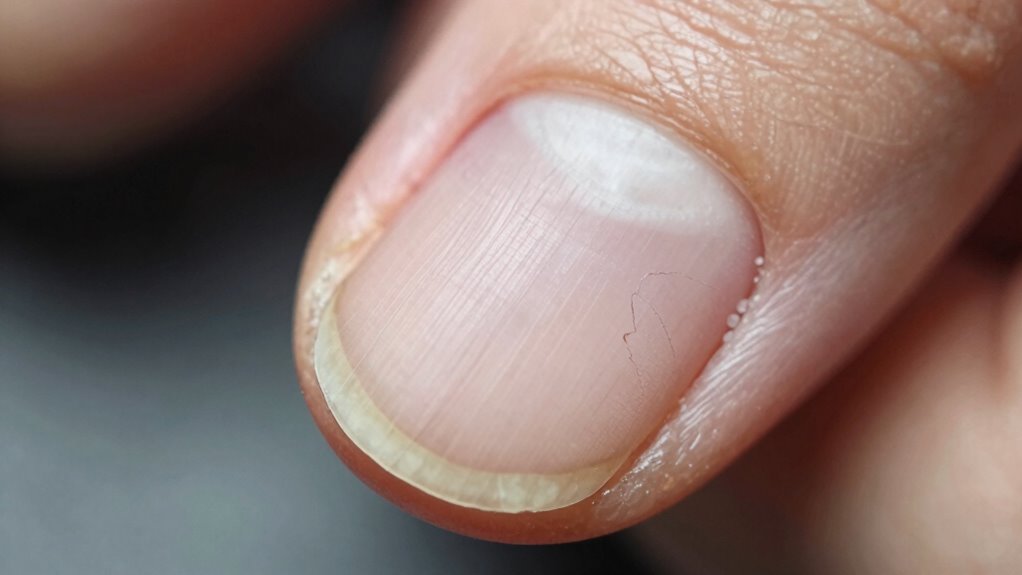
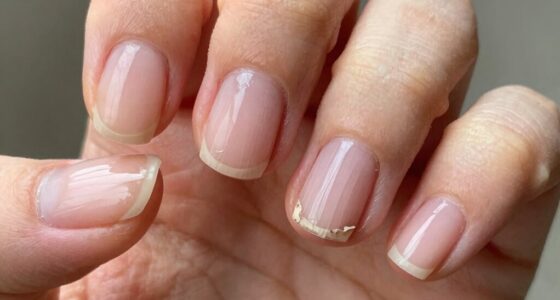
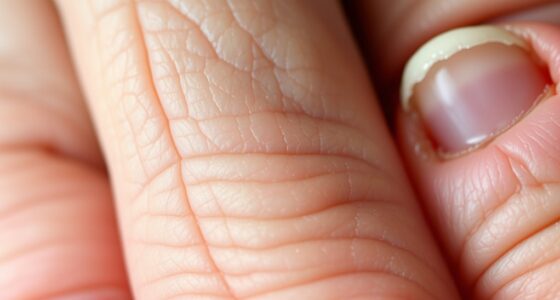
If your nails have become damaged or weakened, understanding how to promote nail plate recovery is essential. Repeated mechanical stress—like constant typing, manicures, or opening bottles—can cause the nail surface to become brittle, peel, or develop ridges. To repair this damage, focusing on nurturing your nails from the inside out is crucial. One of the most important aspects of recovery is improving cuticle health. Healthy cuticles act as a natural barrier, protecting the nail bed from infections and supporting nail growth. Avoid aggressive cuticle removal and instead gently push back or moisturize with nourishing oils. Keeping your cuticles healthy helps prevent further damage and encourages the nail plate to grow stronger.
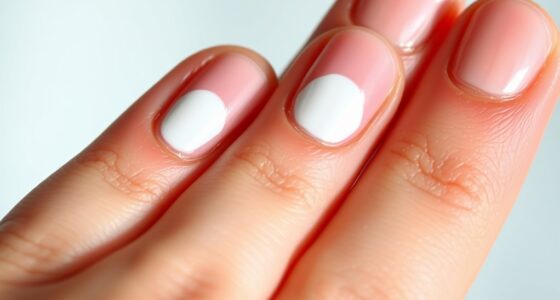
Prioritize cuticle health by gentle care and nourishing oils to support strong, healthy nails.
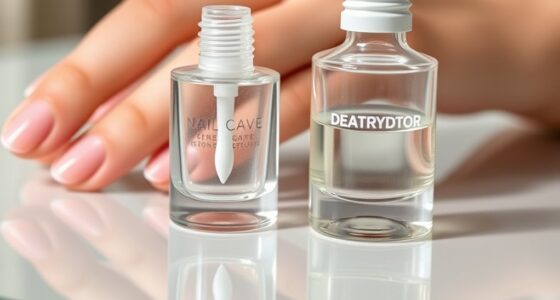
In addition to caring for your cuticles, nail hydration plays a key role in recovery. When nails become dehydrated, they lose flexibility and become more prone to splitting. Incorporate hydrating nail treatments or cuticle oils containing ingredients like vitamin E, jojoba oil, or shea butter. These oils penetrate deeply, restoring moisture and promoting a resilient nail plate. Regularly applying a hydrating base coat can also create a protective barrier, reducing the impact of daily mechanical stress. Remember, hydration isn’t limited to topical treatments; your diet should include foods rich in biotin, zinc, and omega-3 fatty acids, which support nail strength internally. Additionally, understanding the importance of color accuracy in visual assessments can help you better monitor your nail health and the improvements over time. Maintaining proper nail care routines can also prevent future damage and enhance recovery. Incorporating natural remedies such as herbal infusions or essential oils can further support the healing process.
While it might be tempting to use aggressive nail hardeners, be cautious. Overuse can lead to brittleness, making nails even more susceptible to damage. Instead, opt for gentle, nourishing products designed to strengthen without causing further stress. Avoid harsh chemicals and prolonged exposure to water, which can strip away natural oils and weaken the nail structure. When you do engage in activities that put stress on your nails, wear protective gloves and handle objects carefully to minimize trauma. Recognizing the significance of proper nutrition can also enhance your recovery process, as internal support is vital for nail health. Incorporating professional advice from a dermatologist or nail specialist can further tailor your recovery routine to your specific needs.
Consistency is key. Developing a routine that emphasizes cuticle health and nail hydration will gradually rebuild your nail plate’s resilience. Avoid biting or picking at your nails, as this only hampers recovery. Remember, patience is essential; nails grow slowly, and it may take several months to see significant improvements. With proper care, your nails can become stronger, healthier, and better equipped to withstand mechanical stress. Focus on gentle, nourishing habits, and over time, you’ll notice a noticeable difference in the strength and appearance of your nails.
nail strengthening cuticle oil with vitamin E
As an affiliate, we earn on qualifying purchases.
As an affiliate, we earn on qualifying purchases.
Frequently Asked Questions
How Long Does Complete Nail Plate Recovery Typically Take?
Complete nail plate recovery usually takes about 6 months, but it varies depending on individual nail growth rates and the extent of damage. During this time, your nails grow continuously, replacing damaged areas. To support recovery, avoid further mechanical stress, keep nails moisturized, and practice damage prevention. With patience and proper care, your nails can heal and regain strength, but consistent nail growth is essential for full recovery.
Are There Specific Nutrients That Promote Faster Nail Healing?
Yes, certain nutrients can help promote faster nail healing. You should consider taking dietary supplements rich in biotin, zinc, and iron, as they support nail strength and repair. Also, maintaining nail hydration is essential; use moisturizing oils or creams regularly to prevent dryness and brittleness. These steps help your nails recover more quickly from mechanical stress, ensuring healthier, stronger nails over time.
Can Repeated Mechanical Stress Cause Permanent Nail Damage?
Repeated mechanical stress can cause permanent nail damage, especially if it leads to nail deformities or chronic trauma. Continuous pressure or injury weakens the nail structure, increasing the risk of lasting deformities. If you notice persistent changes or damage, it’s essential to reduce trauma and seek professional advice. Early intervention can prevent further harm and help restore your nails’ health, but ongoing trauma might result in irreversible damage.
What Tools or Techniques Can Minimize Nail Stress During Activities?
To minimize nail stress during activities, you should use gentle tools and techniques. Applying a protective nail polish can shield your nails from damage. Regular hand massages boost blood circulation and strengthen your nails, making them more resilient. Avoid using harsh tools that cause trauma, and be mindful of your movements. These steps help prevent further damage and support your nails’ recovery after repeated mechanical stress.
Is It Safe to Use Nail Strengtheners During Recovery?
Yes, using nail strengtheners during recovery can be safe if you choose products formulated to improve nail plate resilience without harmful chemical interactions. Look for gentle, nourishing formulas that support natural healing and avoid those with harsh chemicals that might delay recovery. Applying these strengtheners regularly can help rebuild your nails’ structure over time, but make certain you follow instructions and give your nails enough time to recover fully before resuming heavy activities.
As an affiliate, we earn on qualifying purchases.
Conclusion
You’ve seen how your nails can bounce back from repeated stress, much like a knight’s armor after a battle. By giving your nails proper care—moisturizing, avoiding harsh chemicals, and letting them rest—you set the stage for recovery. Remember, patience is key; even in the age of chivalry, armor took time to repair. Stay consistent, and soon your nails will shine with resilience, proving that even after the fiercest battles, recovery is just around the corner.
biotin supplements for nail growth
As an affiliate, we earn on qualifying purchases.
As an affiliate, we earn on qualifying purchases.
nail repair treatment for damaged nails
As an affiliate, we earn on qualifying purchases.
As an affiliate, we earn on qualifying purchases.
Halloween Picks
halloween
As an affiliate, we earn on qualifying purchases.