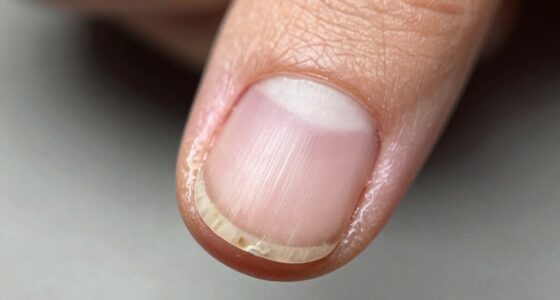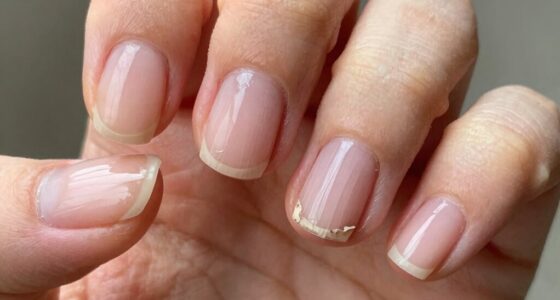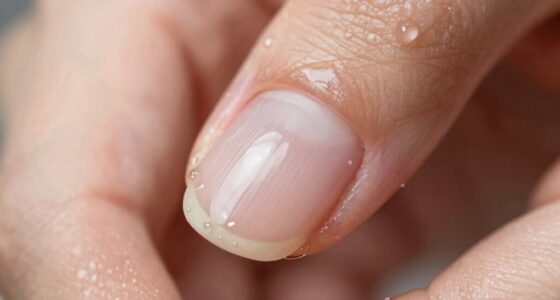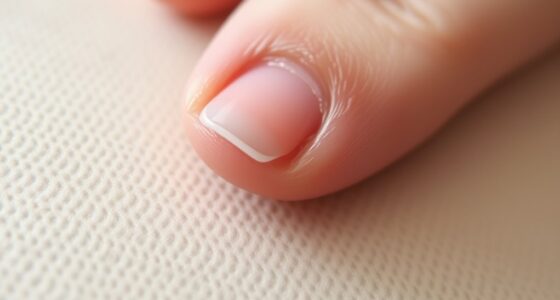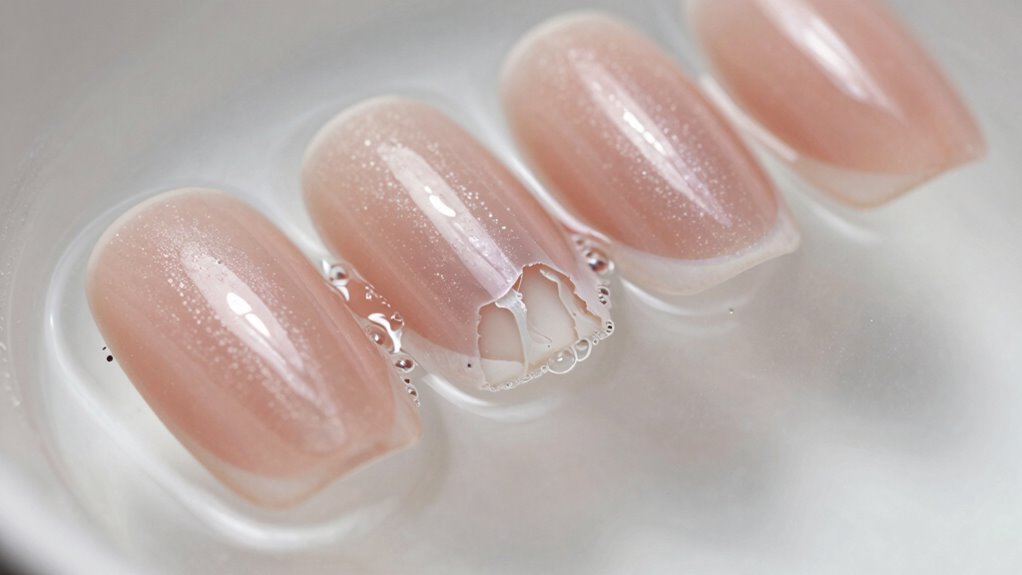

Repeated acetone soaks break down keratin in your nails, causing them to become more porous and weaker over time. As you soak, natural oils and protective layers are stripped away, making nails brittle, prone to cracking, and less flexible. This internal damage also affects how well adhesives stick, leading to chipping or lifting. If you keep exposing your nails to acetone, you’ll continue damaging their structure and health—there’s more to understand about how this process happens.

Get beauty and skincare favorites delivered free with Prime
- Fast, free delivery on millions of items
- Prime Video, Amazon Music and more included
- Member-only deals all year
Key Takeaways
- Acetone dissolves keratin, weakening the nail’s internal structure and increasing porosity over time.
- Repeated soaking strips away natural oils, leading to brittle, fragile nails.
- Increased porosity hampers adhesive bonding, causing nails to lift or chip prematurely.
- Structural damage from acetone reduces nail flexibility and resilience, altering their behavior.
- Continuous exposure causes long-term damage, impairing nail growth and overall health.

Repeated acetone soaks can profoundly alter the behavior of your nails because acetone is a powerful solvent that breaks down keratin, the protein structure in nails. This repeated exposure doesn’t just temporarily remove polish; it impacts the internal composition of your nails, especially their porosity. When you soak your nails in acetone multiple times, you’re fundamentally stripping away the natural oils and keratin layers that keep the nails strong and smooth. As a result, your nails become more porous, meaning tiny holes and gaps form within the nail plate. Increased porosity affects how your nails interact with adhesives, making it more challenging for nail glues or gel products to bond effectively.
Additionally, the porous nature of damaged nails can lead to increased vulnerability to environmental irritants and infections, further compromising nail health. When nails are more porous, adhesive bonding becomes less reliable because the adhesive needs a solid, smooth surface to adhere properly. Porous nails absorb the adhesive’s components, reducing the surface tension necessary for a secure bond. This increased absorption can cause the adhesive to weaken over time, leading to lifting or chipping of gels, acrylics, or overlays. You might notice that after repeated acetone soaks, your manicures don’t last as long, and it feels like the products are peeling or lifting prematurely. This is because the compromised nail surface simply cannot support a strong, lasting bond anymore.
Furthermore, the heightened porosity changes how your nails respond to external stresses. Instead of being resilient, they become more brittle and prone to cracking or splitting. The damage caused by frequent acetone exposure doesn’t just stay on the surface; it affects the internal structure, making your nails less flexible and more prone to breakage. This internal damage can also lead to delayed nail growth, which affects overall nail health and appearance. Over time, this damage can lead to a cycle where you need more frequent nail repairs or even treatments to restore nail health. Recognizing these changes can help you better understand the importance of nail care routines and avoiding excessive acetone use.
It’s vital to understand that while acetone is effective for removing polish, frequent or prolonged soaking can seriously weaken your nails’ natural barrier. Once the keratin structure is compromised, your nails lose their natural resilience and ability to support healthy adhesive bonding. If you want to maintain strong, durable nails, limiting acetone exposure and giving your nails time to recover is imperative. Otherwise, you risk creating a fragile, porous surface that hampers your efforts to achieve long-lasting manicures.
As an affiliate, we earn on qualifying purchases.
Frequently Asked Questions
Can Acetone Soaks Damage Natural Nails Permanently?
Repeated acetone soaks won’t cause permanent damage to your natural nails if you take proper care. However, they can strip away nail hydration, making nails brittle and prone to breakage. They may also harm cuticle health if not followed by moisturizing. To protect your nails, limit soak frequency, use nourishing cuticle oils, and keep your nails hydrated. This helps maintain healthy nails and prevents long-term damage.
How Many Acetone Soaks Cause Significant Nail Changes?
Surprisingly, even a handful of acetone soaks can cause noticeable nail changes. While you might think your nails are resilient, repeated exposure strips away their natural oils, leading to dryness and brittleness. Each soak undermines nail hydration and weakens chemical resilience, making nails more prone to damage. So, don’t underestimate the power of a few sessions—your nails might pay the price after just a handful of exposures.
Do Repeated Acetone Soaks Weaken Nail Strength Long-Term?
Repeated acetone soaks can weaken your nail strength over time, especially if they strip away natural oils. This process reduces nail hydration, making nails more brittle and prone to breakage. Additionally, frequent soaking can harm cuticle health, leading to dryness and damage. To protect your nails, limit acetone exposure and focus on maintaining proper hydration and cuticle care, ensuring your nails stay strong and healthy long-term.
Are There Safer Alternatives to Acetone for Nail Removal?
Yes, there are safer alternatives to acetone for nail removal. You can try natural alternatives like olive oil or coconut oil, which gently loosen polish without harsh chemicals. Gentle removers designed specifically for nails are also available, often containing less aggressive ingredients. These options reduce damage and are safer for your nails long-term. Always follow instructions and give your nails time to recover between treatments for healthier, stronger nails.
How Does Acetone Interact With Nail Keratin at the Molecular Level?
Acetone interacts with nail keratin by dissolving the keratin protein through molecular disruption. It breaks down the disulfide bonds that give keratin its strength, which softens and dissolves the nail material. As you soak your nails repeatedly, acetone penetrates the keratin structure, weakening it at a molecular level. This process causes the nails to become more flexible or fragile over time, altering their natural behavior and integrity.
As an affiliate, we earn on qualifying purchases.
Conclusion
So, next time you soak your nails in acetone, remember you’re gently unraveling the very fabric of their strength. Repeated exposure acts like a silent thief, stealing away natural oils and leaving your nails more fragile and prone to damage. Treat your nails with kindness, giving them time to recover. After all, your nails are the delicate brushstrokes that complete your masterpiece—handle them with care, and they’ll continue to shine like a beacon of your beauty.
As an affiliate, we earn on qualifying purchases.
nail cuticle oil for brittle nails
As an affiliate, we earn on qualifying purchases.
As an affiliate, we earn on qualifying purchases.
Halloween Picks
halloween
As an affiliate, we earn on qualifying purchases.