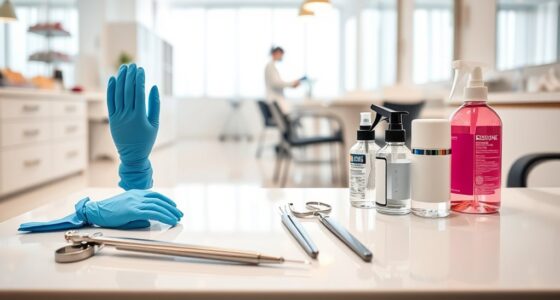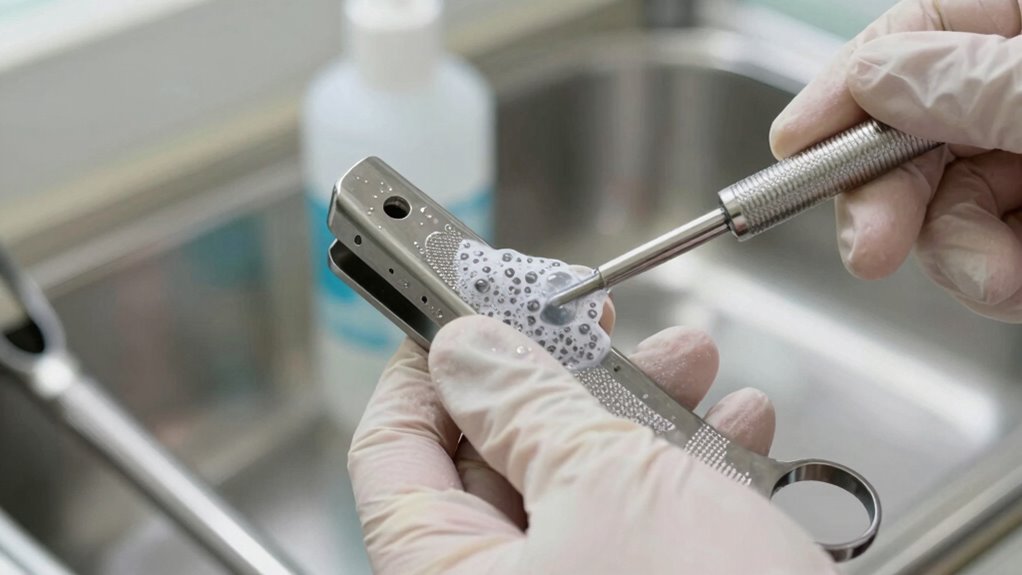
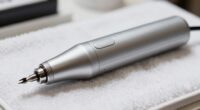
Tool contact times matter because they guarantee disinfectants work effectively to eliminate germs, bacteria, and fungi from your nail tools. If you remove the disinfectant too early, you risk leaving residual pathogens that can cause cross-contamination and infections. Following the recommended contact time guarantees thorough sterilization and protects both your clients and your reputation. To keep your salon safe and following best practices, understanding the importance of proper contact times is essential—there’s more to learn on this!
Key Takeaways
- Adequate contact time ensures disinfectants effectively kill germs, bacteria, and fungi on tools.
- Shortening contact time risks incomplete sterilization, increasing infection transmission.
- Following specified contact times maximizes the chemical’s germ-killing potency.
- Proper adherence to protocols prevents cross-contamination and protects client health.
- Rushing disinfection processes compromises hygiene standards and safety in nail salons.
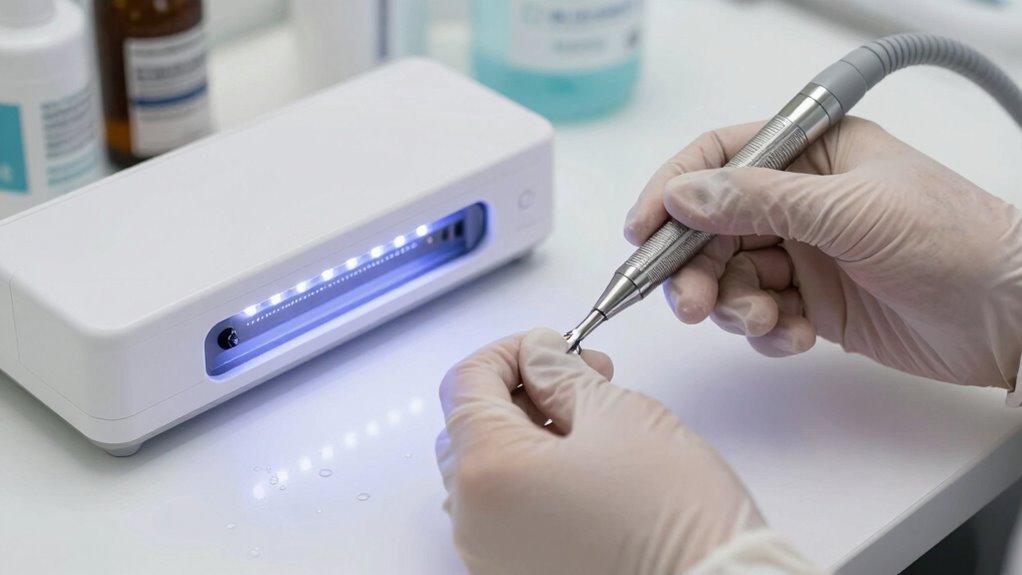
Proper disinfection of tools in nail salons is essential to prevent the spread of infections, but knowing how long to leave disinfectants on tools is often unclear. This is where understanding tool contact times becomes vital. When you follow proper sterilization protocols, you guarantee that your tools are genuinely safe for each client. Contact time is the minimum period during which disinfectants must stay on a surface to effectively kill germs, bacteria, and fungi. If you don’t adhere to these times, you risk leaving residual pathogens that can lead to infections or cross-contamination.
Proper tool disinfection ensures safety; always follow recommended contact times to effectively eliminate germs and prevent infections.
Chemical effectiveness is directly tied to contact time. Many disinfectants are designed to be potent, but they only work if they’re given enough time to act. For example, some EPA-registered disinfectants specify a contact time of 10 minutes, while others might require 5 or 15 minutes. If you remove or wipe off the disinfectant too early, it may not have achieved its full germ-killing potential. This diminishes the safety of your sterilization process and can jeopardize your clients’ health. Always read the label instructions carefully and follow the recommended contact times for each disinfectant you use. Additionally, proper disinfectant use is critical to ensuring chemical effectiveness.
Sterilization protocols are in place for a reason—they’re based on scientific research showing how long certain chemicals need to stay in contact with tools to be effective. These protocols aren’t just suggestions; they’re standards that protect both you and your clients. To stay compliant, you should maintain a schedule that includes immersing tools for the full recommended period, ensuring thorough disinfection. Rushing this process can leave tools inadequately sterilized, which is a risk you can easily avoid by adhering strictly to the prescribed contact times. Proper protocol adherence ensures consistent results and helps maintain a high standard of hygiene in your salon. Additionally, understanding the importance of disinfection guidelines can help you implement best practices more effectively. Regularly verifying your disinfectant’s concentration is also vital to sustain its effectiveness and prevent potential contamination.

VEVOR Nail Tool Cleaning Machine, 12L Large Capacity, Knob Control, Tool Cabinet Cleaner Box with Timer Setting, Tempered Glass Door, 185nm Wavelength, for Labs, Home, Nail Salons, Beauty Salons
VEVOR Nail Tool Cleaning Machine, 12L Large Capacity, Knob Control, Tool Cabinet Cleaner Box with Timer Setting, Tempered…
As an affiliate, we earn on qualifying purchases.
As an affiliate, we earn on qualifying purchases.
Frequently Asked Questions
How Do Different Disinfectants Compare in Effectiveness?
Different disinfectants vary in chemical efficacy, impacting how well they eliminate germs. You should pay attention to contact duration, as some require longer exposure to be effective. For example, quaternary ammonium compounds may need only a few minutes, while others like bleach need a specific contact time to guarantee proper disinfection. Always follow manufacturer instructions closely to maximize effectiveness and keep your salon safe for clients and staff.
Are There Specific Tools That Require Longer Contact Times?
You should know that porous tools like natural nail files often require longer contact times because their material absorbs disinfectants, making sterilization less effective. Non-porous tools, such as metal or glass, typically need shorter durations. In fact, studies show that certain materials need up to twice the contact time to guarantee proper disinfection. Always follow manufacturer guidelines for contact times based on tool material to prevent contamination.
How Often Should Tools Be Disinfected During a Workday?
You should disinfect your tools after each client and at regular intervals during the workday, especially if tools are used multiple times. Follow your disinfection protocols precisely, guaranteeing tools are immersed for the recommended contact time. Proper tool storage between uses prevents contamination. Consistent disinfection helps maintain a safe environment, prevents cross-contamination, and ensures client safety, all while adhering to salon health standards.
What Are the Consequences of Insufficient Contact Time?
Insufficient contact time can seriously compromise proper sterilization, increasing infection risks. Regulatory standards specify minimum contact durations to guarantee tools are thoroughly disinfected. If you don’t follow these guidelines, you might assume tools are safe when they aren’t, leading to potential cross-contamination. This negligence not only risks clients’ health but also jeopardizes your salon’s reputation and legal standing. Always adhere strictly to proper sterilization protocols and contact times for safety.
Can Contact Times Vary Based on Tool Material?
Yes, contact times can vary based on tool material. Different materials, like metal or plastic, may require longer or shorter contact durations to guarantee proper disinfection. You should always follow the disinfectant manufacturer’s instructions, as some materials might be more resistant or sensitive. By adjusting the contact duration accordingly, you guarantee thorough disinfection, reduce contamination risk, and maintain a safe, hygienic environment in your nail salon.

Mod Clean Disinfectant Pods – Hospital Grade, EPA Approved, Water-Soluble Cleaning Solution for Clippers, Nail Tools, Spa Equipment, Barber, Hair Stylists, Salons, Aestheticians & Professionals (32ct)
𝗣𝗼𝘄𝗲𝗿𝗳𝘂𝗹 𝗗𝗶𝘀𝗶𝗻𝗳𝗲𝗰𝘁𝗶𝗻𝗴: Our water-soluble pods transform into a strong disinfectant cleaner within seconds, giving barbers and salons fast,…
As an affiliate, we earn on qualifying purchases.
As an affiliate, we earn on qualifying purchases.
Conclusion
Remember, ensuring proper tool contact times isn’t just about following rules—it’s about safeguarding your clients’ health. Did you know that inadequate disinfection can lead to the transmission of fungi and bacteria, with some studies showing up to 30% of nail tools contaminated? By adhering to recommended contact times, you considerably reduce these risks. So, always stay diligent, follow proper protocols, and prioritize thorough disinfection to keep your salon safe and your clients happy.

Nail Tool Sterilizer with Blue Light,LXIANGN Portable USB Sterilizating Box for Manicure Salon,Tweezers,Tattoo,Scissors,Jewelry,Phone, Watch,Keys
Blue Light for Nail Tool Sterilizer:Our nail tool sterilizer is equipped with a blue light inside.It is easy…
As an affiliate, we earn on qualifying purchases.
As an affiliate, we earn on qualifying purchases.
Mod Clean Disinfectant Pods – Hospital Grade, EPA Approved, Water-Soluble Cleaning Solution for Clippers, Nail Tools, Spa Equipment, Barber, Hair Stylists, Salons, Aestheticians & Professionals (32ct)
𝗣𝗼𝘄𝗲𝗿𝗳𝘂𝗹 𝗗𝗶𝘀𝗶𝗻𝗳𝗲𝗰𝘁𝗶𝗻𝗴: Our water-soluble pods transform into a strong disinfectant cleaner within seconds, giving barbers and salons fast,…
As an affiliate, we earn on qualifying purchases.
As an affiliate, we earn on qualifying purchases.