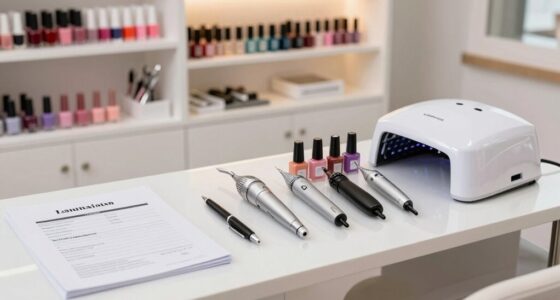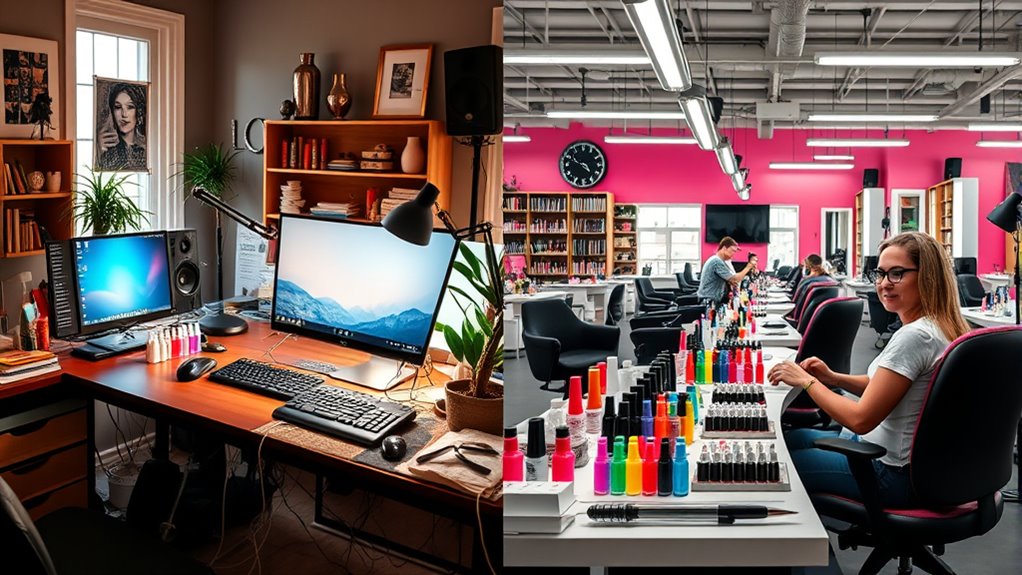

As a freelance nail technician, you gain flexibility, creative freedom, and the chance to build a personal brand, but you face fluctuating income, business management challenges, and variable client flow. Working in a salon offers steady pay, a professional environment, and ongoing training, yet limits your schedule and creative control. Balancing these pros and cons can shape your career path—exploring more details will help you choose the right fit for you.
Key Takeaways
- Freelancers enjoy flexible schedules and creative control, while salon employees benefit from stable hours and predictable income.
- Freelancers can build a personalized brand and niche services, whereas salons focus on reputation and repeat clients through service quality.
- Salon jobs typically offer consistent pay and benefits, while freelancers face fluctuating income and must manage their own taxes and insurance.
- Employees often access exclusive training and mentorship programs, whereas freelancers need to seek out education independently.
- Freelancers have greater autonomy over work environment and workload, but they also handle all business management aspects themselves.

FANDAMEI Nail Art Kit, Nail Design Tools kit with Nail Brushes, Dotting tool, Mixing Palette, Nail Stand. Fake Nail Kits with Almond Gel Nail Tips, Nail Glue, Adhesive Tabs, Nail File. Manicure Set
Nail Art Accessories Kit: Comes with 120pcs short almond nail tips clear half matte, 15pcs pink nail art…
As an affiliate, we earn on qualifying purchases.
As an affiliate, we earn on qualifying purchases.
Flexibility and Scheduling
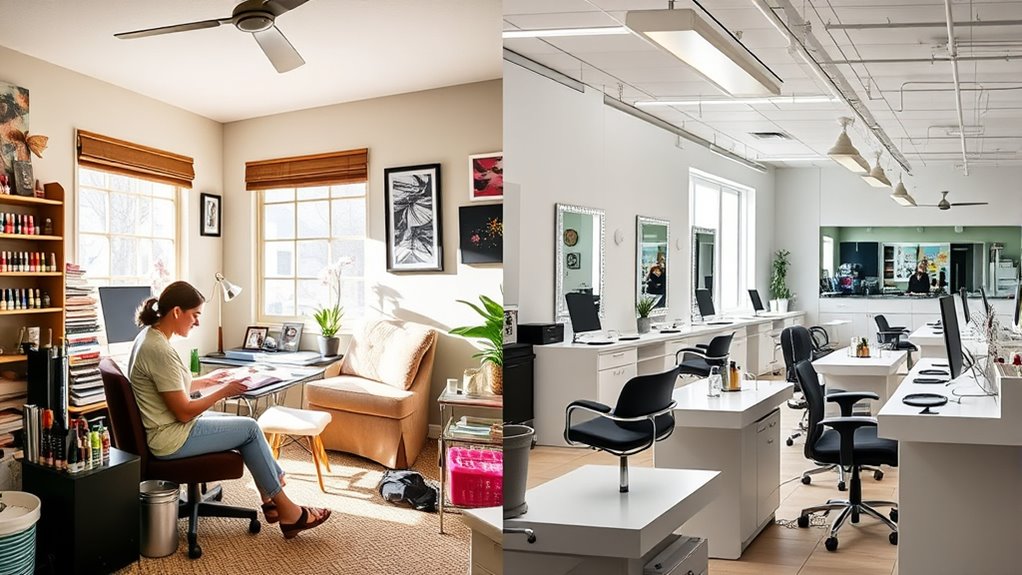
When it comes to flexibility and scheduling, freelancers often have the advantage of setting their own hours and choosing when to work. This control allows you to tailor your workday around personal commitments and peak client times, helping you build stronger client rapport. Since you decide your availability, you can also develop branding strategies that emphasize your flexibility and personalized service. This autonomy makes it easier to attract clients who value convenience and tailored experiences. However, managing your schedule requires discipline to ensure consistent income and avoid burnout. Unlike salon employees with fixed hours, you have the freedom to adapt your schedule to your life, which can lead to increased job satisfaction. Just remember, your ability to balance flexibility with professionalism plays a key role in your success.

Teenitor Nail Charms and Nail Art Tools Set, Nail Art Kit with 5 Boxes of 3D Nail Charms and Gems Rhinestones, 15 Pcs Nail Art Brushes, 5 Pcs Nail Dotting Tools, 2 Set of Nail Stand
Nail Art Kit with Nail Charms & Nail Art Tools: Teenitor nail art set includes 5 boxes of…
As an affiliate, we earn on qualifying purchases.
As an affiliate, we earn on qualifying purchases.
Income Potential and Financial Stability
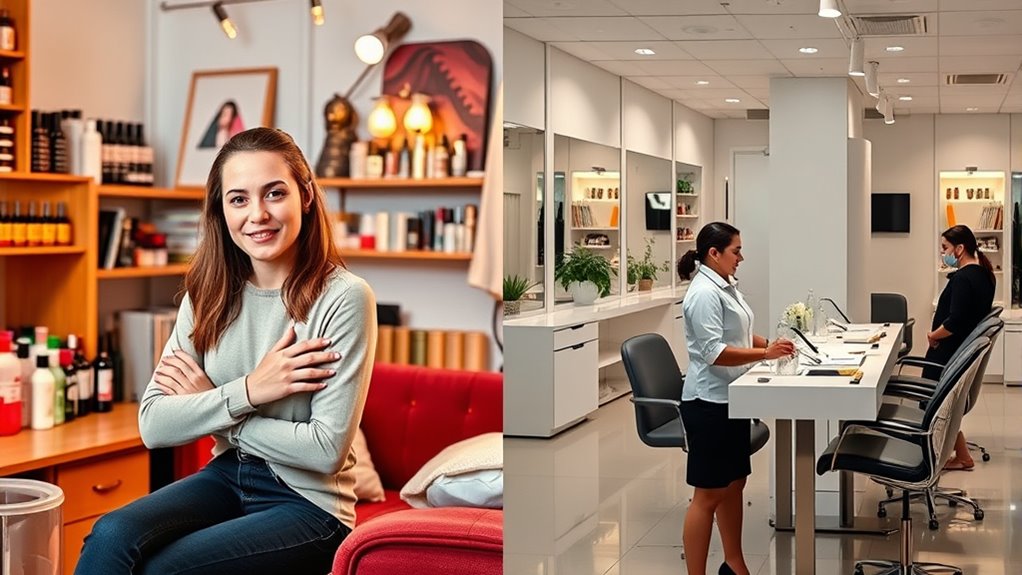
As a freelancer, you can build flexible income streams by taking on different clients and projects, but your earnings may fluctuate month to month. In contrast, salon employees often enjoy more consistent paychecks, providing greater financial security. Considering your preference for stability versus variability can help you decide which path aligns best with your financial goals. Additionally, understanding the coverage area] of your chosen work environment can influence your potential earnings and job stability.
Flexible Income Streams
Freelancers often have the potential to earn more by diversifying their income sources, but this flexibility also comes with financial unpredictability. You can tap into multiple revenue streams, like offering special packages, retail products, or hosting workshops. Building client loyalty through personalized services and effective marketing strategies helps guarantee steady income. It’s vital to adapt quickly and explore new opportunities to maximize earnings. Here’s a quick overview:
| Income Source | Benefits | Challenges |
|---|---|---|
| Client-specific services | High client loyalty, repeat business | Dependency on individual clients |
| Retail products | Additional revenue, brand growth | Inventory management |
| Workshops/classes | Additional income, skill sharing | Time investment, marketing |
Additionally, understanding the risks associated with fluctuating income can help you implement better financial planning strategies.
Financial Security Levels
Choosing between freelance work and salon employment considerably impacts your income potential and financial stability. As a freelancer, your income depends heavily on client loyalty and your branding strategies. Building strong relationships with clients can lead to repeat business, boosting your earnings and providing more financial security. However, income can be unpredictable during slow periods. In contrast, salon employees often have a steady paycheck and benefits, offering more consistent financial stability. While your earning ceiling might be lower than a successful freelancer’s, the security of a regular income can be reassuring. Additionally, understanding the essential oils for financial wellness can help you maintain a balanced approach to your earnings and overall well-being. Ultimately, your ability to develop client loyalty and effectively market yourself influences your income potential, regardless of your work setting. Weighing these factors helps determine which path best supports your financial goals.

MelodySusie USB Nail Drill PC120I for Gentle Nail Prep
PC120I Multifunctional Nail Drill Kit: Comes with 20,000RPM powerful rotary motor and 3/32” mental nail drill bits, this…
As an affiliate, we earn on qualifying purchases.
As an affiliate, we earn on qualifying purchases.
Client Acquisition and Relationship Building
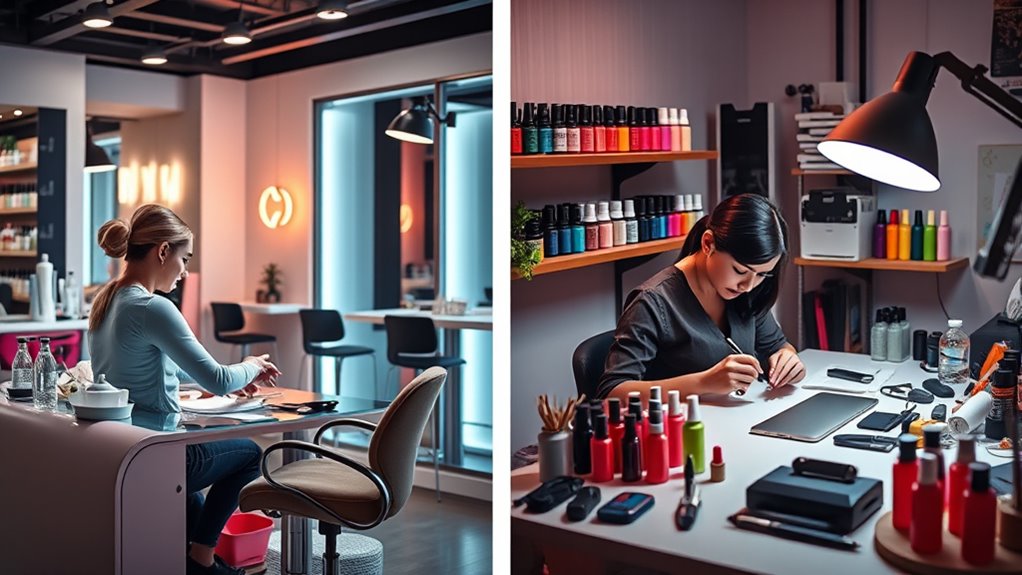
Building a steady client base is vital for both freelancers and salon employees, but the methods you use can differ greatly. As a freelancer, you rely heavily on client loyalty and personalized branding strategies to keep clients coming back. You might build relationships through social media, word-of-mouth, or referral discounts. In a salon, the relationship-building process often involves consistent service quality and a welcoming environment that encourages repeat visits. Both approaches depend on establishing trust and showcasing your skills. Your branding strategies, whether online or in person, play a fundamental role in attracting new clients and differentiating yourself from competitors. Maintaining open communication and providing excellent service help foster long-term relationships, ensuring your client base remains strong and loyal over time. Additionally, understanding client acquisition strategies can significantly enhance your ability to grow and sustain your clientele.

Nail Technician book: Nail Technician Training-All Techniques-Nail tech Practice-Metohds-Theory (euroestetica corsi)
As an affiliate, we earn on qualifying purchases.
As an affiliate, we earn on qualifying purchases.
Work Environment and Resources

The work environment and resources available can considerably impact your daily performance and overall job satisfaction. As a salon employee, you typically benefit from a well-organized space with easy tool accessibility, ensuring you can work efficiently without searching for supplies. Your workspace is often designed for comfort and functionality, which helps maintain focus during long shifts. Conversely, as a freelancer, you have the freedom to customize your workspace to suit your preferences, but this also means investing in and maintaining your tools and setup. The quality and organization of your environment directly influence the quality of your service and your ability to work smoothly. Whether in a salon or freelancing, a well-equipped, comfortable space enhances productivity and job satisfaction. Additionally, understanding the horsepower of electric dirt bikes can inspire creative ways to energize your workspace with innovative tools and equipment.
Creative Freedom and Service Offerings

While working in a salon often means adhering to established service menus, freelancing gives you the flexibility to craft your own creative offerings. You can experiment with unique nail art, specialized treatments, or niche services that set you apart. This freedom allows you to develop branding strategies that showcase your personal style and attract your ideal clients. With more control over your service menu, you can tailor marketing approaches to highlight your specialties, whether through social media, word of mouth, or targeted promotions. You’re not limited by salon policies, so you can continuously evolve your offerings based on client demand or emerging trends. This creative independence helps build a distinctive brand identity, making your services more appealing and memorable. Additionally, understanding salon policies and how they impact your service choices can help you better navigate the transition between freelance and salon work.
Professional Development and Training Opportunities

As a professional, you want to grow your skills and stay current in the industry. Salon employees often have access to advanced workshops, mentorship, and support networks that foster development. Freelancers, on the other hand, may need to seek out certification programs and continuing education on their own to advance their expertise. Additionally, support hours provided by platforms like direct.playstation.com can serve as a useful resource for troubleshooting and staying updated on service updates, which can be analogous to staying informed about industry standards and support channels in your field.
Access to Advanced Workshops
Have you ever wondered how access to advanced workshops differs between freelance stylists and salon employees? As a salon employee, you’re more likely to have opportunities to attend exclusive workshops offered by brands, which help you refine your skills and learn new techniques. These sessions often include training on branding strategies and marketing tactics, giving you an edge in attracting clients. Freelancers, on the other hand, often need to seek out workshops independently, which can be costly and less frequent. While they have the flexibility to choose courses aligned with their niche, they may miss out on the latest industry updates provided by salon-sponsored programs. Additionally, some salons may offer specialized training hours that are not accessible to freelancers. Ultimately, access to advanced workshops can considerably impact your professional growth and your ability to stay competitive.
Mentorship and Support Networks
Access to mentorship and support networks plays a significant role in your ongoing professional development, whether you’re a freelance stylist or a salon employee. Mentorship programs connect you with experienced professionals who can guide your growth, offer feedback, and share industry insights. Support networks, such as industry groups or online communities, provide a platform for sharing resources, troubleshooting challenges, and staying motivated. If you’re in a salon, you may benefit from structured mentorship within the team, fostering skill enhancement and confidence. As a freelancer, building your own support network becomes essential for staying updated and avoiding isolation. Both paths rely on these networks to help you navigate the industry, improve your skills, and achieve your career goals efficiently. Having access to industry-specific resources can further support your growth and keep you informed about the latest trends and best practices.
Certification and Continuing Education
Why does ongoing certification and education matter in your hairstyling career? Staying current with the latest techniques and industry standards helps you build trust with clients, boosting client retention. When you invest in continuing education, you demonstrate professionalism and commitment, making your services more appealing. Certification can also give you a competitive edge, allowing you to refine your skills and expand your offerings. This, in turn, enhances your marketing strategies, as satisfied clients spread positive reviews and refer others. Regular training keeps you updated on trends, tools, and safety practices, ensuring you provide top-quality service. Additionally, economic theories support the importance of specialization and continuous learning in maintaining a competitive position in the industry. Ultimately, ongoing professional development not only sharpens your skills but also strengthens your reputation, helping you thrive whether you’re freelancing or working in a salon.
Work-Life Balance and Independence

Choosing between freelancing and working as a salon employee considerably impacts your work-life balance and sense of independence. As a freelancer, you control your schedule, which allows for better work-life balance and greater work autonomy. You can set your hours to match your personal life and build stronger client loyalty by offering personalized services. However, freelancing also means managing your own time, marketing, and client relationships, which can be demanding. On the other hand, salon employees typically have fixed hours, providing more routine and predictability, but less independence in scheduling. While you benefit from a steady income and support system, your ability to shape your work environment and client interactions is limited. Your choice ultimately influences how much control you have over your professional and personal life.
Legalities, Taxes, and Business Management

Steering the legal and financial aspects of your career is essential, whether you’re freelancing or working as a salon employee. As a freelancer, you handle contract negotiations, setting terms that protect your interests. You’ll also need liability insurance to cover potential mishaps and guarantee your clients’ safety. If you’re employed by a salon, these responsibilities often fall on your employer, but understanding them helps you recognize your rights and obligations. Keeping accurate records for taxes is critical in either scenario—freelancers typically pay self-employment taxes, while salon employees have taxes withheld. Managing your business effectively includes understanding licensing requirements, maintaining proper insurance, and staying compliant with local regulations. Being proactive about these legalities ensures your career remains secure and stress-free.
Frequently Asked Questions
How Does Insurance Coverage Differ Between Freelancers and Salon Employees?
As a freelancer, you’re responsible for your own insurance options, including liability coverage, which can be more customizable but may cost more. As a salon employee, your employer typically provides liability coverage and health insurance, easing your financial burden. This difference means freelancers must actively seek and manage their insurance, while salon employees benefit from employer-sponsored plans, offering more security and convenience.
What Are the Best Ways to Build a Loyal Client Base Independently?
Like the artist who crafts a masterpiece, you build a loyal client base through consistent client retention and smart marketing strategies. Offer exceptional service, remember personal details, and stay engaged with your clients’ needs. Use social media to showcase your work and special promotions to attract new clients. By creating a memorable experience and staying connected, you’ll foster trust and loyalty that keeps clients coming back, strengthening your independent business.
How Do Health and Safety Regulations Vary for Freelancers Versus Salon Staff?
Health compliance and safety standards are vital whether you’re freelancing or working in a salon. As a freelancer, you’re responsible for maintaining your own health compliance, ensuring your workspace meets safety standards, and following local regulations. In contrast, salon staff benefit from the salon’s established safety protocols and regular inspections. Staying updated on health and safety regulations helps protect your clients and your license, no matter your work setting.
What Are the Long-Term Career Growth Opportunities in Each Setting?
Think of your career path as a garden—you need to nurture it for long-term growth. As a salon employee, you often find more structured opportunities for career advancement and skill development through training programs. Freelancers, on the other hand, have the flexibility to diversify their skills and build a personal brand, which can lead to entrepreneurial ventures. Both routes offer unique long-term growth potential depending on your goals and dedication.
How Does Job Stability Compare During Economic Downturns?
During economic downturns, being a salon employee generally offers better job stability and financial security because salons often provide consistent work and benefits, demonstrating economic resilience. As a freelancer, you face more fluctuations since your income depends on client flow, which can diminish during tough times. If stability is your priority, working as a salon employee gives you a safer, more resilient position during economic challenges.
Conclusion
Choosing between freelancing and working in a salon comes down to what matters most to you. Whether you crave independence or prefer stability, weigh the pros and cons carefully. Remember, it’s not just about finding a job—it’s about finding a path where you can truly thrive. Don’t put all your eggs in one basket; sometimes, the grass is greener where you water it. Trust your gut and make the move that feels right.