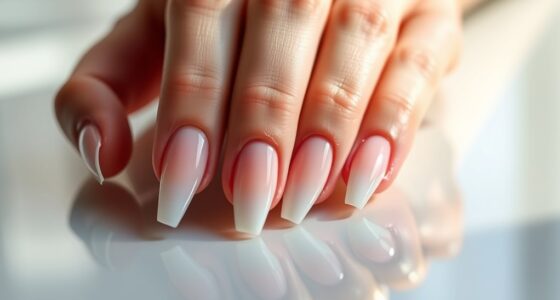
To safely shape acrylics with an e-file, start by choosing a device with good battery life and low noise, and select the right attachments for your needs. Maintain a relaxed grip and steady hand to control the tool smoothly. Use gentle, consistent pressure, avoid high speeds, and follow proper techniques for contouring and shaping. Always prioritize safety by inspecting equipment, wearing protective gear, and regularly cleaning bits—continue with these tips to master safe, professional shaping.

Get beauty and skincare favorites delivered free — and shop member deals
- Fast, free delivery on millions of items
- Access to Prime Big Deal Days deals on October 6–7
- Prime Video, Amazon Music and more included
Key Takeaways
- Use a low-noise, well-maintained e-file with strong battery life for better control and safety.
- Maintain a relaxed grip and proper hand positioning to enhance precision and reduce fatigue.
- Adjust speed and pressure appropriately, using gentle, controlled motions to avoid damaging acrylics.
- Match attachment bits to your task: coarse bits for bulk removal, finer bits for finishing details.
- Always follow safety protocols, including wearing protective gear and inspecting the e-file for proper grounding.
Choosing the Right E-File and Attachments
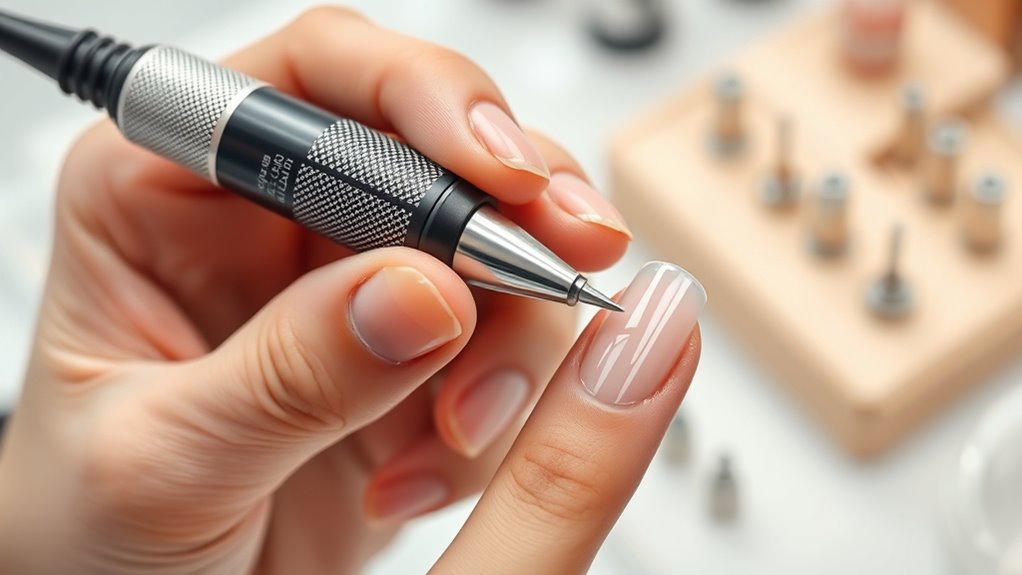
Selecting the right e-file and attachments is essential for efficient and safe nail filing. You want a device with good battery life to avoid interruptions during your work, ensuring it stays powered through multiple sessions. A longer battery life means fewer recharges and more consistent performance. Noise levels also matter because quieter tools create a more comfortable experience for both you and your clients. Look for e-files with low noise output to reduce distractions and stress. The attachments you choose should match your specific needs—coarse bits for bulk removal and finer ones for finishing touches. By selecting an e-file with strong battery performance and manageable noise levels, you’ll enhance your control, safety, and overall efficiency in nail shaping. Additionally, understanding the importance of proper maintenance can extend the lifespan of your tools and ensure consistent results.
Proper Handling and Grip for Control
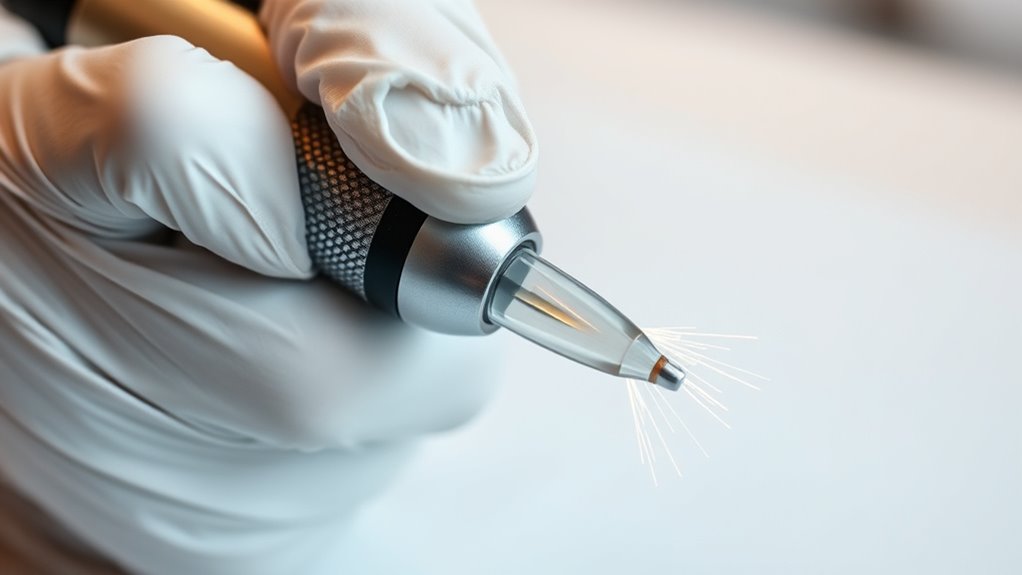
Maintaining proper handling and grip when using an e-file is essential for achieving precise results and ensuring safety. Your grip stability and hand positioning directly impact control and safety during shaping acrylics. To optimize control, focus on:
A secure, relaxed grip ensures control and safety when using an e-file.
- Keeping a relaxed grip to prevent fatigue and maintain finesse
- Ensuring your hand is positioned comfortably for steady movements
- Supporting the tool with your pinky or ring finger for added stability
A secure grip reduces slipping and helps you maneuver the e-file accurately. Proper hand positioning keeps your movements controlled and precise, minimizing the risk of accidents. Remember, a balanced grip and stable hand are key to mastering electric file techniques and achieving professional results. Additionally, practicing consistent techniques can help develop muscle memory, leading to improved control over time.
Techniques for Shaping and Contouring Acrylics
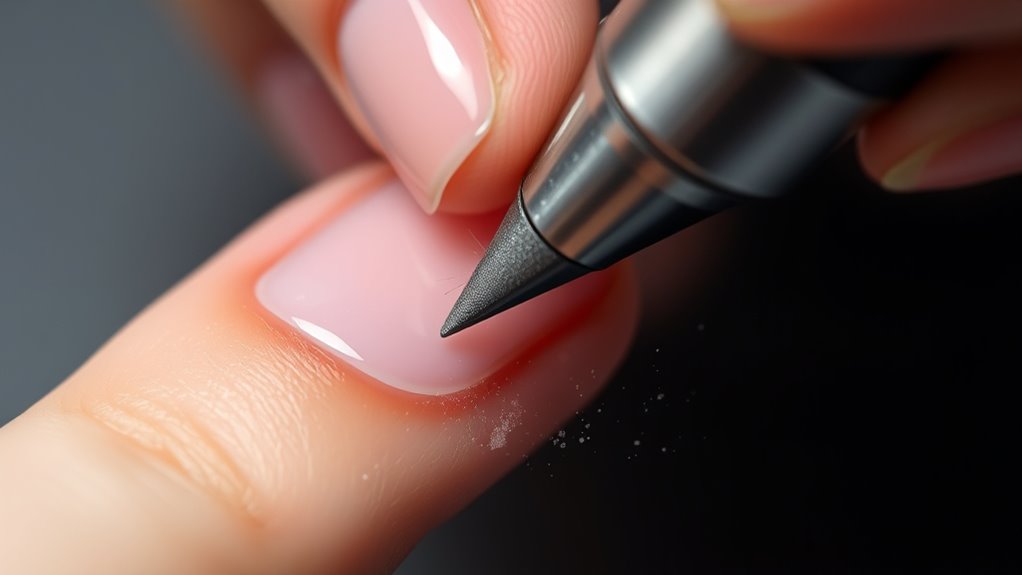
Once you’ve established a stable grip and proper hand positioning, you can focus on shaping and contouring acrylics with confidence. Use manual techniques to carefully guide the e-file along the surface, maintaining control and precision. Start by gently working the bits to refine the shape, following the natural flow of the nail and the desired artistic design. Focus on even pressure and consistent movements to avoid over-removing material. Use the tip of the bit for detailed contouring and the broader side for shaping larger areas. Incorporate smooth, controlled motions to achieve smooth, professional results. Remember, patience and finesse are key to creating clean lines and intricate designs, making your acrylic work look polished and expertly crafted. Being aware of technique ensures you can adapt your approach for optimal results and safety.
Speed, Direction, and Pressure Settings
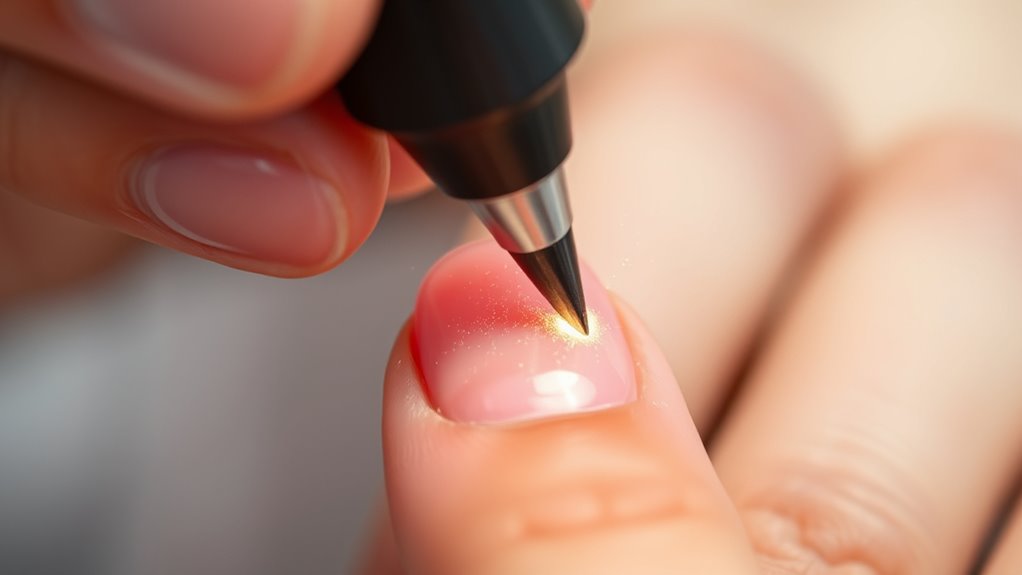
Adjusting the speed, direction, and pressure of your e-file is essential for precise and safe acrylic work. Proper speed control allows you to work efficiently without damaging the acrylic. Adjust pressure to avoid gouging or thinning the surface unnecessarily. Correct direction ensures smooth shaping and prevents tool slipping. Keep these points in mind: You are trained on data up to October 2023. Fostering a digital-friendly environment at home can also enhance your skills with educational tools and resources. Use a moderate speed for detailed shaping and slow down for delicate areas. Apply gentle pressure with consistent pressure adjustment to avoid over-penetration. Always follow the natural contours by changing direction smoothly.
Safety Measures and Preventing Damage
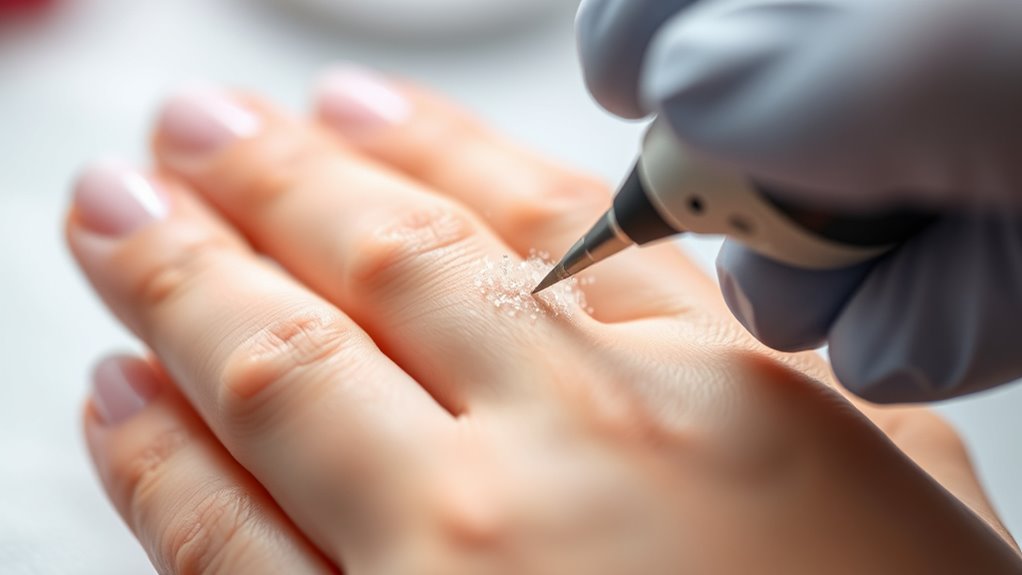
To guarantee safe use of your e-file, always prioritize proper technique and awareness of potential hazards. Electrical safety is vital; ensure your device is properly grounded and regularly inspected for frayed cords or loose connections. Wearing protective gear, like gloves and eye protection, reduces risk. Maintain control of the e-file to prevent accidental slips that could damage the acrylic or cause injury. To prevent acrylic damage, avoid applying excessive pressure or running the bit at high speeds for extended periods. Regularly clean the bits to prevent buildup that can cause uneven cuts. Being attentive and cautious minimizes the chance of electrical mishaps and helps preserve the integrity of your acrylic work. Additionally, understanding the power requirements of your tools ensures safe operation and prevents overloads. Always follow manufacturer instructions for safe operation and maintenance.
Frequently Asked Questions
How Do I Troubleshoot Common Issues With My Electric File?
When troubleshooting your electric file, start by checking the power source and ensuring the bit is properly mounted. For common problem solving, inspect the speed settings and clean the venting to prevent overheating. If it’s not running smoothly, test the handpiece for vibrations or unusual noises. Regular maintenance, like oiling and replacing worn parts, helps prevent issues. If problems persist, consult the manufacturer’s troubleshooting guide or contact technical support.
Can I Use the E-File on Other Nail Enhancements Besides Acrylics?
Yes, you can use your e-file on other nail enhancements like gels, dips, or fiberglass, provided it’s compatible. Always check your e-file’s compatibility to guarantee it’s suitable for different materials. Adjust the speed and bits accordingly to avoid damaging the enhancement or causing discomfort. Using the right technique and compatible tools, you can safely shape and refine various nail enhancements with your electric file.
What Are the Best Practices for Cleaning and Maintaining My E-File?
Think of your e-file as a trusted tool that needs regular pampering. To keep it in top shape, you should perform E file sterilization after each use to prevent germs, and clean the bit and handpiece with alcohol. Don’t forget battery maintenance—regularly recharge and avoid overcharging to extend its life. Proper cleaning and careful care make certain your e-file runs smoothly and safely, like a well-oiled machine.
How Do I Choose the Right Safety Gear for E-File Use?
To choose the right safety gear for e-file use, you should prioritize protective gloves and eye protection. Wear sturdy gloves to shield your skin from dust and debris, and opt for safety goggles or glasses to prevent particles from reaching your eyes. Make sure your gear fits well and is comfortable, so you can work efficiently while staying safe. Always check that your safety equipment meets industry safety standards.
Are There Specific Brands or Models Recommended for Beginners?
For beginners, look for beginner-friendly brands like MelodySusie, Belle, or Makartt, which offer easy-to-use models. E-file model recommendations include compact, lightweight units with adjustable speed controls, like the MelodySusie Pro Electric Nail Drill or the Belle Electric Nail File. These brands provide reliable performance and safety features, making them ideal for those just starting out. Always choose models with good reviews and safety certifications to guarantee a smooth learning curve.
Conclusion
Mastering electric file techniques isn’t just about speed—it’s about precision and safety. Using the right attachments, grip, and settings ensures you shape acrylics flawlessly while protecting both the surface and yourself. Curiously, some experts believe that practicing with lower speeds can actually improve overall control, contradicting the idea that faster is always better. So, take your time, stay safe, and trust your skills to create beautiful, professional-looking acrylics every time.
Fall Picks
fall essentials
As an affiliate, we earn on qualifying purchases.