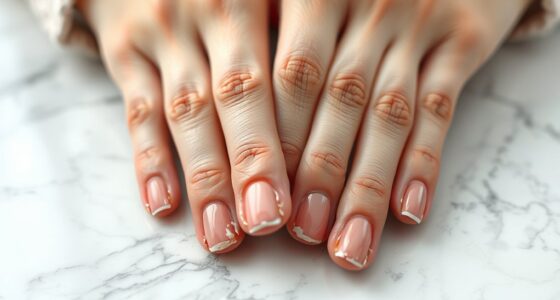
Thin, peeling nails often result from nutritional deficiencies like iron, zinc, or biotin, as well as environmental damage from harsh chemicals or excessive water exposure. Dehydration and underlying health conditions, such as thyroid issues, can weaken nails further. To strengthen them, focus on a balanced diet, stay well-hydrated, and protect your nails with gloves. If you want practical tips and treatments to improve nail health, keep exploring solutions tailored for you.
Key Takeaways
- Nutritional deficiencies like iron, zinc, and biotin can weaken nails, causing thinning and peeling.
- Excessive exposure to chemicals, water, and harsh products damages nail keratin, leading to peeling.
- Dehydration and inadequate hydration reduce nail strength and flexibility, increasing fragility.
- Medical conditions such as thyroid disorders and fungal infections may cause brittle, peeling nails.
- Proper nail care, protective measures, and addressing nutritional or health issues can help strengthen thin, peeling nails.
Common Nutritional Deficiencies and Their Impact on Nails
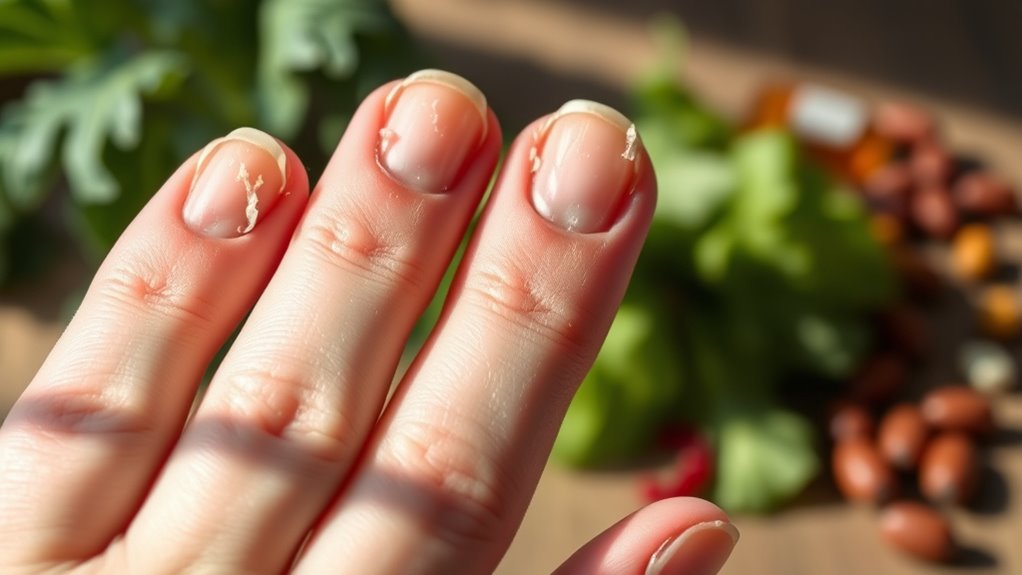
Nails can often reflect your overall health, especially when you’re lacking essential nutrients. Mineral deficiencies, such as iron or zinc, can lead to thin, peeling nails that appear weak and fragile. Without enough iron, you might notice spoon-shaped nails or ridges, indicating anemia. Zinc deficiency can cause nails to become brittle and prone to peeling. Taking vitamin supplements tailored to support nail health can help address these deficiencies, promoting stronger and healthier nails. A balanced diet rich in nutrients like biotin, iron, zinc, and vitamins A, C, and E is essential. If you suspect a deficiency, consult a healthcare professional to determine if supplements are necessary. Nutritional deficiencies can significantly impact nail strength and appearance. Correcting these deficiencies can notably improve the condition of your nails and overall vitality.
The Role of Hydration in Nail Health
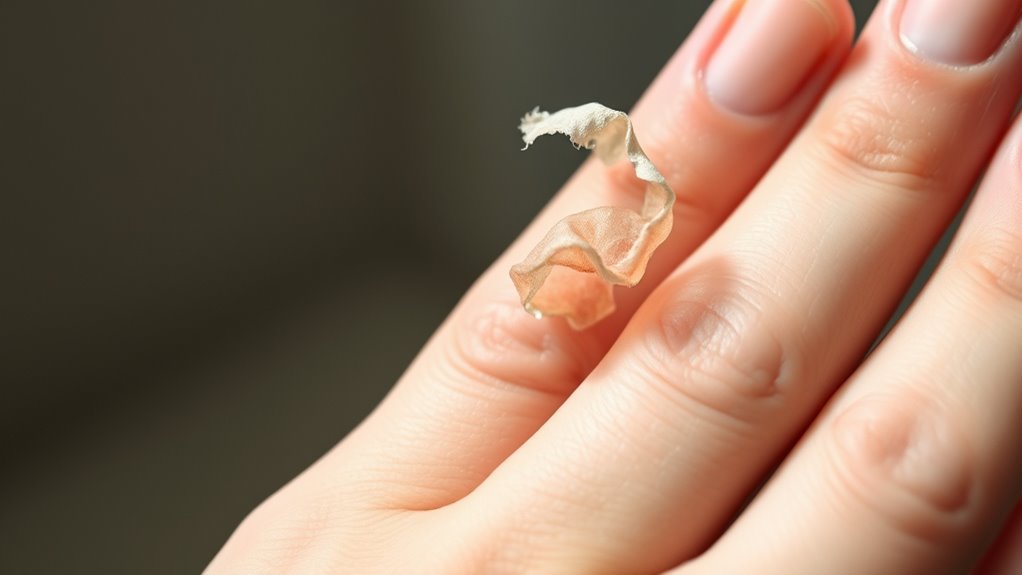
Staying properly hydrated is essential for maintaining strong, healthy nails. Adequate water intake keeps your skin hydrated, which supports nail flexibility and prevents peeling. When you don’t drink enough water, your nails can become brittle and more prone to damage. Improving skin hydration also ensures nutrients are efficiently transported to your nails, promoting growth and strength. To visualize hydration’s benefits, see the table below: protective styling benefits
| Hydration Level | Effect on Nails | Recommended Action |
|---|---|---|
| Well-hydrated | Strong, flexible nails | Drink at least 8 glasses of water daily |
| Slightly dehydrated | Dry, peeling nails | Increase water intake and use moisturizers |
| Severely dehydrated | Brittle, fragile nails | Consult a healthcare provider for hydration issues |
| Excess hydration | No negative impact | Maintain balanced water intake |
Environmental Factors That Damage Nails
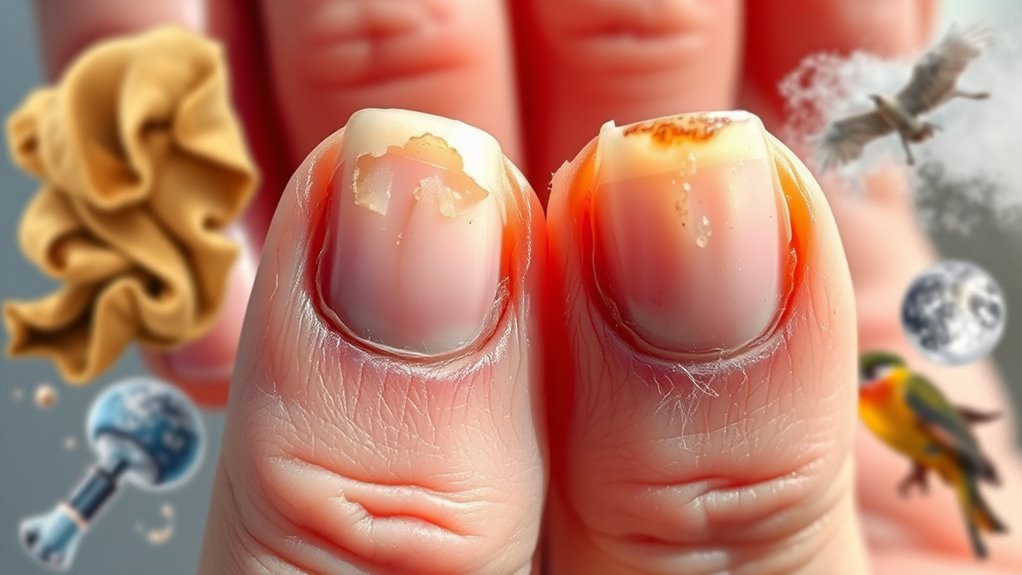
Environmental factors like harsh chemicals, frequent water exposure, and changing humidity can weaken your nails. These elements strip away natural oils and moisture, making nails more prone to peeling and damage. Understanding how these factors affect you helps in protecting your nails effectively. Additionally, using proper nail hygiene can further prevent damage caused by environmental stressors.
Harsh Chemical Exposure
Exposure to harsh chemicals, such as household cleaners, acetone-based nail removers, and strong detergents, can considerably weaken your nails. These chemicals trigger chemical reactions that break down the keratin structure, leading to thinning and peeling. Many product formulations contain aggressive ingredients that strip natural oils, compromising your nails’ integrity. Repeated exposure prevents nails from maintaining their strength and flexibility. Over time, this damage causes nails to become brittle and more prone to breakage. To protect your nails, avoid prolonged contact with these substances and opt for gentler alternatives. Always read labels and choose products designed for sensitive skin or nails. Incorporating professional guidance can further help you select the best products and treatments to maintain nail health. By reducing chemical exposure, you help preserve your nails’ health and prevent them from becoming thin and peeling.
Excessive Water Contact
Frequent contact with water can considerably weaken your nails, making them more prone to peeling and breakage. When your nails are constantly exposed to water, the keratin proteins lose their strength, leading to fragile, thin nails. Using nail polish or artificial nails can worsen this damage, as they trap moisture and hinder your nails’ natural ability to breathe and recover. If you often wash dishes, clean, or swim without gloves, your nails stay wet longer, increasing the risk of peeling. To protect them, limit prolonged water exposure and always dry your hands thoroughly. Consider taking breaks from nail polish and artificial nails to allow your nails to breathe and recover. These steps can help keep your nails healthier and less prone to damage caused by excessive water contact. Additionally, understanding lifestyle factors that affect nail health, such as stress and nutrition, can provide a more comprehensive approach to strengthening your nails.
Environmental Humidity Changes
Changes in humidity levels can directly affect the health of your nails. Humidity fluctuations cause your nails to expand and contract, weakening the nail plate over time. Dry air strips moisture from your nails, making them brittle and more prone to peeling, while high humidity can lead to excess moisture, causing swelling and softening. These climate effects weaken your nails’ structure, making them more susceptible to damage. Sudden changes between dry and damp environments stress the nail matrix, leading to peeling and thinness. To protect your nails, avoid prolonged exposure to extreme humidity conditions. Keep your nails moisturized and consider wearing gloves in harsh climates. Understanding how environmental humidity changes impact your nails helps you adopt better care routines, preventing damage caused by these natural fluctuations. Additionally, maintaining optimal cost and budgeting for nail care products can help you invest in quality moisturizers and treatments that strengthen your nails against environmental stressors.
Underlying Medical Conditions Affecting Nail Strength
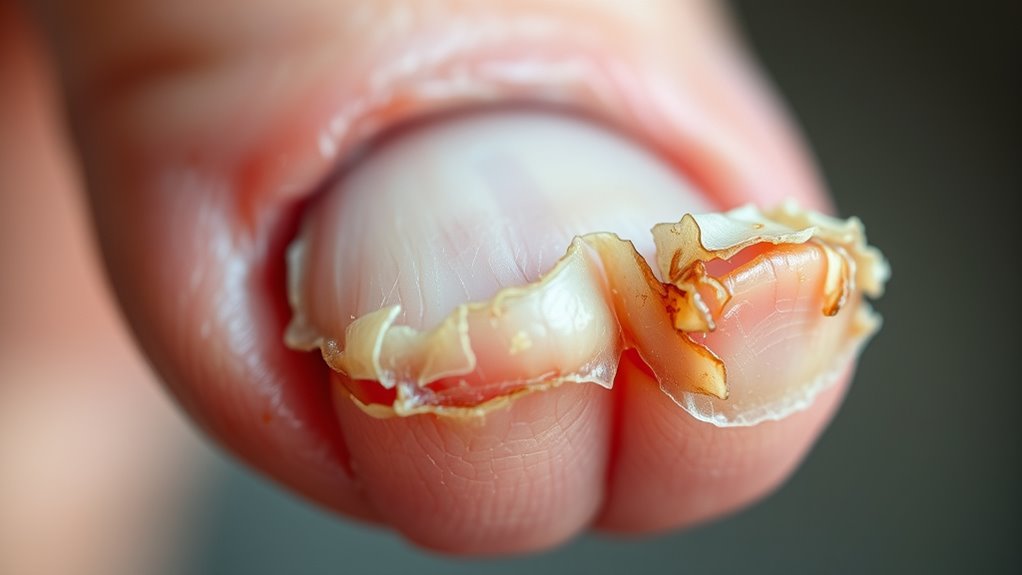
Your nail health can be affected by underlying medical conditions like thyroid disorders, which may cause brittleness or peeling. Nutritional deficiencies, especially lacking vitamins and minerals, also weaken nails and make them more prone to damage. Recognizing these issues can help you address the root causes and improve nail strength effectively. For example, ensuring proper vitamin intake can significantly contribute to healthier nails.
Thyroid Disorders Impact Nails
Thyroid disorders, such as hypothyroidism and hyperthyroidism, can markedly weaken your nails and cause peeling. When your thyroid isn’t functioning properly, it disrupts your body’s hormonal balance, leading to noticeable thyroid symptoms like fatigue, weight changes, and dry skin. This hormonal imbalance affects nail growth and integrity, making them brittle and prone to splitting. You might notice your nails become thin, fragile, or develop ridges. These changes signal that your thyroid health could be impacting your nails’ strength. Addressing the underlying thyroid condition often helps improve nail health over time. If your nails are peeling and you have other thyroid symptoms, it’s essential to consult a healthcare professional for proper diagnosis and treatment to restore hormonal balance and support healthier nails. Thyroid health plays a crucial role in maintaining overall body functions, including nail strength.
Nutritional Deficiencies Role
Nutritional deficiencies often play a significant role in weakening nails and causing peeling, especially when underlying medical conditions affect nutrient absorption or intake. Deficiencies in biotin, zinc, iron, and vitamins A, C, and D can compromise nail strength and hair health. To combat this, nutrient supplementation can support healthy nail growth and prevent peeling. Understanding which nutrients are crucial helps you target deficiencies effectively. Here’s a quick guide:
| Nutrient | Role in Nail & Hair Health | Food Sources |
|---|---|---|
| Biotin | Strengthens nails and hair | Eggs, nuts, seeds |
| Iron | Prevents brittle nails | Red meat, spinach |
| Zinc | Supports cell growth | Shellfish, legumes |
Addressing deficiencies boosts overall nail resilience and hair vitality. Implementing targeted nutritional strategies can further enhance nail health and prevent peeling.
The Influence of Nail Care Habits and Products
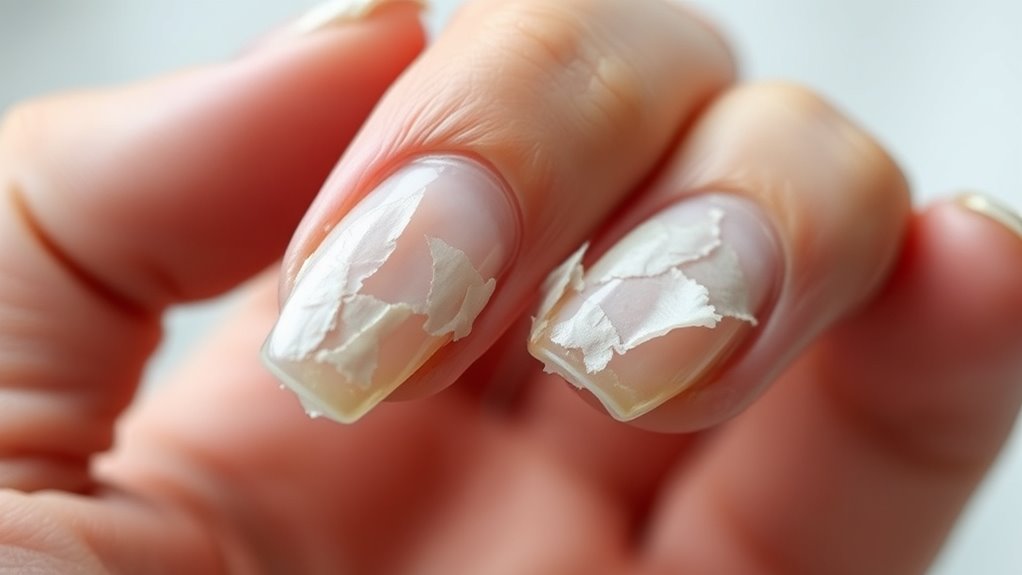
The way you care for your nails and the products you choose can substantially impact their health. Using harsh nail polish removers with acetone can dry out your nails and cuticles, leading to peeling and weakness. Frequent application of nail polish without giving your nails a break can also weaken the nail plate over time. Proper cuticle care is essential; pushing or cutting cuticles aggressively damages the protective barrier, increasing vulnerability to damage. Instead, gently moisturize your cuticles with oils or creams to keep them healthy and flexible. Avoid picking at or tearing your nails, which can cause peeling and splits. Proper nail maintenance plays a crucial role in preventing nail problems and promoting overall nail strength. By adopting gentle nail care habits and choosing nourishing products, you support stronger, healthier nails that are less prone to peeling and damage.
Effective Home Remedies to Reinforce Peeling Nails
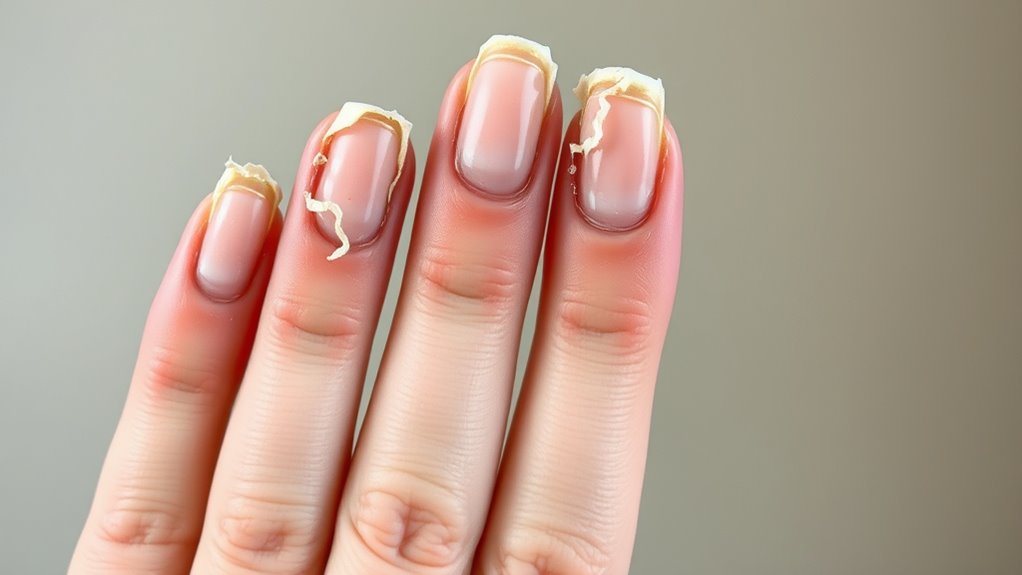
Many simple home remedies can help strengthen peeling nails and restore their health. Focusing on good nail hygiene is essential to peel prevention and overall nail strength. Regularly moisturize your nails and cuticles with natural oils like coconut or olive oil to lock in moisture and reduce brittleness. Wearing gloves during chores protects nails from harsh chemicals and water exposure that worsen peeling. Additionally, avoiding aggressive nail products and using gentle nail buffers prevents further damage. To support nail health, soak your nails in warm lemon water once a week to remove stains and strengthen the nail plate. These remedies, combined with proper nail hygiene, can help reduce peeling and promote healthier, more resilient nails.
Dietary Changes to Promote Stronger Nails
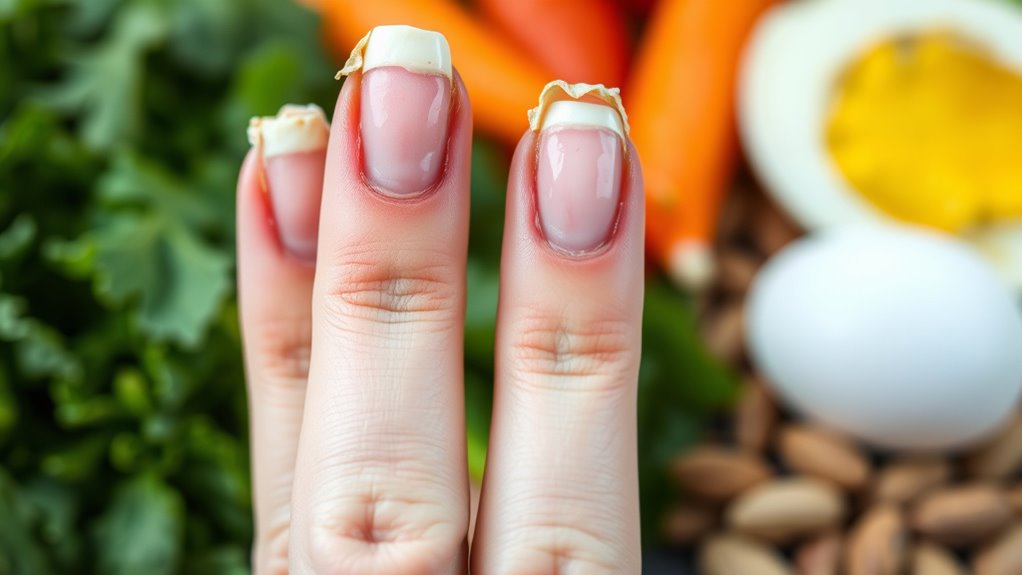
Have you considered that your diet plays a crucial role in the strength and health of your nails? Improving your dietary practices can make a noticeable difference in nail quality. Incorporate foods rich in biotin, vitamin E, zinc, and iron to support nail growth and resilience. Nutritional supplements can also help fill gaps if your diet lacks essential nutrients. Focus on lean proteins, nuts, seeds, leafy greens, and fruits to boost your intake of vital vitamins and minerals. Staying hydrated is equally important, as moisture keeps nails flexible and less prone to peeling. Avoid excessive processed foods and sugars that can weaken nails. By making these dietary adjustments, you’ll provide your body with the nutrients necessary for stronger, healthier nails from the inside out.
Professional Treatments and When to Seek Help
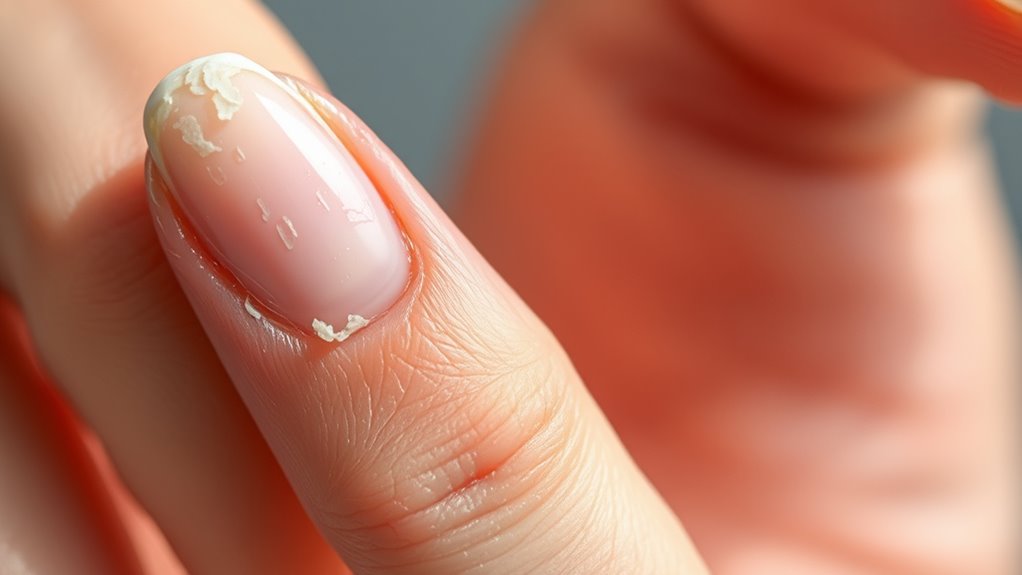
If your efforts to improve your diet haven’t resulted in stronger, healthier nails, it may be time to explore professional treatments. Visiting a salon or dermatologist can provide targeted solutions, especially if your nails are persistently peeling or thin. Salon treatments like keratin strengthening or nail buffing can boost nail resilience quickly. A dermatological consultation can identify underlying issues such as fungal infections or skin conditions that require medical attention.
- Professional manicures tailored for damaged nails
- Medications or topical treatments prescribed by a dermatologist
- In-office procedures like chemical peels or laser treatments to stimulate growth
Recognizing when to seek help ensures your nails get the proper care they need, preventing further damage and promoting healthier growth. Don’t hesitate to consult a specialist if you notice persistent or worsening nail problems.
Tips for Preventing Future Nail Damage
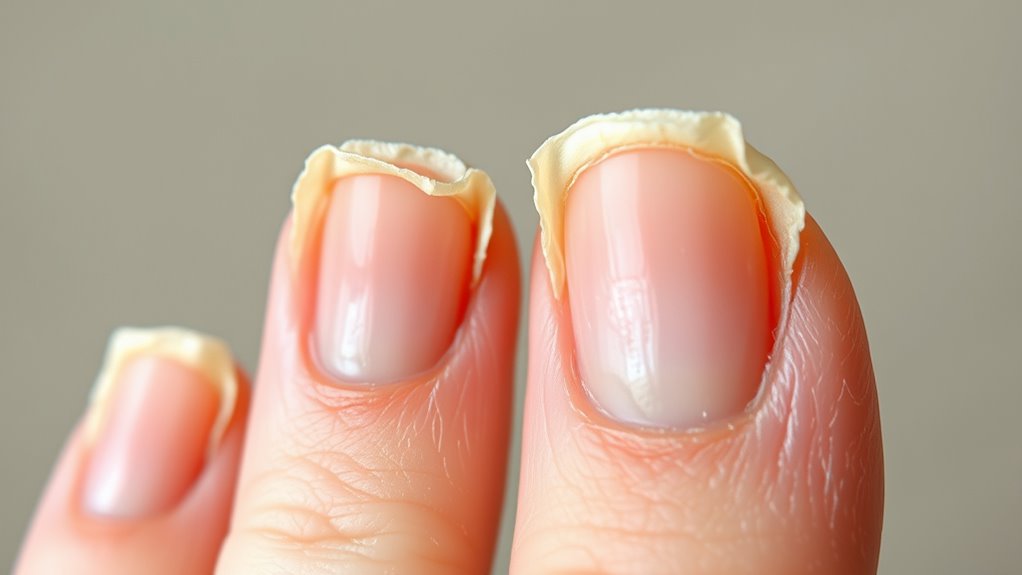
To prevent future nail damage, adopting simple habits can make a significant difference. First, limit your use of nail polish and always apply a strengthening base coat to protect your nails. When removing polish, choose acetone-free remover to avoid drying out your nails. Proper cuticle care is essential—gently push back cuticles instead of cutting them to prevent infections and splits. Keep your nails moisturized with nourishing oils or hand cream, especially after washing your hands. Avoid biting or picking at your nails, which can cause peeling and breakage. Wearing gloves during chores protects your nails from harsh chemicals and water. Regularly giving your nails a break from polish allows them to breathe and recover, helping to maintain stronger, healthier nails over time.
Frequently Asked Questions
Can Genetics Influence the Tendency for Peeling Nails?
Yes, genetics can influence your tendency for peeling nails. Your genetic predisposition and inherited traits play a role in nail strength and health. If peeling nails run in your family, you’re more likely to experience them yourself. While you can’t change your genetics, you can take steps to strengthen your nails, like using nourishing treatments and maintaining good hygiene. Recognizing genetic factors helps you better understand and manage your nail health.
How Do Age and Hormonal Changes Affect Nail Strength?
As you age, hormonal fluctuations and aging effects can weaken your nails, making them more prone to peeling. During hormonal changes, such as menopause or pregnancy, your body’s chemistry shifts, reducing nail strength. Aging naturally decreases collagen and keratin production, which affects nail resilience. To combat this, you should keep nails moisturized, eat a balanced diet rich in vitamins, and avoid harsh chemicals to help maintain their strength despite hormonal and age-related changes.
Are There Specific Medications That Cause Nail Peeling?
Certain medications can cause nail peeling as a side effect. You should watch out for drug interactions and medication side effects that may weaken your nails. For example, some antibiotics, retinoids, or chemotherapy drugs are known to affect nail health. If you notice peeling after starting a new medication, consult your healthcare provider. They can determine if the medication is the cause and suggest alternatives or solutions to protect your nails.
Can Nail Polish or Remover Damage Thin Nails?
Think of your nails as delicate bridges—nail polish effects and removers can weaken them if you’re not careful. Nail polish can cause thinning over time, especially with frequent use, while harsh removers with acetone strip away moisture and damage your nails’ surface. This increases peeling and brittleness. To protect your nails, opt for gentle, acetone-free removers and take breaks between polish applications, letting your nails rebuild their strength.
What Are Signs of Underlying Health Issues Linked to Nail Problems?
You might notice changes in your nails, like ridges, discoloration, or brittle, peeling nails, which can signal underlying health issues. Nutritional deficiencies, such as lack of iron or biotin, often cause these problems. Skin conditions like eczema or psoriasis can also affect nail health. If these signs persist, it is crucial to see a healthcare professional for proper diagnosis and treatment, ensuring any underlying issues are addressed promptly.
Conclusion
Taking care of your nails isn’t just about appearance—it’s a sign of your overall health. While some believe that applying lemon juice strengthens nails, there’s limited scientific proof. Instead, focusing on balanced nutrition, staying hydrated, and avoiding harsh chemicals can make a real difference. Regular care and consulting a professional if problems persist are key. Remember, healthy nails often reflect your body’s well-being, so treat them with the attention they deserve for stronger, peel-free nails.