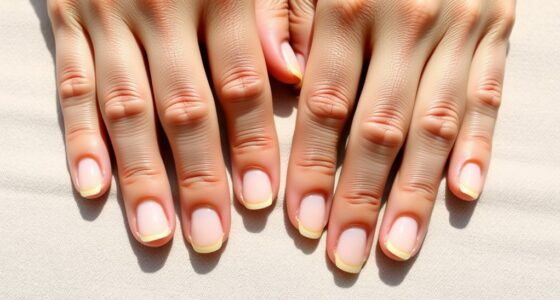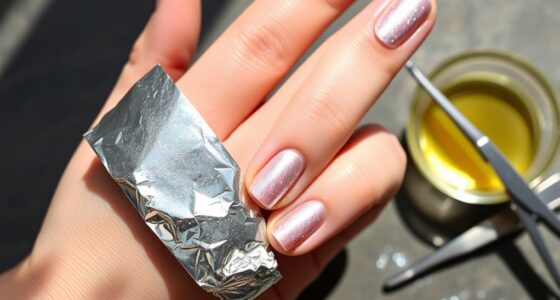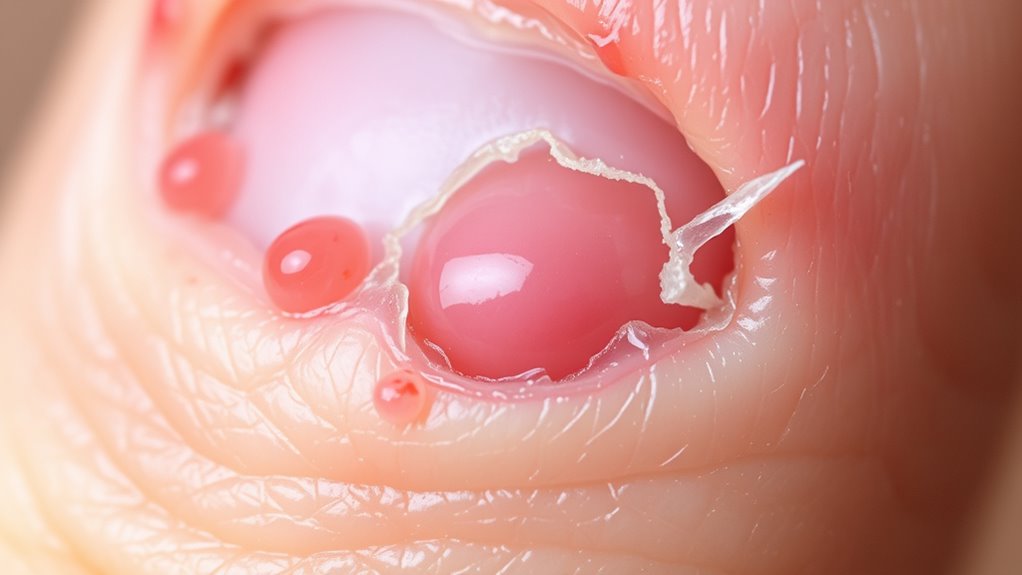

If your nail is partially torn or falling off, start by gently cleaning the area with warm water and disinfecting it to prevent infection. Cover it with a sterile bandage and avoid further trauma. Take over-the-counter pain relievers for discomfort and keep the finger elevated. Watch for signs of infection or severe damage; if symptoms worsen or bleeding persists, seek medical care. For more tips on handling nail injuries, keep exploring helpful advice.
Key Takeaways
- Assess injury severity; seek medical attention if bleeding persists or nail damage is deep or severe.
- Clean the area gently with warm water, disinfect, and cover with a sterile bandage.
- Manage pain and swelling using cold compresses and over-the-counter pain relievers.
- Protect the nail with proper care, avoid nail polish until healed, and prevent further trauma.
- Understand nail growth and maintain good nail hygiene to promote healthy regrowth and prevent infections.
Assessing the Severity of the Injury

To effectively treat nail injuries, you first need to determine how severe the damage is. Understanding nail anatomy helps you recognize injury symptoms, such as bleeding, swelling, or discoloration. If the damage only affects the superficial layers, like minor cracks or bruising under the nail, it’s usually less serious. However, if the injury exposes the nail bed or causes bleeding from the fingertip, it’s more severe and may require professional care. Look for signs like intense pain, nail detachment, or bleeding that doesn’t stop. Evaluating these symptoms helps you decide whether you can manage the injury at home or need to seek immediate medical attention. Accurately gauging the injury severity is vital for proper treatment and healing. AI-powered data analytics can also assist in assessing injury patterns and guiding decisions for optimal care.
Cleaning and Disinfecting the Affected Area

To properly care for a nail injury, you need to clean the affected area thoroughly. Using the right techniques helps remove dirt and debris effectively. Then, applying the appropriate disinfection methods guarantees the area stays protected from infection. Ensuring proper wound cleaning is essential for preventing complications and promoting healing.
Proper Cleaning Techniques
Proper cleaning is essential to prevent infection and promote healing after nail trauma. Start by washing your hands thoroughly with soap and water to remove dirt and bacteria. Gently rinse the affected area with warm water to clear away debris. Avoid nail biting, which can introduce germs and worsen the injury. If you have nail art on the surrounding skin, be cautious not to disturb it or cause further damage. Use a soft, clean cloth or cotton swab to carefully clean around the torn or missing nail area. Pat dry gently with a clean towel. Remember, keeping the area clean reduces the risk of infection and supports smoother healing. Proper cleaning practices are key to a safe recovery process. Additionally, using disinfectants suitable for skin can help eliminate lingering germs and prevent infection.
Disinfection Methods
After cleaning the affected area, it’s important to sterilize it thoroughly to prevent infection. You can use antiseptic solutions like hydrogen peroxide or alcohol, but natural remedies and alternative treatments can also be effective. Tea tree oil, for example, has natural antimicrobial properties and can be diluted with water for safe application. Apple cider vinegar’s acidity helps inhibit bacterial growth, making it a gentle disinfectant option. Keep in mind, though, that some natural remedies may cause irritation, so test first. Always ensure the area is dry before applying any disinfectant. Using these alternative treatments alongside proper cleaning can help reduce infection risk and promote healing naturally. Remember to follow up with appropriate wound care and monitor for signs of infection. Additionally, selecting a best value vacuum cleaner can help keep your home environment clean and reduce the overall risk of introducing bacteria or dirt into your living space.
Protecting the Nail Bed and Surrounding Skin

To protect the nail bed and surrounding skin, you should cover the injury area with a sterile bandage. This helps prevent bacteria from entering and reduces the risk of infection. Keeping the area protected is essential for proper healing and to avoid further damage.
Covering the Injury Area
When you’re caring for a nail injury, covering the affected area is essential to protect the nail bed and surrounding skin from infection and further damage. Use a sterile, non-stick bandage to shield the area, ensuring it stays clean. If you’re interested in nail art or want to hide the injury temporarily, avoid applying nail polish directly over the damaged skin or nail bed until it’s healed. Nail polish can trap bacteria and delay healing. Instead, keep the area covered with a breathable dressing. If you do decide to decorate your nails later, wait until the injury fully heals. Proper coverage minimizes risk and helps your nail recover faster, keeping your fingers safe and healthy. Additionally, understanding infection prevention measures can further support healing and reduce complications.
Preventing Infection Risks
Protecting the nail bed and surrounding skin from infection is essential during recovery. Keep the area clean and dry, and avoid touching it unnecessarily. Be cautious with nail polish removal; use gentle, non-acetone removers to prevent irritating the skin or damaging the nail bed. This helps reduce the risk of nail fungus, which can develop if moisture gets trapped under the nail or if bacteria enter through open skin. Always wash your hands before and after touching the injured area, and use sterile dressings if recommended by your healthcare provider. Avoid exposing the injury to dirty environments or contaminated water. Utilizing appropriate disinfectants can further lower infection risks and promote proper healing, ensuring your nail recovers safely and reduces complications.
Managing Pain and Swelling

Managing pain and swelling after nail trauma is essential for comfort and healing. Start by applying a cold compress or ice pack wrapped in a cloth to the injured finger for 15-20 minutes every few hours. Over-the-counter pain relievers like ibuprofen can reduce discomfort and inflammation. Elevate your hand to minimize swelling and prevent fluid buildup. Keep the area clean and dry to avoid complications like nail fungus, which can worsen pain and delay healing. Be mindful of cosmetic concerns, especially if the injury affects the appearance of your nail. If pain or swelling worsens despite these measures, or if you notice signs of infection, consult a healthcare professional. Proper management helps speed recovery and keeps your nail healthy and looking its best. Using expert voice actors in instructional content can enhance understanding and reassurance during recovery.
When to Seek Medical Attention

Seeking medical attention promptly is essential if you notice increased pain, swelling, or persistent bleeding that doesn’t stop after applying pressure. You should also see a doctor if you observe signs of infection or if nail fungus is worsening around the injured area. Additionally, consider professional care if you plan to remove nail polish, as improper removal can worsen the injury or introduce bacteria. Seek help immediately if:
- You see pus, increased redness, or warmth around the nail.
- The bleeding won’t stop after 10-15 minutes of pressure.
- The nail is completely torn off or severely damaged.
- You notice signs of infection or worsening nail fungus.
Somatic therapy techniques can also be used to help manage pain and emotional distress associated with nail injuries.
Prompt medical care can prevent complications and ensure proper healing.
Proper Care for a Partially Torn or Falling Nail

Have you noticed your nail is partially torn or starting to fall off? To care for it properly, keep the area clean and dry. Gently remove any loose nail fragments to prevent further tearing and reduce discomfort. If you want to maintain your nail aesthetics, avoid applying nail polish until the nail heals completely, and when removing polish, do so carefully to prevent additional damage. Protect the affected finger with a sterile bandage to prevent infection. If there’s significant pain or bleeding, seek medical attention promptly. Rest and avoid using that finger excessively. Proper care helps the nail grow back healthy and minimizes the risk of infection. Additionally, understanding the anatomy and growth process of nails can aid in effective treatment and recovery nail growth process. Remember, patience is key; your nail will take time to fully recover.
Preventing Future Nail Injuries

Taking steps to prevent future nail injuries can save you pain and the hassle of healing. To protect your nails, follow these tips:
- Be gentle when removing nail polish—use non-acetone remover and avoid scraping.
- Practice manicure safety by avoiding aggressive cuticle cutting or peeling.
- Wear protective gloves during chores or activities that risk impact or exposure to chemicals.
- Keep nails trimmed and filed to prevent snagging or breakage.
- Incorporate nail strengthening techniques such as using keratin-based treatments or moisturizing regularly to maintain nail health.
Frequently Asked Questions
How Can I Tell if the Nail Damage Is Infected?
You can tell if your nail damage is infected by watching for signs of infection and symptoms to watch. Look for increased redness, swelling, warmth, or pus around the nail. If you experience persistent pain, throbbing, or a foul odor, these are also signs of infection. If any of these symptoms appear, seek medical attention promptly to prevent the infection from worsening.
Are There Home Remedies to Speed up Nail Regrowth?
Imagine your nail gently pushing through new growth, slowly healing. You can try natural remedies like applying vitamin E oil or aloe vera to boost healing, and taking dietary supplements such as biotin or zinc to support nail growth from within. These tips may help speed up regrowth, but remember, patience is key. Keep your nails protected and maintain a balanced diet for the best results.
Can I Use Nail Polish or Treatments on a Damaged Nail?
You shouldn’t use nail polish or treatments on a damaged nail, as nail polish safety can be compromised and worsen the injury. Instead, focus on keeping the nail clean and dry. For nail treatment options, consult a healthcare professional before applying any products, especially if the nail is partially torn or falling off. Proper care helps prevent infection and supports healthy regrowth.
What Signs Indicate Nerve or Bone Injury Beneath the Nail?
If you notice numbness, tingling, or persistent pain, it could be a sign of nerve damage beneath the nail. Swelling, bruising, or deformity might indicate a bone fracture. If these symptoms occur, seek medical attention promptly. Don’t ignore severe pain or inability to move the finger, as these could signal serious nerve or bone injury. Getting evaluated guarantees proper treatment and prevents further complications.
Is It Safe to Perform Self-Treatment for a Torn Nail at Home?
You can handle minor nail tears at home using basic first aid tips and home remedies. Clean the area gently with soap and water, then apply an antiseptic. If there’s bleeding, apply pressure until it stops. Protect the nail with a sterile bandage and keep it dry. However, avoid attempting complex procedures; seek medical help if there’s severe pain, signs of infection, or if the nail is completely torn off.
Conclusion
Taking quick action can help your nail bounce back like a phoenix rising from the ashes. By evaluating, cleaning, protecting, and knowing when to seek help, you’re giving your nail the best chance to heal. Remember, your nail is like a tiny fortress—careful attention now prevents bigger problems later. With patience and proper care, you’ll be back to your normal self, confident and pain-free, ready to face whatever comes next.