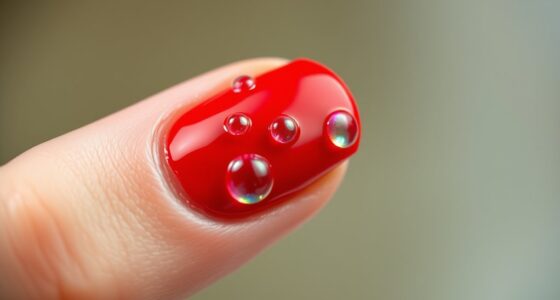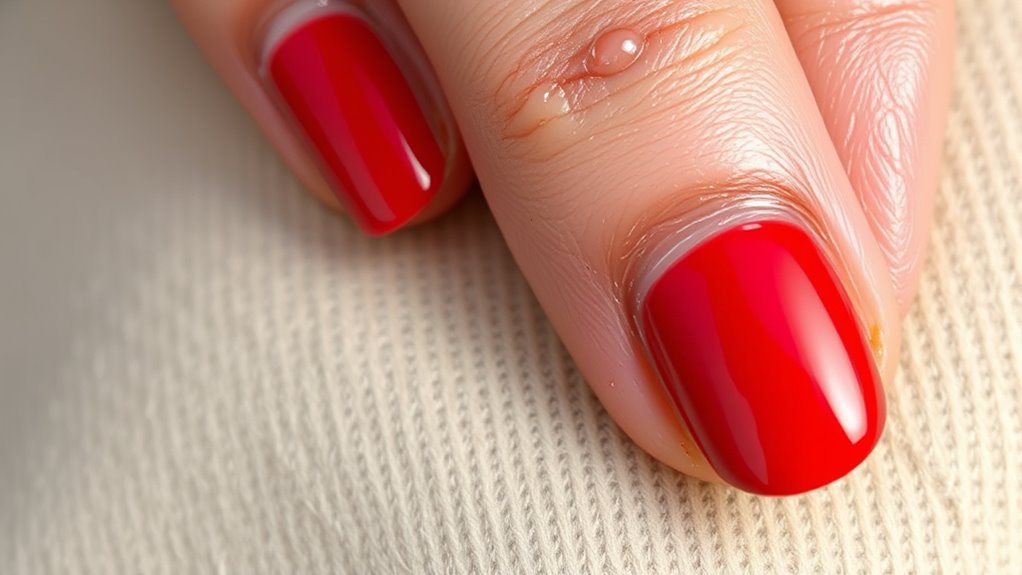

If your nail polish isn’t drying, it’s often due to applying thick coats, working in a cold or humid environment, or using a formula that’s too thick or runny. To fix this, apply thin layers, guarantee good air circulation, and choose quick-drying formulas or topcoats. Proper application is key, and if you keep having issues, there are more tips that can help speed up the process and prevent future drying problems.
Key Takeaways
- Applying thick coats or using old, thickened polish delays solvent evaporation and prolongs drying time.
- Cold, humid environments slow down drying; ensure good air circulation and moderate temperature.
- Using improper tools or techniques, like uneven application or skipping base coats, can cause sticking and slow drying.
- Employing quick-drying topcoats or sprays and using fans or cool air accelerates evaporation.
- Persistent tackiness or dullness may indicate product issues or nail health problems requiring professional advice.
Common Causes of Slow-Drying Nail Polish
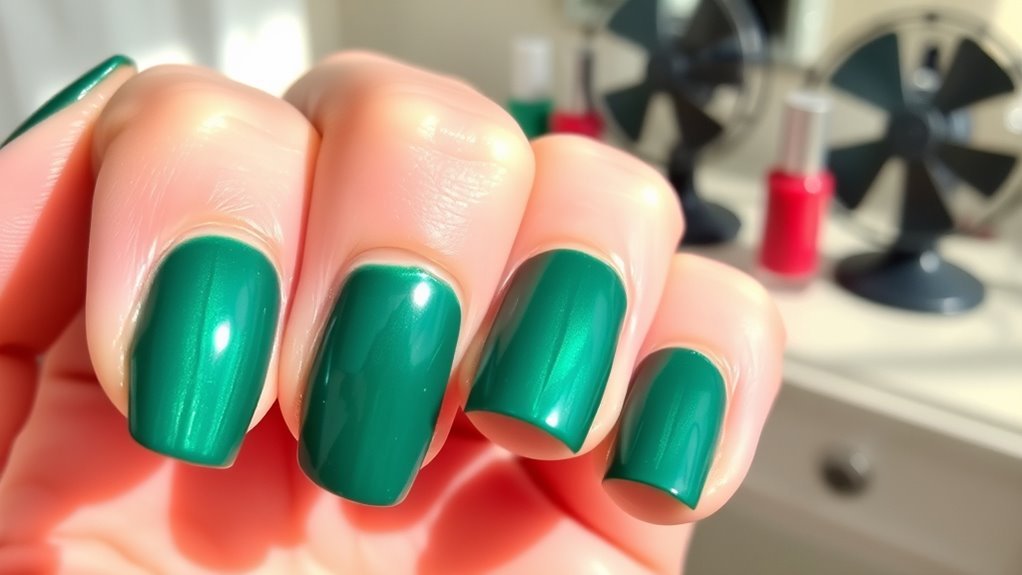
One common reason nail polish takes longer to dry is applying thick coats. When your nail polish consistency is too thick, it creates a barrier that slows down the evaporation of solvents, delaying the drying process. Additionally, store temperature plays a role; if you keep your polish in a cold environment, it can become more viscous, making it harder for it to dry quickly. Cold temperatures also cause the solvents to evaporate more slowly, extending drying times. To speed things up, guarantee your nail polish is at a proper consistency—thin it out if needed—and store it in a warm, temperature-controlled place. Properly managing both the polish’s consistency and store temperature helps you achieve faster, more even drying. Using topcoat treatments can also help seal in the polish and promote quicker drying times.
How Environment Affects Drying Time
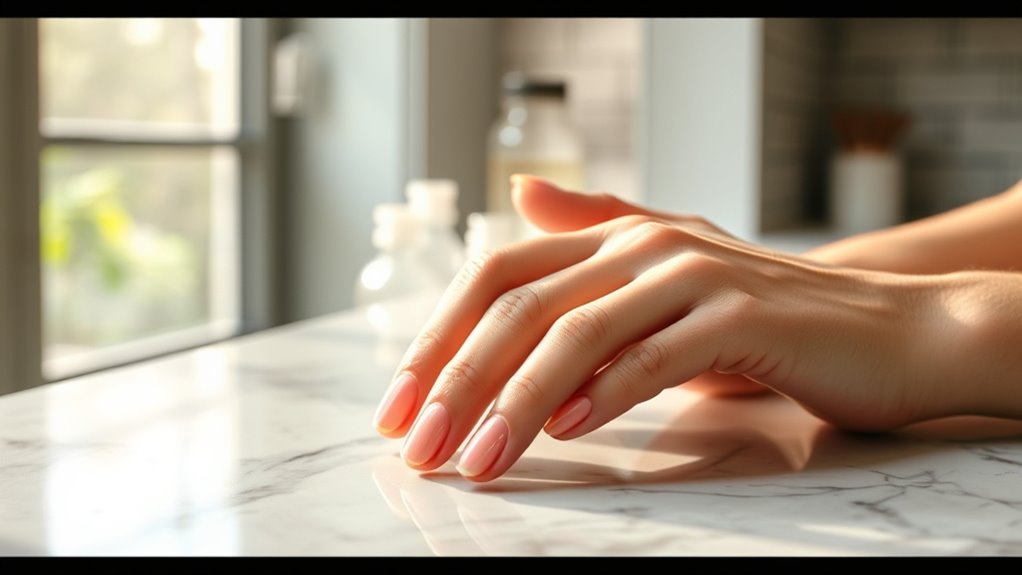
Your environment plays a significant role in how quickly nail polish dries. High humidity levels can slow down evaporation, making your polish stay tacky longer. Conversely, a dry environment helps the polish set faster. Air circulation also impacts drying time; good airflow can speed up evaporation by moving moist air away from your nails, while stagnant air traps moisture and prolongs drying. Avoid humid bathrooms or stuffy rooms when applying polish. Instead, choose a well-ventilated space with moderate humidity and airflow. Keep windows open or turn on a fan to improve air circulation. Additionally, certain tuning techniques can optimize the drying process by reducing excess heat and ensuring even curing. These environmental factors directly influence how quickly your nail polish dries, so optimizing your surroundings can save you time and frustration.
Choosing the Right Nail Polish Formula
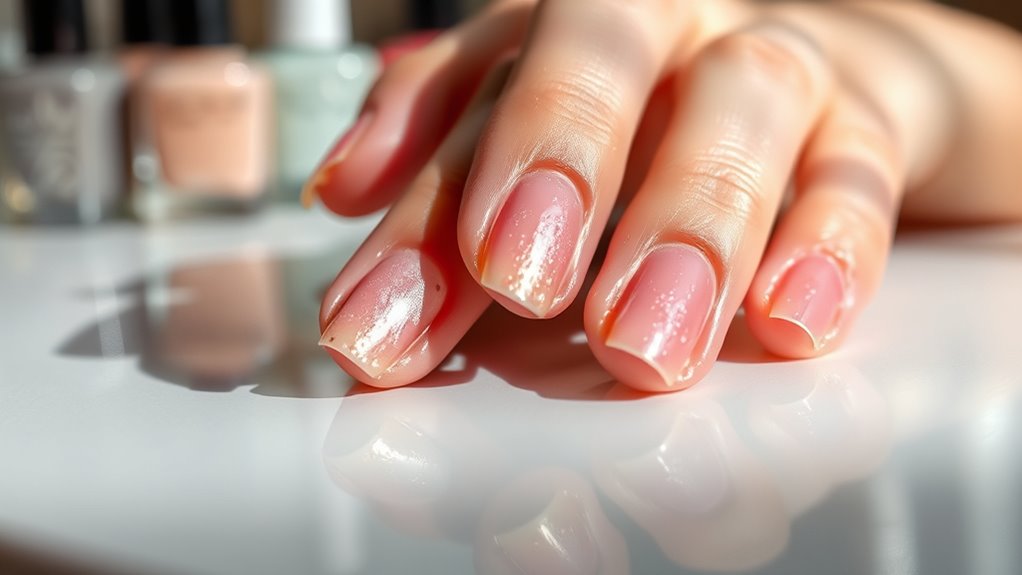
Selecting the right nail polish formula can substantially impact how quickly your nails dry and how long the finish lasts. Opt for polishes with a balanced nail polish consistency—neither too thick nor too runny. Ingredient formulations matter: look for those with quick-drying components and fewer solvents that can prolong drying time.
| Nail Polish Type | Best For |
|---|---|
| Gel | Long-lasting, high shine |
| Creme | Smooth application, quick dry |
| Sheer | Natural look, fast drying |
| Matte | Unique finish, moderate drying time |
| Glitter | Decorative, requires special removal |
Choosing formulas suited to your preferences ensures a smoother, faster drying experience and a longer-lasting finish.
Proper Application Techniques for Faster Drying
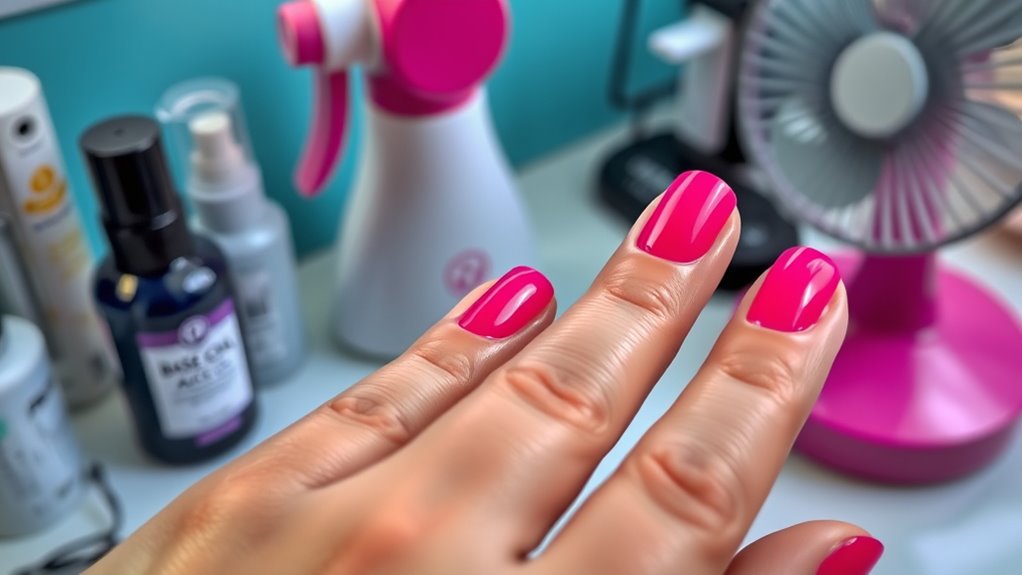
Applying thin, even coats of nail polish is essential for faster drying and a smoother finish. Use proper brush techniques by starting at the base of your nail and pulling the brush toward the tip in smooth strokes. Avoid thick layers, which take longer to dry and can cause smudging. Always apply a base coat first; it creates a smooth surface and reduces the likelihood of uneven application. When applying polish, work quickly but carefully, ensuring each stroke is even. If you notice streaks or uneven spots, lightly drag the brush over the area to blend. These techniques help minimize drying time and improve the overall look of your manicure. Proper application is key to achieving a quick-drying, flawless finish. Additionally, practicing dynamic communication exercises can help you stay relaxed and focused during your manicure, reducing the chances of accidental smudges.
Tips and Tricks to Accelerate Drying Time
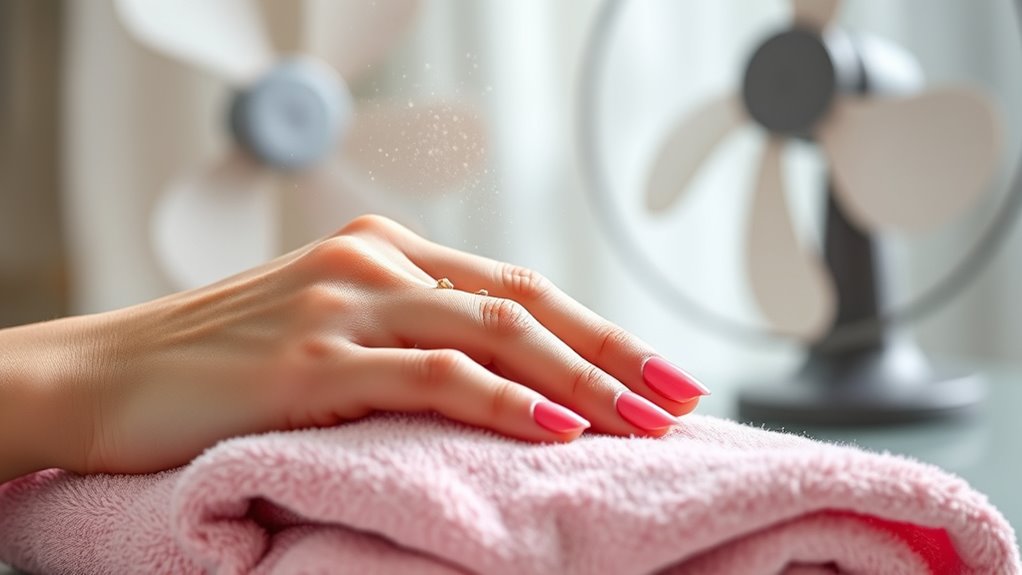
To speed up the drying process, incorporating quick-drying topcoats or sprays can make a significant difference. These innovative drying methods work by creating a thin, fast-evaporating layer that accelerates the overall drying time. Additionally, understanding nail polish ingredients helps you choose formulas that dry faster naturally. Using a fan or cool air can also help set your polish quicker. Here’s a quick comparison:
| Method | Effectiveness | Best For |
|---|---|---|
| Quick-drying topcoats | Fastens drying process | Smooth, shiny finish |
| Nail sprays | Evaporates solvent quickly | On-the-go touch-ups |
| Cold air from fan | Cools and solidifies polish | General speed improvement |
| Innovative drying devices | Rapid, consistent results | Regular use |
Being aware of market dynamics can help you choose the best method for your needs. These tips help you achieve a flawless finish in less time.
When to Seek Professional Help
If your nail polish stays tacky or never fully dries, it’s time to contemplate professional help. Persistent dryness signs can indicate underlying issues that at-home solutions can’t fix. Don’t wait too long—consult a nail technician or dermatologist if problems persist. Recognizing industry trends can also help in understanding potential causes and effective treatments.
Persistent Dryness Signs
Persistent dryness that lingers long after your nails should be dry can be a sign that something’s wrong. If your nail polish remains dull, tacky, or prone to chipping despite ample drying time, it may indicate underlying issues with nail health or moisture retention. Your nails might be dehydrated or damaged, preventing proper moisture balance and causing the polish to stay wet or sticky longer than usual. Recognizing these signs early is important because they can signal more serious problems, such as infections or nail disorders. If you notice persistent dryness along with other symptoms like brittleness, peeling, or discoloration, it’s time to contemplate seeking professional help. Addressing these issues can improve both your nail health and your polish’s ability to dry properly. Additionally, improper nail preparation or the use of low-quality products can contribute to prolonged drying times and nail issues.
When to Consult Experts
Knowing when to see a professional is essential if your nail polish remains wet or tacky long after it should be dry, especially if this issue persists despite proper application and drying time. If you’re attempting nail art or DIY fixes and still face drying problems, it might be time to consult an expert. Persistent tackiness could indicate a problem with your nail polish formula or application technique. Professionals can assess whether your products are expired or incompatible with your nails or if you need specialized treatments. Ignoring ongoing issues can damage your nails or lead to infections. When DIY fixes aren’t working, seeking professional help ensures your nails stay healthy and your nail art turns out flawless. Additionally, understanding product expiration dates can prevent future drying issues and ensure you’re using effective products. Don’t hesitate to get expert advice if problems continue.
Frequently Asked Questions
Can Using a Hairdryer Speed up Nail Polish Drying?
Using a hairdryer can speed up nail polish drying, but you need to be careful. Aim the dryer at a safe distance to improve air circulation around your nails without blowing hot air directly onto the polish, which can cause smudging. Keep the nail temperature consistent and avoid overheating. This technique helps evaporate excess solvents, but don’t rush—allow enough time for your nails to dry completely for the best results.
Does Applying a Top Coat Help the Polish Dry Faster?
Applying a top coat can help your nail polish dry faster because of its benefits, like creating a smooth, protective layer. This layer reduces the risk of smudging and promotes quicker drying time. Plus, a good top coat enhances shine and longevity. To speed up drying, make sure to apply thin coats and let each layer set fully before adding the next. This method optimizes drying time and keeps your nails looking flawless longer.
Are Gel or Hybrid Polishes Quicker to Dry Than Regular Ones?
Gel or hybrid polishes dry faster than regular ones because they cure under UV or LED light, setting instantly. Gel vs regular polish takes minutes to fully dry, while regular polish can take hours. Hybrid vs gel combines the best of both, offering quick curing with a durable finish. If you’re short on time, choose gel or hybrid for speedy results, but remember, proper curing is essential for durability.
How Long Should I Wait Before Exposing Nails to Water?
Think of your freshly painted nails as delicate glassware; you wouldn’t want to expose it to water too soon. Wait at least 24 hours for proper drying time before water exposure. This allows the polish to set fully, preventing smudges or dents. Rushing it could ruin your work. Be patient, and your nails will stay flawless, with the water exposure happening only when your polish is completely dry and secure.
Can Certain Nail Treatments or Base Coats Interfere With Drying Time?
Yes, certain nail treatments or base coats can interfere with drying time due to chemical interactions. If your base coat contains ingredients that don’t fully dry or cure, it can prevent your polish from setting properly. Proper nail prep is essential; make sure you allow each layer to dry completely before applying the next. Using compatible products designed for quick-drying can also help minimize delays and improve overall drying time.
Conclusion
Think of your nail polish as a delicate butterfly emerging from its cocoon. If you rush or rush it prematurely, it might never fully take flight. By understanding the causes, choosing the right formula, and applying proper techniques, you’re guiding that butterfly gently out into the world. Patience is your best tool—soon enough, your nails will be a beautiful, lasting masterpiece. Trust the process, and let your nails shine like a butterfly in full flight.