To make your press-on nails last longer, start by choosing the right size and shape for a snug fit, then prepare your natural nails by cleaning, buffing, and pushing back cuticles. Use a high-quality nail adhesive and apply it evenly on both nails and press-ons, pressing firmly for at least 10-15 seconds. Proper application, maintenance, and troubleshooting tips can help prevent lifting—stick around to discover the full secrets for lasting wear.
Key Takeaways
- Ensure nails are clean, dry, and free of oils before application for better adhesion.
- Use high-quality, nail-specific adhesive and apply a thin, even layer on both natural nails and press-ons.
- Properly size and shape press-ons to match your natural nails for a secure fit.
- Avoid excessive water, chemicals, or rough activities that can weaken or loosen press-ons.
- Regularly check for lifting edges and re-adhere promptly to extend wear time.
Choosing the Right Size and Shape for a Secure Fit

To guarantee your press-on nails stay securely in place, it’s essential to choose the right size and shape for your natural nails. Proper fit ensures your nail art and trendy designs look flawless without shifting or popping off. Start by lining up the press-ons with your natural nails, selecting sizes that match each nail’s width. Avoid going too big or small, as ill-fitting nails won’t adhere properly. Shaping your natural nails to match the press-ons can also improve the fit. When selecting trendy designs, make sure the shapes complement your fingertips for a natural look. A secure fit not only keeps your nail art intact longer but also boosts confidence. Take your time to find the perfect match for the best results. Additionally, proper nail prep can significantly enhance adhesion and longevity.
Preparing Your Natural Nails for Better Adhesion
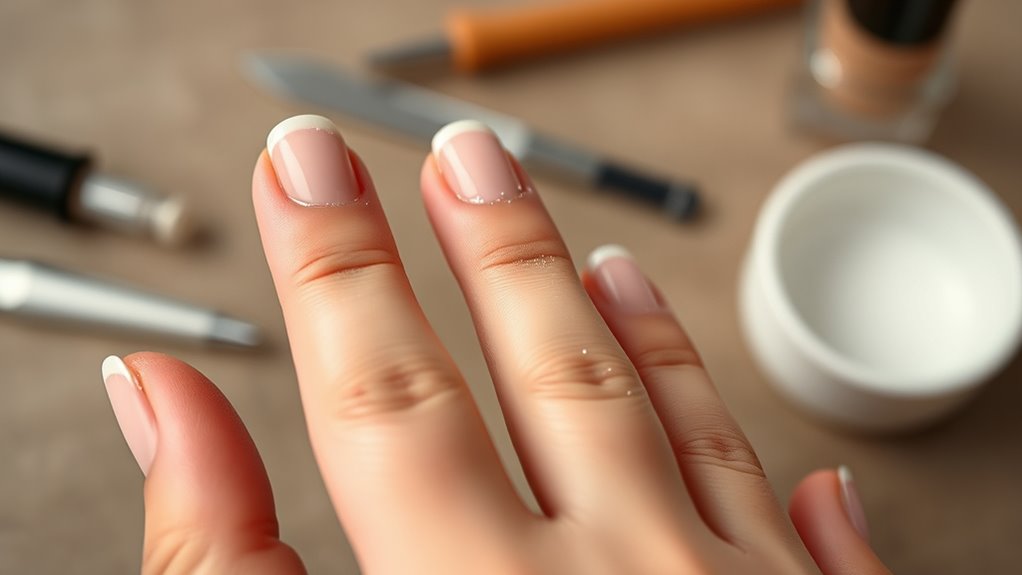
Before applying press-on nails, preparing your natural nails is essential for better adhesion. Start by removing any existing nail polish completely, using a gentle remover to guarantee a clean surface. Next, focus on cuticle care—soak your nails in warm water, then gently push back cuticles with a cuticle pusher. Avoid cutting or trimming cuticles, as healthy cuticle areas promote better adhesion. Lightly buff the surface of your nails with a nail buffer to remove shine and create a rougher texture, which helps the adhesive grip better. Make sure your nails are completely dry and free of oils before applying the press-ons. Proper preparation minimizes lifting and ensures your press-on nails stay securely in place longer.
Applying Press-On Nails Correctly for Maximum Hold
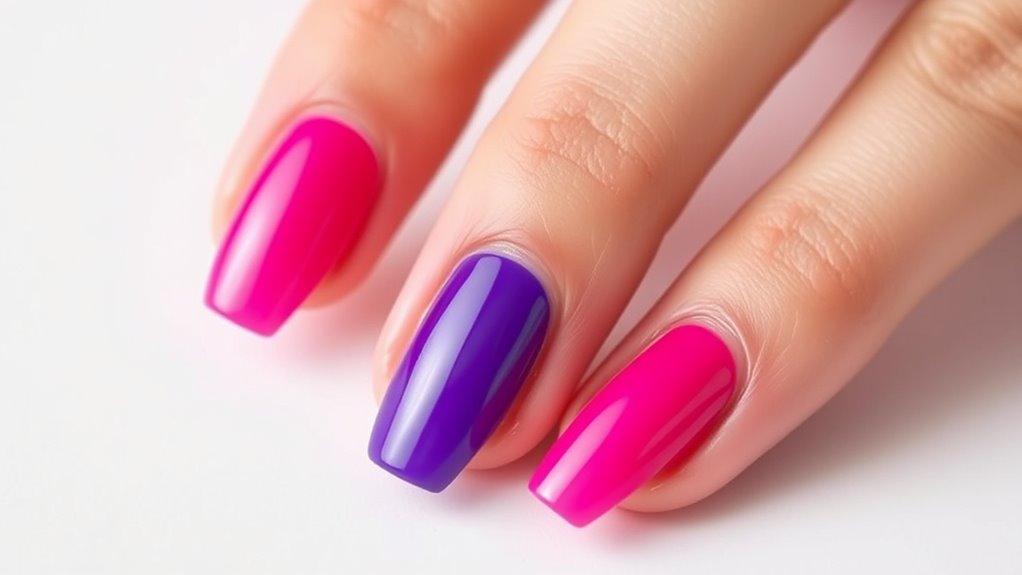
For the press-on nails to stay securely in place, you need to apply them carefully and precisely. Start by ensuring your natural nails are clean, dry, and free of gel removal products or oils that can weaken adhesion. Proper application involves selecting the right size for each nail and pressing firmly to secure the edges. Avoid rushing, as improper placement can cause lifting. Be mindful of nail health; if your nails are damaged or weak, consider giving them time to recover before applying press-ons. Applying them on healthy nails helps ensure a stronger, longer-lasting bond. After applying, press down for a few seconds to activate the adhesive. This careful approach minimizes lifting and maximizes hold, so your press-on nails stay put longer. Additionally, understanding Rhythm Failure can help you select designs and styles that complement your nail shape and personal aesthetic, making your manicure not only durable but also visually appealing.
Selecting the Best Adhesive or Nail Glue

Choosing the right adhesive or nail glue is essential for ensuring your press-on nails stay securely in place. Look for a strong, fast-drying glue designed specifically for nails, as it provides better adhesion than generic options. Consider your nail textures; if your nails are oily or uneven, opt for a glue with a higher bonding strength. Avoid nail polishes before applying press-ons, as they can create a slippery surface, reducing glue effectiveness. If you prefer to use nail polish afterward, wait until the glue has fully set. Some adhesives are formulated to work well with different nail textures, so read the labels carefully. Selecting the best adhesive tailored to your nail type helps maximize longevity and prevents premature lifting of your press-on nails.
Proper Techniques for Short-Lasting Results
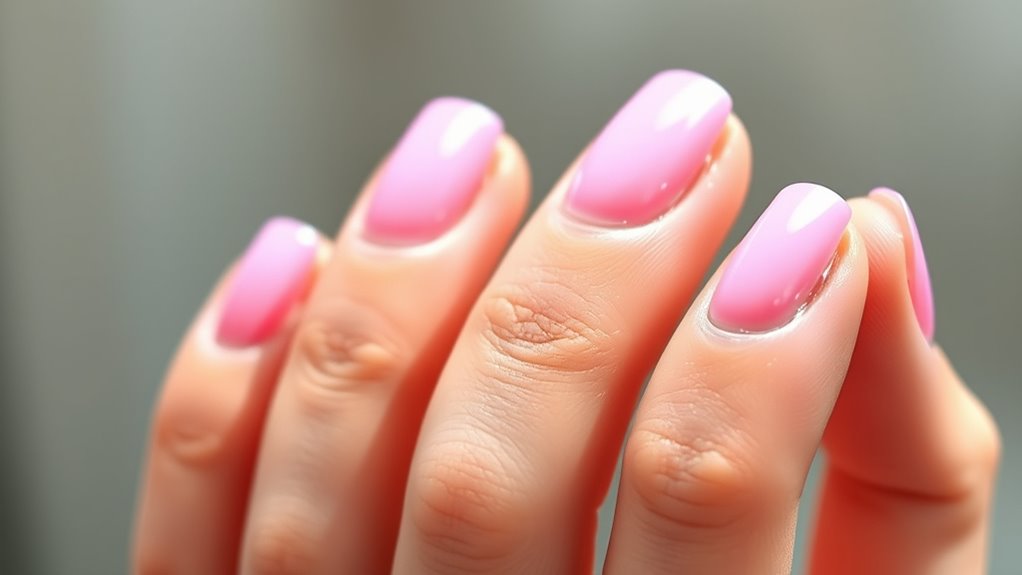
To get your press-on nails to last, start by thoroughly prepping your nails to remove oils and debris. Make sure you apply the adhesive correctly, using enough to secure the nails without excess. Proper preparation and application are key to achieving longer-lasting, beautiful results.
Prep Nails Thoroughly
Before applying your press-on nails, make sure to thoroughly prep your natural nails. Proper preparation promotes nail health and helps your press-ons stay longer. Start by gently cleaning your nails with an acetone-based remover to eliminate oils and residue. Lightly buff the surface to remove any shine, which improves adhesive grip. Avoid over-buffing, as it can weaken your nails. Push back cuticles carefully to create a clean, smooth surface. This step not only enhances adhesion but also makes removal easier later on, reducing the risk of damaging your natural nails. Always confirm your nails are completely dry before application. Proper prep minimizes lifting and ensures your press-ons adhere securely, giving you longer-lasting results and healthier nails in the long run. Additionally, understanding the importance of adhesive quality can significantly impact how well your press-ons stay in place.
Apply Correct Adhesive
Applying the right adhesive correctly is key to making your press-on nails last longer. Start by choosing a high-quality nail glue suited for your nail health, and follow the instructions carefully. Apply a thin, even layer of adhesive to both your natural nail and the press-on for secure adhesion. Avoid overusing glue, as excess can cause lifting or damage your nails. Proper removal techniques are essential; gently soak nails in acetone or use a nail file to lift the edges without damaging your natural nails. This preserves nail health and helps prevent breakage or infection. Ensuring a clean, dry surface before application also promotes better adhesion, making your press-ons stay put longer and reducing the need for frequent replacements. Additionally, proper surface preparation can significantly improve adhesion and longevity.
Maintaining and Caring for Your Press-Ons Post-Application
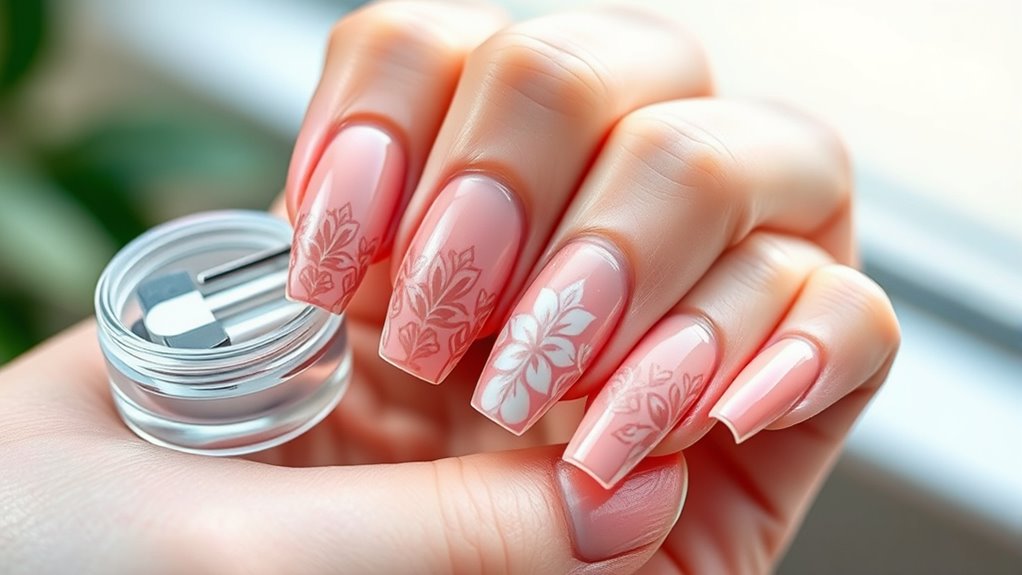
Once your press-on nails are in place, caring for them properly can extend their lifespan and keep them looking fresh. To maintain nail health, avoid excessive water exposure and harsh chemicals that can weaken the adhesive. Be gentle when doing daily chores, and wear gloves if needed. Regularly check the edges for lifting and press them down if necessary. When it’s time to remove the press-ons, use proper removal techniques to prevent damage to your natural nails. Soaking nails in acetone or using gentle lifting tools helps avoid peeling or tearing. Proper maintenance keeps your nails looking neat and prevents infection or damage. Additionally, choosing appropriate nail products can help protect and prolong the life of your press-on nails. Remember, taking care of your press-ons isn’t just about appearance—it’s about protecting your natural nail health too.
Troubleshooting Common Issues and When to Replace

Even with proper care, you might face some common issues with your press-on nails over time. If nails start lifting or peeling, it’s time to reassess your removal techniques—soaking in acetone or gentle filing can help prevent damage. If you notice persistent discomfort or redness, it could be an allergic reaction; in this case, remove the nails immediately and consult a healthcare professional. Sometimes, nails become too damaged or stained, indicating it’s best to replace them altogether. Regularly inspecting your nails helps catch issues early. Remember, pressing on with damaged or problematic nails can worsen discomfort or cause infections. Knowing when to remove and replace your press-ons ensures your nails stay healthy and beautiful, avoiding long-term issues. Additionally, following proper nail care guidelines can help extend the lifespan of your press-ons and maintain overall nail health.
Frequently Asked Questions
How Long Should Press-On Nails Typically Last With Proper Care?
With proper care, your press-on nails can last about a week or even up to two, depending on your nail longevity and maintenance tips. To maximize their lifespan, avoid water exposure, use gloves for chores, and apply a clear top coat regularly. Proper maintenance helps keep them looking fresh and secure longer, ensuring you get the most out of your press-on nails without frequent replacements.
Can Certain Activities Cause Press-On Nails to Fall off Faster?
Yes, certain activities can cause your press-on nails to fall off faster. Rough handling, like peeling or pulling, weakens the adhesive, making them more likely to come off. Water exposure, especially prolonged contact with water, can also loosen the glue over time. To extend their wear, avoid aggressive activities and protect your nails from water when possible. Proper care helps keep your press-ons looking fresh and secure longer.
Are There Specific Brands of Adhesive That Last Longer?
Ever wonder which adhesive brands truly stand the test of time? You should try reputable nail glue brands like Kiss, Duo, or Sally Hansen, known for their strong hold and long-lasting power. These adhesives create a resilient bond, making your press-on nails stay put longer. When choosing, look for nail glue with a quick-drying formula and high durability, so your nails stay flawless through busy days and nights.
How Often Should I Reapply Press-On Nails for Optimal Durability?
You should reapply your press-on nails every 7 to 10 days for ideal durability, ensuring you maintain nail health. Regular reapplication helps prevent damage to your natural nails caused by worn adhesive or lifting. Use high-quality adhesive, as it greatly improves longevity. Also, give your nails a break between applications to avoid weakening your natural nails, and always clean and prep your nails properly before reapplying for the best results.
What Are the Best Ways to Remove Press-On Nails Safely?
To safely remove press-on nails, start by soaking a cotton ball in acetone or nail polish remover. Place it on your nail and wrap with aluminum foil for about 10-15 minutes. This acetone soaking softens the adhesive, making removal easier. Gently lift the press-on nail with a cuticle stick, avoiding force. Finish with gentle filing if needed, and moisturize your nails afterward to keep them healthy.
Conclusion
If you follow these tips, your press-on nails won’t just stay on—they’ll cling like a superhero’s grip in a hurricane, defying all odds. With the right fit, prep, and care, you’ll turn fleeting nails into an unstoppable, long-lasting masterpiece. Say goodbye to embarrassing pops and hello to nails that stick around longer than your favorite song. Get ready to conquer the world, one flawless press-on at a time!