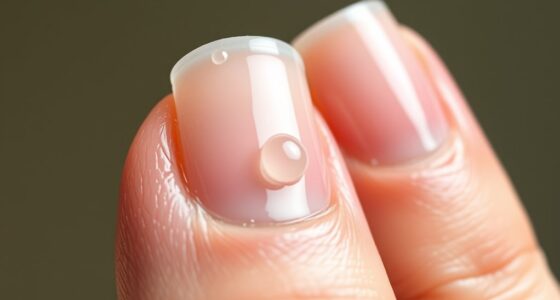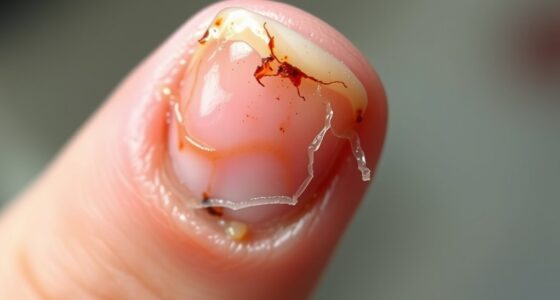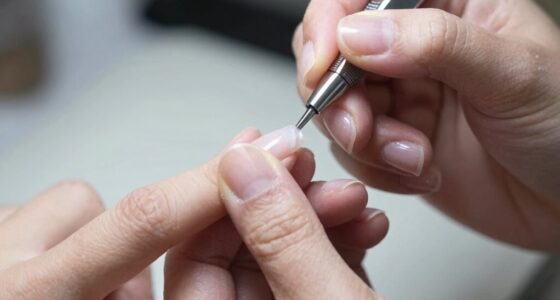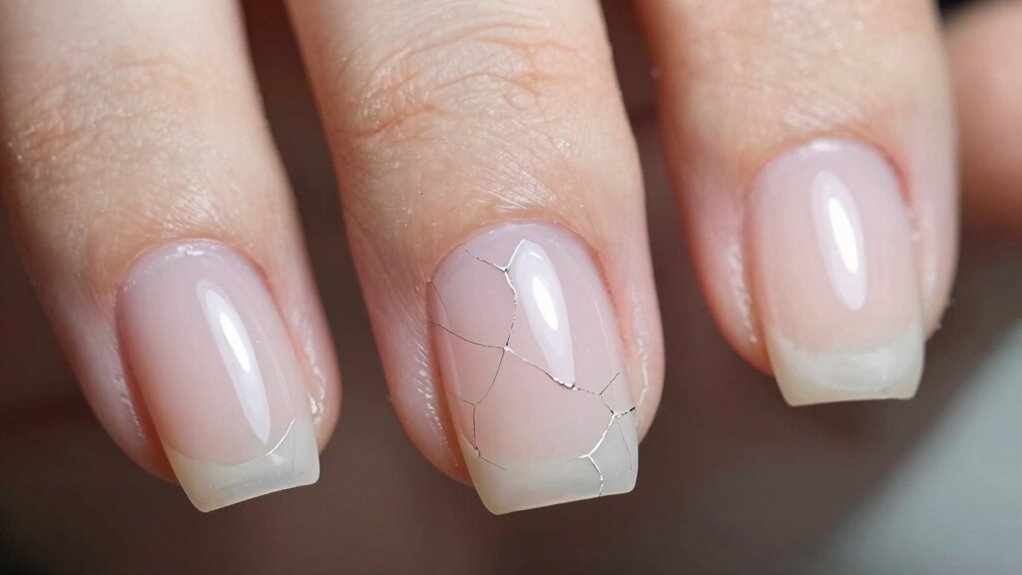

Gel overlays crack mainly because of weak nails, poor application, or external forces like water, heat, or impacts. To troubleshoot, start by ensuring your nails are healthy and free of oil or debris before applying gel. Use quality products, apply thin layers, and cure thoroughly. Protect your nails by wearing gloves during chores. If cracks appear, addressing the cause early can prolong your overlay’s life. Want to discover more tips to stop cracks before they start?

Get beauty and skincare favorites delivered free with Prime
- Fast, free delivery on millions of items
- Prime Video, Amazon Music and more included
- Member-only deals all year
Key Takeaways
- Poor nail health or weakness can lead to cracking of gel overlays.
- Applying thick or uneven gel layers increases the risk of cracks.
- External factors like water, heat, or impact weaken gel bonds over time.
- Using low-quality gel products reduces durability and adhesion.
- Regular nail maintenance and prompt repairs prevent further damage and cracking.

Gel overlays are a popular choice for adding strength and length to your nails, but cracks can sometimes develop, causing frustration. When this happens, it’s essential to understand why your overlay might be cracking and how to troubleshoot the issue effectively. One of the first things to consider is your nail health. If your nails are weak, brittle, or prone to peeling, they may not support the gel overlay properly, leading to cracks. Making sure your nails are healthy before applying gel overlays can make a considerable difference. Regularly moisturizing and nourishing your nails and cuticles helps maintain their strength, making them less susceptible to breakage. Additionally, avoiding harsh chemicals and excessive filing can preserve your nail’s natural integrity.
Healthy nails are key to preventing cracks in gel overlays—moisturize, nourish, and avoid harsh chemicals.
Another critical factor is product selection. Not all gel products are created equal, and choosing the right one can influence the longevity of your overlay. Low-quality gels or those with poor adhesion properties tend to crack more easily, especially if applied improperly. Opt for reputable brands known for their durability and flexibility, which can better accommodate the natural movement of your nails. When selecting products, pay attention to the gel’s consistency—thicker gels might be easier to work with, but they can also be more prone to cracking if not applied correctly. Conversely, very thin gels may not provide enough strength. Always follow the manufacturer’s instructions regarding curing times and application techniques to guarantee the best adhesion and flexibility.
Application technique plays a vital role in preventing cracking. If the gel isn’t properly prepared or applied in thin, even layers, it can lead to weak spots that crack over time. Make sure your nails are clean, dry, and free of oils before applying the gel overlay. Properly buffing the nail surface helps create a better bond. When applying the gel, use thin coats and cure each layer thoroughly to avoid any uncured product that might cause weak spots or lifting. Also, be mindful of your daily activities; excessive pressure or impact on your nails can cause cracks, regardless of how well you’ve applied the gel. Using proper nail prep techniques can significantly reduce the risk of issues down the line. Additionally, understanding nail flexibility and how it can influence gel performance can help you choose the most suitable products for your needs, especially since nail health can be affected by factors like diet, hydration, and overall wellness. Recognizing the importance of product quality and how it impacts durability can guide you toward better choices for long-lasting results.
Finally, think about your lifestyle and habits. Overexposure to water, heat, or chemicals can weaken gel overlays and contribute to cracking. Wearing gloves during cleaning or dishwashing can extend the life of your manicure. If cracks do develop, it’s wise to remove the overlay promptly to prevent further damage and to give your nails a chance to recover. It’s also beneficial to be aware of nail health and how it impacts your gel application, as healthy nails are less prone to cracking. By paying attention to your nail health, selecting quality products, and applying them correctly, you can greatly reduce the chances of cracks and enjoy a longer-lasting, beautiful gel overlay.
As an affiliate, we earn on qualifying purchases.
Frequently Asked Questions
Can Certain Nail Shapes Cause Gel Overlays to Crack More Often?
Yes, certain nail shapes can affect the crack frequency of gel overlays. For example, pointed or almond shapes may put more stress on the overlay’s edges, compromising the structural integrity. Round or squoval shapes tend to distribute pressure more evenly, reducing cracks. When choosing a nail shape, consider how it impacts the overlay’s durability and make sure proper application technique to support the structural integrity of your gel nails.
Does the Thickness of the Gel Overlay Affect Its Durability?
Yes, the thickness of your gel overlay impacts its durability. If it’s too thick, it’s more prone to cracking because it can’t flex with your nail movements. Proper nail preparation and application techniques are essential—you should thin out the gel layers and guarantee each coat is cured correctly. Avoid over-application, and focus on building strength gradually to prevent cracking and maximize longevity.
Are Specific Brands of Gel Overlays More Prone to Cracking?
You might worry that certain brands cause more cracking, but brand comparison isn’t the only factor. Durability factors like application technique, thickness, and curing play big roles. Some brands are known for stronger overlays, but even the best can crack if not applied correctly. Focus on proper prep, thin layers, and curing to prevent cracks, regardless of the brand. Quality and technique often outweigh brand reputation.
How Does Ambient Temperature Impact Gel Overlay Longevity?
Ambient temperature greatly influences gel overlay longevity due to temperature sensitivity. If you work in a room that’s too hot or cold, it can affect how the gel cures and adheres, leading to cracks. To prevent this, maintain a stable environment, and use proper application techniques like thorough curing times and proper surface prep. Keeping the workspace controlled ensures your gel overlays stay smooth, durable, and crack-free longer.
Can Nail Art or Decorations Influence Gel Overlay Cracking?
Nail art and decorations can act like a loaded gun for cracking gel overlays if not applied carefully. Heavy or uneven decorations create stress points, much like cracks in a windshield, leading to potential breakage. The decoration influence can weaken the overlay’s integrity, especially if adhesives aren’t secure or if they’re applied after curing. To keep your nails intact, choose lightweight designs and guarantee proper adhesion and curing.
As an affiliate, we earn on qualifying purchases.
Conclusion
Remember, just like a well-built bridge needs a solid foundation, your gel overlays require proper prep and application. I once watched a technician fix a crack in a client’s overlay, and it reminded me how tiny flaws can lead to big problems—like cracks forming from a small, unnoticed chip. With patience and attention to detail, you can prevent cracks and keep your overlays smooth and durable. Trust the process, and your nails will stand strong against the test of time.
As an affiliate, we earn on qualifying purchases.
As an affiliate, we earn on qualifying purchases.
Fall Picks
fall essentials
As an affiliate, we earn on qualifying purchases.