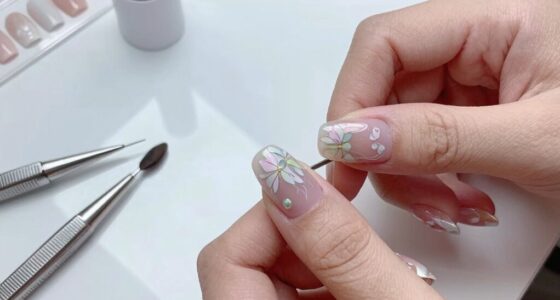
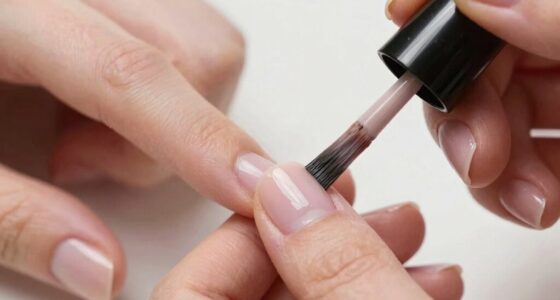
Use rubber base in a service plan when your clients engage in activities that put frequent stress or trauma on their nails—such as manual work or sports. It’s ideal when shifting clients from acrylic or gel to a more flexible, resilient option. Rubber base also extends the lifespan of manicures prone to chipping or lifting. If you want to discover how to optimize your application and client results, keep exploring the benefits of this versatile product.

Get beauty and skincare favorites delivered free with Prime
- Fast, free delivery on millions of items
- Prime Video, Amazon Music and more included
- Member-only deals all year
Key Takeaways
- Use for clients with fragile, brittle, or compromised nails needing a flexible, strong foundation.
- Apply when clients engage in activities that cause frequent nail stress or impact.
- Opt for rubber base when transitioning clients from acrylic or gel to a more durable, flexible option.
- Choose for manicures prone to chipping, lifting, or damage to enhance longevity.
- Use to improve overall nail health and prevent damage over time with proper application.

Choosing the right base for your service plan is essential to guarantee durability and customer satisfaction. When it comes to nail enhancements or coatings, rubber base has become increasingly popular because of its flexibility and strength. Knowing when to use rubber base in a service plan involves understanding its unique properties and how it can enhance the overall application. The key is in the base application process and how it integrates with the entire service plan. Rubber base isn’t just a trend; it’s a strategic choice that can improve the longevity of the manicure, especially when used appropriately.
Rubber base works particularly well for clients with fragile or compromised nails because it offers superior flexibility compared to traditional gel or acrylic bases. Its elasticity allows it to move with natural nail growth and daily movements, reducing the risk of cracking or lifting. If your client has brittle or thin nails, incorporating a rubber base into the service plan makes sense. It provides a strong foundation while maintaining flexibility, which helps prevent damage over time. When performing the base application, you should guarantee the nail surface is properly prepped—cleaned, dehydrated, and slightly buffed—to optimize adhesion. Proper preparation is vital for seamless service plan integration and lasting results.
Deciding when to use rubber base also depends on the specific needs of your client and the type of service you’re providing. For example, if your client engages in activities that cause their nails to experience frequent stress or trauma, rubber base can absorb some of that impact. It’s especially beneficial for those who work with their hands or perform manual labor, as it enhances durability without sacrificing flexibility. Incorporating rubber base early in the service plan setup guarantees that the entire process benefits from its resilient properties. This strategic base application not only improves the lifespan of the manicure but also boosts client satisfaction by reducing chipping or lifting issues.
Additionally, rubber base can be a good choice when shifting clients from acrylic or gel to a more flexible option. It’s compatible with various top coats and color layers, making it easy to integrate into existing service plans. As part of your service plan integration, consider explaining these benefits to your client, emphasizing how rubber base enhances their nail health and manicure longevity. This transparency builds trust and encourages repeat visits. Recognizing the importance of proper piercing care and hygiene can also help maintain the overall health and integrity of the nails and surrounding skin. Ultimately, knowing when to incorporate rubber base into your service plan means evaluating the client’s nail condition, lifestyle, and the desired outcome, allowing you to provide a customized and durable solution that aligns with their needs.
As an affiliate, we earn on qualifying purchases.
Frequently Asked Questions
How Long Does a Rubber Base Typically Last in a Service Plan?
A rubber base typically lasts about 3 to 5 years in a service plan, depending on your installation tips and maintenance routines. To maximize its lifespan, guarantee proper application, avoid excessive moisture, and clean it regularly. You should also check for signs of wear or damage periodically, and address issues promptly. With proper care, your rubber base can stay durable and functional, providing excellent protection and aesthetic appeal for years to come.
Are There Specific Industries That Benefit Most From Rubber Bases?
You’ll find that industries like manufacturing, construction, and automotive benefit most from rubber bases due to their industry-specific applications. The material’s versatility allows it to conform to various environments, providing excellent durability and flexibility. Whether you need shock absorption, sealing, or vibration damping, rubber bases serve these industries well, making them a reliable choice for specialized needs. Their adaptability ensures they meet unique industry demands effectively.
Can Rubber Bases Be Customized for Different Service Needs?
Yes, rubber bases can definitely be customized for different service needs. You have a variety of customization options, including size, shape, and color, which allow you to tailor them to specific applications. Thanks to their material versatility, rubber bases can be adapted for various industries and environments, ensuring durability and functionality. This flexibility makes them a practical choice for many service plans, helping you meet unique requirements effectively.
What Are the Cost Implications of Using Rubber Bases?
Using rubber bases offers good cost efficiency because they’re durable and long-lasting, reducing frequent replacements. Their material flexibility allows for versatile applications, which can save you money on different service needs. While initial costs might be slightly higher than other options, the extended lifespan and adaptability make rubber bases a cost-effective choice overall. You’ll benefit from fewer repairs and replacements, ultimately maximizing your budget and service quality.
How Do Rubber Bases Compare to Other Base Materials in Durability?
Rubber bases are the sturdy giants of the flooring world, outlasting many materials thanks to their superior durability. They excel in chemical resistance and handle wear and tear better than vinyl or laminate. While installation challenges exist—they require precise fitting—they reward you with long-term resilience. Compared to other bases, rubber stands firm against harsh chemicals and heavy foot traffic, making it an excellent choice for areas demanding extra durability.
As an affiliate, we earn on qualifying purchases.
Conclusion
Think of your service plan like planting a garden. The rubber base is the sturdy soil that supports everything else—you’ll want it in place when you’re building a solid foundation for long-term growth and durability. Without it, your garden may struggle to flourish. So, use the rubber base wisely, just like nourishing soil, to guarantee your service plan stands strong and grows resilient over time.
nail base coat for fragile nails
As an affiliate, we earn on qualifying purchases.
As an affiliate, we earn on qualifying purchases.
As an affiliate, we earn on qualifying purchases.
Fall Picks
fall essentials
As an affiliate, we earn on qualifying purchases.