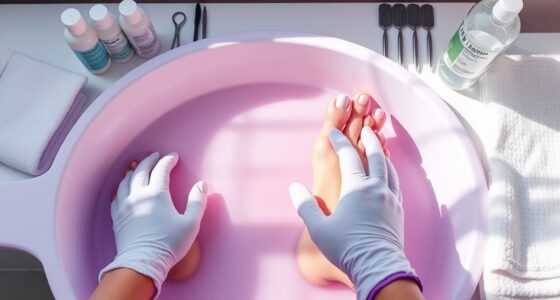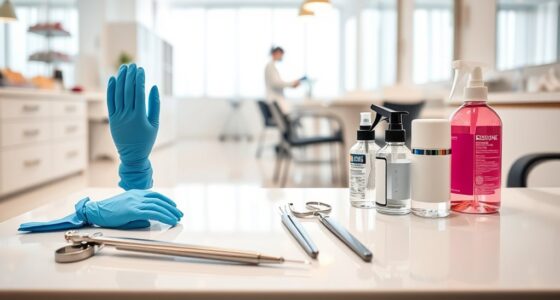
When handling blood spills and minor injuries in your nail salon, act quickly by wearing proper PPE like gloves and masks. Clean the injury with antiseptic and cover it, then contain blood spills with absorbent materials before disinfecting the area thoroughly. Dispose of contaminated items in biohazard containers, and document the incident following safety protocols. Maintaining a clean, organized environment and training staff helps prevent accidents—continue to learn how to strengthen your safety practices.
Key Takeaways
- Immediately wear protective gloves and gear before addressing blood spills or injuries.
- Contain and clean blood spills with absorbent materials, then disinfect the area thoroughly.
- Properly dispose of contaminated materials in sealed biohazard waste containers.
- Document the incident details and report to supervisors following established protocols.
- Provide prompt first aid for minor injuries and monitor for signs of worsening symptoms.
Top picks for "handl blood spill"
Open Amazon search results for this keyword.
As an affiliate, we earn on qualifying purchases.
Recognizing and Assessing Minor Injuries
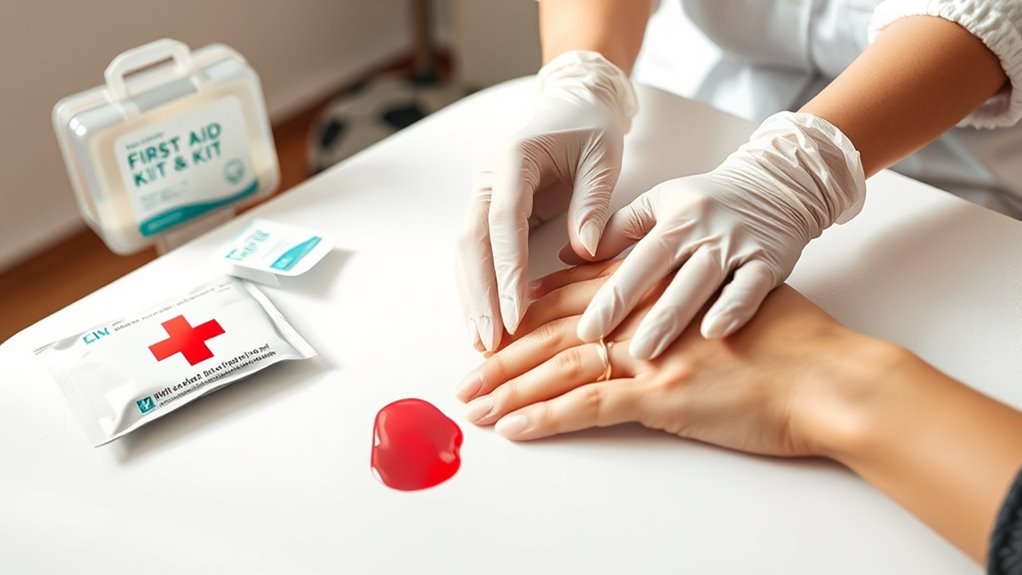
Recognizing and evaluating minor injuries in the nail salon is essential for maintaining a safe environment. When you spot a small cut, scrape, or bruise, assess the severity quickly. If it’s minor, applying basic first aid—like cleaning the wound and using an antiseptic—is usually enough to prevent infection. Always prioritize injury prevention by encouraging clients and staff to handle tools carefully and wear protective gear. Keep an eye out for signs of bleeding, swelling, or pain that could worsen if ignored. Promptly addressing minor injuries helps prevent complications and maintains a professional setting. Remember, early intervention with appropriate first aid not only minimizes the injury’s impact but also reassures clients that you’re committed to their safety. Incorporating safety protocols into routine procedures can further reduce the risk of minor injuries occurring in the first place.
Immediate Response to Blood Spills
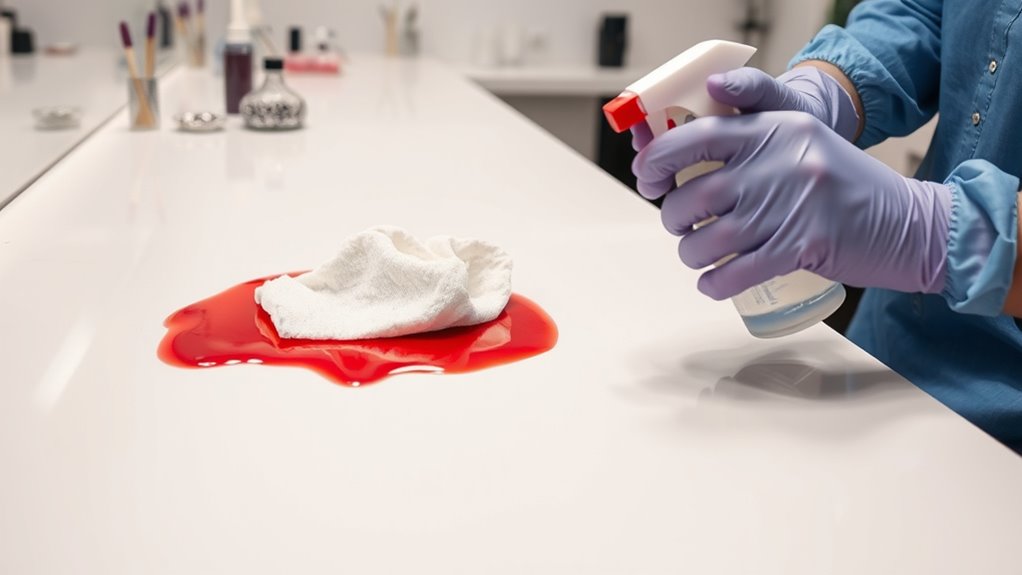
When a blood spill occurs, your first step is to put on protective gear to prevent contamination. Next, quickly contain the spill to prevent it from spreading, then clean and disinfect the area thoroughly. Properly handling spills guarantees safety for everyone in the salon.
Wear Protective Gear
If you encounter a blood spill in the salon, wearing protective gear immediately is essential to prevent contamination. Your first step is to put on protective clothing, such as gloves and a gown, to shield your skin and clothes. Next, ensure you wear a face mask and eye protection to avoid splashes or aerosols. Then, use spill containment supplies like absorbent materials to control the blood and prevent it from spreading. Finally, handle tools carefully, avoiding contact with contaminated surfaces. Remember, protective gear acts as a barrier, reducing the risk of infection. Always change gloves after handling blood and dispose of contaminated items properly. Staying prepared with the right protective clothing ensures your safety and maintains a hygienic environment. Proper use of personal protective equipment can significantly minimize health risks during blood spill incidents.
Contain and Clean Spills
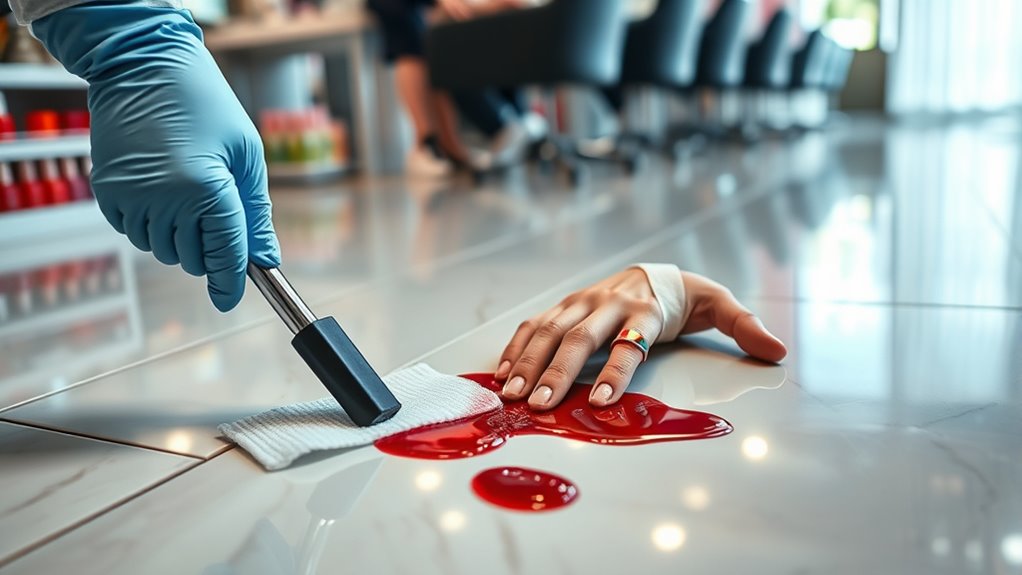
To effectively contain and clean blood spills, act quickly to prevent the spread of contamination. Start by isolating the spill area with absorbent materials designed for spill containment. Use gloves and protective gear to minimize hazard exposure, guaranteeing no contact with the blood. Carefully cover the spill with absorbent pads or paper towels, then apply an appropriate disinfectant, such as a bleach solution, to sanitize the area thoroughly. Allow the disinfectant to sit for the recommended contact time before removing the contaminated materials. Dispose of all contaminated items in a sealed, labeled biohazard bag. This quick response not only ensures spill containment but also considerably minimizes hazards, protecting both staff and clients from potential infections. Always follow your salon’s protocols for blood spill cleanup. Proper hazard management ensures a safer environment for everyone involved.
Proper Personal Protective Equipment (PPE) Usage
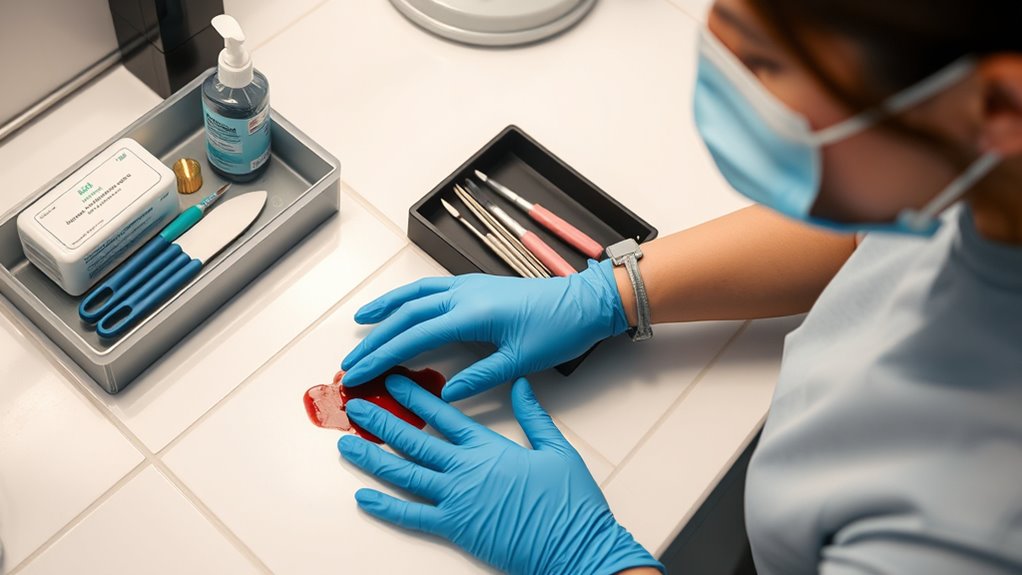
Using the right PPE is essential to protect yourself during blood spill cleanup and minor injuries. You should wear gloves that fit well, a protective mask, and safety glasses to prevent exposure. Proper PPE use keeps you safe and minimizes the risk of infection. Additionally, having access to for sale 100 supplies can ensure you are well-prepared for any incident that occurs.
Wear Appropriate Gloves
Wearing appropriate gloves is essential for protecting yourself and your clients from bloodborne pathogens and other contaminants during blood spills or when handling minor injuries. First, choose gloves made of durable material to prevent tears and leaks. Second, always inspect gloves for holes or damage before use. Third, store your gloves properly—in a cool, dry place—to maintain their integrity and glove durability. Fourth, replace gloves immediately if they become punctured or contaminated. Proper glove storage guarantees you have reliable protection when needed. Additionally, selecting gloves that meet safety standards ensures effective barrier protection from contaminants. Remember, selecting the right gloves and maintaining their condition helps prevent cross-contamination and keeps your workspace safe. Always prioritize glove quality and proper storage to ensure maximum effectiveness during blood spill cleanup or injury care.
Use Protective Masks
Protective masks are essential for preventing the inhalation of bloodborne pathogens and airborne contaminants during blood spills or injury treatment. Wearing the right protective masks guarantees your respiratory safety and reduces infection risks. Choose masks that fit snugly over your nose and mouth, creating a seal to block harmful particles. Here’s a quick visual:
| Mask Type | Key Feature |
|---|---|
| Surgical Masks | Lightweight, disposable |
| Respirators (N95, P100) | Tight fit, high filtration |
| Cone Masks | Comfortable, loose-fitting |
Using proper PPE like protective masks minimizes exposure to blood particles and airborne hazards. Always select the appropriate mask for the situation, ensuring maximum respiratory safety and effective protection during blood spill cleanup or injury care. Understanding industry trends can help you choose the most effective protective equipment for your needs.
Safety Eyewear Importance
Proper safety eyewear plays an essential role in safeguarding your eyes from blood splashes, airborne debris, and chemical splatters during blood spill cleanup or injury treatment. Wearing the right eye protection minimizes the risk of infections and injuries. To guarantee maximum safety, consider these key points: 1. Always choose safety eyewear that fits snugly and comfortably. 2. Ensure the lenses are impact-resistant and provide full coverage. 3. Replace scratched or damaged eye protection immediately. 4. Wear safety eyewear whenever handling blood spills or minor injuries. Additionally, selecting eyewear with appropriate impact resistance helps prevent injuries from accidental splashes or debris.
Cleaning and Disinfecting the Affected Area
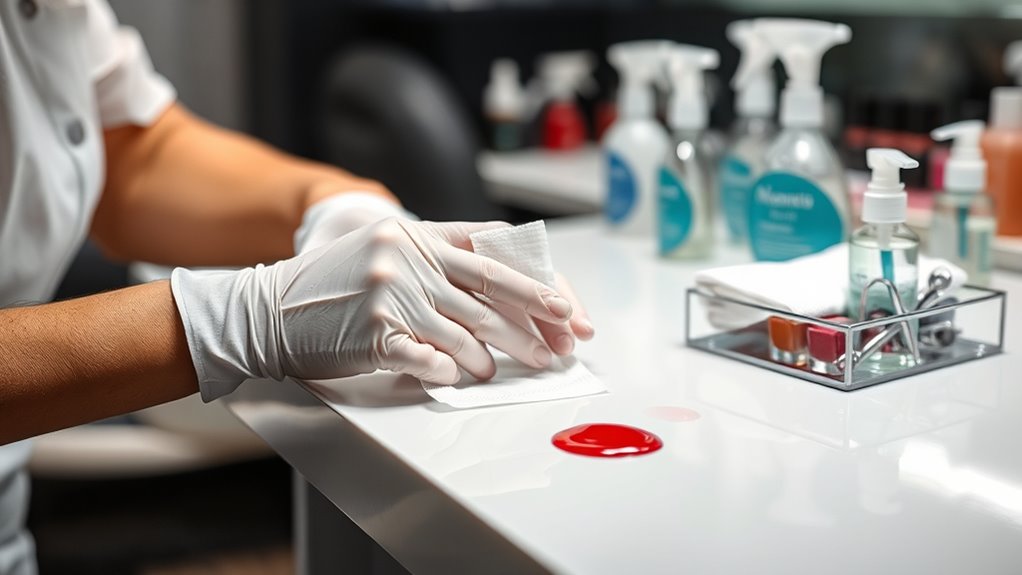
When you clean and disinfect the affected area after a blood spill or minor injury, it is vital to act quickly to prevent infection. You must thoroughly remove any blood and debris, then use a proven disinfectant to kill bloodborne pathogens. Confirm the disinfectant’s effectiveness against viruses and bacteria before application. Follow the manufacturer’s instructions for proper contact time and dilution, as inadequate disinfection can leave harmful microorganisms behind. Use gloves and eye protection to avoid direct contact with contaminated materials. Pay close attention to all surfaces the blood may have touched, including tools, countertops, and floors. Proper cleaning and disinfecting minimize the risk of cross-contamination and keep your salon safe for clients and staff alike.
Safe Disposal of Contaminated Materials
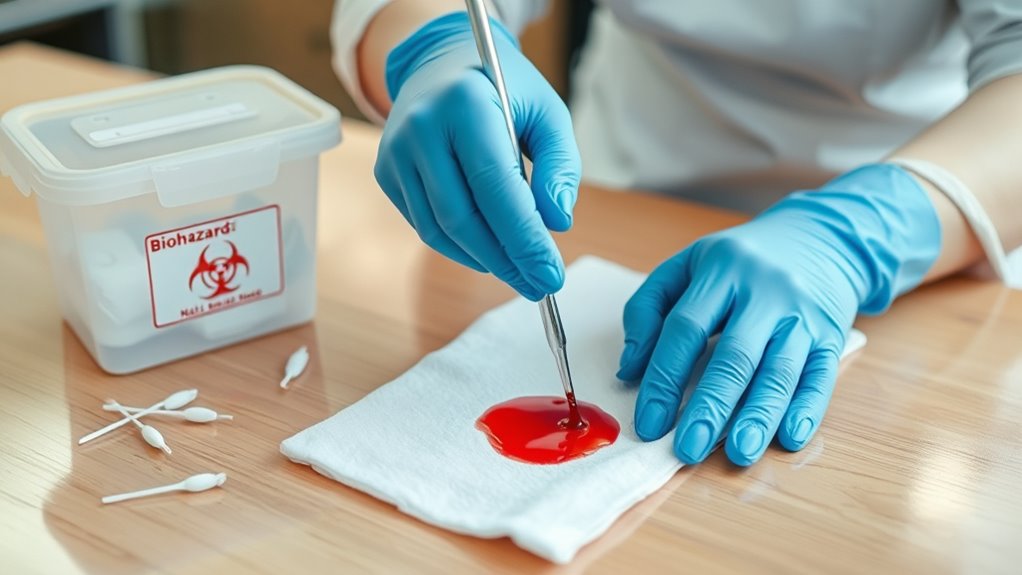
After thoroughly cleaning and disinfecting the affected area, it’s important to focus on the safe disposal of contaminated materials. Proper handling ensures you prevent the spread of infection and comply with disposal protocols. First, place all contaminated items—such as gauze, gloves, and any absorbent materials—into a designated hazardous waste container. Second, clearly label the container as biohazardous waste to avoid confusion. Third, follow your local regulations for hazardous waste disposal, ensuring you don’t throw contaminated materials in regular trash. Fourth, seal the container securely before disposal. Always wear gloves when handling contaminated materials and wash your hands afterward. Adhering to proper disposal protocols minimizes health risks and keeps your salon compliant and safe. Incorporating proper waste management practices further enhances safety and environmental responsibility.
Documenting Incidents and Reporting Procedures

Keeping accurate records of incidents is essential for maintaining safety and ensuring appropriate follow-up. Incident documentation involves recording what happened, when, where, and who was involved, providing a clear account of the event. This information helps identify hazards and prevent future incidents. You should follow established reporting procedures, ensuring that all incidents, no matter how minor, are promptly reported to the appropriate supervisor or health authority. Proper documentation also supports compliance with health regulations and protects your business legally. Be detailed and objective in your reports, including any actions taken or recommended. Consistent incident documentation and adherence to reporting procedures help create a safer salon environment, reduce risks, and demonstrate your commitment to client and staff safety. Additionally, understanding celebrity lifestyle insights can encourage staff to foster a positive and engaging atmosphere that prioritizes safety and well-being.
Training Staff on Safety Protocols
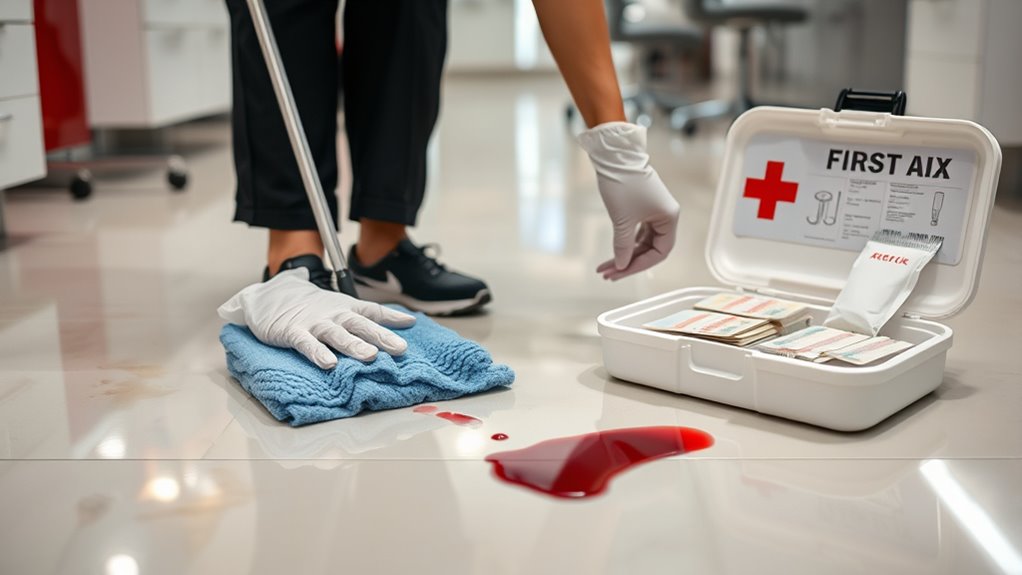
Training your staff on safety protocols is essential to maintaining a safe and compliant nail salon environment. Clear staff communication ensures everyone understands emergency procedures and safety measures. To achieve this, focus on:
- Conducting regular training sessions on safety procedures, including handling blood spills and minor injuries.
- Practicing emergency drills so staff can respond swiftly and confidently during actual incidents.
- Encouraging open communication, allowing staff to ask questions and clarify safety protocols.
- Updating training materials periodically to reflect best practices and new safety guidelines.
- Emphasizing the importance of reviews to identify and address potential safety issues proactively.
Preventative Measures to Minimize Accidents

Implementing preventative measures is essential to reducing the risk of accidents in your nail salon. Start with hazard identification by regularly inspecting your workspace for potential dangers, such as slippery floors, exposed wires, or unstable furniture. Address these hazards promptly to prevent slips, trips, or falls. Keep tools organized and in designated areas to avoid clutter that could cause accidents. Educate your staff on accident prevention practices, emphasizing the importance of proper handling of sharp tools and chemicals. Use safety signage where necessary to alert staff and clients to potential risks. Regularly review safety protocols and update them based on new hazards or incidents. By proactively identifying hazards and promoting accident prevention, you create a safer environment for everyone.
Maintaining a Safe and Hygienic Salon Environment
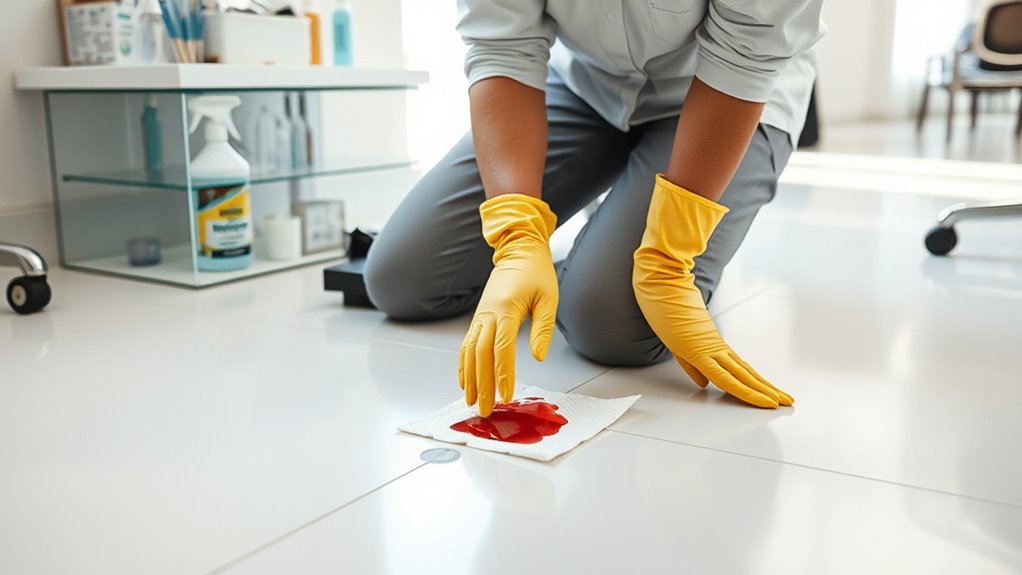
Maintaining a safe and hygienic salon environment is crucial for protecting both your clients and staff from infections and accidents. Clear client communication helps set expectations and emphasizes hygiene standards. To keep your salon aesthetic professional and safe:
- Regularly disinfect all tools, workstations, and surfaces to prevent cross-contamination.
- Use proper waste disposal methods for sharps and biohazard materials.
- Ensure staff practices good hand hygiene and wears protective gear when needed.
- Keep the salon organized, minimizing clutter that could cause accidents or hinder cleaning.
Frequently Asked Questions
What Are the Legal Requirements for Reporting Blood Spills in Salons?
You must follow your salon’s blood spill protocols and reporting procedures when a blood spill occurs. Legally, you’re required to report any blood spills to the appropriate health authorities promptly, guaranteeing proper documentation and cleanup. Always act quickly, decontaminate the area, and document the incident thoroughly. Staying compliant helps protect clients and staff, and ensures your salon adheres to local health regulations.
How Often Should Staff Receive Bloodborne Pathogen Training?
Stay sharp and stay safe with bloodborne safety by scheduling staff training every year. Regular refreshers reinforce proper protocols, reduce risks, and guarantee everyone’s prepared. Consistent training keeps your team confident, compliant, and cautious, creating a clean, caring environment for clients. By maintaining this routine, you prevent potential problems and promote professionalism. Remember, ongoing education isn’t just a requirement—it’s an essential commitment to safety and service excellence.
What Signs Indicate a Need for Medical Evaluation After Minor Injuries?
You should seek medical evaluation if you notice symptom severity increasing or if the injury persists beyond a few days. Signs like persistent swelling, redness, excessive bleeding, or pain indicate you need professional care. Don’t overlook signs of infection or if the injury worsens instead of improving. Prompt medical attention ensures proper treatment, reduces infection risk, and prevents complications, keeping you safe and healthy after minor injuries.
Are There Specific Disinfectants Recommended for Blood Spill Cleanup?
When it comes to blood spill cleanup, you need disinfectants that are powerful enough to act like a shield against germs. Use EPA-registered disinfectants with proven effectiveness against bloodborne pathogens. Follow strict spill cleanup procedures: wear gloves, carefully contain and disinfect the area, and dispose of contaminated materials properly. This guarantees your salon remains a safe haven, protecting both your clients and your staff from hidden dangers lurking in the aftermath.
How Should Contaminated Waste Be Stored Before Disposal?
You should store contaminated waste in a properly labeled, leak-proof, and puncture-resistant container that meets specific storage container requirements. Guarantee proper waste segregation by separating biohazard materials from regular trash, and keep the container in a secure, designated area away from clients and staff. Regularly dispose of the waste according to local health regulations to prevent contamination and maintain a safe salon environment.
Conclusion
By staying vigilant and following these safety steps, you turn your salon into a fortress against accidents. Think of it as tending a delicate garden—you nurture each detail to keep harm at bay. When you handle blood spills and minor injuries promptly and properly, you’re not just protecting your clients and staff; you’re cultivating trust and a reputation that blossoms with every safe, hygienic service you provide.