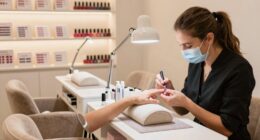
Understanding OSHA guidelines is vital for keeping your nail salon safe and compliant. You’ll need to handle chemicals carefully, use proper ventilation, and wear PPE like gloves and masks to protect yourself and clients. Maintaining cleanliness, good ergonomics, and proper recordkeeping also help reduce risks. Staying updated on safety practices and regulations ensures you meet standards and provide a healthy environment. Keep going to learn more about essential safety steps for your salon’s success.
Key Takeaways
- OSHA enforces safety standards to prevent chemical exposure, infections, and injuries in nail salons.
- Proper chemical storage, handling, and disposal are essential for compliance and safety.
- Adequate ventilation reduces airborne fumes and maintains air quality.
- Use and maintain PPE, ergonomic setups, and regular breaks to protect workers’ health.
- Accurate recordkeeping, injury reporting, and staff training ensure ongoing safety compliance.

ForPro Professional Collection Disposable Nitrile Gloves, Chemical Resistant, Powder-Free, Latex-Free, Non-Sterile, Food Safe, 4 Mil, Black, Medium, 100-Count
Nitrile Gloves: Chemical & puncture-resistant nitrile gloves provide a higher level of protection against liquids, gases, & sharp…
As an affiliate, we earn on qualifying purchases.
As an affiliate, we earn on qualifying purchases.
Overview of OSHA and Its Role in Nail Salons

Have you ever wondered how safety standards are enforced in nail salons? OSHA plays a crucial role in protecting client health by ensuring cosmetic safety. While OSHA primarily oversees workplace safety nationwide, it also influences nail salons through regulations that safeguard both workers and clients. These guidelines help prevent hazards like infections, chemical exposure, and injuries. OSHA’s role isn’t to micromanage every salon but to set essential safety standards that promote cleanliness and proper procedures. Salon owners are responsible for complying with these rules, which ultimately benefits your experience by reducing health risks. By enforcing safety standards, OSHA helps maintain a safe environment where your health is prioritized, ensuring that every visit to the nail salon is both beautiful and safe. Proper hazard communication ensures that all chemicals used are handled safely and correctly.

Extract-All Salon Pure Air 3 Ventilation System 350 CFM – Source Capture Exhaust for Nail Salon, Tattoo, Spa & Esthetician Workstations (SPA3, White)
350 CFM source capture ventilation system designed to reduce airborne dust, vapors, and odors at nail, tattoo, lash,…
As an affiliate, we earn on qualifying purchases.
As an affiliate, we earn on qualifying purchases.
Chemical Safety and Proper Material Handling
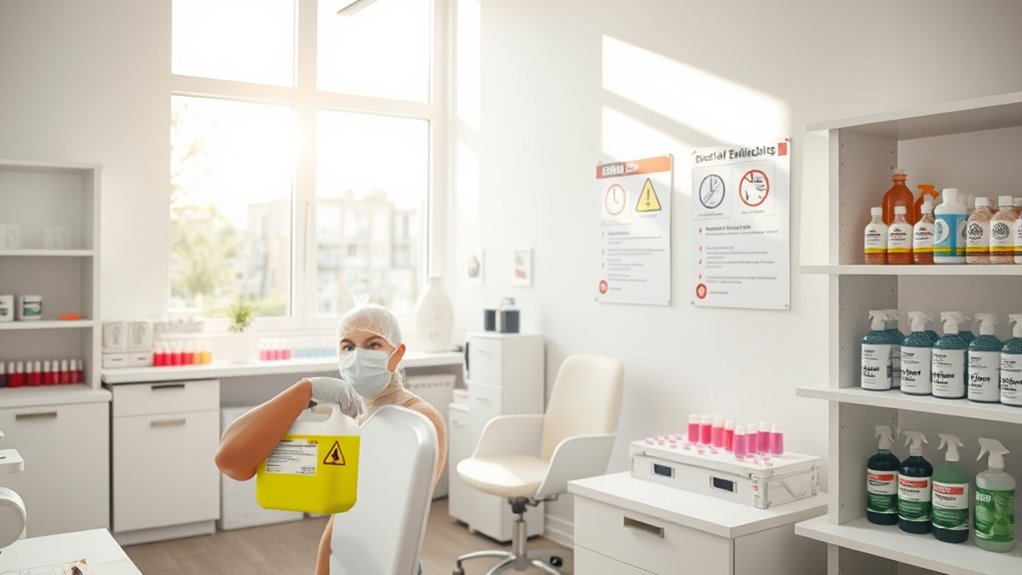
Proper chemical safety and material handling are essential to maintaining a safe nail salon environment. You need to store chemicals properly in clearly labeled containers, away from heat sources and direct sunlight. Confirm that chemical storage areas are ventilated and secure to prevent leaks or spills. When handling products like acetone, formaldehyde, or glues, wear appropriate personal protective equipment, such as gloves and masks. Proper material disposal is equally important—dispose of waste materials according to OSHA regulations, avoiding contamination and environmental hazards. Keep disposal containers sealed and labeled, and never pour chemicals down the drain. Implementing these safety practices minimizes exposure risks for you and your clients, ensuring a safer, healthier salon environment. Additionally, understanding industry transformations can help salon owners stay ahead of regulations and adopt innovative safety measures.

SAVILAND Nail Face Mask for Nail Drill: Salon Clear Visibility & Comfortable Wear Full Face Mask Splash Resistant Quicker Anti Fog Nail Art Tools for Nail Artists Enthusiasts Technicians Salon Studio
Pro-Upgraded 2026 Salon-Tech Face Shield: Say goodbye to nail dust & flying broken nails while filing nails, 100%…
As an affiliate, we earn on qualifying purchases.
As an affiliate, we earn on qualifying purchases.
Ventilation Standards to Minimize Exposure
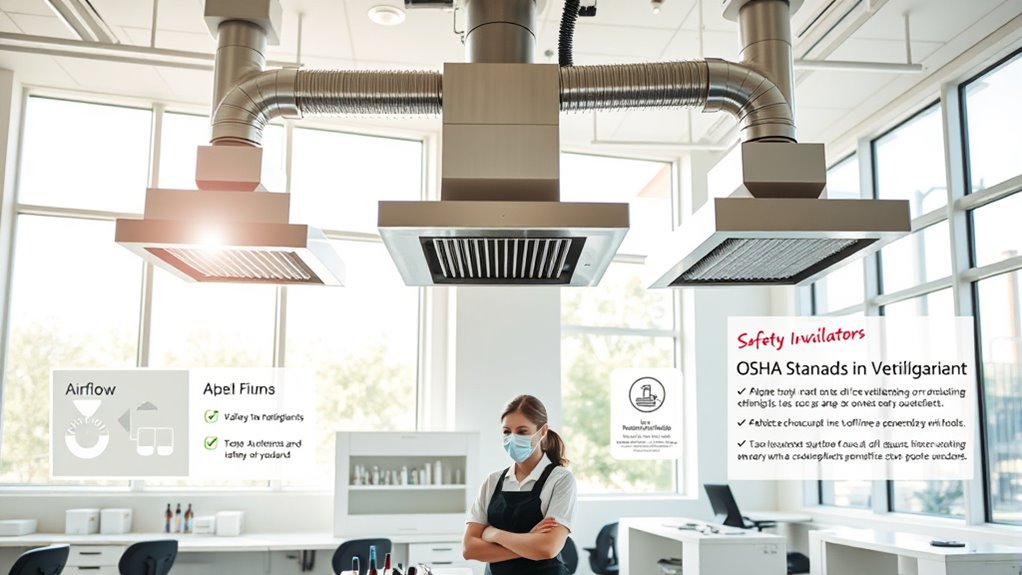
To keep exposure levels safe, you need to make certain your salon has proper airflow. Regularly check and maintain your ventilation system so it operates efficiently. Good airflow and system upkeep are key to creating a healthier environment for you and your clients. Incorporating data privacy considerations into your ventilation planning can also help protect sensitive client information.
Adequate Airflow Requirements
Ensuring adequate airflow in your nail salon is essential for minimizing exposure to fumes and airborne contaminants. Proper airflow boosts airflow efficiency and enhances ventilation design, creating a safer environment. To visualize, consider the following factors:
| Aspect | Impact |
|---|---|
| Airflow volume | Ensures sufficient removal of airborne fumes |
| Ventilation placement | Maximizes airflow efficiency across workspaces |
| Air exchange rate | Maintains clean, fresh air in each area |
A well-planned ventilation design ensures consistent airflow, reducing hazards. Proper airflow not only improves air quality but also helps meet OSHA standards, protecting both staff and clients. Focusing on ventilation design and airflow efficiency guarantees your salon maintains a safe, compliant environment.
Ventilation System Maintenance
Regular maintenance of your ventilation system is essential for keeping airflow effective and meeting OSHA standards. Proper upkeep ensures good air quality by removing dust, fumes, and vapors that can harm your clients and staff. To maintain ideal performance, focus on these key tasks:
- Regularly inspect and replace filters to prevent buildup that can reduce airflow and air quality.
- Clean vents and ducts to eliminate dust and debris that hinder proper ventilation.
- Test the system periodically to ensure it operates efficiently and complies with OSHA guidelines.
- Incorporate ventilation standards into your routine checks to ensure comprehensive compliance and optimal air quality.

BarberPub Ergonomic Nail Tech Chair with Lumbar Support, Adjustable Manicure Chair with Armrests, Comfy Home Office Chairs with 360-Degree Swivel Wheels for Beauty Salon 3567 (Pink)
Ergonomic Design: Our beautiful nail chair is designed to provide comfort for manicurists and salon clients during long…
As an affiliate, we earn on qualifying purchases.
As an affiliate, we earn on qualifying purchases.
Personal Protective Equipment Requirements

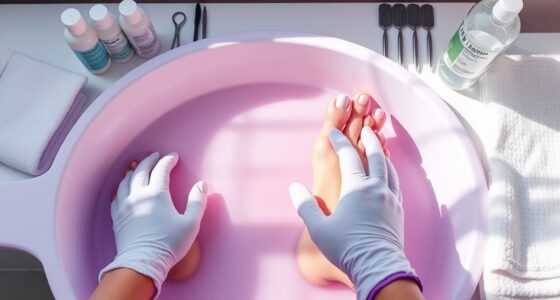
Wearing the right personal protective equipment (PPE) is essential for maintaining safety in nail salons. You need to guarantee you’re using appropriate personal protective gear, such as gloves, masks, and eye protection, to shield yourself from chemicals and airborne particles. PPE compliance isn’t just about having gear on; it’s about wearing it correctly every time you work with potentially hazardous materials. Proper PPE helps prevent skin irritation, respiratory issues, and eye injuries. Make sure your gloves fit well and are resistant to chemicals, your masks filter out dust and fumes, and your eye protection covers your eyes adequately. Regularly inspect your PPE for damage or wear, replacing items as needed. Staying consistent with PPE use keeps you safe and aligns with OSHA guidelines. Additionally, understanding air purifier maintenance dos and don’ts can help improve the overall indoor air quality in your workspace.
Sanitation and Hygiene Protocols

How can nail salons maintain a safe environment for clients and staff? The key is following strict sanitation and hygiene protocols. First, ensure all tools, including nail polish and files, are properly sterilized after each use. Second, keep your salon decor clean by regularly disinfecting surfaces, chairs, and workstations. Third, practice good hand hygiene by washing hands frequently and using hand sanitizer. Proper disposal of single-use items prevents contamination. Additionally, implementing proper maintenance procedures for equipment helps ensure safety and efficiency. By maintaining these protocols, you reduce the risk of infections and create a welcoming, hygienic space. Clear procedures and consistent practices help uphold safety standards, protecting everyone in your salon. Remember, a clean environment not only complies with OSHA regulations but also builds trust with your clients.
Hazard Communication and Material Safety Data Sheets

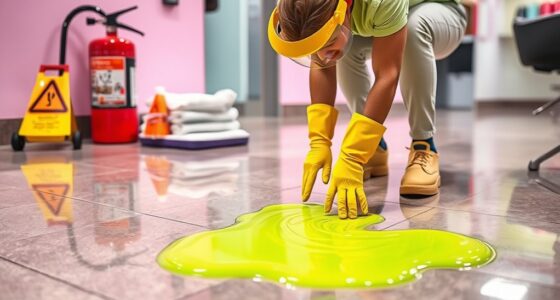
Understanding hazard communication is essential for maintaining a safe nail salon environment. You need to ensure that all chemicals are properly labeled with clear, accurate information. Chemical labeling helps you identify hazards quickly, so you and your staff can handle substances safely and prevent accidents. Material Safety Data Sheets (MSDS) provide crucial details about each chemical’s risks, safe handling procedures, and spill response steps. When a spill occurs, your knowledge of MSDS guides you on how to contain and clean it up safely, minimizing exposure. Regularly reviewing and updating your hazard communication protocols keeps everyone informed and prepared. Proper storage of essential oils and other chemicals is also vital to prevent degradation and accidental exposure. By prioritizing proper chemical labeling and understanding spill response procedures, you create a safer workspace where risks are managed effectively.
Ergonomics and Worker Comfort
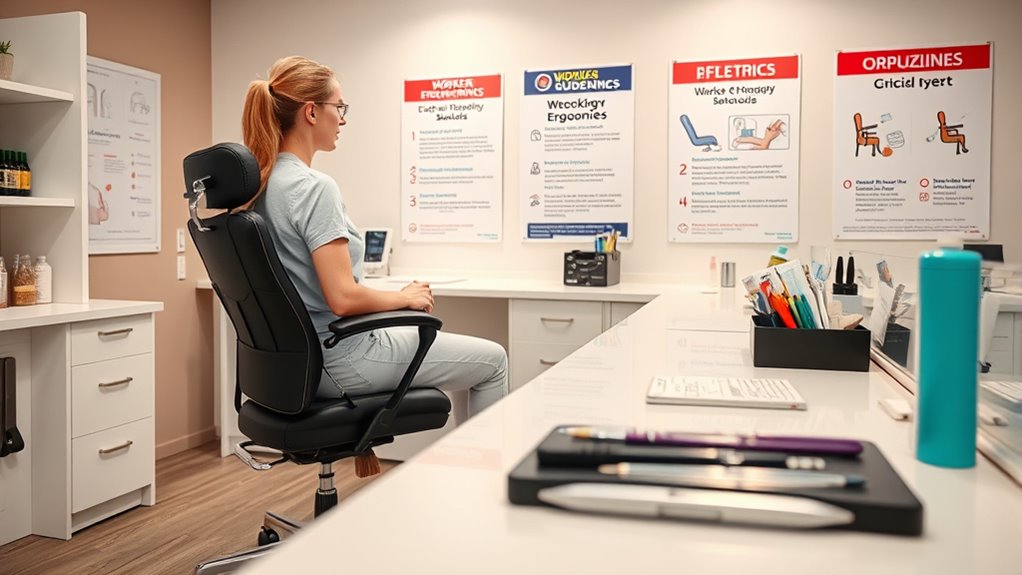
You can reduce fatigue and prevent injuries by setting up your workstation properly and taking regular breaks. Adjust your tools and chair height to stay comfortable and maintain good posture. Remember, small changes can make a big difference in your overall comfort and safety during long shifts. Additionally, ensuring your workspace is ergonomically optimized can contribute significantly to long-term health and productivity. ergonomic setup
Proper Workstation Setup
A well-designed workstation is essential for ensuring nail technicians work comfortably and efficiently. Proper setup minimizes strain and boosts productivity. To achieve this, focus on these key areas:
- Use ergonomic seating that supports good posture and reduces back pain during long shifts.
- Organize your workstation to keep tools within easy reach, preventing unnecessary stretching or twisting.
- Adjust your work surface height so your arms are at a comfortable angle, reducing shoulder tension.
- Incorporate ergonomic principles into your workspace design to further enhance comfort and safety.
Regular Break Practices
Regular breaks are essential for maintaining comfort and preventing injury during long shifts. Scheduling regular breaks allows you to rest your hands, neck, and back, reducing strain and fatigue. Make sure to take short rest periods every hour to stretch and change positions, which helps improve circulation and minimizes the risk of repetitive stress injuries. Your employer should provide scheduled breaks, so you’re encouraged to step away from your workstation without feeling rushed. During these rest periods, avoid repetitive motions and give your muscles time to recover. Properly spaced breaks not only enhance your comfort but also boost your productivity and focus. Prioritizing scheduled breaks is a simple yet effective way to adhere to OSHA guidelines and promote a safer, healthier work environment.
Recordkeeping and Reporting Workplace Injuries
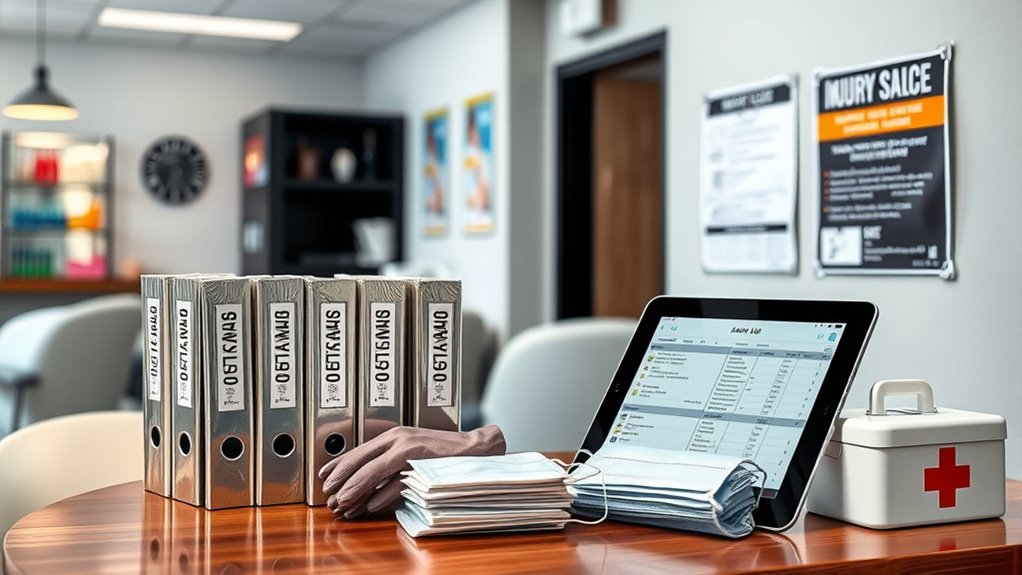
Keeping accurate records of workplace injuries is essential for maintaining a safe nail salon environment. Proper accident documentation helps you identify hazards and prevent future incidents. Injury tracking ensures compliance with OSHA regulations and improves overall safety. To manage this effectively, you should:
Accurate injury records help prevent hazards and ensure OSHA compliance in your nail salon.
- Record every work-related injury or illness promptly, including details like date, location, and cause.
- Maintain clear documentation of accident reports, ensuring they are accessible for inspections.
- Report severe injuries to OSHA within the required time frame, typically 24 hours, to stay compliant.
Training and Employee Education on Safety Practices

You need to provide your employees with ongoing safety training to keep them informed about best practices. It’s essential they develop hazard recognition skills to identify potential risks early. Make sure they understand how to use equipment properly to prevent accidents and injuries.
Ongoing Safety Training
Ongoing safety training is essential to maintaining a safe nail salon environment, ensuring employees stay informed about current best practices and potential hazards. Regular training helps you meet OSHA compliance requirements and maintain safety certifications. To keep safety top of mind, consider these steps:
- Conduct periodic refresher courses on proper handling of chemicals and tools.
- Update staff on new OSHA regulations and safety protocols.
- Encourage participation in external safety certifications to reinforce best practices.
Hazard Recognition Skills
Effective hazard recognition is essential for maintaining a safe nail salon environment, as it enables staff to identify potential risks before they cause harm. By developing strong safety awareness, you can spot hazards like chemical spills, faulty equipment, or clutter that could lead to accidents. Training your team to recognize hazards quickly helps prevent injuries and ensures compliance with OSHA guidelines. Regular education sessions reinforce the importance of hazard recognition and keep safety at the forefront of daily operations. When your staff actively notices risks, they can address issues promptly and prevent incidents. Building hazard recognition skills creates a safer workspace for everyone, reducing the likelihood of accidents and promoting a culture of safety within your salon.
Proper Equipment Usage
Proper equipment usage is crucial for maintaining safety in a nail salon, and thorough training guarantees staff understand how to operate tools and machinery correctly. Proper training reduces accidents and ensures that safety procedures are followed, protecting both clients and staff.
To achieve this, focus on these key areas:
- Always read and follow manufacturer instructions for nail polish, tools, and equipment to prevent misuse.
- Regularly inspect salon decor and tools for damage or wear, replacing or repairing as needed.
- Educate employees on proper handling techniques to prevent injuries and contamination.
Maintaining Compliance and Staying Updated on Regulations

Staying compliant with OSHA regulations requires proactive effort, as rules and standards can change frequently. To keep up, regularly review OSHA updates and industry best practices. Train your staff on new safety protocols, especially when it comes to handling nail polish and other chemicals. Maintain organized appointment scheduling to avoid overcrowding and ensure proper sanitation between clients. Keep all safety data sheets accessible and up-to-date for every product used. Conduct periodic safety audits to identify and address potential hazards. Staying informed about new regulations helps you avoid fines and ensures a safe environment. By staying proactive, you protect your clients and your business, demonstrating your commitment to safety and compliance in your nail salon.
Frequently Asked Questions
How Often Should Nail Salon Staff Undergo OSHA Safety Training?
You should have your nail salon staff undergo OSHA safety training annually to stay current with regulations. This training emphasizes the proper use of Personal Protective Equipment (PPE) and guarantees employees maintain their certification. Regular training helps prevent accidents, protects both staff and clients, and keeps your salon compliant with safety standards. Make sure your team reviews safety procedures yearly to maintain a safe, professional environment and uphold employee certification requirements.
What Are the Penalties for Non-Compliance With OSHA Regulations?
If you ignore OSHA regulations, you risk hefty penalties—up to $13,653 per violation—and license violations that could close your salon. In fact, OSHA reports that non-compliance often results in employee fines averaging over $1,000. Staying compliant not only protects your staff’s health but also keeps your business open. Regular safety training and adherence to guidelines are essential to avoid these costly penalties and maintain your salon’s reputation.
How Can Salons Effectively Monitor Air Quality and Ventilation?
To effectively monitor air quality and ventilation, you should conduct regular air quality testing to identify any pollutants or VOC buildup. Keep up with ventilation maintenance by inspecting and cleaning exhaust systems frequently, ensuring proper airflow. Installing air purifiers can also help improve air quality. By staying proactive with these steps, you create a safer environment, reduce health risks, and guarantee compliance with OSHA standards in your salon.
Are There Specific OSHA Guidelines for Handling Acrylic and Gel Nails?
Handling acrylic and gel nails can be a chemical exposure nightmare if you don’t follow OSHA guidelines. You must use personal protective equipment like gloves and masks to prevent inhalation or skin contact with harmful chemicals. OSHA recommends proper ventilation and safe handling procedures to minimize risks. Stay vigilant, follow these regulations closely, and prioritize safety to protect yourself and your clients from potential health hazards.
How Frequently Should Sanitation Protocols Be Reviewed and Updated?
You should review and update your sanitation protocols regularly, ideally every three to six months. This includes maintaining cleaning schedules and ensuring product sterilization procedures are up-to-date. Consistently checking your sanitation practices helps prevent contamination and keeps your salon compliant with OSHA guidelines. Make it a habit to reassess and improve safety measures to protect your clients and staff, especially when new products or equipment are introduced.
Conclusion
By understanding OSHA guidelines, you not only protect your clients and staff but also create a safer, more efficient salon environment. Some say OSHA regulations are just bureaucratic red tape, but evidence shows they markedly reduce workplace injuries and illnesses. Staying compliant might seem challenging, but it’s worth the effort. When you prioritize safety, you foster trust and professionalism, proving that safe salons truly thrive—so stay informed, implement best practices, and keep your salon a safe haven.