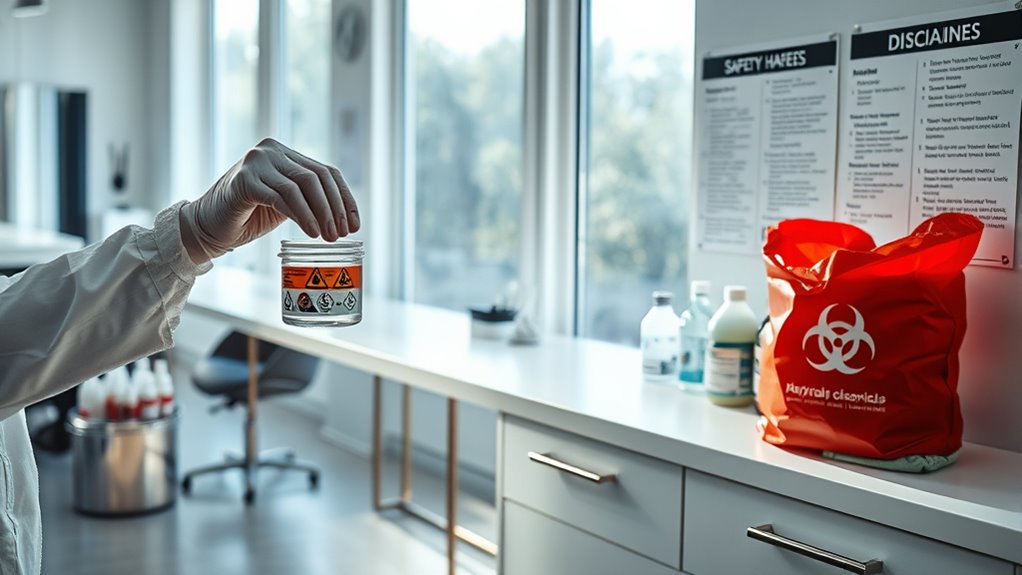

To handle and dispose of nail chemicals safely, always wear protective gear like gloves and goggles, and make certain proper ventilation in your workspace. Store products in labeled, leak-proof containers away from heat and sunlight, following manufacturer instructions. Prevent spills by working carefully and keeping your area tidy. When it’s time to dispose, use designated containers and follow local regulations for cleaning or recycling. If you continue exploring, you’ll discover even more ways to keep your salon safe and eco-friendly.
Key Takeaways
- Store chemicals in labeled, airtight containers away from heat and incompatible substances to prevent leaks and reactions.
- Wear appropriate PPE such as gloves, goggles, and masks during handling to protect against skin and respiratory exposure.
- Follow proper application techniques, handle chemicals carefully, and maintain a clean workspace to minimize spills and fumes.
- Dispose of chemical waste in designated containers, segregate waste, and never pour chemicals down drains, following local disposal regulations.
- Regularly train staff on chemical safety, proper storage, PPE use, and eco-friendly disposal practices to ensure compliance and safety.
Understanding the Types of Nail Chemicals and Their Risks

Nail chemicals can pose significant health risks if not properly understood and handled. Knowing the different types of chemicals used in your salon is essential to minimize exposure. Many products contain ingredients with high chemical toxicity, which can cause skin irritation, respiratory issues, or long-term health problems. Always check ingredient labeling on nail products to identify potentially harmful substances like formaldehyde, toluene, or dibutyl phthalate. Recognizing the risks associated with these chemicals helps you take appropriate precautions, such as wearing gloves and ensuring proper ventilation. Understanding the specific chemicals in your supplies also guides you in selecting safer alternatives, ultimately protecting your health and that of your clients. Staying informed about chemical toxicity and ingredient labeling is a vital step toward a safer salon environment. Additionally, staying updated on best practices for handling and disposal can significantly reduce exposure to hazardous substances.
Proper Storage Practices for Nail Products

To guarantee the safety and effectiveness of your nail products, proper storage is essential. Always check product labeling for storage instructions, and use appropriate storage containers that prevent leaks or contamination. Keep chemicals in a cool, dry place away from direct sunlight and heat sources. Properly labeled containers help you quickly identify contents and reduce risks of misuse. Use dedicated shelves or cabinets, and avoid storing incompatible products together, such as acids and bases. Ensure lids are tightly sealed after each use. Here’s a quick guide to storage practices:
| Product Type | Storage Temperature | Container Type |
|---|---|---|
| Nail Polish | Room temperature | Airtight glass or plastic bottles |
| Acrylic Liquids | Cool, dry place | Leak-proof containers |
| Solvents | Well-ventilated area | Sealed metal or plastic containers |
| Adhesives | Cool, dark spot | Labeled, secure containers |
| Disinfectants | Cool, dry place | Properly labeled bottles |
Personal Protective Equipment and Safe Handling Techniques

Wearing the right personal protective equipment keeps you safe from chemical exposure during nail services. Make sure you use essential gear like gloves, masks, and eye protection consistently. Following proper handling procedures helps prevent accidents and keeps your salon environment safe.
Essential PPE Gear
Protecting yourself while handling nail chemicals starts with using the right personal protective equipment (PPE) and following safe handling techniques. Essential PPE gear keeps harmful fumes and accidental splashes at bay. Always wear protective gloves to prevent skin irritation and chemical burns. Safety goggles shield your eyes from splashes and fumes that can cause irritation or damage. A dust mask or respirator helps reduce inhalation of fumes and dust particles. Ensure your apron or protective clothing covers your skin to avoid contact. Proper PPE use minimizes health risks and promotes a safer salon environment. Remember, PPE is your first line of defense against chemical exposure, so always check that your gear fits well and is in good condition before starting work. Using proper handling techniques also helps prevent accidents and exposure to hazardous substances.
Proper Handling Procedures
When handling nail chemicals, following proper procedures is essential for your safety. Always wear your PPE gear to reduce the risk of chemical exposure. Use gloves, goggles, and masks to protect your skin, eyes, and lungs. Handle containers carefully to prevent spills and avoid splashing. When pouring chemicals, do so slowly and over a stable surface to minimize spill prevention issues. Keep your work area clean and well-ventilated to reduce vapor buildup. If a spill occurs, act immediately by containing it with absorbent materials and disposing of waste properly. Never mix chemicals unless instructed, as this can cause dangerous reactions. Staying vigilant and following these handling techniques will help keep you safe from chemical exposure and maintain a secure salon environment. Additionally, regular training on safety protocols can reinforce proper chemical handling procedures and ensure ongoing safety compliance.
Ventilation and Workspace Safety Measures

Good ventilation is essential to keep harmful fumes out of your workspace, so make sure your system is properly installed and maintained. Establish clear safety protocols to guarantee everyone understands how to keep the environment safe. By doing so, you create a healthier, more productive salon for both clients and staff. Additionally, fostering a creative practice mindset encourages staff to stay attentive to safety measures and innovate ways to improve workspace conditions.
Proper Ventilation Systems
Proper ventilation is essential for maintaining a safe and healthy salon environment, especially when working with nail chemicals that can emit harmful fumes. Effective systems help control odors, improve air quality, and protect your clients and staff. Confirm your ventilation setup includes powerful exhaust fans that vent fumes outside and maintain good airflow. Regularly check and replace air filters to optimize air filtration. Use localized exhaust hoods near workstations to capture fumes directly at the source. Keep windows open when possible to promote fresh air circulation. Proper ventilation not only minimizes odor buildup but also reduces the risk of inhaling hazardous chemicals. Proper ventilation systems can significantly enhance overall workspace safety by ensuring that fumes are effectively removed. Remember, a well-designed ventilation system is a critical component of workspace safety and helps create a more comfortable salon experience.
Workspace Safety Protocols
Implementing effective workspace safety protocols is essential for protecting everyone in your salon from potential hazards associated with nail chemicals. Start by establishing clear procedures for chemical spill response, ensuring all staff know how to contain and clean spills safely without risking exposure. Keep spill kits readily accessible and train your team regularly. Emergency contact procedures should be posted visibly, so staff can quickly summon help if needed. Make sure everyone understands whom to contact during a chemical emergency and how to provide precise information. Proper ventilation is crucial, but safety protocols extend beyond that. Regularly review and update safety guidelines, conduct drills, and reinforce the importance of adhering to these measures. Staying prepared minimizes risks and maintains a safe, healthy environment for your clients and team. Additionally, understanding headphone repair and troubleshooting can help in case of equipment malfunctions that might interfere with communication or safety procedures.
Preventing Spills and Accidents During Application

To prevent spills and accidents during application, you need to stay attentive and organized throughout the process. Keep your workspace tidy, and handle chemicals carefully to avoid unnecessary spills. Be mindful of nail polish fumes, which can cause discomfort or accidents if inhaled in poorly ventilated areas. Use proper tools and techniques to minimize splashes or drips. Keep a clean cloth nearby to quickly wipe up any spills before they spread. In case of a chemical spill, follow your salon’s chemical spill response procedures promptly to avoid accidents or skin irritation. Always double-check that bottles are securely closed before use. Staying alert and prepared helps ensure a safe, efficient application process. Incorporating sound healing science concepts such as maintaining a calm environment can also reduce stress and improve safety during work.
Safe Disposal Procedures for Nail Chemical Waste

Because nail chemical waste can be hazardous, proper disposal procedures must be followed to protect yourself, your clients, and the environment. Always use designated disposal containers for different types of waste, such as liquids, solids, and contaminated materials. Waste segregation is essential; separate chemical waste from regular trash to prevent leaks or reactions. Make sure containers are clearly labeled and leak-proof, and never overfill them. Follow your local regulations for disposal, and never pour chemicals down drains or into the trash. When containers are full, seal them tightly and store them in a designated area until professional disposal. Proper disposal not only minimizes health risks but also guarantees compliance with safety standards. Always stay informed about the correct procedures for your specific region. Additionally, understanding regulatory compliance ensures you adhere to all legal requirements for chemical waste disposal and avoid potential penalties.
Environmental Considerations and Eco-Friendly Disposal Options

Considering the environmental impact of nail chemical disposal is essential for a sustainable salon practice. You can reduce your footprint by choosing eco-friendly packaging for product storage and disposal. Opt for biodegradable products whenever possible, as they break down naturally and lessen landfill waste. Properly recycling containers and waste materials minimizes environmental harm. Implementing refillable bottles for nail liquids reduces single-use plastics. Educate your staff on eco-conscious practices to promote sustainability. Additionally, partner with waste disposal services that prioritize environmentally friendly methods. Using biodegradable products and eco-friendly packaging demonstrates your commitment to the planet while maintaining salon hygiene standards. These small adjustments can make a significant difference in creating a more sustainable and responsible beauty environment for your clients and the planet. Incorporating environmentally friendly waste management strategies can further enhance your salon’s eco-conscious efforts.
Training Staff on Chemical Safety Protocols

Effective training is essential to guarantee your staff understands and follows proper chemical safety protocols. By educating your team on nail polish formulations, you ensure they recognize the potential hazards of different products and handle them safely. Incorporate hands-on demonstrations to reinforce safety practices, such as proper storage, use of PPE, and disposal methods. Well-trained staff can also improve your salon’s marketing strategies by confidently promoting your commitment to safety and quality, attracting more clients. Regular refresher courses keep safety top of mind and adapt to new regulations or product changes. Clear communication about safety protocols fosters a culture of responsibility, reducing accidents and chemical exposure. Additionally, understanding chemical composition helps staff identify potential risks associated with specific nail products. Ultimately, extensive training safeguards your team’s health, enhances your salon’s reputation, and ensures compliance with industry standards.
Staying Compliant With Regulations and Industry Standards

Staying compliant with regulations and industry standards is essential for maintaining a safe and reputable salon. Proper chemical storage is key to ensuring safety and adhering to regulatory compliance. You must regularly review local, state, and federal guidelines related to chemical handling and disposal. Keep updated on industry standards to avoid violations and potential fines. Implement clear procedures for labeling, storing, and disposing of nail chemicals. Conduct routine staff training to reinforce compliance practices. Maintain detailed records of chemical inventories and disposal activities. This proactive approach minimizes risks, protects your clients and staff, and upholds your salon’s reputation.
Maintaining compliance through proper chemical storage safeguards your salon’s safety and reputation.
- Regularly review regulatory updates
- Store chemicals in approved containers
- Label all chemicals clearly
- Document inventory and disposal
- Train staff on compliance procedures
Frequently Asked Questions
How Often Should I Review Safety Protocols With My Staff?
You should review safety protocols with your staff at least every six months. Regular staff training ensures everyone stays updated on best practices and safety measures. Additionally, conduct protocol updates whenever there are changes in regulations or new products introduced. Frequent reviews help reinforce safety awareness, reduce risks, and maintain a safe salon environment. Make it a priority to keep your team informed and confident in handling nail chemicals securely.
Are There Specific Certifications Required for Handling Nail Chemicals?
Think of handling nail chemicals like sailing a ship through treacherous waters—you need the right map and skills. You should get a chemical certification to navigate safely and guarantee you’re compliant. Safety training is your compass, guiding you through risks and proper procedures. While specific certifications vary by location, completing these programs helps you handle chemicals responsibly, protecting your team and clients while keeping your salon shipshape and afloat.
How Can I Inform Clients About Chemical Safety Risks?
You can inform your clients about chemical safety risks through clear client education. Use proper chemical labeling on products to highlight hazards, and verbally explain potential risks during treatments. Share information about proper ventilation and safety precautions, encouraging clients to ask questions. Providing written handouts or posters also helps reinforce safety messages. Your proactive approach shows you prioritize their health, building trust and ensuring they’re well-informed about chemical safety in your salon.
What Are the Signs of Chemical Exposure or Poisoning?
If you notice chemical symptoms like skin irritation, dizziness, or headaches, it could be a sign of chemical exposure or poisoning. Watch for indicators such as nausea, difficulty breathing, or eye redness. If these poisoning indicators appear, you should immediately remove yourself from exposure, seek fresh air, and contact a healthcare professional. Recognizing these signs early helps prevent serious health issues and guarantees prompt treatment.
How Do Local Regulations Differ for Chemical Disposal?
Regulations for chemical disposal can be as varied as the stars in the sky, and it’s vital you stay compliant. Local rules often dictate specific disposal methods and regional compliance standards, so you must familiarize yourself with your area’s regulations. Some regions require hazardous waste labels, while others mandate designated disposal facilities. Always check with local authorities to guarantee you’re following the correct procedures and avoiding costly penalties.
Conclusion
Did you know that improper handling of nail chemicals can release harmful pollutants into the environment and pose health risks? By following proper storage, disposal, and safety protocols, you can protect your staff, clients, and the planet. Remember, a recent industry survey found that 85% of salons that adopted eco-friendly practices reported fewer health complaints and improved client trust. Stay informed, stay safe, and make environmentally responsible choices to guarantee your salon thrives.