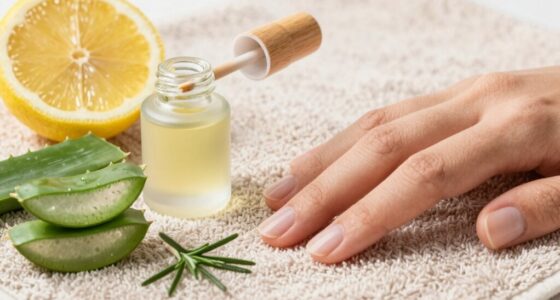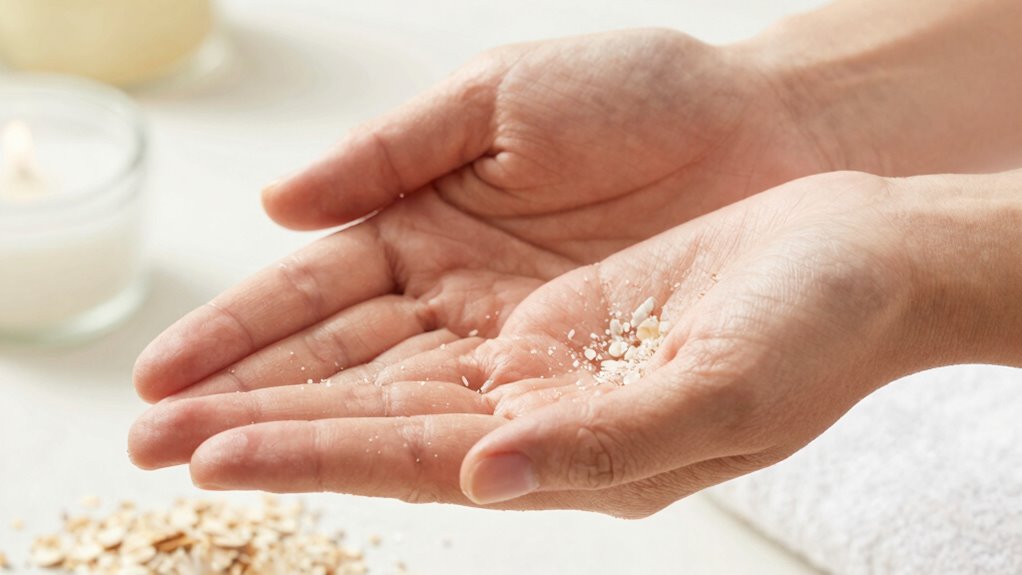

To exfoliate your hands naturally without irritating your skin, opt for gentle methods like using sugar or oatmeal scrubs, applying light pressure with short strokes once or twice a week. Follow up with hydrating creams or natural oils like coconut or almond oil to lock in moisture. Avoid harsh chemicals and over-scrubbing to prevent damage. If you want to discover more tips for healthy, soft hands that won’t irritate, keep exploring this helpful guide.

Get beauty and skincare favorites delivered free with Prime
- Fast, free delivery on millions of items
- Prime Video, Amazon Music and more included
- Member-only deals all year
Key Takeaways
- Use gentle, natural ingredients like sugar, oatmeal, or ground coffee for manual exfoliation with light pressure.
- Limit exfoliation to once or twice weekly to prevent over-irritation and micro-tears.
- Incorporate soothing agents such as honey or aloe vera post-exfoliation to hydrate and calm skin.
- Opt for chemical peels with mild acids (AHAs or BHAs) and follow instructions carefully to avoid overuse.
- Always moisturize thoroughly after exfoliating to lock in hydration and protect against environmental damage.
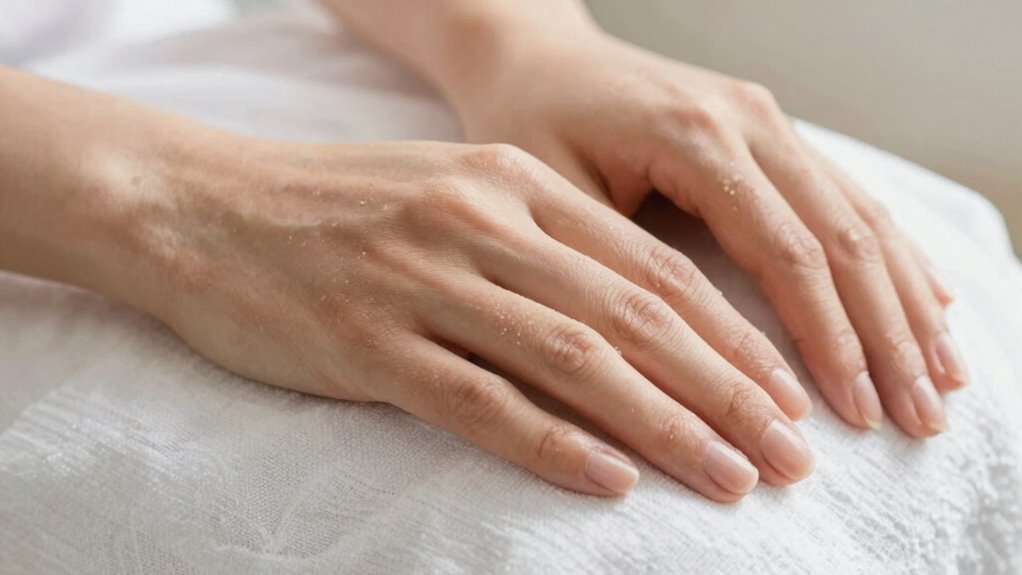
Your hands often face the brunt of daily activities, leading to roughness and dry patches. Over time, dirt, harsh soaps, and environmental exposure can strip away natural oils, leaving your skin dull and irritated. To keep your hands soft and smooth without over-irritating your skin, natural exfoliation is your best bet. You don’t need aggressive chemical peels or harsh scrubbing to achieve healthy-looking hands. Instead, gentle methods tailored to your skin’s needs can deliver effective results without causing damage.
Chemical peels are often associated with facial treatments, but there are gentle options suitable for hands as well. These peels typically contain mild acids like alpha hydroxy acids (AHAs) or beta hydroxy acids (BHAs), which dissolve dead skin cells without requiring manual scrubbing. When used properly, chemical peels can promote cell turnover and reveal fresher skin underneath, giving your hands a more even tone and smoother texture. Just be sure to follow the instructions carefully and avoid overusing these peels, as excessive application might cause irritation or dryness.
Manual scrubbing, on the other hand, provides a more tactile approach to exfoliation. The key is to use a gentle scrub made from natural ingredients such as sugar, oatmeal, or ground coffee. You want to avoid harsh abrasives that can cause micro-tears and worsen dryness. When you exfoliate manually, do so with light pressure and short, gentle strokes. This method can effectively remove dead skin cells and dirt but must be done sparingly—about once or twice a week—to prevent over-exfoliation. Incorporating water damage prevention techniques can help protect your skin from environmental harm that accelerates roughness and dryness.
Additionally, choosing gentle exfoliation methods suited for sensitive skin types can minimize the risk of irritation while still maintaining skin health. Using natural ingredients like honey or aloe vera in your routine can further soothe and hydrate your skin during exfoliation. It is also helpful to understand that skin sensitivity varies from person to person, so observing how your skin responds can guide your exfoliation frequency and methods. Regularly incorporating hydrating skincare can enhance the effectiveness of your routine and prevent dryness or irritation. Combining these approaches can give your hands a balanced, natural glow. Start with a gentle, natural scrub to loosen dead skin and dirt, then follow up with a mild chemical peel if your skin tolerates it. Always moisturize immediately afterward with a nourishing hand cream or natural oil like coconut or almond oil to lock in hydration. Avoid aggressive scrubbing or harsh chemicals that strip your skin’s natural oils, and listen to your skin’s signals—if you notice redness or irritation, cut back on exfoliation.
As an affiliate, we earn on qualifying purchases.
Frequently Asked Questions
Can Natural Exfoliation Be Used on Extremely Sensitive Skin?
Yes, you can use natural exfoliation on extremely sensitive skin, but you should be very gentle. Opt for gentle scrubbing with soft ingredients like oatmeal or sugar mixed with soothing remedies like honey or aloe vera. Avoid harsh scrubs or abrasive tools. Always test a small patch first, and if irritation occurs, discontinue use. This approach helps remove dead skin without over-irritating, leaving your hands soft and refreshed.
How Often Should I Exfoliate My Hands Naturally?
You should exfoliate your hands 1-2 times a week with gentle DIY scrubs, like sugar or oatmeal mixtures, to keep skin soft without irritation. Imagine a gentle breeze brushing away roughness, revealing smoother skin beneath. Overdoing it can cause redness or dryness, so stick to this frequency for healthy, radiant hands. Adjust based on your skin’s response, listening for signs of over-exfoliation, and enjoy the refreshed feeling afterward.
Are There Specific Natural Ingredients to Avoid for Sensitive Skin?
Yes, you should avoid natural ingredients that contain harsh chemicals or artificial fragrances, as they can irritate sensitive skin. Steer clear of citrus oils, cinnamon, and menthol, which can cause redness or burning. Instead, opt for gentle options like oatmeal, honey, or sugar. Always patch-test new ingredients, and choose products labeled fragrance-free or hypoallergenic to protect your skin from unnecessary irritation.
Can Natural Exfoliation Replace Professional Hand Treatments?
Natural exfoliation can complement professional hand treatments but shouldn’t completely replace them. It helps maintain your skin’s chemical barriers and boosts moisture retention, keeping hands smooth and healthy. However, professional treatments often target deeper issues and offer specialized care that natural methods can’t fully achieve. You should combine gentle, natural exfoliation with professional visits for ideal results, especially if your skin is sensitive or requires more intensive care.
What Signs Indicate My Skin Is Over-Exfoliated?
Your skin might be over-exfoliated if it’s peeling like a sunburned apple or turning redder than a lobster. You could even experience chemical burns or extreme dryness, making your hands feel raw and sensitive. If your skin’s feeling tight, sore, or looking flaky and irritated, that’s a sign you’ve gone too far. Cut back on exfoliation, give your skin a break, and prioritize gentle, nourishing care to restore balance.
As an affiliate, we earn on qualifying purchases.
Conclusion
By embracing natural exfoliation methods, you can reveal softer, healthier hands without risking irritation. Remember, gentle is the key—harsh scrubs only do more harm than good. So, why settle for rough, dull skin when you have simple, nourishing options at your fingertips? With patience and consistency, your hands will thank you with a radiant, smooth glow. Isn’t it worth giving nature a chance to do its gentle magic?
hydrating hand cream with aloe vera
As an affiliate, we earn on qualifying purchases.
As an affiliate, we earn on qualifying purchases.
gentle hand exfoliation products
As an affiliate, we earn on qualifying purchases.
As an affiliate, we earn on qualifying purchases.
Fall Picks
fall essentials
As an affiliate, we earn on qualifying purchases.