
TL;DR

Get beauty and skincare favorites delivered free with Prime
- Fast, free delivery on millions of items
- Prime Video, Amazon Music and more included
- Member-only deals all year
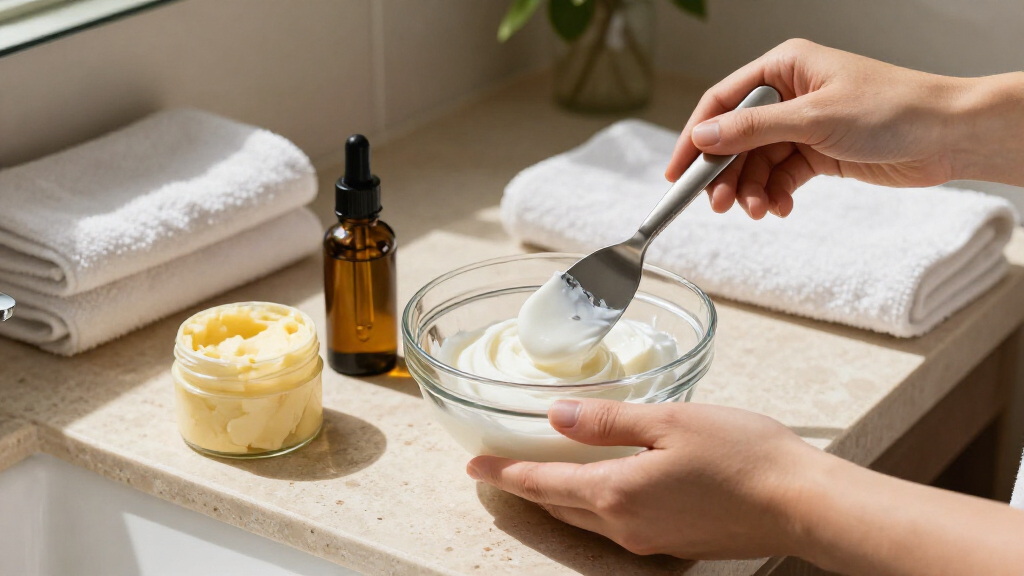
Cosmetics Business published a subscriber-only article by Belinda Carli on making barrier repair moisturisers, describing ceramides and emollients as relevant ingredients. The publicly available extract says demand has risen and cites a consumer survey figure, but does not disclose the full formulation guidance or the survey details.
Cosmetics Business published a subscriber-only report on October 28, 2026, examining how to formulate a barrier repair moisturiser, with ceramides and emollients identified in the public extract as ingredients of interest. The available excerpt offers only a limited view of the article, so its detailed formulation advice cannot be independently described from the supplied material.
The report, written by Belinda Carli, is framed around ingredients needed to create what it calls an effective skin barrier repair formula. Its public extract asks how such a moisturiser is put together and what ingredients may help it perform differently from a regular moisturiser. The extract names ceramides and emollients, but does not provide concentrations, ingredient combinations, manufacturing steps or testing results.
Cosmetics Business says up to 71% of consumers declare themselves to have sensitive skin, citing a numbered source. It presents that figure as context for rising demand for barrier repair moisturiser formulas. The supplied extract does not identify the survey, its date, geographic coverage, sample size or the precise wording of the question, so the statistic should be read as the publication’s reported figure rather than a fully assessable measure.
The full article is marked as premium subscriber content. The source page invites readers to subscribe or sign in, and the details provided here do not include the complete text. No specific recipe or product-making instructions are available in the public material supplied for this report.
Why Barrier Formulas Draw Interest
The report addresses a formulation topic linked by Cosmetics Business to consumer interest in sensitive skin. Moisturisers marketed for barrier support are relevant to product developers and readers comparing skincare claims, but the extract does not establish that any particular formula repairs skin or performs better than another product.
For readers seeking practical advice, the distinction between a topic overview and an actual recipe matters. The public extract names ingredient categories but omits the information needed to reproduce a formula or judge its performance, including ingredient levels, stability data and testing. Its key value in the supplied version is therefore as a pointer to a specialist report, not as a complete how-to guide.
Products Worth Considering

LEVOIT Vital 200S-P Smart Air Purifier for Large Rooms

Levoit Eleva 300X HEPA Air Purifier for Home and Bedroom

Therabody Theragun Mini 3rd Generation Massage Gun, Black
As an affiliate, we earn on qualifying purchases.
What the Public Extract Says
The article’s stated focus is how to make a barrier repair moisturiser and which ingredients may distinguish the formula from a regular moisturiser. The extract specifically mentions ceramides and emollients, but contains no explanation of their roles or how they should be combined. It also does not list other ingredients, discuss formulation constraints, or provide a finished product specification.
Cosmetics Business dates the report to October 28, 2026, and identifies Carli as its author. The page labels the article premium content; the supplied source is a short promotional extract rather than the full report. Accordingly, the details that can be confirmed are limited to its subject, author, publication date, the two named ingredient categories and the publication’s stated consumer-demand context.
““From ceramides to emollients, Belinda Carli breaks down the ingredients needed to create an effective skin barrier repair formula.””
— Cosmetics Business, introducing Belinda Carli’s report
Formulation Details Remain Subscriber-Only
The supplied source does not show the full article, so it is not possible to confirm specific ingredients beyond ceramides and emollients, suggested amounts, preparation method or evidence supporting product performance. It also does not explain what Cosmetics Business means by “barrier repair” in this report or how performance is assessed.
The cited figure of up to 71% cannot be evaluated fully without its source, survey period, population and methodology. The extract also gives no data measuring the reported rise in demand. These limitations mean neither the scale of the trend nor the article’s detailed technical conclusions can be verified from the material provided.
Full Report Holds Further Guidance
The next source for the article’s complete formulation guidance is the subscriber-only report itself, which Cosmetics Business says is available to premium subscribers. Until its full text or another source provides the technical details, the ingredients named in the extract should not be treated as a complete recipe or as evidence that a homemade moisturiser will repair the skin barrier.
Further reporting could clarify the underlying consumer survey and the report’s recommendations, including formula composition and any testing cited. No additional publication, product launch or follow-up date is stated in the supplied material.
Key Questions
What did Cosmetics Business publish?
It published a subscriber-only report by Belinda Carli on making a barrier repair moisturiser, dated October 28, 2026.
Which ingredients are named in the public extract?
The extract names ceramides and emollients. It does not provide a complete ingredient list, amounts or instructions for combining them.
Does the available material include a moisturiser recipe?
No. The supplied text is a short extract and says the full article is available to premium subscribers. It gives no reproducible formula or preparation steps.
What is the source of the 71% sensitive-skin figure?
The publication includes the figure and a numbered citation, but the supplied extract does not identify the survey or give its date, sample size, geography or methodology.
Source: cosmeticsbusiness.com