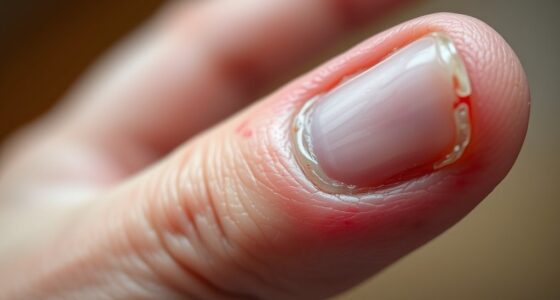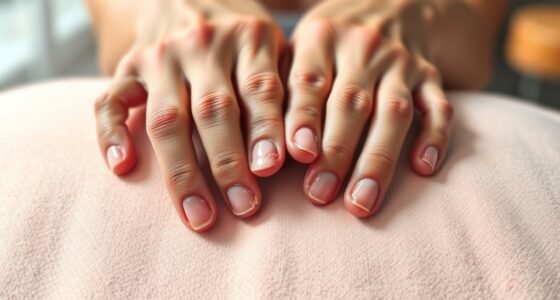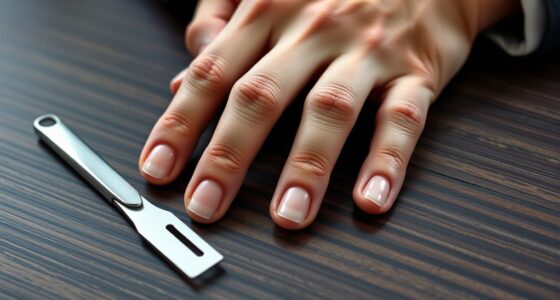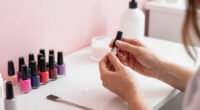
To reduce peeling at your nail edges, focus on keeping them moisturized with cuticle oils or rich creams that contain vitamin E or jojoba oil. Gently file away peeling edges with a fine-grit file in one direction to prevent further damage. Protect your nails by wearing gloves during chores and avoiding harsh chemicals. Maintain a healthy diet rich in biotin, zinc, and omega-3s, and give your nails regular breaks from polish. For more effective tips, continue exploring expert advice.

Get beauty and skincare favorites delivered free with Prime
- Fast, free delivery on millions of items
- Prime Video, Amazon Music and more included
- Member-only deals all year
Key Takeaways
- Gently file peeling edges with a fine-grit file, always in one direction to prevent further damage.
- Keep nails and cuticles moisturized daily with nourishing oils like vitamin E or jojoba oil.
- Avoid harsh acetone-based removers; opt for acetone-free formulas to prevent dryness and peeling.
- Wear gloves during chores and dishwashing to protect nails from water and chemicals.
- Maintain a balanced diet rich in biotin, zinc, and omega-3s to strengthen nails from within.

Peeling at the nail edge can be frustrating and often signals underlying issues like dryness or damage. To combat this, you need to focus on both nail strengthening and establishing effective moisturizing routines. Strengthening your nails helps make them more resilient to peeling, while moisturizing keeps the nails and surrounding skin hydrated, preventing brittleness and splitting. When you incorporate these practices into your daily routine, you’ll notice fewer peeling edges and healthier nails overall.
Start by paying attention to your nail care products. Use gentle, nourishing formulas that contain ingredients like biotin, keratin, or calcium, which promote nail strength. Avoid harsh acetone-based polish removers or excessive exposure to water, as these can weaken your nails over time. Instead, opt for acetone-free removers and wear gloves when doing chores or washing dishes. Applying a nail strengthener or hardener regularly can also provide a protective barrier that reduces peeling and breakage. Additionally, selecting products that promote nail health can further support your efforts and boost nail resilience.
Choose gentle, nourishing nail products with biotin, keratin, or calcium to strengthen and protect your nails.
Moisturizing routines are equally essential. Keep your nails and cuticles well-hydrated by applying a quality cuticle oil or moisturizer daily. Look for products enriched with vitamin E, jojoba oil, or shea butter, which deeply nourish the nails and surrounding skin. Consistency is key—if you neglect hydration, your nails are more prone to becoming brittle and peeling. Remember to massage the moisturizer into your nails and cuticles thoroughly, as this stimulates blood flow and enhances absorption. Proper hydration from both topical and internal sources is crucial for maintaining strong, flexible nails.
In addition to topical care, consider your overall hydration and diet. Drinking plenty of water helps maintain internal moisture levels, supporting stronger nails from the inside out. Incorporating nutrients like biotin, zinc, and omega-3 fatty acids into your meals can also improve nail health and resilience over time. You should also avoid habits that damage nails, like biting or using them as tools. Instead, give your nails regular breaks from polish and artificial enhancements, which can weaken the nail plate and cause peeling. If you notice peeling edges, gently file them down with a fine-grit nail file, always filing in one direction to prevent further splitting.
As an affiliate, we earn on qualifying purchases.
Frequently Asked Questions
Can Diet Affect Nail Peeling?
Yes, your diet impact can influence nail health and reduce peeling at the nail edge. Consuming foods rich in biotin, vitamins E and B, and minerals like zinc and iron supports strong, healthy nails. A balanced diet helps prevent brittleness and peeling by providing essential nutrients your nails need to grow strong. Keep hydrated, eat a variety of nutrient-dense foods, and avoid excessive exposure to harsh chemicals for better nail health.
Are There Specific Vitamins for Healthier Nails?
Certainly, a touch of elegance can be found in nurturing your nails with specific vitamins. Vitamin supplements, especially biotin, vitamin E, and zinc, play a subtle yet essential role in nail strengthening. These nutrients help enhance flexibility and resilience, reducing peeling and breakage. Incorporate these into your routine to promote healthier, more resilient nails, allowing you to enjoy a refined, well-groomed appearance with confidence and grace.
How Often Should I Trim My Nails?
You should trim your nails every one to two weeks to prevent peeling and maintain healthy edges. When trimming, avoid cutting too close to the skin, which can cause damage. Incorporate nail polishing carefully and avoid over-polishing, as it can weaken nails. Also, prioritize cuticle care by moisturizing regularly, which helps protect the nail edge. Proper trimming, along with good nail and cuticle routines, keeps your nails strong and less prone to peeling.
Do Certain Nail Products Cause Peeling?
Certain nail products, like some nail polish formulas, can cause peeling if they contain harsh chemicals. Think of it like a rough paint job that chips easily—your nails suffer similarly. Using proper cuticle care and opting for gentle, nourishing formulas can help prevent damage. Check labels for acetone or formaldehyde, and always moisturize after removing polish to keep your nails strong and less prone to peeling.
What’s the Best Way to Prevent Future Damage?
To prevent future damage, prioritize good cuticle care by moisturizing regularly and avoiding harsh removers, which can weaken nails. Incorporate nail strengthening treatments like protein-based base coats or oils to reinforce your nails. Also, keep your nails trimmed and avoid aggressive filing. Wearing gloves during chores and maintaining a balanced diet will support overall nail health, reducing peeling and keeping your nails strong and resilient over time.
As an affiliate, we earn on qualifying purchases.
Conclusion
To keep your nails strong and peeling-free, stick to a nourishing routine and avoid harsh chemicals. Did you know that over 60% of women experience nail peeling at some point? By taking simple steps like moisturizing your cuticles and wearing gloves during chores, you can considerably reduce peeling and boost nail health. Consistency is key—your nails will thank you for the care you give them!
acetone-free nail polish remover
As an affiliate, we earn on qualifying purchases.
As an affiliate, we earn on qualifying purchases.
As an affiliate, we earn on qualifying purchases.
Halloween Picks
halloween
As an affiliate, we earn on qualifying purchases.