To provide safe manicures and pedicures for aging adults, focus on gentle nail care practices that prevent damage and infections. Use soft tools, avoid harsh chemicals, and keep nails moisturized. Create a comfortable environment with proper seating and sterilized tools. Watch for signs of nail issues like thickening or discoloration, and address them promptly. If you want to guarantee you follow best practices for healthy nails, there’s more to learn about effective techniques and precautions.
Key Takeaways
- Use gentle, acetone-free products and avoid harsh chemicals to protect fragile, aging nails.
- Ensure a safe, clutter-free environment with ergonomic seating to prevent falls and discomfort during nail care.
- Trim and file nails carefully in one direction to prevent damage and snagging.
- Regularly inspect nails for signs of infection, discoloration, or thickening, and address issues promptly.
- Incorporate moisturizing treatments for nails and cuticles to maintain flexibility and prevent brittleness.
Top picks for "nail care elderly"
Open Amazon search results for this keyword.
As an affiliate, we earn on qualifying purchases.
Understanding the Unique Nail Care Needs of Seniors
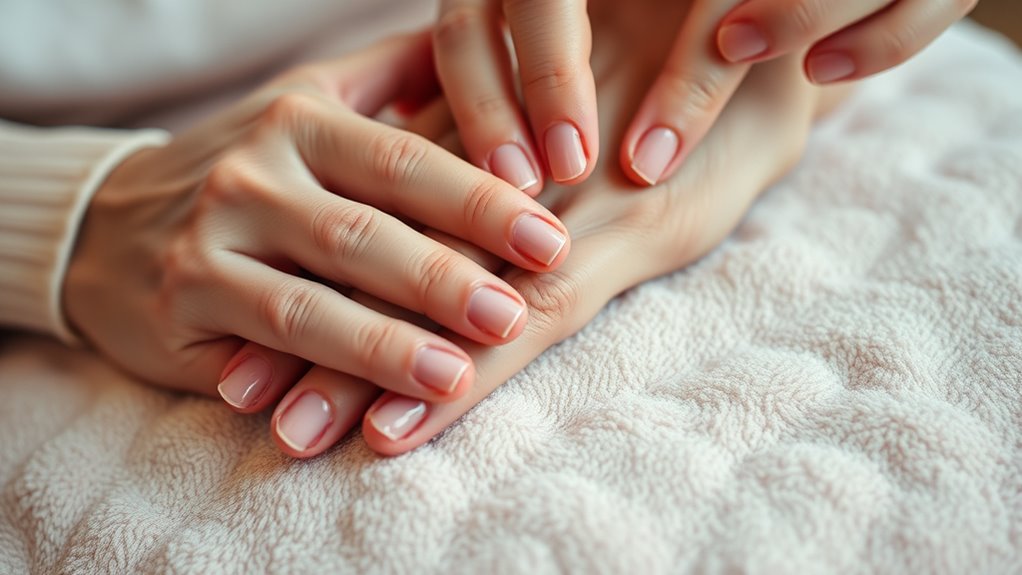
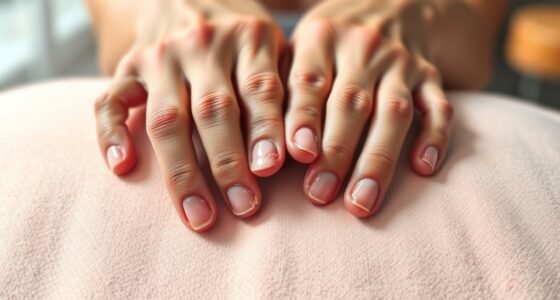
As you age, your nails undergo changes that require special attention. You might notice altered nail growth patterns, with nails growing more slowly or becoming brittle. These shifts can make nails more prone to breakage and damage. Additionally, common nail disorders such as fungal infections, ridges, or thickened nails become more prevalent in seniors. Understanding these changes helps you recognize when your nails need extra care or medical attention. Proper nail care can prevent discomfort and maintain healthy nails. It’s essential to keep nails clean, moisturized, and trimmed gently, avoiding aggressive filing or harsh chemicals. Being aware of these age-related nail issues allows you to seek appropriate care, ensuring your nails stay healthy, strong, and less susceptible to common disorders. Regularly inspecting your nails for signs of infection can help catch issues early and maintain overall nail health.
Preparing a Safe and Comfortable Environment for Nail Services

You need to create a space that feels safe and cozy for your elderly clients. Make sure the seating is comfortable and easy to access, so they can relax during the service. Always follow strict sanitization protocols to keep equipment clean and prevent infections. Incorporating organized spaces can help ensure all necessary tools are readily available and reduce clutter, creating a more efficient and calming environment.
Comfortable Seating Arrangements
Creating a comfortable seating arrangement is essential to guarantee elderly clients feel safe and relaxed during nail services. Use ergonomic chairs that provide proper support for their back and neck, reducing fatigue and discomfort. Cushioned seating helps minimize pressure points, making it easier for clients to sit comfortably for the duration of the service. Adjust the height of the chair so their feet rest flat on a stable surface, promoting good posture. Ensure the chair swivels smoothly for easy movement and access. Keep the area clutter-free to prevent tripping hazards, and provide armrests if needed for added stability. Incorporating proper maintenance of furniture ensures that seating remains safe and comfortable over time. A well-thought-out seating setup helps clients feel secure, relaxed, and cared for, creating a positive experience that encourages repeat visits.
Sanitized Equipment Protocols
Maintaining strict sanitized equipment protocols is essential to guarantee a safe and comfortable environment for nail clients. You should follow proper disinfection procedures after each service, ensuring tools are thoroughly cleaned and disinfected according to industry standards. Use appropriate sterilization techniques, such as autoclaving or chemical sterilization, to eliminate all bacteria, fungi, and viruses. Regularly inspect and maintain your sterilization equipment to ensure it functions correctly. Always handle tools with gloves and avoid cross-contamination by storing sanitized instruments separately from dirty ones. Document your disinfection procedures to stay compliant with health regulations. Proper color accuracy in tools and environment can also help detect any contamination issues early. By adhering to these protocols, you create a hygienic space that prioritizes your clients’ safety and well-being, especially important when caring for aging adults.
Techniques for Gentle and Effective Nail Trimming and Filing

To trim and file nails safely, start with gentle nail clippers designed for ease and comfort. Use proper filing techniques to smooth edges without causing damage, and always maintain good nail hygiene to prevent infections. These steps guarantee a comfortable and effective nail care routine for elderly individuals.
Using Gentle Nail Clippers
Using gentle nail clippers is essential for safe and comfortable nail trimming, especially for elderly individuals with fragile or thickened nails. Proper nail clipper safety means choosing sharp, well-maintained tools and avoiding excessive force. Focus on gentle trimming techniques to prevent injury or discomfort. Visualize:
- Carefully positioning the clipper parallel to the nail edge
- Using small, controlled cuts rather than large snips
- Avoiding cutting too close to the quick or skin
- Holding the finger steady to prevent slips
- Checking for any rough edges afterward
- Remembering that nail health can influence the choice of tools and trimming methods to ensure safety and effectiveness.
Proper Filing Techniques
Proper filing techniques are essential for guaranteeing that nail shaping is gentle and effective, especially for elderly individuals with delicate or thickened nails. Always start by removing any nail polish carefully, avoiding harsh nail polish removal that can weaken nails. Use a gentle nail file, filing in one direction rather than sawing back and forth, to prevent damage. Focus on shaping the nail edges smoothly, which helps prevent snagging or tearing. If your client enjoys nail art techniques, guarantee the nails are well-shaped before applying designs, as uneven edges can affect the overall look. Keep your file clean and replace it regularly to maintain hygiene. Proper filing not only enhances the nail’s appearance but also minimizes discomfort, making the manicure safe and comfortable for aging adults.
Maintaining Nail Hygiene
Maintaining nail hygiene involves careful trimming and filing techniques that protect fragile or thickened nails common in elderly individuals. Use gentle tools to avoid injury, and always trim straight across to prevent ingrown nails. When removing nail polish, opt for acetone-free remover to reduce dryness. If you’re exploring nail art designs, ensure nails are clean and dry before applying new polish. Keep nails smooth and neat by filing edges softly, avoiding harsh motions that can cause splitting. Regularly inspect nails for signs of infection or damage, and soak nails in warm water to soften them before trimming. Remember, gentle care prevents pain and preserves nail health. Incorporating proper nail hygiene practices can further reduce the risk of infections and promote healthier nails. Keep nails clean and dry for hygiene.
Choosing Appropriate Nail Products for Aging Nails
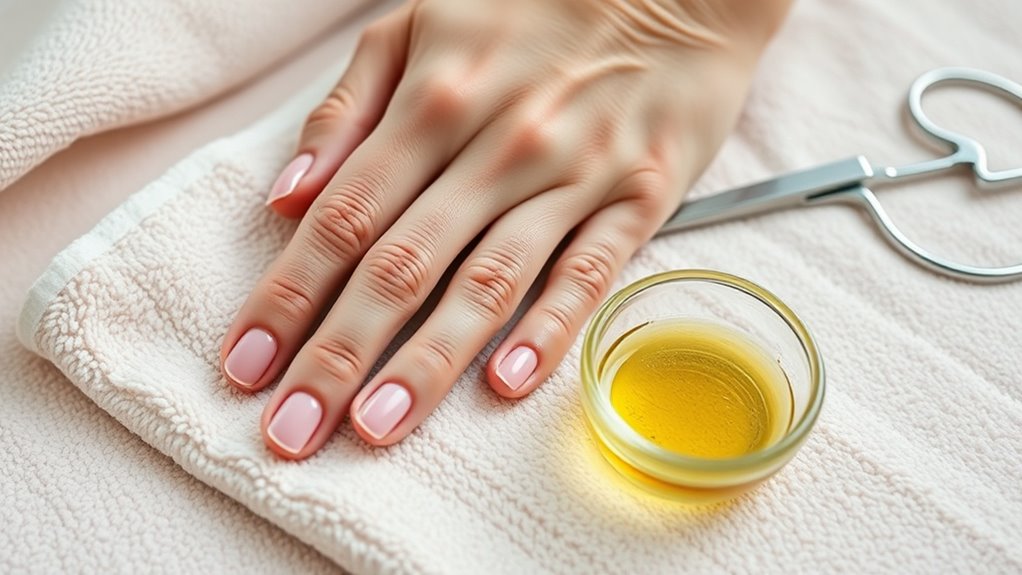
As nails age, they become thinner, more brittle, and prone to damage, making the choice of appropriate nail products essential for maintaining health and appearance. When selecting nail polish removal, opt for gentle, acetone-free formulas to prevent further dryness and breakage. These are less harsh on delicate aging nails and help preserve moisture. For cuticle care, choose nourishing oils or creams that soften cuticles without causing irritation. Avoid harsh chemicals or overly thick products that can clog pores or damage the nail bed. Look for products specifically formulated for sensitive or fragile nails, and always read labels carefully. Using gentle, suitable products minimizes discomfort, supports nail strength, and keeps nails looking healthy and well-maintained as you age. Additionally, selecting vetting products designed for aging nails can further ensure safety and effectiveness.
Recognizing and Addressing Common Nail Issues in Older Adults
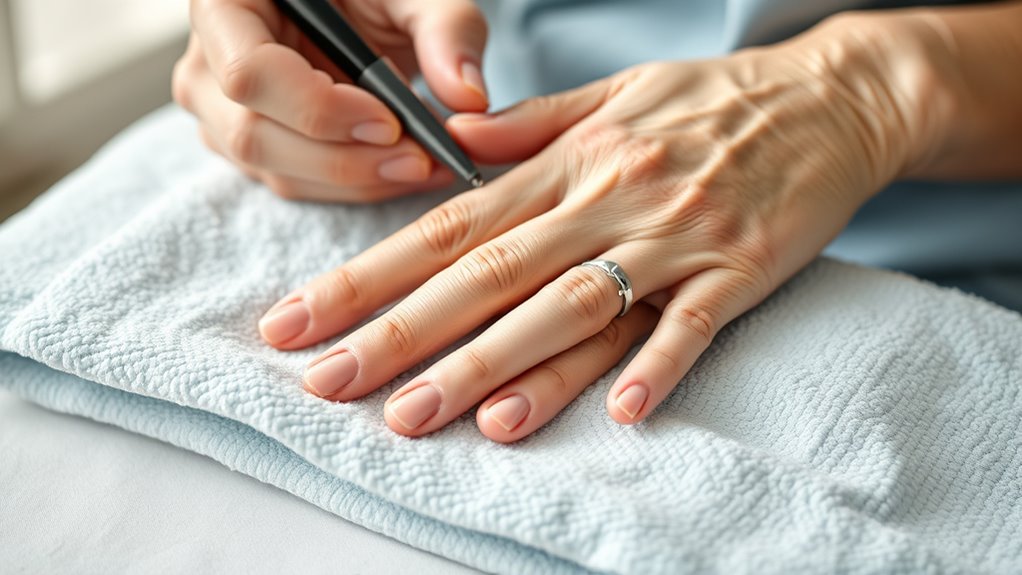
Older adults often experience specific nail issues that can signal underlying health problems or result from natural aging processes. Look out for signs like brittle, peeling, or discolored nails. These problems may hinder your ability to enjoy current nail polish trends or nail art techniques. To recognize issues, observe for:
- Thickened nails that are difficult to trim
- Ridged or grooved surfaces
- Yellow or brown discoloration
- Crumbling edges
- Fungal or bacterial spots
Address these concerns by consulting a healthcare professional when needed. Safe manicures can still incorporate stylish nail polish trends, but be gentle with fragile nails. Proper care helps prevent further damage, so always handle nails with care and avoid aggressive techniques that may worsen existing issues. Regular nail health monitoring can help identify problems early and ensure proper treatment.
Tips for Maintaining Healthy Nails Between Professional Services

To keep nails healthy between professional appointments, maintaining a gentle and consistent routine is vital. Start by carefully removing nail polish with a gentle, acetone-free remover to prevent dryness and damage. Avoid harsh scrubbing, which can weaken nails. After removal, give your nails time to breathe before applying new polish. When storing nail polish, keep bottles in a cool, dark place to prevent thickening and spoilage. This helps guarantee your polish remains easy to apply and safe for your nails. Keep your nails moisturized by applying a nourishing cuticle oil or moisturizer daily. Also, avoid biting or picking at nails, as this can cause damage and infections. Regularly checking your nails for signs of nail health issues can help catch problems early and ensure proper care. Consistent, gentle care helps maintain healthy, strong nails between professional visits.
Frequently Asked Questions
How Often Should Seniors Get Professional Nail Care?
You should get professional nail care every 4 to 6 weeks, following the frequency guidelines and professional recommendations. Regular visits help maintain healthy nails, prevent infections, and address age-related issues like brittle nails or fungal concerns. If you notice any problems or have specific health conditions, consider more frequent appointments. Always discuss your needs with a specialist to guarantee safe, effective care tailored to your aging nails.
Are There Specific Tools Best Suited for Elderly Nail Trimming?
When it comes to trimming elderly nails, you’ve got to use the right tools—think senior manicure equipment designed specifically for delicate nails. Opt for elderly nail tools like ergonomic nail scissors, gentle emery boards, and nail clippers with a soft grip to avoid slips. Using the proper tools helps you stay on top of nail care and keeps the process safe, so you don’t bite off more than you can chew.
Can Nail Polish Be Safely Used on Aging Nails?
Yes, nail polish can be safely used on aging nails if you choose the right type. Look for nail polishes labeled as low-odor, formaldehyde-free, and free from harsh chemicals to guarantee nail polish safety. These options help protect aging nail health by reducing irritation and damage. Always apply a nourishing base coat to strengthen fragile nails and avoid excessive use, which can weaken aging nails over time.
What Are Signs of Nail Infections in Seniors?
You notice nail discoloration or skin redness, and suddenly, you’re on alert. These signs often point to a nail infection in seniors. Watch for thickened or brittle nails, pus, or unusual odor, which can also indicate infection. Early detection is vital—if you see these symptoms, consult a healthcare professional promptly to prevent further complications and guarantee proper treatment. Ignoring these signs could lead to more serious health issues.
How Can Caregivers Assist With Nail Care at Home?
You can assist with nail care at home by ensuring proper nail hygiene and maintaining home safety. Gently trim their nails straight across, avoiding sharp edges, and use clean tools. Keep the area well-lit and stable to prevent falls. Encourage regular inspections for signs of infection or damage. Always prioritize their comfort and safety, and seek professional help if you notice any issues or if they have difficulty caring for their nails themselves.
Conclusion
Think of caring for your nails as tending to a delicate garden. With patience, gentle hands, and the right tools, you can help your nails flourish beautifully, even as they change with age. By creating a safe space and using thoughtful techniques, you nurture your nails like a gardener tending precious blooms. Remember, consistent care and kindness keep your nail garden healthy and vibrant—your personal touch makes all the difference.