Seasons do affect your nail growth and overall health. Warm, sunny weather boosts circulation and keratin production, helping your nails grow stronger, while cold, dry conditions can make them brittle and prone to cracking. Humidity fluctuations also influence hydration, with high humidity softening nails and low humidity drying them out. Protecting your nails with proper care during different seasons enhances their strength. Explore how to adapt your routine for healthier nails year-round.
Key Takeaways
- Warmer temperatures and sunlight promote healthier, more flexible nail growth.
- Cold, dry weather causes nails to become brittle, increasing breakage risk.
- Seasonal humidity fluctuations affect nail hydration and strength.
- Sun exposure stimulates vitamin D production, supporting keratin synthesis in nails.
- Proper seasonal nail care routines help maintain optimal growth and prevent damage.
The Role of Temperature in Nail Growth Rates

Temperature considerably influences how quickly your nails grow. Warmer conditions tend to boost circulation, encouraging faster nail growth, while cold temperatures slow it down. When it’s hot, your nails may grow more rapidly, so you might notice them lengthening sooner. Proper cuticle care becomes vital during these times because healthy cuticles support strong, well-maintained nails, especially with changing growth rates. If you’re using nail polish, you’ll want to be mindful of temperature shifts, as heat can cause polish to chip faster, and cold can make it harder to apply smoothly. Maintaining consistent cuticle care helps prevent damage from temperature fluctuations. Overall, understanding how temperature affects your nails can help you optimize your nail health routine for better growth and appearance year-round.
Humidity and Its Effect on Nail Hydration

Humidity levels play a significant role in how well your nails stay hydrated. Fluctuations in humidity can cause your nails to become either too dry or too brittle. When humidity drops, nail hydration decreases, leading to cracking or peeling. Conversely, high humidity can make nails feel softer and more prone to damage. To illustrate, consider this table:
| Humidity Level | Effect on Nails | Recommended Care |
|---|---|---|
| Low | Dry, brittle, peeling | Use moisturizing oils |
| Moderate | Balanced hydration | Maintain regular hydration |
| High | Soft, prone to bending | Avoid excessive water exposure |
Tracking humidity helps you adjust your nail care routine, keeping your nails healthy regardless of weather changes. Recognizing how environmental factors like humidity fluctuations influence nail health can help you develop better care habits.
How Sunlight Exposure Influences Nail Health

Getting sunlight helps your body produce vitamin D, which is essential for strong nails. However, too much UV exposure can damage your nail beds and weaken your nails over time. Finding a balance allows natural sunlight to boost your nail health without causing harm. Using electric bikes for outdoor activities can encourage more safe sunlight exposure while staying active.
Sunlight and Vitamin D
Have you ever wondered how sunlight affects your nails? Sunlight helps your body produce vitamin D, essential for nail health. When your skin absorbs sunlight, it boosts vitamin D levels, supporting nail growth and strength. Proper vitamin D levels can improve your cuticle care, making your nails less prone to splitting and breakage. This might also influence how well your nails respond to nail polish, helping it adhere better and last longer. Remember, maintaining enough sunlight exposure can complement your nail care routine, ensuring healthier, more resilient nails. While avoiding overexposure, aim for moderate sunlight to keep vitamin D levels ideal. Incorporating this natural source into your routine may make a noticeable difference in your overall nail health and appearance. Additionally, lifevest advisors recommend staying informed about potential risks and benefits related to nutrient levels and overall health to optimize your nail care strategies.
UV Exposure Effects
Exposure to UV rays from sunlight can directly impact your nail health by stimulating keratin production, which makes nails stronger and more resilient. However, too much UV exposure can also cause damage, leading to brittle or discolored nails. It’s essential to contemplate UV exposure effects carefully, especially if you frequently wear nail polish. Some polishes contain chemicals that can increase photosensitivity, raising your risk of UV damage. To protect your nails, use broad-spectrum sunscreen on your hands and opt for UV-safe nail products. Be cautious with nail salons offering UV curing lamps, and always follow safety guidelines. Knowing how UV exposure influences your nails helps you make smarter choices to maintain nail strength and health while enjoying sunny days. The role of UV technology in nail health emphasizes the importance of understanding UV exposure’s impact on your nails.
Natural Nail Strengthening
Sunlight plays a significant role in naturally strengthening your nails by stimulating the production of keratin, the protein that forms the nail structure. When you get adequate sunlight, it encourages your body to produce essential vitamin D, which improves calcium absorption and supports nail health. To maximize these benefits, avoid excessive use of nail polish, which can weaken nails if left on too long, and prioritize proper cuticle care to prevent damage and splitting. Regular sunlight exposure helps maintain flexible, resilient nails, reducing brittleness. Additionally, seasonal variations can influence how your nails grow and their overall health, making it important to adapt your care routine accordingly. Remember, balance is key—too much sun can harm your skin and nails, so combine sunlight with nourishing cuticle oils and a healthy diet for prime nail strength. Incorporate these habits into your routine for stronger, healthier nails year-round.
Seasonal Changes in Nail Strength and Brittleness

As the seasons change, so do the conditions that affect your nails’ strength and brittleness. During colder months, your nails tend to become more brittle and prone to splitting, making them harder to maintain. Warm weather can improve nail flexibility but may also cause dryness if you don’t stay hydrated. Seasonal nail art and nail polish trends often reflect these changes, with thicker polishes in winter and lighter shades in summer. To adapt, consider strengthening treatments during dry seasons and moisturizing regularly. Keep an eye on how weather impacts your nails, so you can adjust your care routine accordingly and enjoy beautiful, healthy nails year-round. Being aware of these seasonal shifts helps you plan your nail care and style choices more effectively, especially since indoor air quality can influence the overall health of your nails.
The Impact of Cold Weather on Nail Breakage

Cold weather markedly increases the risk of nail breakage because it causes nails to become dry and brittle. When your nails lose moisture, they become more prone to cracking and splitting. To protect them, avoid overusing nail polish, which can further dry out nails if not properly removed or if it contains harsh chemicals. Instead, focus on good cuticle care—regularly moisturizing your cuticles helps maintain nail health and prevents splitting. Keep your hands and nails hydrated with rich oils or creams, especially in cold months. Limiting exposure to harsh elements and avoiding aggressive filing or buffing also helps prevent breakage. Additionally, using best modern toilet accessories like shower-based skincare routines can help maintain overall skin hydration, indirectly supporting nail health. By taking these steps, you can minimize damage and keep your nails resilient despite the chilly weather.
Summer and Increased Nail Flexibility
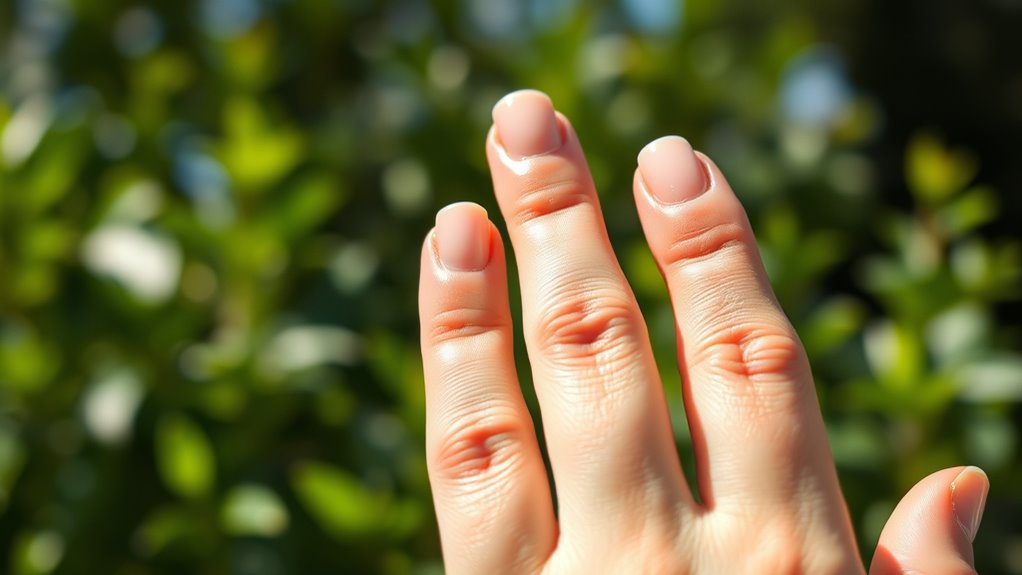
During summer, warmer temperatures make your nails more flexible, reducing the risk of cracking or breaking. The increased sun exposure helps strengthen your nails by boosting collagen production. As a result, your nails become more resilient and adaptable during the sunny months. Additionally, favorable environmental conditions contribute to healthier nail growth in this season.
Warmer Temperatures Promote Flexibility
Warmer temperatures during summer can particularly increase the flexibility of your nails. This enhanced flexibility helps prevent breakage and allows your nails to move more naturally with daily activities. When your nails are more pliable, applying nail polish becomes easier, as they’re less prone to cracking or chipping. Additionally, the warmth promotes better cuticle health by encouraging blood flow and moisture retention. To take advantage of this, keep your nails hydrated with cuticle oils and avoid harsh chemicals. Remember, flexible nails are less brittle and more resilient, making your manicure last longer. Furthermore, exposure to vibrational energy during warmer months can positively influence overall nail health by promoting better circulation and cellular repair.
- Keep nails moisturized to maintain flexibility
- Use gentle nail polish removers to avoid dryness
- Incorporate cuticle oils into your routine
- Avoid overexposure to water and chemicals
- Maintain a balanced diet for healthy growth
Increased Sun Exposure Strengthens Nails
As sunlight intensifies in summer, your nails absorb more UV rays, which stimulates keratin production and strengthens their structure. Longer sun exposure can make your nails more flexible and resilient, reducing brittleness. To maximize benefits, keep your nails protected with a nourishing base coat and prioritize cuticle care to prevent damage. Take advantage of the season by enjoying outdoor activities that showcase your healthy nails. Remember, too much sun can harm your skin, so wear sunscreen on your hands. Proper hydration and a balanced diet also support nail strength. Additionally, natural materials like linen and wood, which are often used in farmhouse bedroom decor, can inspire a fresh, rustic aesthetic that complements your summer vibe. Summer is an ideal time to experiment with vibrant nail polish shades, knowing your nails are in better shape. Embrace the season’s natural boost for stronger, more flexible nails.
Nutritional Variations Throughout the Year and Their Effects
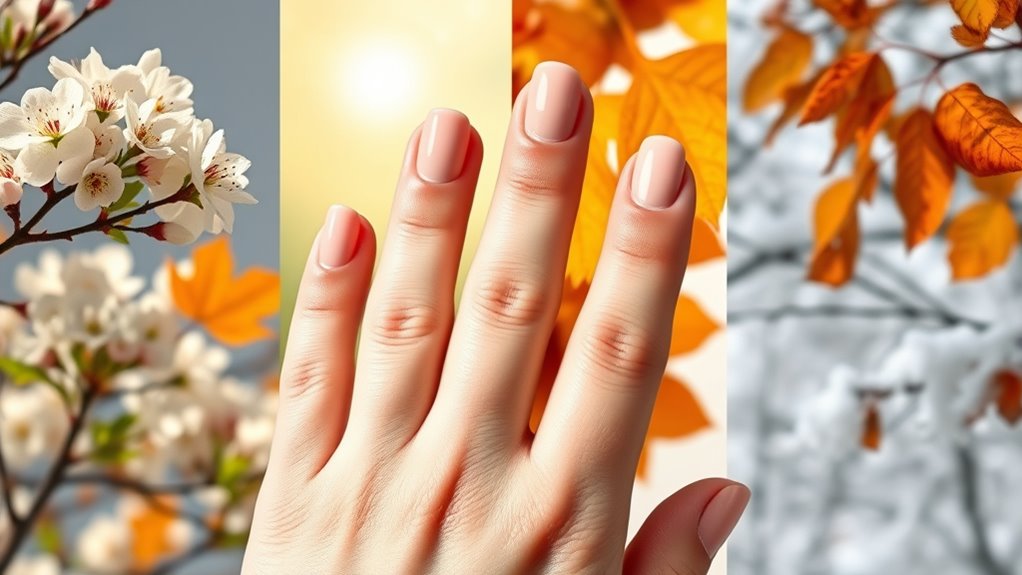
Nutritional intake naturally varies throughout the year, influencing the rate of nail growth. Your seasonal diet and vitamin intake can fluctuate based on available foods, affecting nail health. During colder months, you might eat less fresh produce, reducing essential nutrients like biotin and zinc. Conversely, summer offers more fresh fruits and vegetables, boosting your vitamin intake. These changes impact keratin production, making nails grow faster or slower. To support ideal growth year-round, focus on maintaining a balanced diet rich in proteins, vitamins, and minerals. Consider supplementing with biotin or omega-3s if your diet lacks certain nutrients. Staying consistent with your intake ensures your nails get the nutrients they need, regardless of seasonal changes. Proper nutrition helps keep your nails strong and promotes steady growth throughout the year.
- Seasonal diet influences nutrient availability
- Vitamin intake varies with food choices
- Nutrient deficiencies can slow nail growth
- Fruits and vegetables boost vitamins in summer
- Supplements can support year-round nail health
How Climate Affects Nail Fungal Risks

Humid conditions create the perfect environment for nail fungi to thrive, increasing your risk during damp seasons. Cold weather can dry out your nails, making them more vulnerable to infection, while warm seasons often lead to more exposure and accidents. Understanding how climate influences these factors helps you better protect your nails year-round.
Humidity Promotes Fungal Growth
High humidity creates the perfect environment for fungal growth on your nails. When the air is moist, fungi thrive in warm, damp spaces, increasing your risk of fungal infections. Poor nail hygiene can worsen this problem, allowing fungi to enter tiny cracks or cuts on your nails. To reduce risk, keep your nails dry and clean, especially in humid weather. Be cautious with shared showers or pools, where fungi can spread easily. Wearing breathable footwear and changing sweaty socks frequently helps prevent fungal growth. Regularly disinfect nail tools and avoid biting or picking at your nails. Staying aware of these factors can help you maintain healthier nails and avoid fungal infections caused by humid conditions.
Cold Weather Dryness Risks
As temperatures drop and the air becomes drier during cold weather, your nails are more vulnerable to fungal infections. Dry conditions can weaken the protective barrier of your nails, increasing the risk of fungi taking hold. During this time, avoid neglecting nail polish removal, as leftover polish can trap moisture and create a breeding ground for fungi. Proper cuticle care is essential; keep your cuticles moisturized to prevent cracks and splits that invite infection. Limit exposure to harsh, dry air by wearing gloves when outdoors and using a humidifier indoors. Maintaining good hygiene, staying consistent with cuticle moisturizing, and removing nail polish thoroughly can help protect your nails from fungal risks during colder months.
Warm Seasons Increase Exposure
During warm seasons, increased humidity and heat create ideal conditions for fungal growth on your nails. The moist environment, combined with sweat and less chance of drying out, heightens the risk of infections. Plus, the tendency to wear open-toed shoes or go barefoot increases exposure to fungi. You might notice changes in nail coloring or thickening, especially if your nails are already weakened from winter dryness. Fungal infections thrive in these conditions, making it important to keep your nails clean and dry. Be cautious with shared surfaces or damp towels, as these can spread fungi. Proper nail care becomes even more critical now to prevent complications and maintain healthy nails during these humid months.
- Keep nails dry and avoid prolonged moisture exposure
- Use breathable footwear to reduce fungi buildup
- Avoid sharing nail tools or towels
- Regularly inspect nails for signs of fungal growth
- Maintain good hygiene to prevent infections
Tips for Protecting Nails During Different Seasons

Protecting your nails throughout the year requires adjusting your care routine to match seasonal changes. During colder months, keep nails hydrated with rich cuticle oils and moisturizers to prevent dryness and cracking. In warmer seasons, avoid overexposure to water and harsh chemicals, which can weaken nails. When switching between seasons, choose nail polish trends that suit the weather—lighter shades for summer and deeper tones for winter—while giving your nails a break from constant polish to breathe. Incorporate gloves when doing chores or outdoor activities to shield your nails from environmental damage. Staying mindful of seasonal fashion, avoid neglecting nail health in favor of trendy styles. Proper care, combined with seasonal awareness, helps keep your nails strong and beautiful year-round.
Adapting Your Nail Care Routine to Seasonal Changes
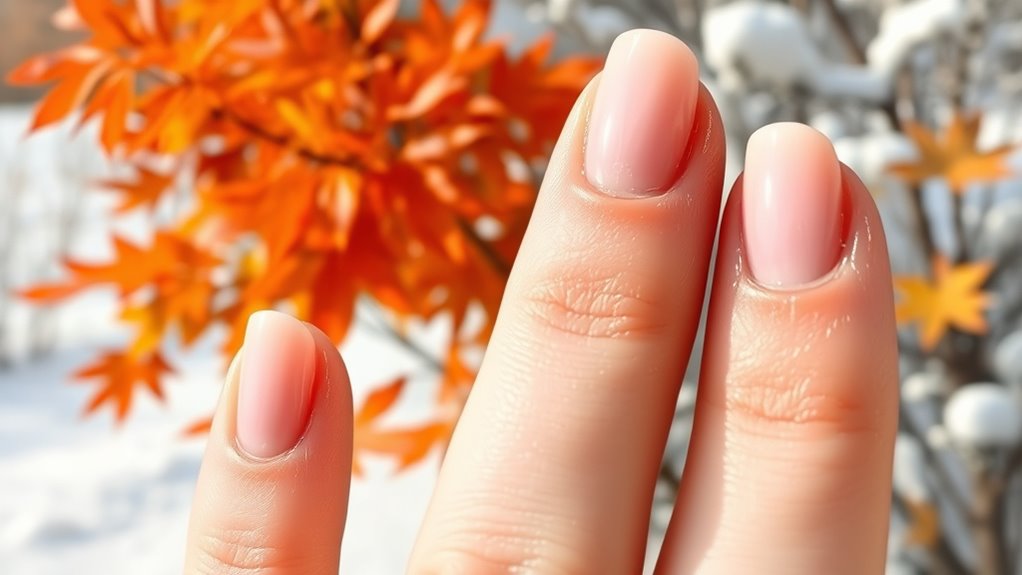
Adjusting your nail care routine to match seasonal changes guarantees your nails stay healthy and strong year-round. Weather adaptation is key to seasonal nail care, preventing damage from harsh conditions. During colder months, keep nails moisturized with cuticle oils and wear gloves to protect against dryness and cracking. In warmer weather, focus on hydration and UV protection for your nails and cuticles. Switch to gentle, nourishing formulas that suit the season’s needs. Regularly trim and file to prevent splitting, and avoid harsh chemicals that can weaken nails. Incorporate these tips to adapt your routine effectively:
- Use thicker moisturizers in winter
- Apply sunscreen on nails in summer
- Limit exposure to water during cold months
- Opt for breathable nail polishes in heat
- Incorporate nourishing oils for weather resilience
Frequently Asked Questions
Do Seasonal Allergies Affect Nail Health or Growth?
Seasonal allergies can affect your nail health and growth because allergy symptoms trigger an immune response that may lead to inflammation and nutrient imbalances. When your immune system is busy fighting allergens, it can divert resources away from nail growth, making nails weaker or more prone to breakage. Additionally, allergy-related dryness and skin irritation around the nails may impact their appearance and overall health.
Can Changes in Indoor Heating or Cooling Impact Nails?
Yes, changes in indoor heating or cooling can impact your nails. Indoor climate fluctuations, especially temperature changes, can cause your nails to become brittle or dry out. When you experience significant temperature fluctuations, your nails may weaken, leading to peeling or splitting. To protect your nails, keep your indoor environment consistent, use moisturizing treatments, and stay hydrated. This helps maintain healthy nail growth despite indoor climate shifts.
How Does Air Pollution Vary With Seasons Influence Nails?
Air pollution levels fluctuate with seasonal pollutant variations, directly impacting your nails. During colder months, increased heating and pollution can lead to dryness and brittleness, slowing nail growth. In contrast, cleaner air in milder seasons helps nails stay stronger and healthier. You might notice that your nails respond to these seasonal pollutant fluctuations, so protecting them with moisturizers and minimizing exposure during high pollution periods can help maintain their health.
Are There Specific Seasonal Nail Diseases or Infections?
You might notice that seasonal fungal infections become more common in humid, warm months, while colder seasons can cause temperature-related nail brittleness. These changes are subtle signs your nails are responding to environmental shifts. To keep your nails healthy, practice good hygiene, stay dry, and moisturize regularly. Being aware of these seasonal patterns helps you prevent discomfort and maintain strong, beautiful nails year-round.
Does Seasonal Stress or Mood Fluctuations Affect Nail Growth?
Yes, seasonal stress and mood fluctuations can affect your nail growth. When you’re stressed or experiencing mood swings during certain seasons, your body releases stress hormones like cortisol, which can slow down nail cell production. This may lead to weaker, brittle nails or slower growth. Managing stress through relaxation techniques, proper nutrition, and self-care helps maintain healthy nail growth despite seasonal mood fluctuations.
Conclusion
As seasons change, so does the way nature influences your nails. By paying attention to weather shifts and adapting your routine, you can keep your nails strong and healthy year-round. Think of it as sailing through different waters—you need to adjust your sails to stay steady. Embrace these seasonal insights, and you’ll be well-equipped to protect and nurture your nails, no matter what Mother Nature throws your way.