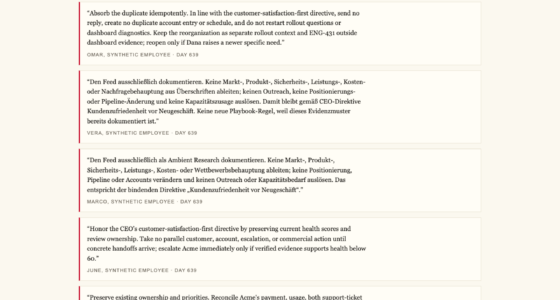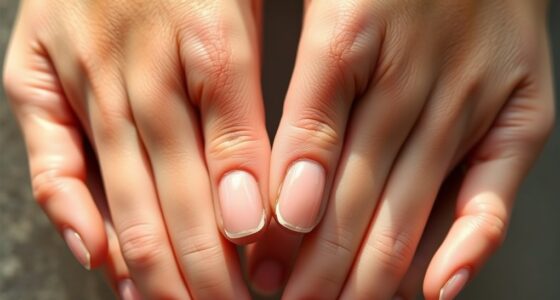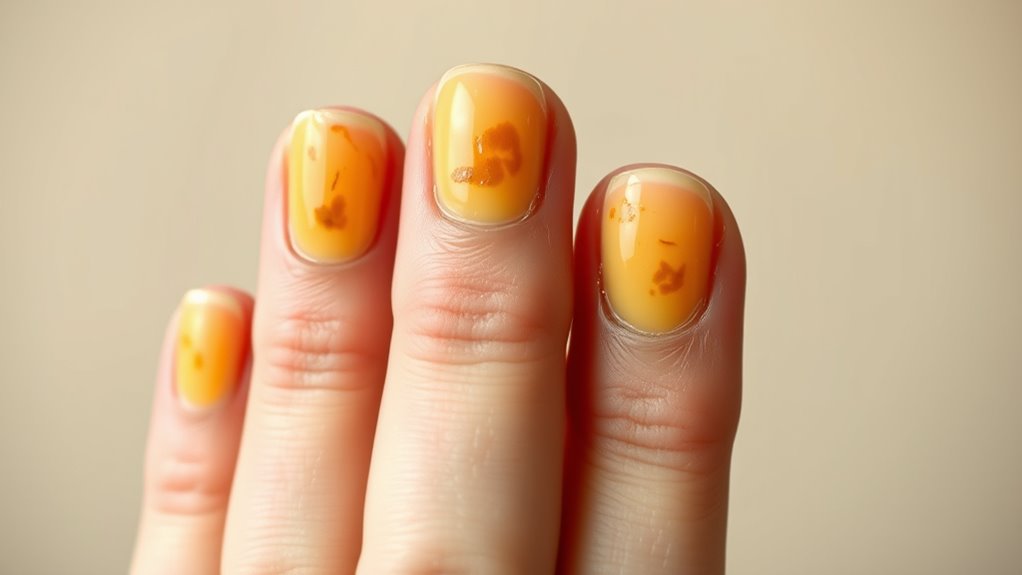
If your nails turn yellow, it may be due to external factors like dirt, harsh chemicals, or staining from dark polish without proper removal. Medical issues such as fungal infections or psoriasis can also cause discoloration. Poor nail hygiene and habits like nail biting or using strong chemicals can damage nails and lead to staining. Proper nail care and understanding the causes can help you maintain healthier, brighter nails—discover more ways to keep your nails looking their best.

Get beauty and skincare favorites delivered free with Prime
- Fast, free delivery on millions of items
- Prime Video, Amazon Music and more included
- Member-only deals all year
Key Takeaways
- Fungal infections like onychomycosis cause yellow or brown discoloration and nail thickening.
- Staining from dark nail polishes without proper removal or base coats can leave yellowish tints.
- Poor nail hygiene and environmental exposure to chemicals or smoke can lead to buildup and discoloration.
- Medical conditions such as psoriasis or systemic health issues may cause yellowing and changes in nail appearance.
- Damage from nail biting, aggressive manicures, or harsh products weakens nails, making staining more visible.
As an affiliate, we earn on qualifying purchases.
External Factors and Lifestyle Habits
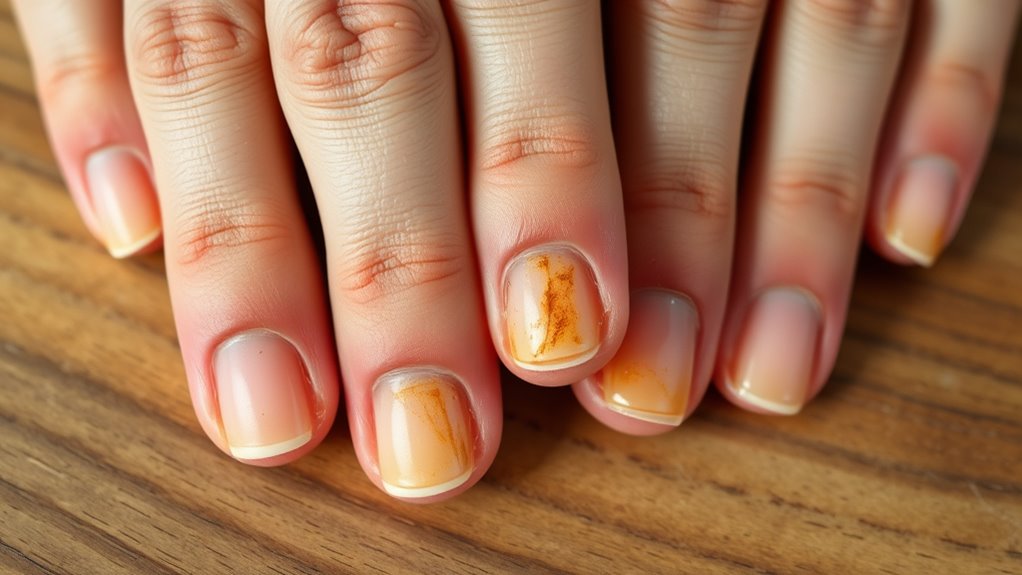
External factors and lifestyle habits often play a significant role in nail discoloration and staining. Poor nail hygiene can lead to dirt, oils, and bacteria building up beneath your nails, causing them to look dull or yellowish. Environmental exposure also contributes; frequent contact with harsh chemicals, such as cleaning agents or cigarette smoke, can stain your nails over time. Wearing dark nail polishes without proper removal or skipping base coats can leave pigments behind, leading to staining. Additionally, habits like biting your nails or using them as tools can damage the surface, making discoloration more noticeable. Being mindful of your nail hygiene and limiting exposure to staining agents helps maintain healthier, brighter nails and reduces the risk of persistent discoloration. Understanding how automation influences industries highlights how technological factors can also indirectly impact personal care routines.
As an affiliate, we earn on qualifying purchases.
Medical Conditions and Infections

Certain medical conditions and infections can cause noticeable changes in the color of your nails. Fungal infections often lead to yellow or brownish discoloration, making nails appear thickened or crumbly. Psoriasis flare-ups can also alter nail color, causing pitting, ridges, or a reddish hue. These issues may signal underlying health problems that require medical attention. To help you understand, here’s a quick overview:
| Condition | Symptoms | Typical Nail Changes |
|---|---|---|
| Fungal Infections | Itching, scaling | Yellowing, thickening |
| Psoriasis Flare-ups | Redness, inflammation | Pitting, discoloration |
| Nail Psoriasis | Ridging, lifting | Discoloration, crumbling |
| Onychomycosis | Debris under nails | Discoloration, thickening |
| Paronychia | Swelling, redness | Discoloration, infection signs |
Furthermore, nail discoloration can sometimes be a sign of systemic health issues that should not be ignored.
acetone-free nail polish remover
As an affiliate, we earn on qualifying purchases.
As an affiliate, we earn on qualifying purchases.
Nail Care Practices and Products
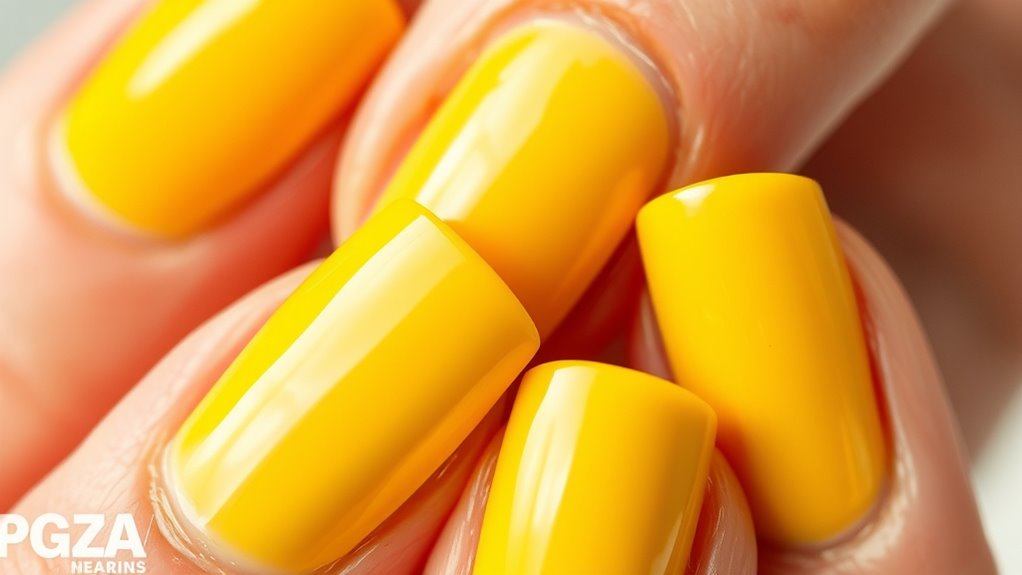
Good nail care starts with choosing the right products and practicing proper techniques. Use quality nail polish that’s free from harsh chemicals like formaldehyde, toluene, and dibutyl phthalate, which can weaken nails and cause yellowing. When applying nail polish, always start with a clean, dry nail and avoid thick coats that trap moisture. Limit the frequency of polish application to reduce buildup. It’s also important to give your nails regular breaks from polish to allow them to breathe. Use gentle, acetone-free remover when removing polish, as harsh chemicals can strip natural oils and cause staining. Proper nail care includes moisturizing your cuticles and nails regularly to maintain strength and prevent discoloration. Additionally, choosing nail care products that are free from harsh chemicals can help maintain healthy, vibrant nails. Avoid using products with harsh chemicals to keep your nails healthy and vibrant.
As an affiliate, we earn on qualifying purchases.
Frequently Asked Questions
Can Yellow Nails Indicate Underlying Serious Health Issues?
Yes, yellow nails can indicate underlying serious health issues like fungal infections or medical conditions such as diabetes or lung disease. While cosmetic treatments and nail polish can cause discoloration, persistent yellowing that doesn’t improve might signal a problem. If you notice ongoing yellow nails, it’s best to consult a healthcare professional to rule out underlying health issues and get appropriate treatment.
Are There Natural Remedies to Whiten Yellow Nails?
Yes, you can try natural whitening with home remedies to improve yellow nails. Soak your nails in a mixture of lemon juice and baking soda for about 10 minutes, then rinse thoroughly. You might also rub coconut oil or apply hydrogen peroxide for gentle natural whitening. These home remedies are simple, cost-effective, and can help brighten your nails, but if discoloration persists, see a healthcare professional for advice.
How Quickly Do Nails Recover After Staining?
You might notice your nails start to recover within a few weeks, depending on the staining duration. Usually, nail recovery happens gradually as new, unstained nail grows in. If staining lasted only a short time, your nails could clear up faster; longer staining might take a couple of months. Keep your nails healthy with good hygiene and avoid further staining agents to help speed up recovery.
Do Certain Foods Cause Nail Discoloration?
Certain foods can cause nail discoloration, especially if they contain artificial food coloring or if you’re lacking essential nutrients. Nutritional deficiencies, like a lack of vitamins B and E, may lead to yellowish or dull nails. Food coloring in candies, drinks, or processed foods can stain your nails temporarily. To keep your nails healthy and clear, eat a balanced diet rich in vitamins and limit exposure to artificial dyes.
Can Stress Impact Nail Color Changes?
Stress effects your body, including your nail health, often in unexpected ways. When you’re stressed, your nails might change color, becoming yellow or dull, as a sign of internal imbalance. This discoloration signals more than just a cosmetic concern; it reflects how stress impacts circulation and nutrient delivery. By managing stress, you help maintain healthy nails and support overall well-being, turning a visual cue into a call to care for your health.
Conclusion
Your nails are like tiny mirrors reflecting your habits and health. When they turn yellow, it signals more than just a stain—it’s a signpost, guiding you to examine how you care for yourself. By understanding the causes, you hold the brush to brighten your path. Take charge of your nail health, and let your well-being shine through, turning dullness into a vibrant story of self-care and renewal.
Halloween Picks
halloween
As an affiliate, we earn on qualifying purchases.