
TL;DR

Get beauty and skincare favorites delivered free with Prime
- Fast, free delivery on millions of items
- Prime Video, Amazon Music and more included
- Member-only deals all year
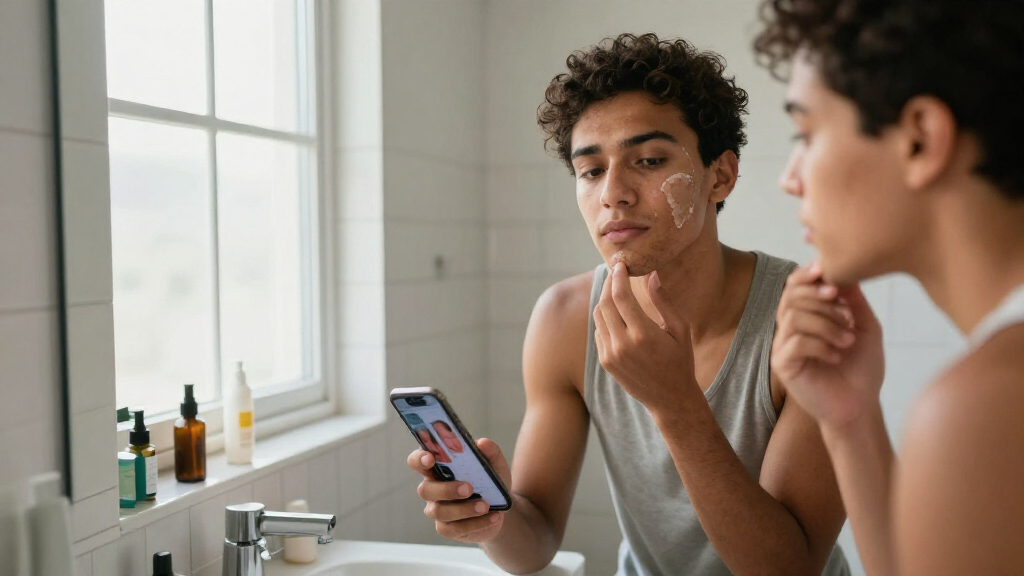
Haut.AI released SkinBench on October 27, 2026, reporting that six leading AI models frequently identified skin concerns that were not present. Across images without eye puffiness, the models reported it in approximately 95% to 100% of cases. The benchmark raises questions about using general-purpose AI to make skin assessments and product recommendations.
Haut.AI released SkinBench on October 27, reporting that six leading AI models frequently identified skin concerns that were not present in tested images. In images where eye puffiness was absent, the models reported it in approximately 95% to 100% of cases, a result that highlights risks for beauty businesses using AI to assess skin or recommend products.
Developed by Haut.AI’s Data Science team, SkinBench runs 19 tests across seven skin concerns and characteristics: wrinkles, sun spots, redness, skin tone, skin type, dark circles and eye puffiness. The release accompanied the company’s Skin Foundation Model, SkinFM. The reported findings focus on how the six general-purpose models performed, including frequent false reports of concerns and difficulty locating features they did identify.
The eye-puffiness result is a false-detection finding: the tested images did not show the concern, but models reported it anyway. Haut.AI’s report frames that error as relevant to consumer-facing skin analysis because a concern detected by a system could feed into a recommendation. The supplied material does not identify the six models by name or provide their individual scores, so readers cannot compare the models from the information available here.
SkinBench’s broader premise is that skin analysis involves separate tasks, not one general measure of accuracy. A system may need to identify whether a concern exists, grade its severity, mark its location, classify skin type and produce consistent results across complexions. A single combined score may obscure a weakness in one of those tasks, the report argues. The release does not establish that every AI skin tool or commercial product performs like the six models tested.
False Alerts Can Skew Beauty Advice
For a beauty service, a false skin concern can affect what a customer is told and what products are recommended. If a system flags puffiness that is not visible, for example, a recommendation engine could present an eye product as relevant when the underlying assessment is wrong. That can make advice less useful and may undermine confidence in the service.
Errors can also affect progress tracking. A tool cannot meaningfully measure improvement in a feature it did not correctly identify at the start. These are practical implications of the benchmark’s findings, not evidence that the tested models caused specific consumer harm or that any named brand has deployed them in this way.
The question matters as consumers and businesses explore AI-assisted beauty advice. The source material cites NielsenIQ research finding that 49% of consumers had taken beauty product recommendations from generative AI, and Accenture research finding that 75% of beauty consumers were open to an AI-powered shopping experience. A Haut.AI survey of 1,238 U.S. women found 62% interested in or already using AI for skincare or bodycare advice. Those figures describe the cited studies’ findings; they do not show that consumers use SkinBench or the six tested models for diagnosis.
Products Worth Considering

Withings Sleep Under-Mattress Sleep Tracking Pad

Bowflex PR1000 Home Gym

Oral-B iO Series 3 Rechargeable Electric Toothbrush for Adults, Black, with 2 Brush Heads and Travel Case
As an affiliate, we earn on qualifying purchases.
A Benchmark Beyond One Score
SkinBench was released alongside SkinFM, Haut.AI’s Skin Foundation Model, on October 27, 2026. The benchmark sets out to test several distinct abilities relevant to skin analysis. Detection asks whether a concern is present; localization asks where it is; classification includes identifying skin type. Repeatability and performance across skin tones are also relevant when evaluating whether results can be used consistently.
The report argues that vendors and buyers should examine task-specific results rather than rely on one blended accuracy figure. It recommends checking false-detection rates, the quality of feature localization, balanced accuracy for skin-type classification and performance on the weakest-performing skin-tone group. It also says system results should be compared with expert assessments, while recognizing that experts themselves may disagree.
Haut.AI cites a separate evaluation of its own skin measurement technology conducted at Institut d’Expertise Clinique in France. Compared with a consensus panel of expert graders, that technology showed repeatability of ICC 0.97 to 0.98 across five facial skin endpoints, according to the supplied material. This is a company-reported result from a different evaluation; it is not a performance score for the six models in SkinBench.
“A model that can describe a photo is not necessarily one that can measure skin.”
— Haut.AI’s SkinBench report
Model Scores and Methods Missing
The supplied report summary does not name the six models, give model-by-model results or provide the full test set and scoring tables. It also does not specify how many images were used for the eye-puffiness comparison, how those images were selected, or the exact reference process used to determine that puffiness was absent. Those details would help readers judge how broadly the reported rates apply.
It is also unclear from the available material how the benchmark’s findings vary by model, image conditions or skin-tone group. The release describes difficulty locating features, but the supplied information does not quantify that performance. SkinBench’s reported results should be understood as findings from the benchmark, not proof that all general-purpose AI systems fail at every skin-analysis task or that any particular commercial service produces the same errors.
Publish Test Details and Scores
The next useful step for buyers and researchers is access to the full methodology and results: the models tested, test images, expert reference assessments, scoring rules and individual task scores. Haut.AI’s report says those materials matter for judging a benchmark’s credibility, but the source material provided here does not say when or whether every underlying item will be made public.
Beauty businesses considering AI skin analysis can use the findings as a reason to ask vendors for separate evidence by task, including false-detection rates, localization results, performance across skin tones and repeatability. SkinBench’s release provides a benchmark and reported results; whether independent researchers or other companies will reproduce the findings remains unknown.
Key Questions
What did SkinBench find?
Haut.AI reported that six leading AI models often identified skin concerns that were not present. In images without eye puffiness, they reported it in approximately 95% to 100% of cases.
Which skin features did SkinBench test?
The benchmark ran 19 tests across seven areas: wrinkles, sun spots, redness, skin tone, skin type, dark circles and eye puffiness.
Does this mean all AI skin-analysis tools are unreliable?
No. The reported results concern six tested models. The available material does not establish that all AI skin tools, or every task they perform, have the same weaknesses.
Why can a false detection matter to consumers?
A system that reports a concern that is not present could inform an irrelevant product recommendation or make progress tracking unreliable. The report describes these as potential consequences; it does not document specific consumer harm.
What information is still needed to assess the results?
The available summary does not identify the models or provide full model-by-model scores, image counts, test images or complete scoring methods. Those details would help readers assess how widely the findings apply.
Source: cosmeticsbusiness.com