
TL;DR

Get beauty and skincare favorites delivered free with Prime
- Fast, free delivery on millions of items
- Prime Video, Amazon Music and more included
- Member-only deals all year
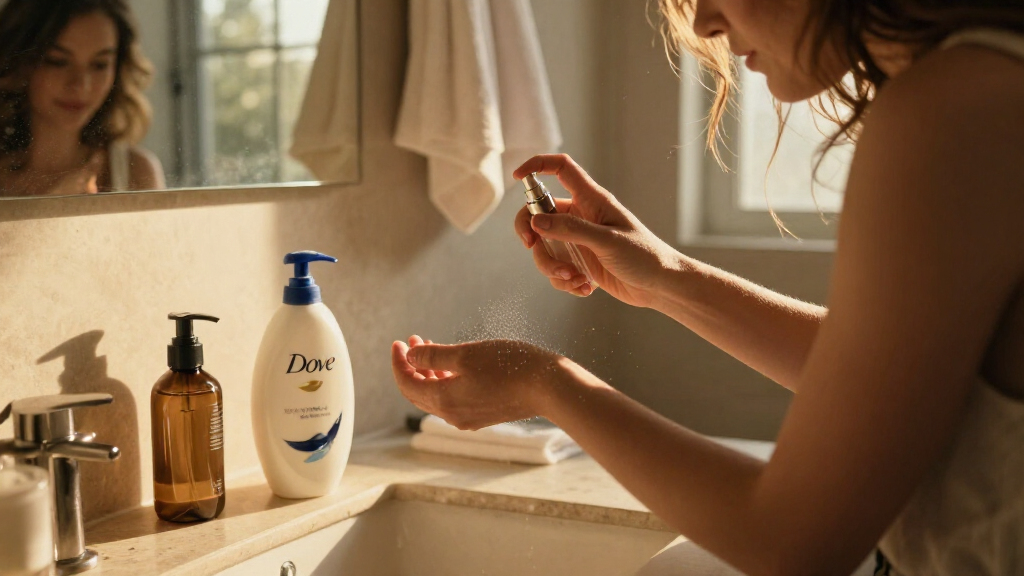
Dove released a limited-edition fine fragrance based on the scent of its Original Beauty Bar, giving consumers a new way to engage with a long-established product. Cosmetics Business argues the drop’s marketing value may lie less in perfume sales than in renewed attention for the bar; sales impact and production numbers were not provided.
Dove released a limited-edition fine fragrance modeled on the scent of its Original Beauty Bar, turning a familiar cleansing product into a collectible launch. In an opinion piece for Cosmetics Business, the publication argues that the drop’s main marketing value may be the attention it sends back to the bar, rather than the perfume becoming a major product line of its own.
The fragrance gives consumers a new format for experiencing Dove’s Original scent, which the source describes as closely associated with the brand’s 69-year-old cleansing product. Dove is owned by Unilever. The article calls this the brand’s first perfume, but provides no further information about the fragrance’s size, price, distribution or production run.
Cosmetics Business says the fragrance sold out quickly, while suggesting that the result may reflect a deliberately small supply. The source gives no sales figures or inventory data, so the scale of demand and the number of bottles produced cannot be verified from the available material.
The article’s central argument is that the release can act as advertising for Dove’s existing Beauty Bar. A product that prompts conversation or reminds consumers of a familiar scent could bring renewed attention to the original item. That is an interpretation of the campaign’s purpose, not evidence that the launch increased Beauty Bar sales.
Turning Familiar Scents Into Events
The launch offers beauty marketers an example of using an established product’s distinctive qualities to create a short-lived event. Rather than introducing an unrelated product, Dove drew on a scent consumers may already associate with its Beauty Bar. This can make a familiar item feel newly discussable without requiring the brand to replace or substantially change it.
That approach matters to brands with products that have long histories and loyal users. A limited release can generate coverage, conversation and consumer curiosity, while the original product remains available through ordinary retail channels. But attention is not the same as commercial success: the source does not report whether the fragrance drove purchases of the bar, increased brand preference or produced lasting sales.
The strategy also carries a practical trade-off. Scarcity can make a launch feel special, yet a small release limits the number of people who can buy it. If consumers see the drop mainly as a promotional object, it may create a burst of interest without changing their shopping habits. The source does not provide consumer research or follow-up results to show which outcome occurred.
Products Worth Considering

Oral-B iO5 Rechargeable Electric Toothbrush with 5 Cleaning Modes and Travel Case, White

Fitbit Sense 2 Health and Fitness Smartwatch, Shadow Grey/Graphite

Blueair Blue Pure 311i Max Air Purifier
As an affiliate, we earn on qualifying purchases.
A Familiar Product, A New Format
The Cosmetics Business article frames the fragrance as an extension of a product with decades of consumer recognition, rather than as a conventional move into fine fragrance. The Original Beauty Bar’s scent is the link between the limited-edition launch and Dove’s established range. The article says the release occurred “last month,” but does not provide a publication date that would let readers identify the calendar month.
As a comparison, the article points to Heinz Vintage Drip, a 2022 collaboration between food company Heinz and resale platform thredUP. The collection featured ketchup-stained clothing. Cosmetics Business argues that the stains made ketchup the subject of the campaign: people could understand the joke and think about the condiment without wanting to wear the clothes. The example supports the article’s broader view that a physical, unexpected product can give an established brand something to talk about.
These examples are presented as marketing analysis, not as proof that limited drops reliably lift sales. The source offers no comparable campaign data, consumer studies or sales outcomes for either activation.
““A physical product gives people something to turn towards.””
— Cosmetics Business opinion article
Sales Impact Remains Unreported
The source does not state how many bottles Dove produced, the fragrance’s price, where it was sold or how quickly it went out of stock. Its suggestion that the release sold out because supply was limited is presented as a likelihood, not supported by inventory figures or a company statement.
There is also no reported evidence that the launch increased Beauty Bar sales or repeat purchases, or that consumer interest continued after the drop. The article is an opinion piece, and its marketing conclusions should be read as analysis rather than measured campaign results. The available material does not include a statement from Dove or Unilever explaining the campaign’s goals.
Evidence To Watch After The Drop
The next useful indicators would be company data on the release, including the size of the production run, sales performance and any plans for another fragrance edition. Further information could clarify whether the product was intended as a one-off collectible, a test of consumer interest or part of a broader marketing programme.
For the larger marketing claim, the key question is whether the launch produced measurable attention for Dove’s established bar beyond the initial sell-out. Retail performance and consumer response after the release would help distinguish a short-lived publicity moment from a campaign that influenced ongoing demand. No such results or next steps are included in the source material.
Key Questions
What did Dove release?
Dove released a limited-edition fine fragrance inspired by the scent of its Original Beauty Bar, according to the Cosmetics Business article.
Why does the article say the fragrance matters?
The article argues that the fragrance could draw attention back to the Original Beauty Bar by giving consumers a new way to engage with its familiar scent. It does not provide sales data proving that effect.
Did the fragrance sell out?
The source says it sold out quickly, but gives no sales figures, release locations or inventory numbers. Its suggestion that the supply may have been small is not confirmed with production data.
Did the launch increase sales of Dove’s Beauty Bar?
The available source material does not report whether the fragrance increased Beauty Bar sales or changed consumer purchasing behavior.
What other campaign does the article cite?
It cites Heinz and thredUP’s Heinz Vintage Drip, a 2022 collection of ketchup-stained clothing, as another example of a physical product designed to make a familiar brand ingredient the focus of conversation.
Source: cosmeticsbusiness.com