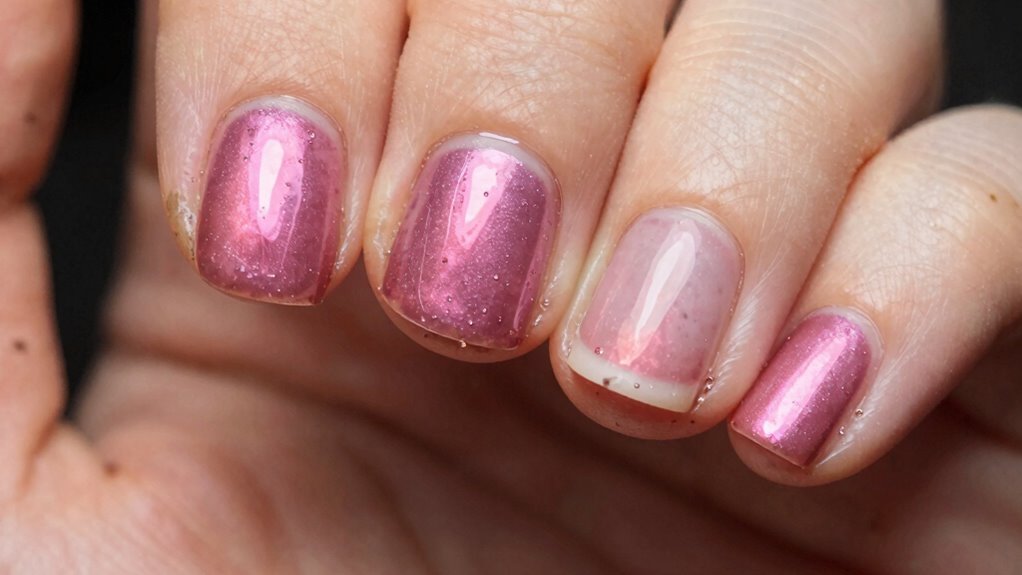
Product flooding at the cuticle area happens when you overload your brush or don’t wipe off excess polish before applying. Thick or overly wet brushes make it harder to control the amount of product you use, which can spill over the edges. Rushing through the process or using careless strokes also increases the risk of flooding. If you want to discover simple techniques to prevent this mess, keep exploring how to improve your application skills.
Key Takeaways
- Overloading the brush with excess polish leads to runoff and flooding over the cuticles.
- Rushing or applying fast increases the likelihood of product spilling onto the cuticle area.
- Using a thick or overly wet brush reduces control, causing polish to flood the cuticles.
- Inadequate nail surface preparation, like unclean or buffed nails, makes flooding more likely.
- Not wiping excess polish from the brush before application results in excess product reaching the cuticles.
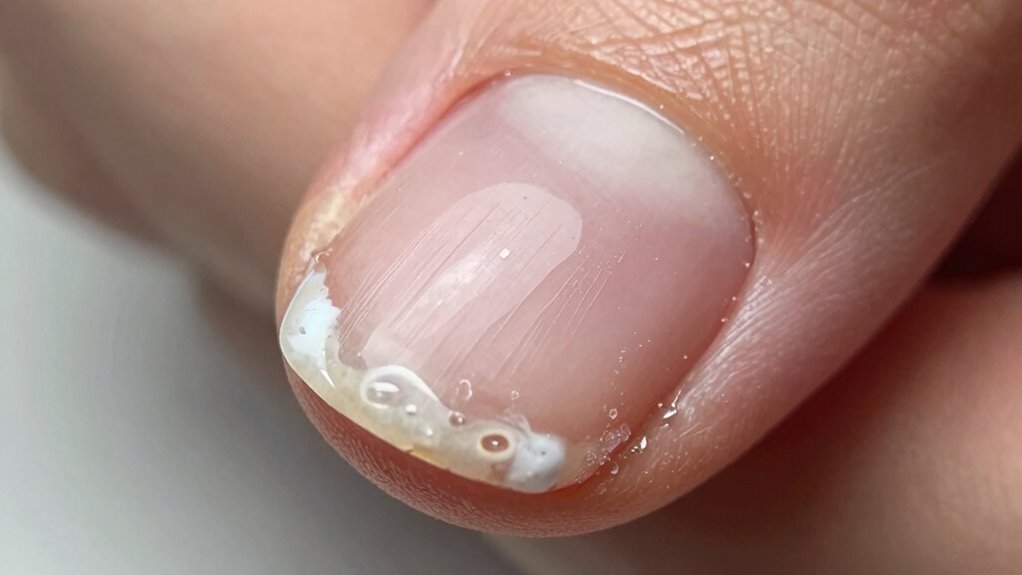
Have you ever noticed excess nail product spilling over the cuticle area during a manicure? It’s a common issue that can happen to anyone, especially if you’re not paying close attention during nail polish application. When this occurs, it often results in a messy look and can even impact your cuticle health if not addressed properly. The main cause of product flooding is simply the way the nail polish or other nail products are applied. If you’re not careful, the brush might be too saturated or you might rush through the process, leading to excess product seeping onto the surrounding skin.
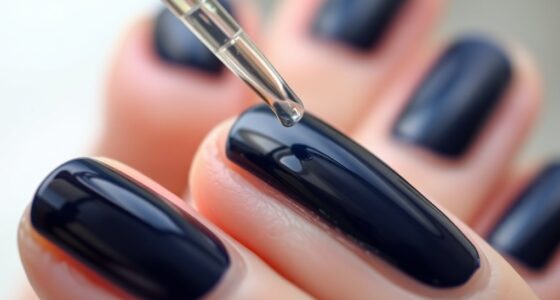
During nail polish application, the goal is to deposit the right amount of product onto the nail plate without overspreading onto the cuticle or skin edges. When you overload the brush or don’t wipe off excess polish before applying, it’s easy for the product to spill over the cuticle area. This tends to happen especially when you’re trying to cover the entire nail quickly or if your brush isn’t properly loaded. A thick brush or a too-wet brush can also make it more difficult to control the application, increasing the risk of flooding. If you’re not using smooth, controlled strokes, you might inadvertently push the polish past the nail boundary and onto the surrounding skin.
Use controlled strokes and wipe excess polish to prevent flooding and achieve a neat manicure.
Another factor contributing to product flooding is poor preparation of the nail surface. When your nails aren’t clean or properly buffed, the polish tends to spread unevenly, increasing the chances of excess product spilling over the edges. This can also compromise cuticle health, as excess polish sitting around the cuticles can cause dryness or irritation over time. Proper cuticle care, including softening and gently pushing back cuticles before applying polish, helps create a neat edge and minimizes the risk of flooding. Additionally, understanding the application techniques can greatly improve your control and prevent messes. Using appropriate tools, such as a fine detail brush, can help you achieve more precise application and avoid flooding.
Furthermore, rushing through your manicure or not paying attention to detail can markedly increase product overflow. Patience and steady hands are key. If you’re hurried, you might not notice when your brush is overloaded or when you’re nearing the cuticle area, resulting in excess product spilling over. Using high-quality brushes and nail polish with good consistency can also help improve control and reduce flooding.
As an affiliate, we earn on qualifying purchases.
Frequently Asked Questions
Can Product Flooding Damage My Nail Bed?
Yes, product flooding can damage your nail bed by compromising cuticle health. When excess product seeps onto the skin around your nails, it can cause irritation or infection, affecting nail absorption and growth. This prolonged exposure might weaken the nail bed over time. To prevent this, make sure you apply products carefully, avoiding the cuticle area, and keep the surrounding skin clean and healthy for maximum nail development.
How Can I Prevent Product Flooding in Future Applications?
To prevent product flooding during future applications, focus on proper application techniques. Always apply cuticle protection, like a barrier or tape, to keep product away from the skin. Use precise, controlled strokes and avoid overloading your brush. Keep a steady hand and apply thinner layers, building up as needed. These steps help prevent excess product from seeping onto the cuticle area, ensuring a clean, professional finish.
Does Product Flooding Affect Nail Adherence Long-Term?
Product flooding can act like a stubborn barrier, sabotaging nail adherence long-term. When excess product pools at the cuticle, it hampers proper nail health and prevents efficient absorption of nutrients and top coats. Over time, this buildup can weaken the bond, making nails more prone to lifting or chipping. To maintain strong, healthy nails, make certain you control application, preventing excess product from overwhelming the cuticle area.
Is Product Flooding More Common With Certain Nail Products?
Yes, product flooding is more common with certain nail products like thick nail polish or heavy cuticle oils. When you apply these, they tend to flow into the cuticle area more easily, especially if you’re not precise. Proper cuticle care and using thinner layers of polish help prevent flooding. Be careful to control the product application, ensuring it stays on the nail plate and avoids the cuticle zone.
Can Damaged Cuticles Increase the Risk of Flooding?
Think of your cuticles like a garden’s border; damaged cuticles are like broken fences, letting excess water—nail products—spill into unwanted areas. When cuticle health is compromised, your nail absorbs more product, increasing flooding risk. This is especially true if the cuticles are cracked or inflamed, making nail absorption uneven. Proper cuticle care keeps your garden’s borders intact, reducing product flooding and promoting healthy, well-maintained nails.
As an affiliate, we earn on qualifying purchases.
Conclusion
As you navigate your nail care routine, imagine the cuticle area as a delicate garden. When excess product floods in, it’s like rain overwhelming the tiny plants, drowning them and causing damage. To keep your garden thriving, regulate the flow—apply smaller amounts with care, and gently wipe away the excess. This mindful approach ensures your cuticles stay healthy, vibrant, and free from the chaos of over-saturation, allowing your nails to flourish beautifully.
As an affiliate, we earn on qualifying purchases.
As an affiliate, we earn on qualifying purchases.