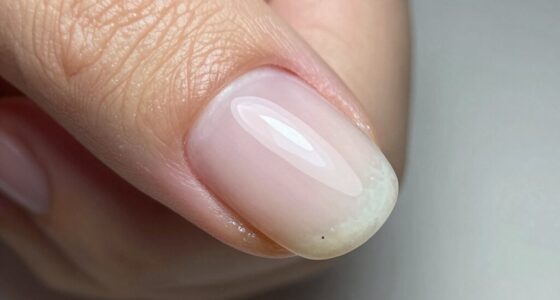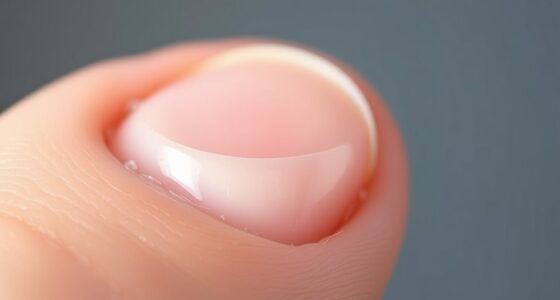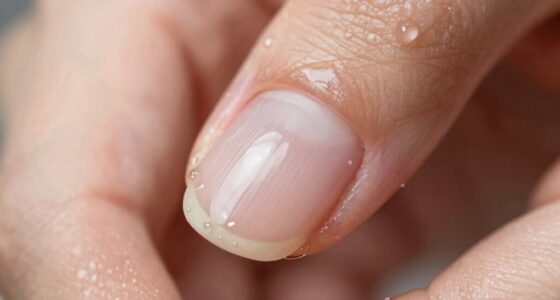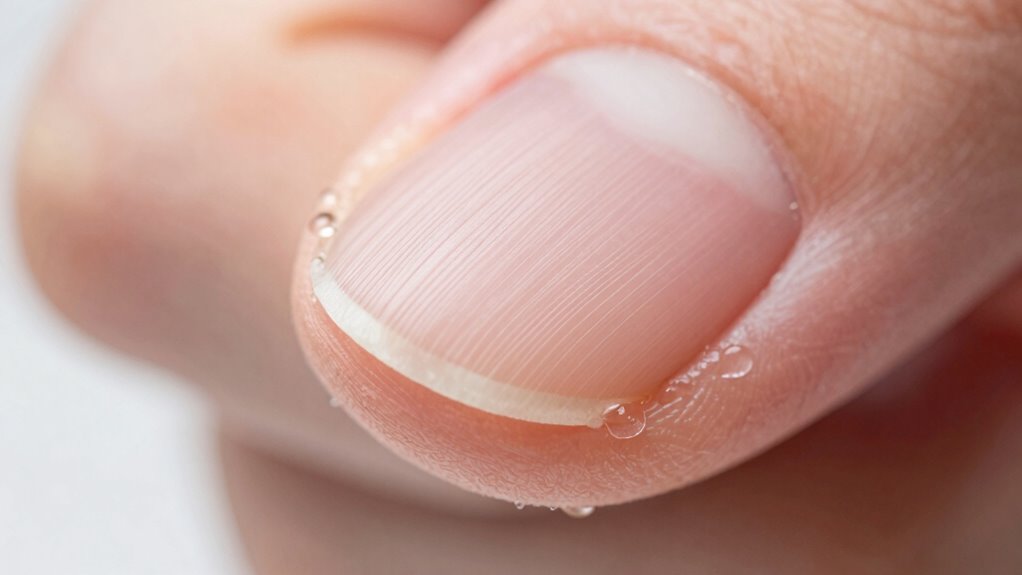

Your nail’s flexibility depends on its keratin structure, which consists of long chains of amino acids forming a tough, fibrous network. When these chains form strong cross links, your nails become more resilient and flexible. If the keratin is less dense and has more porosity, your nails may become brittle and prone to cracking. Maintaining a balanced keratin structure is key to strong, flexible nails—continue to discover how different factors influence this delicate balance.
Key Takeaways
- Dense, well-organized keratin networks enhance nail strength and resilience, increasing flexibility and reducing brittleness.
- Cross-linked keratin chains create a interconnected structure that balances nail stiffness and pliability.
- Less dense keratin structures result in higher porosity, leading to brittleness and decreased flexibility.
- Proper keratin density and cross-linking maintain optimal nail flexibility while preventing cracking.
- Nutrients like biotin support keratin production, improving structure and overall nail flexibility.
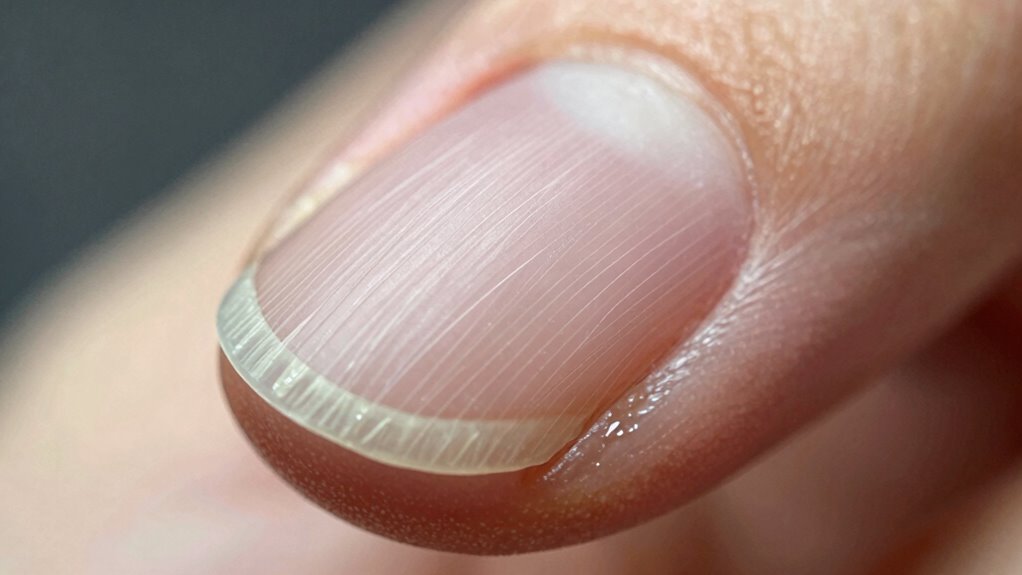
Keratin, the primary protein in your nails, directly determines their flexibility and strength. This protein is built from long chains of amino acids that form a tough, fibrous structure. The way these chains are arranged and bonded influences how flexible or brittle your nails can be. One key process that affects this arrangement is keratin cross linking. Cross linking involves the formation of chemical bonds between different keratin chains, creating a dense, interconnected network. When cross links are abundant and well-formed, your nails gain resilience and strength. Conversely, if these cross links are weak or sparse, your nails tend to become brittle and prone to breaking. The balance of keratin cross linking is vital; too many can make nails stiff and less flexible, while too few can result in overly soft, weak nails.
Another essential factor that influences nail flexibility is nail porosity. Porosity refers to how porous or permeable your nails are, which directly impacts their ability to retain moisture. High porosity means your nails absorb and lose moisture easily, leading to increased brittleness and a higher likelihood of cracking or splitting. Low porosity indicates a more compact nail structure, which retains moisture better and tends to be stronger and more flexible. The degree of porosity is often linked to keratin structure—more porous nails typically have less dense keratin networks with weaker cross linking, making them less resilient. Conversely, less porous nails usually have a tightly packed keratin matrix, resulting in increased durability and flexibility.
Your nail health depends heavily on maintaining an ideal balance between keratin cross linking and porosity. If your nails are too porous, they might require extra hydration or protective treatments to prevent brittleness. On the other hand, overly dense nails with excessive cross linking may become too stiff and prone to cracking under stress. Proper nutrition, hydration, and nail care can influence these factors by supporting healthy keratin production and cross linking. For example, nutrients rich in biotin, keratin, and vitamins can promote a more robust keratin network, improving overall flexibility. Avoiding harsh chemicals and excessive exposure to water helps maintain appropriate porosity levels, preventing your nails from becoming too porous or overly dense. By understanding how keratin cross linking and nail porosity work together, you can better manage your nail health, ensuring they remain strong, flexible, and less prone to damage.

Nature's Bounty Biotin Hair Skin and Nails Vitamins, 120 Softgels
- Supports Healthy Hair: Promotes healthy, beautiful hair
- Enhances Skin and Nail Health: Supports skin and nail vitality
- Nervous System Support: Boosts nervous system health
As an affiliate, we earn on qualifying purchases.
As an affiliate, we earn on qualifying purchases.
Frequently Asked Questions
Can Keratin Treatments Permanently Change Nail Flexibility?
Keratin treatments can’t permanently change your nail flexibility. They temporarily enhance keratin synthesis, making nails more resilient and improving nail elasticity in the short term. However, these treatments don’t alter the fundamental keratin structure, so the effects fade as nails grow out or are exposed to daily wear and tear. To maintain flexibility, you’ll need ongoing care and possibly periodic treatments, but permanent change isn’t achievable.
How Does Hydration Affect Keratin’s Role in Nail Flexibility?
Hydration considerably impacts keratin’s role in nail flexibility. When your hydration levels are adequate, moisture retention in your nails increases, making them more pliable and less prone to breakage. Proper hydration keeps keratin proteins flexible, allowing your nails to bend without cracking. Conversely, dehydration causes moisture loss, making nails brittle and rigid. To maintain healthy, flexible nails, drink plenty of water and use moisturizing treatments regularly.
Are There Specific Nutrients That Strengthen Keratin in Nails?
You should know that biotin, a key nutrient, can boost nail strength by up to 25%. When you focus on nutrient absorption, you improve nail mineralization, which makes keratin fibers more resilient. Foods rich in biotin, zinc, and iron support keratin production, leading to stronger, less brittle nails. So, eating a balanced diet with these nutrients helps your nails stay healthy and flexible, reducing breakage over time.
Does Age Impact Keratin Structure and Nail Flexibility?
Age-related changes can impact keratin structure, making your nails less flexible over time. As you age, keratin aging occurs, leading to brittleness and increased fragility. You might notice your nails become more prone to breaking or splitting. This is because the natural keratin in your nails deteriorates, affecting their strength and flexibility. To combat this, focus on proper nutrition, hydration, and nail care to support keratin health as you age.
Can Keratin Damage Be Reversed to Improve Nail Flexibility?
Think of your nails as a delicate garden needing tender care. Keratin damage can often be repaired with proper keratin repair treatments, helping to restore nail elasticity. You can improve flexibility by nourishing your nails with moisturizing oils and strengthening formulas. While some damage is reversible, consistent care is key; it’s like watering your garden regularly to bring back its vibrant growth and resilience.

Nail-Aid Keratin 3 Day Growth Nail Strengthener
- Powerful Keratin Nail Strengthener: Reinforces weak, thin nails from within
- Promotes Faster Nail Growth: Supports longer, harder nails in 3 days
- Prevents Peeling & Chipping: Creates a protective shield for nails
As an affiliate, we earn on qualifying purchases.
As an affiliate, we earn on qualifying purchases.
Conclusion
Now that you understand how keratin’s intricate structure shapes nail flexibility, you might think the story ends here. But there’s more beneath the surface—hidden factors and potential surprises that could change everything you know. Will future discoveries reveal new ways to strengthen or soften your nails? The mystery of keratin’s true potential remains. Stay curious, because what’s next could redefine how you care for your nails forever. The journey is far from over.

Cuccio Naturale Milk & Honey Revitalizing Cuticle Oil, Lightweight Fast-Absorbing Hydrating Nail & Cuticle Conditioner, Cold-Pressed Oils + Vitamin E, 2.30 Fl Oz
- Deeply Moisturizes Cuticles: Provides intense hydration and healing
- Natural, Cruelty-Free Formula: Paraben-free with plant-based ingredients
- Lightweight, Non-Greasy Feel: Absorbs quickly without residue
As an affiliate, we earn on qualifying purchases.
As an affiliate, we earn on qualifying purchases.

Kerasal Multi-Purpose Nail Repair, Restore Nail Appearance, Brush, 0.43oz
- Package Size: 0.43 fl oz
- Nail Repair Benefits: Reduces discoloration and thickness
- Nail Hydration: Hydrates and exfoliates brittle nails
As an affiliate, we earn on qualifying purchases.
As an affiliate, we earn on qualifying purchases.