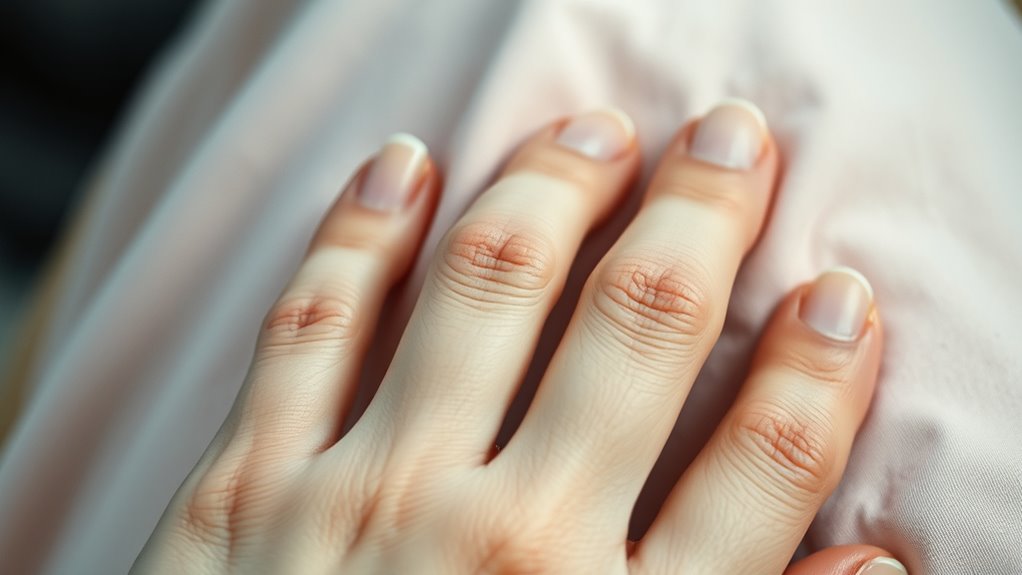
During menopause, hormonal changes can make your nails brittle, slow down their growth, and cause surface irregularities. To improve nail health, focus on nourishing your body with a balanced diet rich in biotin, zinc, and vitamin D. Practice gentle nail care, like trimming and moisturizing regularly, and consider supplements or topical treatments designed for mature nails. If you notice persistent issues, exploring additional tips can help you maintain stronger, healthier nails as you age.
Key Takeaways
- Hormonal changes during menopause reduce estrogen, leading to slower nail growth and increased brittleness.
- Maintain a balanced diet rich in biotin, zinc, and vitamin D to support nail strength and counteract deficiencies.
- Use gentle nail care routines, including regular trimming, moisturizing, and avoiding harsh chemicals or acetone-based removers.
- Consider supplements like biotin and collagen to enhance nail resilience and promote healthier growth.
- Seek medical advice if nails become excessively brittle, discolored, or painful to identify underlying conditions and receive targeted treatment.

HBlife Makeup Organizer with Brush Holder for Vanity, Large Plastic Bathroom Countertop Organizer Skin Care Storage, Easy to Store Lipsticks, Nail Polishes, Perfumes, Eyeshadow Palettes, All White
- Large Capacity: 13.58x6.89x9.76 inch with multiple compartments
- Organized Brush Slots: Dedicated slots for brushes, pens, and tubes
- Versatile Use: Suitable for vanity, bathroom, and office
As an affiliate, we earn on qualifying purchases.
Understanding the Impact of Menopause on Nail Composition
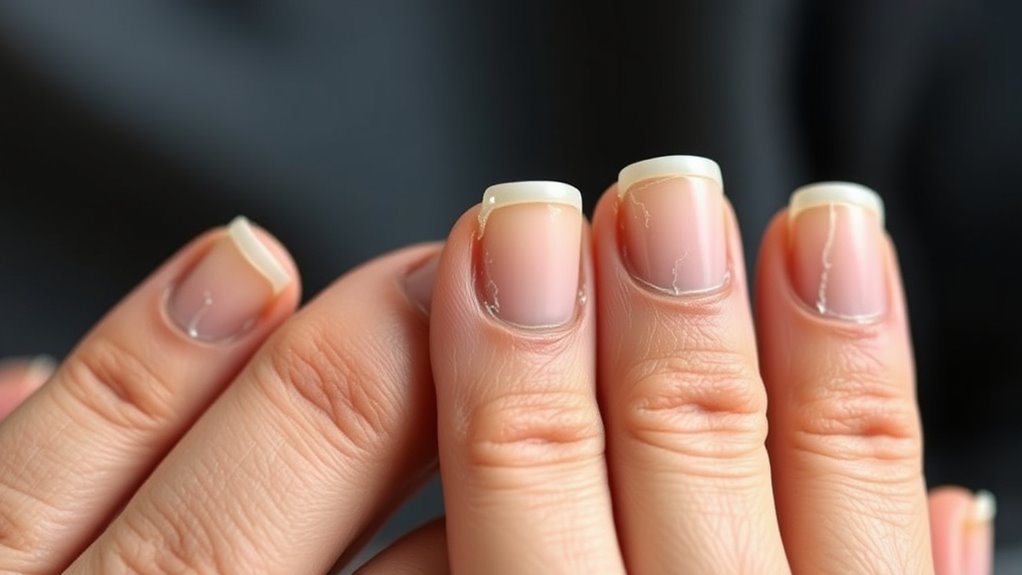
Menopause considerably affects nail composition due to hormonal changes that alter the body’s ability to produce keratin, the protein responsible for nail strength and growth. These shifts can lead to noticeable changes in nail pigmentation, causing nails to appear discolored or uneven in tone. You might also observe nail pitting, small depressions or dents on the nail surface, as a result of disrupted keratin production. Such alterations happen because reduced estrogen levels impact the nail matrix, where new nail cells form. Understanding nail health is essential for managing these changes effectively. While these changes can be unsettling, understanding their hormonal roots helps you recognize that they’re a natural part of menopause. Maintaining a healthy diet and proper nail care can support your nails during this progression, even as these compositional shifts occur.
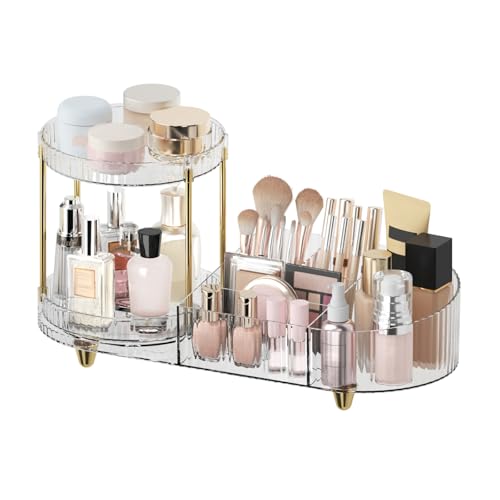
Makeup Organizer Countertop for Vanity, Rotating Perfume Tray with 5-compartment Cosmetic and Skincare Organizers, Multi-Purpose Desk Storage Makeup Brush Holder for Bathroom Bedroom Counter
- Rotating Makeup Organizer: Smooth 360-degree rotation with 2 layers
- Multi-Compartment Design: Five separate compartments for various items
- Transparent Material: Clear view for easy item identification
As an affiliate, we earn on qualifying purchases.
Common Changes in Nail Appearance During Menopause
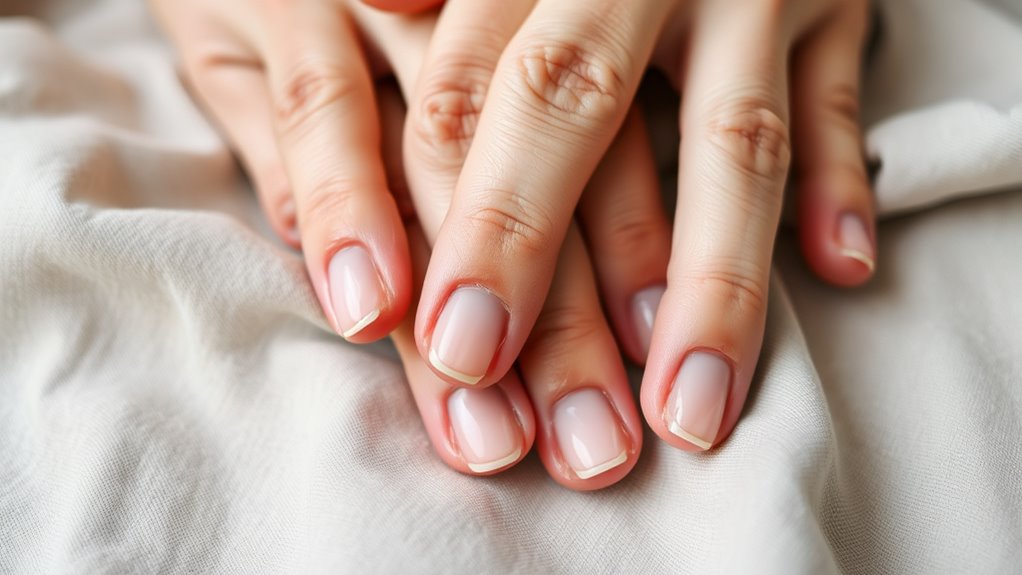
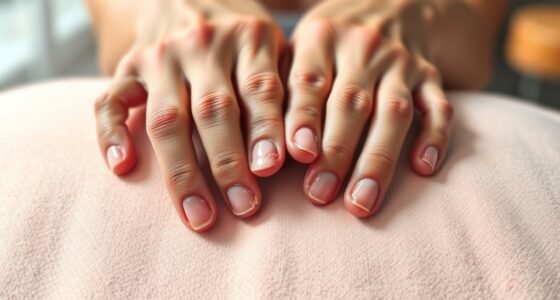
As hormonal shifts occur during menopause, you may notice several changes in the appearance of your nails. Your nails might become more brittle, develop ridges, or appear dull and yellowed. These changes can also influence your nail polish trends, making certain shades or finishes less appealing or harder to apply smoothly. You might find that intricate nail art techniques become more challenging as nails become more fragile. Additionally, you could see white spots or vertical ridges, which are common during this stage. These visual shifts are normal but can be frustrating. Incorporating strengthening treatments into your nail care routine can help maintain nail health and resilience despite these changes. Staying aware of these common appearance shifts allows you to adapt your nail care routine effectively.
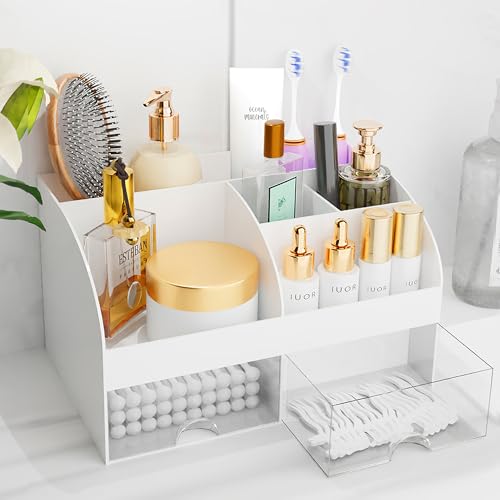
Makeup Organizer with Drawers, Cosmetic Storage for Dresser Vanity and Bathroom Countertop, Beauty Holder for Lipstick Brush, Skincare Organizer for Vanity, Cosmetic Display Case (White)
- Ample Storage Capacity: 6 sections and 2 drawers for organization
- Transparent Drawers: Easily find your items quickly
- High-Quality Material: Eco-friendly, durable ABS plastic
As an affiliate, we earn on qualifying purchases.
Hormonal Fluctuations and Their Effect on Nail Growth
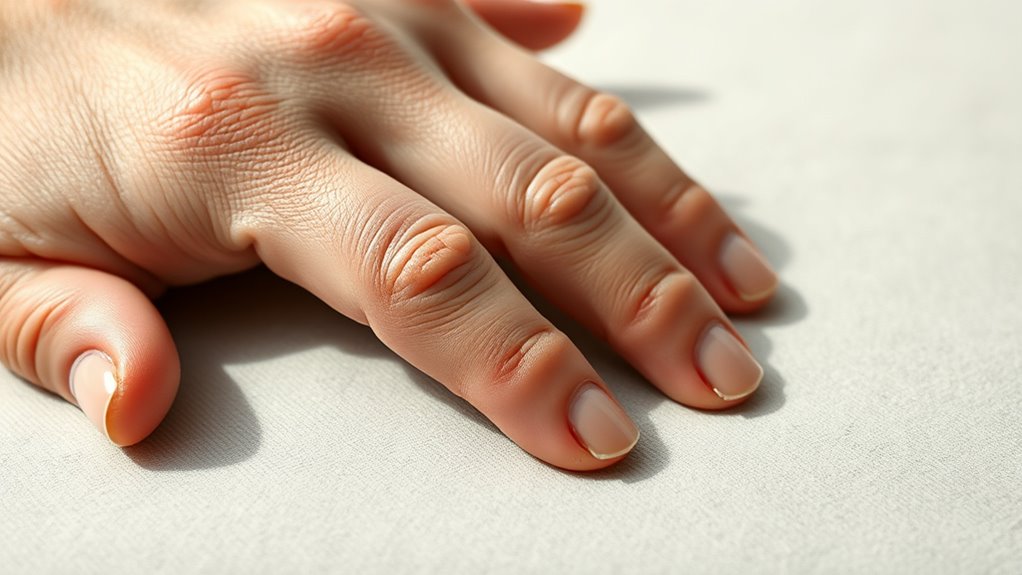
Hormonal fluctuations during menopause directly influence the rate and quality of your nail growth. As estrogen levels drop, your nails may grow more slowly or become brittle. These hormonal changes can also cause your nails to become thinner and more prone to splitting or breaking. Testosterone and other hormones play a role in nail health too, affecting the keratin production that forms your nails. When hormones fluctuate unpredictably, they disrupt the normal cycle of nail growth, leading to weaker, more fragile nails. You might notice your nails taking longer to grow or losing their usual strength. Additionally, nail health can be impacted by nutritional deficiencies that often accompany hormonal changes during menopause. Understanding this link helps you recognize that these changes are a natural part of menopause, and addressing hormonal balance can support healthier nail growth during this transition.

Yaheetech Makeup Box with Mirror & Shoulder Strap Cosmetic Case Organizer
- Layered Storage for Easy Access: Two top trays and bottom compartment
- Secure Dual Locking System: Includes dual latch locks and keys
- Portable and Lightweight Design: Detachable 67-inch shoulder strap for travel
As an affiliate, we earn on qualifying purchases.
Nutritional Deficiencies Linked to Brittle Nails
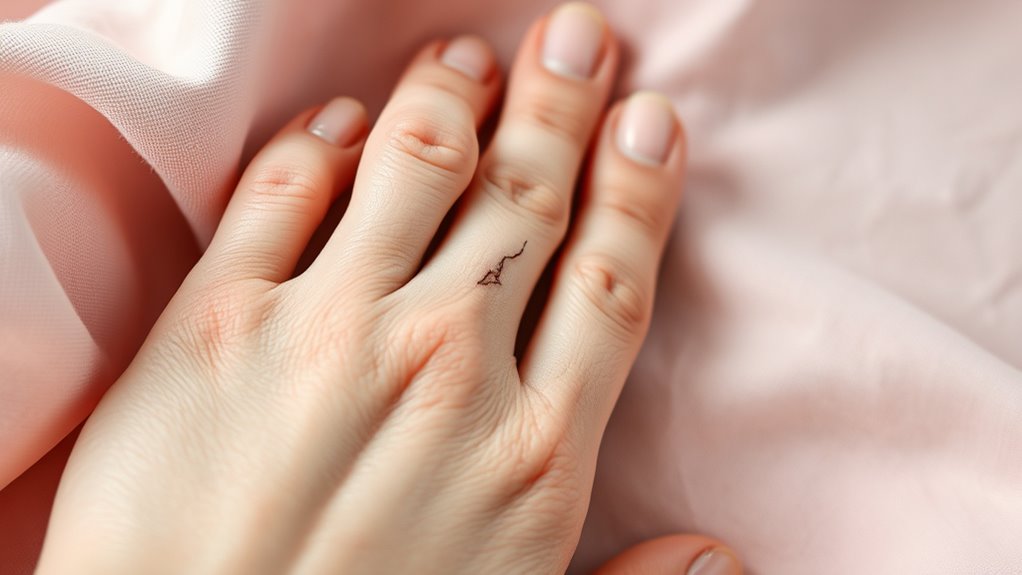
Nutritional deficiencies can considerably weaken your nails, making them more prone to brittleness. Iron and zinc shortages are common culprits, while low vitamin D and biotin levels also play a role. Addressing these gaps in your diet can help strengthen your nails and improve their overall health. Incorporating nutrient-rich foods like seeds, nuts, and leafy greens can further support nail strength and resilience.
Iron and Zinc Deficiencies
Iron and zinc are essential minerals that play a critical role in maintaining healthy nails, especially during menopause when deficiencies are more common. An iron deficiency can lead to brittle, spoon-shaped nails and slow growth, as your body struggles to supply enough oxygen to nail tissues. Zinc deficiency, on the other hand, can cause white spots, ridges, and poor nail repair. During menopause, hormonal changes can increase the risk of these deficiencies, impacting nail strength and appearance. Ensuring your diet includes iron-rich foods like lean meats, spinach, and beans, along with zinc sources such as nuts, seeds, and seafood, can help prevent these issues. Addressing iron and zinc deficiencies is essential for supporting nail health and overall well-being during this stage of life.
Vitamin D and Biotin Shortfalls
As your body adjusts during menopause, it can sometimes struggle to get enough vitamin D and biotin, leading to brittle, weak nails. These nutritional gaps are often a result of hormonal shifts that affect nutrient absorption and metabolism. To combat this, focus on:
- Ensuring sufficient sunlight exposure or supplementing vitamin D to support calcium absorption and nail strength.
- Incorporating biotin-rich foods like eggs, nuts, and seeds to promote healthy nail growth.
- Recognizing that hormonal changes can decrease nutrient levels, exacerbating brittleness.
- Maintaining a balanced diet to support overall nail health and fill nutritional gaps caused by menopause.
- Understanding how contrast ratio influences the clarity and depth of images, similar to how proper nutrition enhances nail resilience and overall health.
Addressing these deficiencies can help improve nail resilience and reduce brittleness during this transitional phase.
The Role of Aging and Menopause in Nail Health

Aging and menopause considerably impact nail health, often leading to weaker, more brittle nails. As hormone levels decline, your nails may become thinner and grow more slowly. This makes maintaining trendy nail art difficult, especially when nail polish ingredients can further weaken nails. Many nail polish formulas contain harsh chemicals like formaldehyde and toluene, which can strip moisture and cause chipping. Staying informed about nail art trends that use gentler, nourishing formulas can help protect your nails. Additionally, aging reduces the body’s ability to produce keratin, the protein that strengthens nails. This natural decline, combined with menopause, makes it essential to choose nail products carefully and focus on nurturing your nails to maintain their health and appearance. Recognizing the importance of nail care products tailored for aging skin can also make a significant difference.
Lifestyle Habits That Can Improve Nail Strength
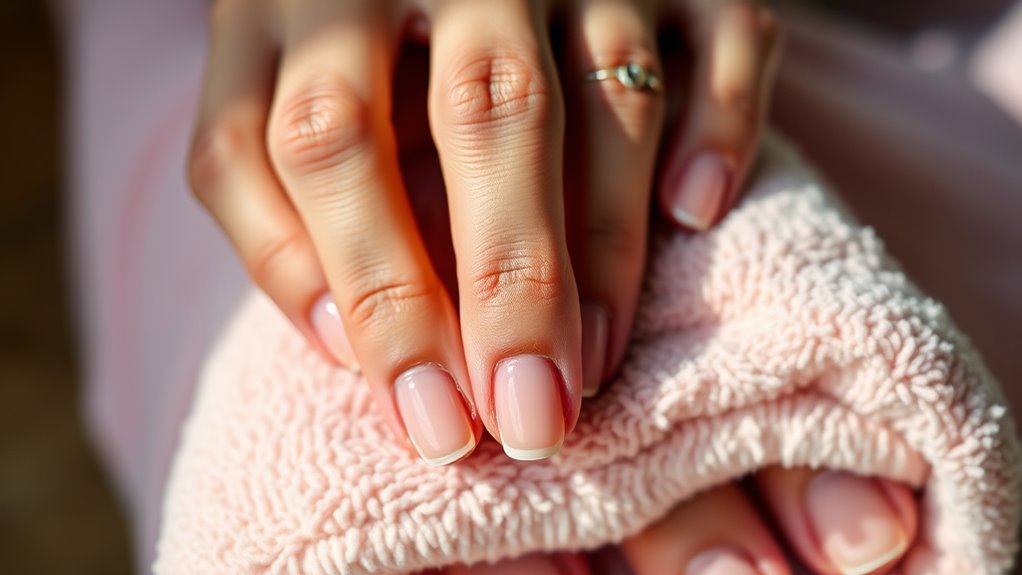
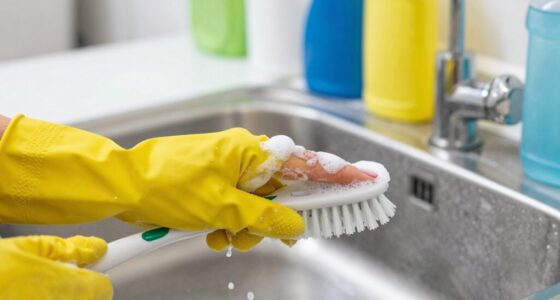
Adopting healthy lifestyle habits can considerably boost your nail strength and overall nail health. Simple changes can make a big difference. First, guarantee you’re nourishing your nails from within by eating a balanced diet rich in vitamins and minerals. Second, limit excessive nail polishing and avoid harsh chemicals in nail polish remover, which can weaken nails. Third, develop gentle manicure routines that include moisturizing your cuticles and nails regularly. Fourth, incorporate protective measures like wearing gloves during chores to prevent damage. Fifth, exploring nail care products designed specifically for menopausal women can provide additional support for nail strength. Consistency is key; these habits can help improve nail resilience and promote healthier growth. By paying attention to your daily routines, you can reduce brittleness and support stronger, more durable nails during menopause.
Effective Nail Care Practices for Mature Women

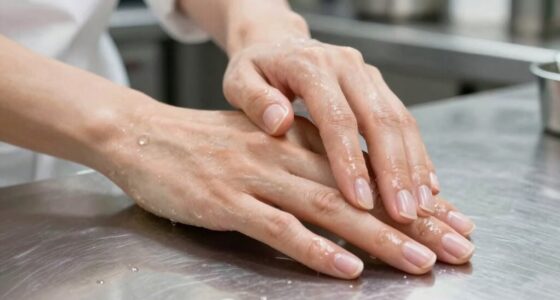
Are you taking the right steps to care for your nails as they mature? Proper nail care is essential for maintaining strength and avoiding damage. Always use gentle nail polish removal methods; opt for acetone-free remover to prevent dryness. After washing your hands, apply a nourishing hand moisturizer to keep nails hydrated and flexible. Regularly trimming and filing nails helps prevent splitting. Protect your nails by wearing gloves during chores. To emphasize key practices, see the table below:
| Practice | Benefit | Tip |
|---|---|---|
| Nail polish removal | Prevents dryness and damage | Use gentle, acetone-free remover |
| Hand moisturizer application | Keeps nails hydrated and flexible | Moisturize daily after washing |
| Proper trimming and filing | Reduces splitting and breakage | File in one direction |
| Wearing gloves | Shields nails from harsh chemicals | Use during cleaning |
Consistent care supports healthier, stronger nails as you age. Additionally, incorporating natural materials like linen and wood into your nail care routine can help maintain overall nail health and resilience.
Supplements and Topical Treatments for Stronger Nails
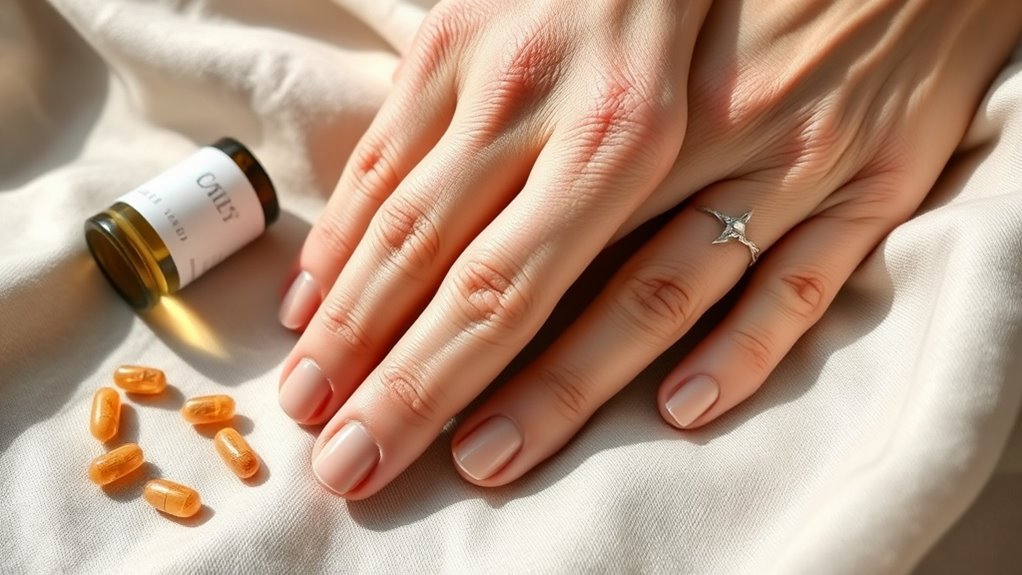
Supplements like biotin can help boost your nail strength, while collagen supports their flexibility. Topical keratin treatments can also reinforce your nails from the outside. Exploring these options may help you achieve healthier, more resilient nails during menopause. Additionally, using hydrocolloid technology in nail treatments can promote healing and protect against further damage.
Biotin Boosts Nail Strength
Biotin, a B-vitamin, plays a crucial role in strengthening brittle, weak nails often experienced during menopause. It can help improve nail thickness and reduce fragility, making nails less prone to damage. When taking biotin, consider these tips:
- Consistency is key to see results.
- Use supplements alongside topical treatments for better absorption.
- Be aware that biotin may help combat nail discoloration caused by aging or fungi.
- If nail fungus or discoloration persists, consult a healthcare professional for targeted treatment.
- Incorporating glycolic acid products into your skincare routine can also promote healthier nails by improving skin and cuticle health around the nails.
While biotin helps improve overall nail health, it’s important to address underlying issues like fungal infections, which can weaken nails further. Proper care combined with biotin can lead to healthier, stronger nails during menopause.
Collagen for Flexibility
As menopause can lead to decreased collagen production, incorporating collagen into your nail care routine can enhance flexibility and reduce brittleness. Collagen supplements support the structural integrity of nails, making them less prone to cracking. You can choose from various forms like powders, capsules, or drinks to boost your collagen levels. Topical treatments with collagen may also improve nail flexibility by hydrating and strengthening the nail matrix. Here’s a quick comparison:
| Collagen Supplements | Topical Collagen Treatments |
|---|---|
| Ingested for systemic support | Applied directly to nails |
| Promotes overall nail health | Provides localized hydration |
| May improve nail flexibility | Enhances nail surface strength |
| Usually taken daily | Used as needed for flexibility |
Incorporating both options can help you maintain healthier, more resilient nails during menopause.
Topical Keratin Treatments
Since keratin is a key protein in nail structure, applying topical keratin treatments or taking keratin supplements can substantially strengthen your nails. These treatments help repair brittle, slow-growing nails, making them more resilient for nail art and keeping up with popular manicure trends. To maximize benefits, consider these tips:
- Choose products with pure keratin to ensure effective penetration.
- Use regularly to see noticeable improvements in nail strength.
- Combine with a healthy diet rich in biotin and vitamins for added support.
- Avoid harsh chemicals that can weaken nails further, especially during menopause.
When to Seek Medical Advice for Nail Concerns

If you notice persistent changes in your nails, such as severe brittleness, discoloration, or pain, it’s important to consult a healthcare professional. These signs could indicate underlying issues like nail polish allergies or fungal infections that need proper diagnosis and treatment. Ignoring these symptoms might lead to further damage or infection. Be alert if your nails become unusually thick, discolored, or develop peeling layers.
| Symptom | Possible Cause | When to Seek Help |
|---|---|---|
| Severe brittleness | Hormonal changes, aging | If nails easily break or crack |
| Discoloration | Fungal infection, allergy | When discoloration persists |
| Pain or swelling | Infection or trauma | If pain worsens or spreads |
| Changes after polish use | Nail polish allergies | After reactions or persistent issues |
Frequently Asked Questions
Can Menopause-Related Nail Changes Be Reversed?
Yes, menopause-related nail changes can often be improved. You can try nutritional interventions, like increasing biotin, zinc, and vitamin E, to strengthen your nails. Hormone therapy might also help restore hormonal balance, potentially reversing brittleness and slow growth. Consistently caring for your nails and maintaining a balanced diet support overall health. Consult your healthcare provider to determine the best options for your specific needs and guarantee safe, effective treatments.
Are There Specific Nail Products Recommended for Menopausal Women?
You should look for recommended nail products that focus on strengthening and nourishing your nails. Natural nail treatments, like cuticle oils and strengthening polishes, can help improve nail health during menopause. Choose products with ingredients such as biotin, keratin, and vitamin E. Avoid harsh chemicals like formaldehyde or acetone. Regular use of these recommended nail products can help restore your nails’ strength and promote healthier growth over time.
How Do Stress Levels Influence Nail Health During Menopause?
Stress levels impact your nail health during menopause like a storm disrupting calm waters. When you’re stressed, your body releases hormones that can weaken nails and slow their growth. Managing stress is essential, especially during hormone fluctuations, to maintain healthy nails. Practice stress management techniques such as deep breathing or yoga, which help balance your hormones and support nail strength, keeping your nails resilient despite menopausal changes.
Is It Safe to Use Natural Remedies for Brittle Nails?
Yes, natural remedies like herbal remedies and essential oils are generally safe for brittle nails, but you should use them carefully. Make sure to choose high-quality products, do a patch test first, and dilute essential oils properly. While they can boost nail strength naturally, consult your healthcare provider if you have allergies or skin sensitivities. These remedies can be effective additions to your nail care routine.
Do Certain Medications Worsen Nail Brittleness in Menopausal Women?
Did you know that up to 30% of medications can cause side effects like nail brittleness? Certain medications, especially those with drug-nail interactions, can worsen nail brittleness in menopausal women. These side effects occur because some drugs interfere with nail growth or weaken their structure. Always check medication side effects and consult your doctor if you notice worsening nail health, as adjustments might help protect your nails.
Conclusion
Did you know that up to 50% of women experience changes in nail health during menopause? By understanding how hormonal shifts and aging affect your nails, you can take proactive steps to strengthen them. Focus on proper nutrition, good nail care habits, and consult a professional if needed. Taking these actions helps you maintain healthier, stronger nails, so you can keep feeling confident and vibrant through this natural phase of life.