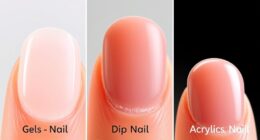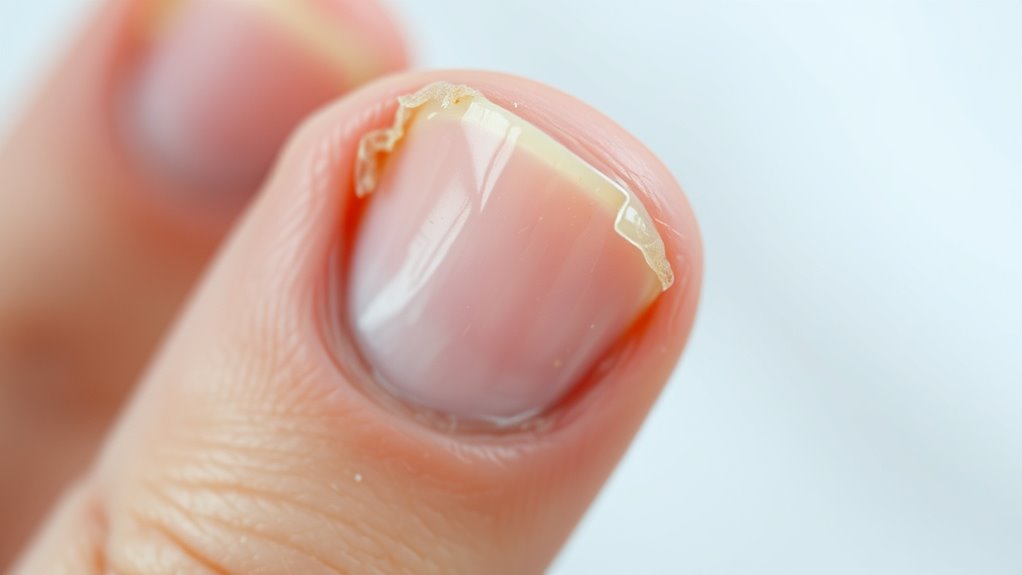

If your nails are thin and over-buffed, stop filing immediately to prevent further damage. Keep them moisturized with nourishing oils like vitamin E or coconut oil, and avoid harsh chemicals and polish removers. Focus on gentle nail care, including cuticle hydration and proper nutrition, like biotin-rich foods and enough water. Use strengthening treatments and home remedies to promote healing. Continuing with these steps will help your nails recover and regain their strength.
Key Takeaways
- Cease all buffing and filing to prevent further thinning and allow nails to recover naturally.
- Keep nails moisturized with nourishing oils like vitamin E or olive oil to promote healing.
- Avoid harsh chemicals, acetone, and nail polish removers that can dry out or damage nails further.
- Support recovery through a balanced diet rich in biotin, vitamins E, A, C, zinc, and iron to strengthen nails.
- Use gentle nail care practices, including proper filing with fine-grit tools and avoiding cuticle cutting, to promote healthy growth.
Understanding the Impact of Over-Buffing on Nail Health
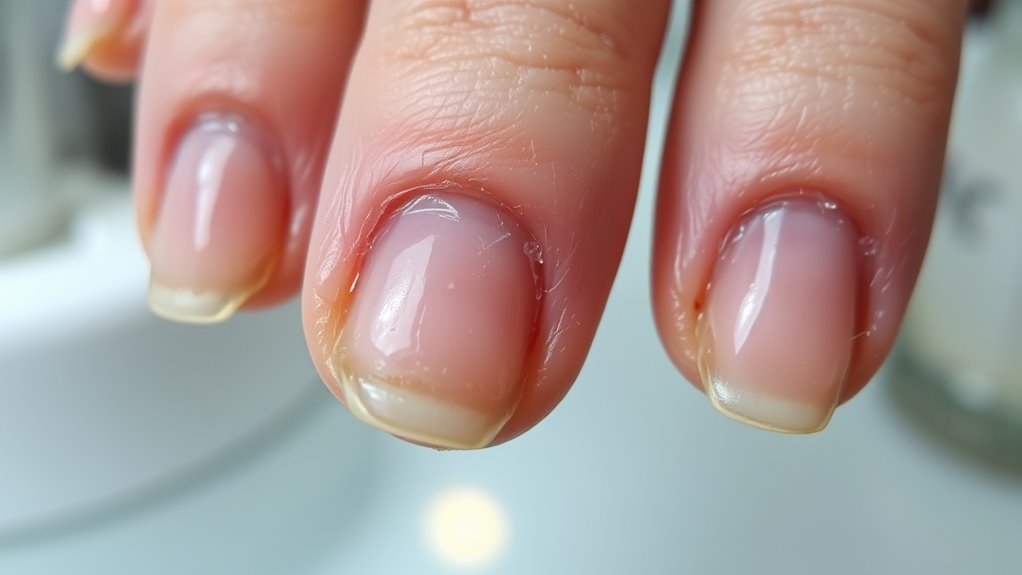
While buffing your nails can create a smooth, shiny surface, over-buffing can actually harm your nail health. Excessive buffing wears down the nail’s outer layer, disrupting the natural nail structure and making your nails more fragile. When you over-buff, you risk thinning the nails, which increases their susceptibility to cracks and splits. Additionally, aggressive buffing can damage the cuticle area, impairing cuticle health and leaving your nails vulnerable to infections. Healthy cuticles protect the nail matrix and support overall nail growth, so neglecting this area can lead to longer-term problems. Understanding the balance between buffing enough to enhance appearance and avoiding overdoing it is fundamental. Proper care preserves the integrity of your nails and maintains their strength and resilience over time. Automation technology can also play a role in monitoring and guiding proper nail care routines to prevent over-buffing.
Recognizing the Signs of Over-Filed Nails

You’ll notice your nails becoming thin and fragile, making them more prone to damage. They may also feel more sensitive to touch or temperature changes. Additionally, an uneven surface can be a clear sign you’ve over-filed your nails. To help your nails recover, consider using nourishing oils and maintaining proper hydration, which support nail health and regeneration. nail health
Visible Nail Thinning
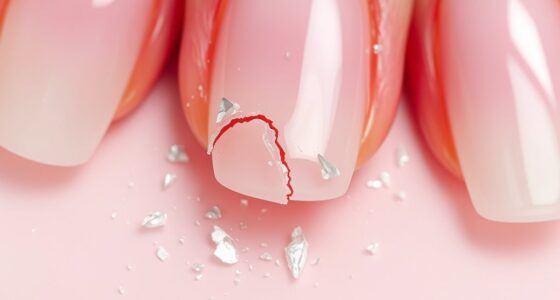
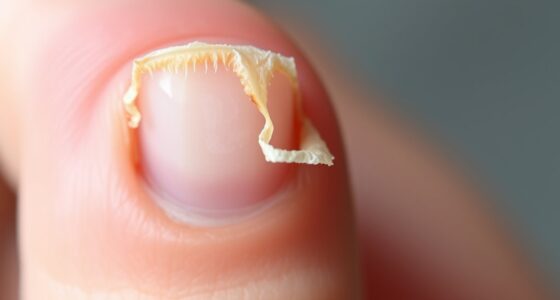
Visible nail thinning is a key sign that you may have over-filed your nails. When nails become noticeably thinner, it indicates compromised nail health caused by excessive buffing or filing. Over buffing effects strip away the top layers of the nail plate, weakening its structure and making it more vulnerable to damage. You might notice your nails looking fragile, translucent, or almost see-through in areas where you’ve overdone it. This thinning can also cause uneven nail surfaces or ridges, further signaling that your nails need care. Recognizing these signs early helps prevent further damage and sets the stage for proper recovery. Paying attention to nail thinning ensures you’re aware of your nail health and can take steps to restore strength and resilience.
Increased Nail Sensitivity
Over-filing your nails often leads to increased sensitivity, making them more prone to discomfort and pain. You might notice that even gentle touches cause soreness or your nails feel unusually tender. This heightened sensitivity indicates your nails are compromised and need care. Look for signs like:
- Sharp pain when applying nail polish or removing it
- A burning or tingling sensation around the nails
- Increased nail dryness or peeling
- Flaky or damaged cuticle health
To help your nails recover, focus on improving nail hydration and nourishing your cuticles. Avoid harsh chemicals and give your nails time to heal. Proper hydration supports the nail’s natural barrier, reducing sensitivity and fostering strength. Prioritizing cuticle health also prevents further damage and promotes overall recovery. Additionally, understanding the role of contrast ratio in image quality can be applied metaphorically to recognize how contrast in care and nourishment can make your nails appear healthier and more resilient over time.
Uneven Nail Surface
When nails become over-filed, they often develop an uneven surface that’s easy to notice. This irregularity impacts both nail health and aesthetics, making nails look rough or patchy. You might see ridges, dips, or ridges that disrupt smoothness. To visualize, consider this table:
| Smooth Surface | Slight Bump | Deep Groove |
|---|---|---|
| Even, glossy | Small bump | Significant dip |
| Healthy shine | Mild irregularity | Noticeable flaw |
| Consistent texture | Slight roughness | Disrupts nail aesthetics |
| Reflects light well | Dull spots | Affects nail aesthetics |
| Looks natural | Slight unevenness | Visible defect |
Recognizing these signs helps you address over-filing early, preserving nail health and improving appearance. Proper care and understanding of nail health are essential for recovery.
Immediate Steps to Minimize Damage
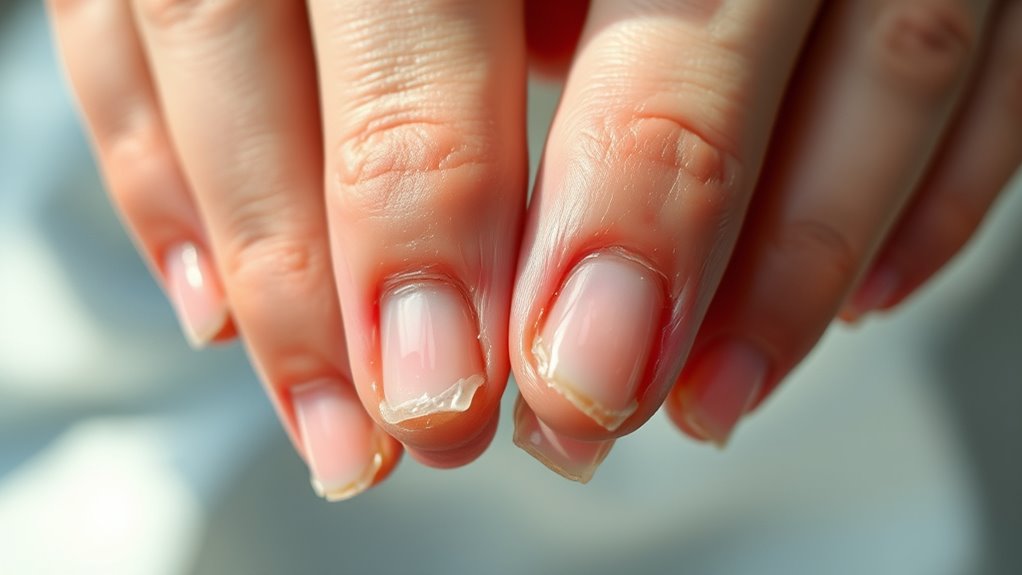
To minimize damage right away, stop any further filing to prevent worsened thinning. Keep your nails moisturized regularly to support healing and reduce brittleness. Also, steer clear of harsh chemicals that can irritate or weaken your nails further. Using gentle nail products can help protect and strengthen your nails during recovery.
Stop Further Filing
If you notice your nails are over-filed and look thin, the first step is to stop all filing immediately. Continuing to file can worsen damage and make nails weaker. Take a moment to assess the situation and resist the urge to fix it further. During this time, avoid nail polish removal or any harsh chemicals that could irritate or dry out your nails. Focus on gentle cuticle care to support healing. You should also:
- Refrain from using nail files or buffers
- Avoid applying acrylics or gel polish
- Skip harsh nail treatments or acetone-based removers
- Keep your nails clean and dry to prevent infection
Implementing gentle nail care practices can significantly aid in recovery. Stopping filing immediately helps prevent additional trauma, allowing your nails to start recovering and reducing the risk of further damage.
Moisturize Regularly
After stopping all filing and avoiding harsh treatments, start moisturizing your nails regularly to promote healing. Focus on cuticle hydration, as well-maintained cuticles support overall nail health and prevent further damage. Use nourishing cuticle oils or creams daily to lock in moisture and encourage recovery. Nail hydration is equally important; apply a rich hand cream or specialized nail moisturizer to keep your nails supple and less prone to brittleness. Consistent moisturization helps replenish lost oils, reduces dryness, and supports the regeneration of thin, over-buffed nails. Keep this routine up, especially after washing your hands or exposure to harsh elements, to optimize the healing process and restore your nails’ strength and appearance over time. Regular moisturization can also help prevent further damage, ensuring your nails stay healthy and resilient during recovery.
Avoid Harsh Chemicals
Harsh chemicals can further weaken and damage your already over-filed nails, so reducing their contact is vital. Avoid products with strong acetone or harsh solvents, especially during nail artistry or polish removal. These chemicals strip away natural oils, making nails more fragile. To protect your nails:
- Choose gentle, acetone-free polish removers
- Skip harsh cuticle removers or strong cleaning agents
- Use nourishing base coats instead of stripping topcoats
- Limit exposure to cleaning products with strong chemicals
The Importance of Nail and Cuticle Care
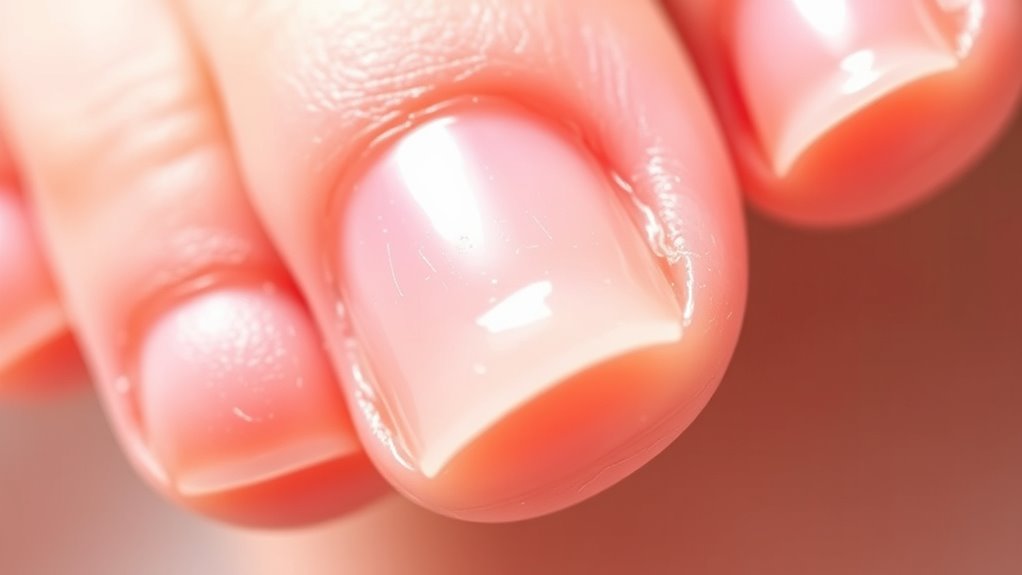
Taking good care of your nails and cuticles is essential for maintaining healthy, strong nails. Proper nail hygiene helps prevent infections and keeps your nails looking neat. Regularly clean under your nails and avoid sharing tools to reduce bacteria buildup. Cuticle health is equally important; moisturize your cuticles daily to prevent dryness and cracking that can lead to damage. Gently pushing back your cuticles can improve nail appearance but avoid cutting or tearing them, which can cause infections. Healthy cuticles protect the new nail growth and support overall nail strength. Additionally, understanding optimal angles for pinball machines can provide insights into maintaining the integrity of your nails and preventing over-buffing damage. By maintaining good nail hygiene and caring for your cuticles, you create a strong foundation for your nails to recover and grow healthier after over-buffing.
Nourishing Your Nails With Proper Nutrition

Proper nutrition plays an essential role in restoring and maintaining healthy nails, especially after over-buffing has weakened their structure. When you focus on nail hygiene, you support better cuticle health and overall nail strength. Eating a balanced diet rich in vitamins and minerals helps repair damage and promotes growth. Incorporate these nutrients:
- Biotin-rich foods like eggs and nuts to boost nail strength
- Vitamin E from leafy greens and seeds to nourish cuticles
- Protein sources such as fish and beans for keratin production
- Iron from lean meats and spinach to prevent brittleness
Staying hydrated also keeps nails flexible and less prone to cracking. Additionally, understanding the importance of digital literacy and critical thinking skills in managing online beauty advice can help you make informed decisions about nail care routines. Remember, consistent good nutrition complements proper nail care practices and accelerates recovery from over-filed, thin nails.
Best Practices for Safe Nail Filing in the Future
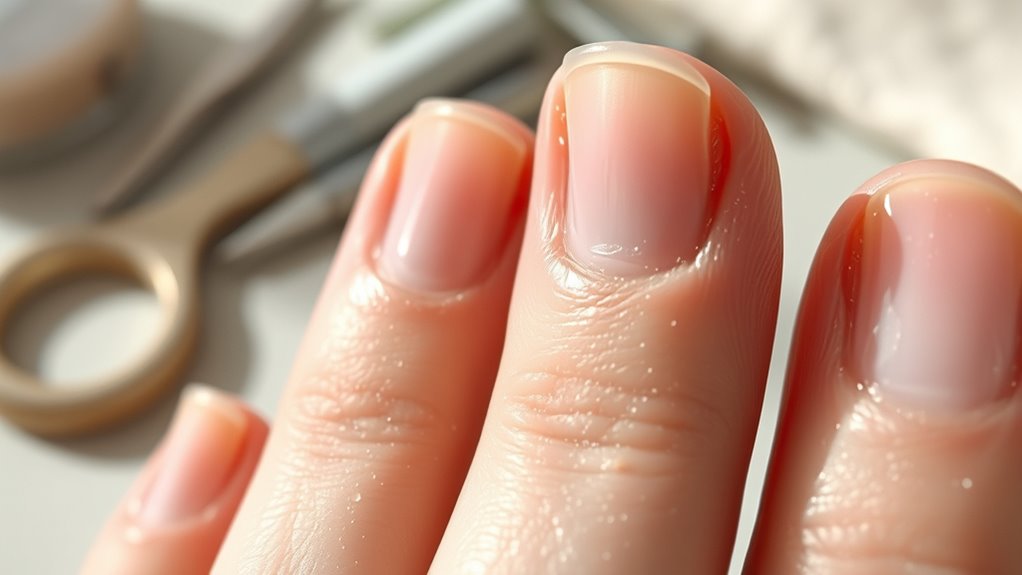
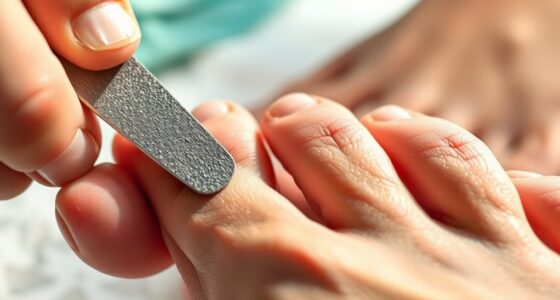
To guarantee your nails stay strong and healthy, adopting safe filing techniques is essential. First, always use a gentle, fine-grit nail file to prevent excessive thinning or damage. Avoid aggressive back-and-forth motions; instead, file in one direction to reduce trauma. Maintaining proper nail hygiene is vital—clean your nails and tools regularly to prevent infections. Limit filing sessions to avoid over-thinning your nails, and don’t dig into the nail edges. Keep your nails hydrated and avoid filing too close to the cuticles, which can weaken the nail bed. Remember, patience is key—work slowly and carefully. Additionally, being mindful of your filing techniques can significantly reduce the risk of over-buffing and subsequent damage. By following these best practices for safe nail filing, you support healthy nail growth and help prevent future damage.
Using Strengthening Treatments and Supplements
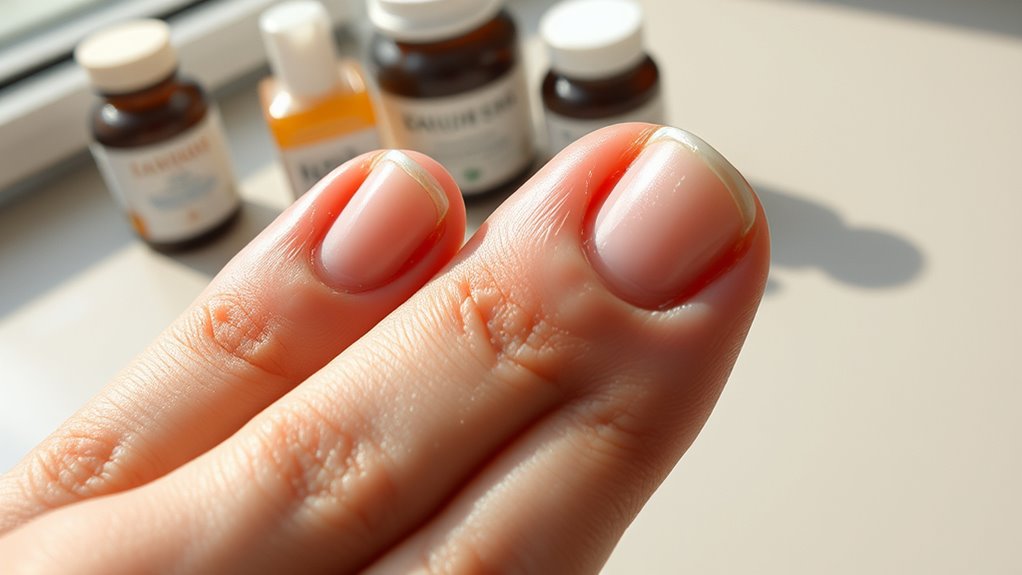
Strengthening treatments and supplements can boost your nails’ resilience and promote healthy growth. They help improve nail hydration and cuticle health, which are essential for recovery after over-buffing. Consider incorporating these options into your routine:
- Use keratin or biotin-based nail strengtheners to reinforce fragile nails
- Apply cuticle oils or serums to nourish and hydrate the cuticles
- Take biotin supplements to support keratin production from within
- Incorporate multivitamins rich in zinc, iron, and vitamins A, C, and E to promote overall nail health
These treatments work together to rebuild your nails’ structure and prevent future damage. Consistent use and patience are key to seeing results, helping your nails regain strength and a healthy appearance over time.
Home Remedies to Promote Nail Recovery

When your nails need quick and natural support, home remedies can be effective in promoting recovery. Focusing on nail hydration and cuticle maintenance helps restore strength and flexibility. Regularly moisturize your nails with nourishing oils like vitamin E or olive oil to prevent dryness. Gently push back cuticles with a soft tool to maintain healthy cuticle beds, avoiding over-manipulation. Proper hydration also involves drinking plenty of water daily. Here’s a visual guide:
| Home Remedy | Benefits |
|---|---|
| Coconut oil | Deeply moisturizes and heals |
| Vitamin E oil | Promotes nail strength |
| Olive oil | Nourishes and softens nails |
| Cuticle oil | Maintains cuticle health |
| Hydrating hand cream | Locks in moisture |
Consistency is key—integrate these into your routine for best results.
When to Seek Professional Help for Nail Damage

While home remedies can considerably improve nail health, there are times when professional help becomes necessary. If you notice persistent pain, severe nail damage, or signs of infection, seeking a professional consultation is essential. Poor nail hygiene can worsen damage, so don’t delay if you experience:
- Cracking, splitting, or peeling nails that don’t improve
- Redness, swelling, or pus around the nail bed
- Discoloration or dark streaks
- Significant pain or sensitivity
A healthcare professional can assess the extent of damage, recommend appropriate treatments, and prevent further issues. Timely professional intervention ensures proper nail recovery and reduces the risk of complications. Trust your instincts—when damage seems severe or unresolved, professional consultation is the safest choice.
Frequently Asked Questions
Can Over-Buffing Cause Permanent Nail Damage?
Yes, over-buffing can cause permanent nail damage if you’re not careful. It weakens your nail health by thinning the nail plate, making nails more susceptible to breakage and infections. To prevent damage, avoid excessive buffing, use gentle techniques, and give your nails time to recover. Proper nail care and damage prevention strategies help maintain healthy nails, preventing long-term harm from over-buffing.
How Long Does It Take for Nails to Fully Recover?
Nails typically take about 4 to 6 months to fully recover after over-buffing or over-filing. You can speed up the process by nurturing nails with nourishing oils and avoiding further trauma. Nail growth gradually pushes out damaged layers, so patience is key. Keep your nails moisturized and protected, and stay consistent with care routines, knowing that healthy, strong nails will eventually replace the fragile, over-filed layers over time.
Are There Specific Products to Prevent Over-Filing?
To prevent over-filing, use gentle, protective nail products like strengthening bases or ridge fillers that add a barrier and reduce the need for aggressive filing. Look for files labeled as gentle or fine-grit, and always file in one direction. Regularly applying nourishing cuticle oils and moisturizers helps maintain nail health, minimizing the risk of over-filing. Being cautious and using protective products guarantees your nails stay strong and healthy.
Can Nail Over-Buffing Lead to Infections?
Yes, over-buffing can increase your infection risk because it damages nail health, creating tiny tears and exposing sensitive skin. When your nails become thin and weak, bacteria and fungi have easier entry points. To protect yourself, avoid excessive buffing, keep nails clean and dry, and consider applying nourishing oils or strengthening treatments. Proper nail care helps maintain healthy nails and minimizes infection risks caused by over-buffing.
What Are the Best Tools for Gentle Nail Shaping?
For gentle nail shaping, choose nail file types like glass or fine-grit emery boards, which are gentle on thin nails. Use soft, controlled strokes to shape your nails, avoiding aggressive filing. Stick to gentle nail shaping techniques like rounding or squaring, depending on your preference. These tools and methods help prevent further damage and promote healthy nail growth while maintaining a smooth, polished look.
Conclusion
By giving your nails proper care and avoiding over-buffing, you can restore their strength and health. Imagine Sarah, who after over-filing, used nourishing oils and avoided harsh treatments; within weeks, her nails looked healthier and thicker. If you notice damage, act quickly with gentle care and seek help if needed. With patience and the right habits, you’ll help your nails recover and look beautiful again, just like Sarah’s refreshed, resilient nails.