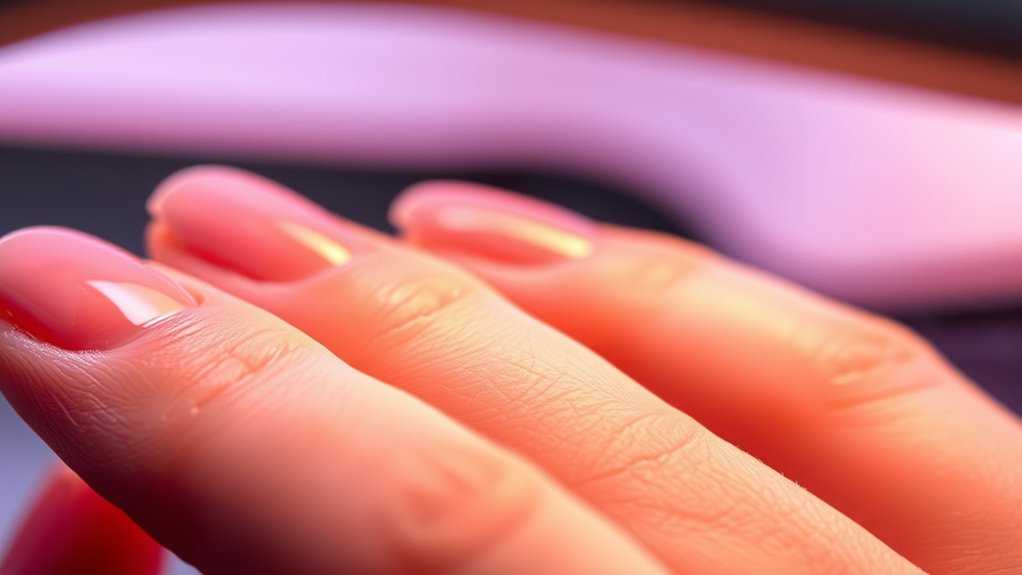
If your gel polish wrinkles or lifts in the lamp, the cause is often uneven or thin application, or improper curing. Make sure you apply quality gel in smooth, even coats and follow the recommended curing times for your lamp type. Also, prep your nails well—clean, buff, and hydrate before applying. Poor product quality and environmental factors can affect results too. Continue exploring to learn how to perfectly achieve a flawless gel finish.
Key Takeaways
- Apply gel polish in thin, even coats to ensure proper curing and prevent surface wrinkles.
- Use the correct lamp type and curing time as per manufacturer instructions for complete hardening.
- Properly clean and prepare nails to remove oils, debris, and smooth the surface for better adhesion.
- Choose high-quality, compatible gel products and avoid mixing brands to prevent curing issues.
- Maintain nail hydration and limit UV exposure to keep nails healthy and improve gel adherence.
Top picks for "polish wrinkl lift"
Open Amazon search results for this keyword.
As an affiliate, we earn on qualifying purchases.
Inconsistent or Thin Application of Gel Polish
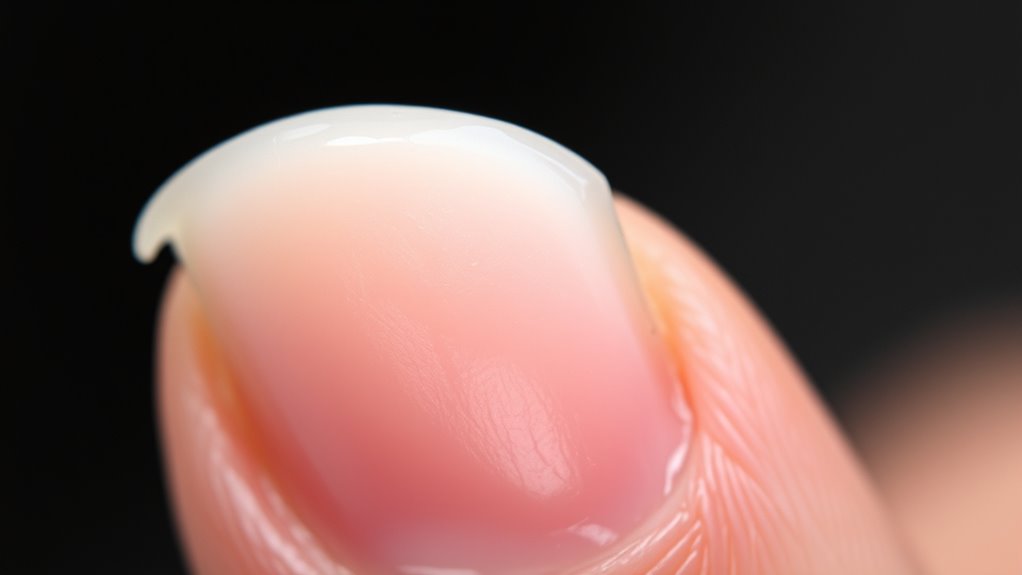
If you don’t apply gel polish evenly and with enough thickness, it can lead to issues like wrinkling or lifting. Application consistency is key to a smooth, durable finish. When you use too thin a layer, the polish may not adhere properly, causing lifting or peeling over time. On the other hand, applying uneven or patchy coats creates areas of thinness and thick spots, which can cause the gel to wrinkle during curing. To avoid these problems, make certain each coat of gel has the right polish thickness—not too thin or thick—and that you distribute it evenly across your nail surface. Proper application technique helps the gel cure evenly and prevents surface imperfections, giving you a flawless, long-lasting manicure. Additionally, proper curing with an accurate lamp timer ensures the gel hardens uniformly, reducing the risk of surface wrinkling or lifting.
Using the Wrong Lamp or Inadequate Curing Time
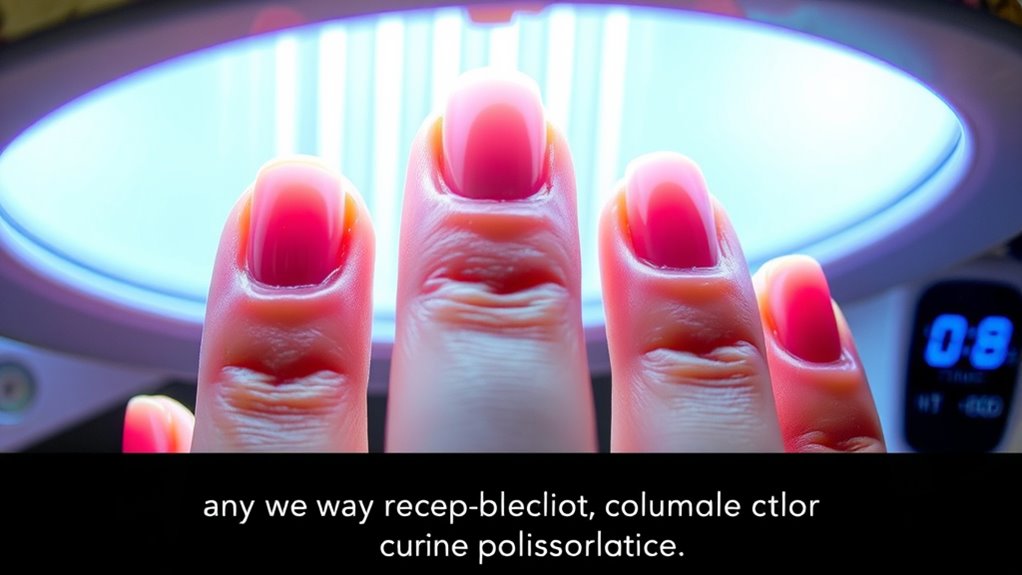
Using the wrong lamp or not curing the gel polish long enough can cause wrinkling or lifting. Different lamp types, such as LED or UV, have specific curing durations required for ideal results. If you use an incompatible lamp or don’t stick to the recommended curing time, the gel may not fully harden, leading to wrinkles or lift-offs. For example, UV lamps often need 2 minutes, while LED lamps typically require only 30-60 seconds. Ignoring these guidelines results in insufficient curing, compromising the gel’s adhesion and flexibility. Always verify your lamp type and follow the manufacturer’s recommended curing duration. Proper curing ensures the gel is evenly hardened, reducing the risk of wrinkling, lifting, and other common issues. Additionally, understanding the role of contrast ratio can help you assess the curing quality by observing the clarity and depth of the gel’s finish.
Poor Surface Preparation and Nail Hygiene
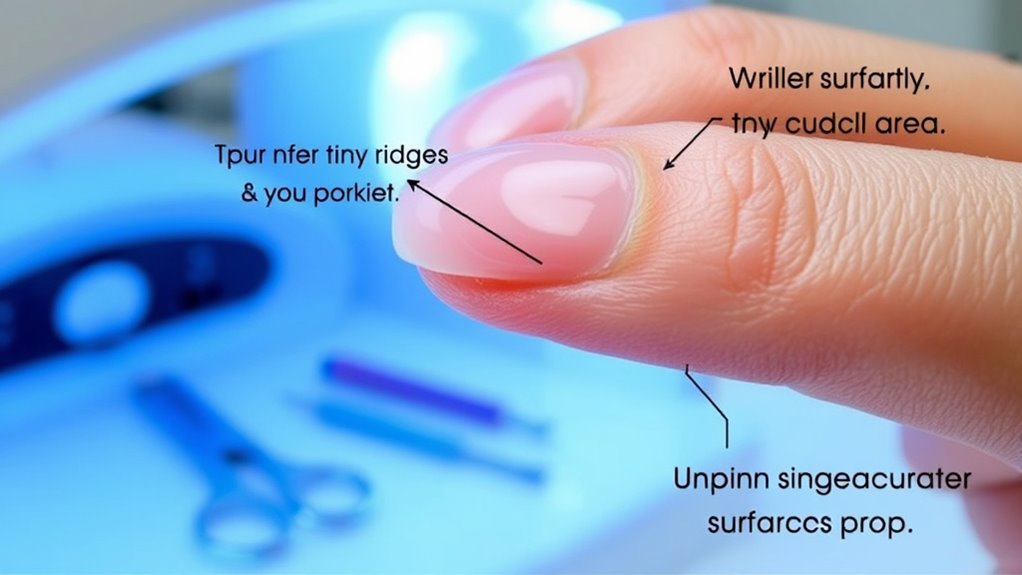
Poor surface preparation and nail hygiene are common causes of gel polish wrinkling or lifting. If your nails aren’t clean and smooth, the gel won’t adhere properly, leading to issues. Make sure to thoroughly clean nails to remove oils and debris, and gently buff the surface to ensure surface smoothing. Neglecting these steps can cause poor adhesion and early lifting. Proper maintenance and adherence to cleaning protocols are essential for long-lasting results. Nail cleanliness and surface smoothing improve gel adherence and reduce wrinkling or lifting.
Issues With Product Quality or Compatibility
Product quality and compatibility play a crucial role in preventing gel polish issues like wrinkling or lifting. Poor product formulation or ingredient instability can lead to inconsistent curing and adhesion problems. When the gel isn’t formulated properly, it may not bond well with your nails or cure evenly, causing wrinkles or lifts over time. Using incompatible products—like mixing brands or formulas—can also trigger these issues. To avoid this, always choose high-quality gels from trusted brands and ensure they’re compatible with your lamp and base coat. Additionally, glycolic acid products can improve overall skin health, which may influence nail adhesion and longevity if used properly.
- Check that the gel’s formulation is designed for your specific lamp type
- Use products from reputable brands with proven ingredient stability
- Avoid mixing different gel brands or formulas
- Follow manufacturer instructions precisely
- Replace old or expired gel products
Environmental Factors and Nail Condition
Environmental factors and the condition of your nails considerably impact the longevity and appearance of gel polish. If your nails are dehydrated or lack proper nail hydration, the gel may not adhere well, leading to lifting or wrinkling. UV exposure also plays a role; prolonged exposure can weaken your nails and affect how the gel cures, potentially causing it to lift or wrinkle. To prevent this, keep your nails well-hydrated with cuticle oil and moisturizer, especially in dry environments. Limit UV exposure by wearing gloves during sun exposure or using broad-spectrum SPF on your hands. Maintaining healthy, hydrated nails creates a better surface for gel application and curing, reducing the risk of issues like wrinkling or lifting caused by environmental factors.
Frequently Asked Questions
Can Over-Curing Cause Gel Polish to Wrinkle or Lift?
Over-curing can cause gel polish to wrinkle or lift because it affects the application techniques and curing times. If you cure for too long, the gel may become brittle or lose adhesion, leading to wrinkles or lifting. To avoid this, follow the recommended curing times for your lamp and gel, and guarantee even application. Proper technique and timing help maintain a smooth, durable finish without issues.
Does Nail Shape Affect Gel Polish Longevity and Appearance?
Think of your nails like a building’s foundation—shape impacts how well gel polish lasts. A high nail arch or shorter finger length can cause the polish to lift or crack because of uneven stress. Proper shaping guarantees even application and better adhesion. If you keep your nails well-shaped, you’ll notice your gel stays glossy longer and resists lifting, much like a sturdy structure standing the test of time.
How Do Allergies Impact Gel Polish Adhesion and Wrinkling?
If you have allergies or skin sensitivities, they can cause your skin to react to the gel polish, affecting adhesion and increasing the risk of wrinkling or lifting. Allergy reactions might lead to inflammation or irritation, weakening the bond between your nail and the polish. To avoid this, choose hypoallergenic formulas, do a patch test beforehand, and guarantee proper application techniques to minimize irritation and improve adhesion.
Are Certain Gel Brands More Prone to Wrinkling or Lifting?
Certain gel brands are more prone to wrinkling or lifting due to inconsistent brand quality and formula stability. You’ll find that established brands with consistent quality control tend to deliver better results, reducing issues like wrinkling. Cheaper or less reputable brands might have formula instability, which affects adhesion and curing. To avoid problems, stick to trusted brands known for their consistency and reliable formulas, ensuring a smoother, longer-lasting gel manicure.
Can Ambient Temperature During Curing Influence Gel Polish Results?
Yes, ambient temperature can influence your gel polish results. If your curing environment is too hot or cold, it affects how the gel cures, leading to issues like wrinkling or lifting. To avoid this, make certain your working area stays within the recommended temperature range, typically around 70-75°F. Maintaining a consistent curing environment helps your gel polish cure evenly, reducing the risk of imperfections and ensuring long-lasting, flawless results.
Conclusion
To keep your gel polish flawless and avoid wrinkles or lifting, pay attention to each step like a craftsman. Proper surface prep, choosing the right lamp, and applying a thin, even coat are your best tools. Think of it as tending a garden—care and patience yield the best blooms. When you follow these tips, you’ll enjoy a smooth, long-lasting finish that shines brighter than a diamond. Your nails deserve that extra touch of perfection!