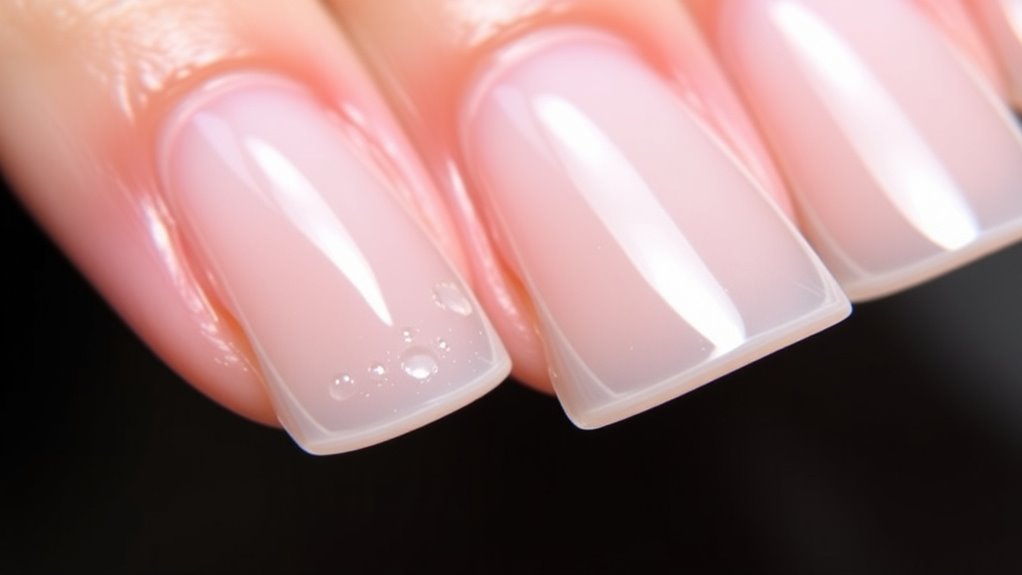
If your gel extensions are lifting early, it’s often due to improper prep, like skipping cleaning or dehydrating your nails, or poor application techniques. Make sure your nails are thoroughly cleaned, dry, and free of oils before applying gel. Properly cure each layer and avoid picking at lifted edges. Regular maintenance and good cuticle care can help, but if lifting continues, there are additional tips that can keep your nails looking fresh longer.
Key Takeaways
- Ensure proper nail prep, including cleaning, dehydration, and thin gel layers, to improve adhesion and prevent early lifting.
- Maintain healthy cuticles by moisturizing and avoiding damage to reduce gaps and lifting risks.
- Avoid exposing gel nails to water, chemicals, or rough handling, and wear gloves during chores.
- Gently file any lifted edges and reapply a topcoat or gel to seal gaps and extend extension lifespan.
- Seek professional assessment if lifting persists to address underlying issues and ensure correct application techniques.
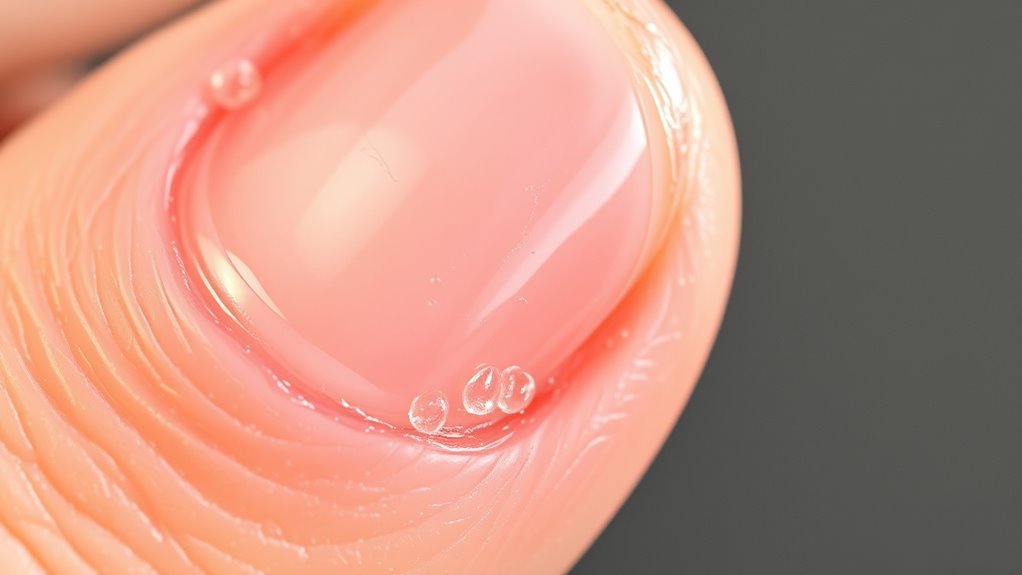
Gel extensions can lift prematurely when they’re not properly applied or maintained. If you notice your gel extensions starting to lift, it’s often because the foundation wasn’t solid from the start or because of poor maintenance. One common culprit is neglecting cuticle health, which plays a vital role in how well gel adheres to your natural nails. When your cuticles are dry or damaged, it can lead to gaps between the extension and your nail bed, making lifting more likely. To prevent this, always keep your cuticles moisturized and avoid cutting or pushing them back aggressively, which can cause trauma and compromise the adhesion process.
Proper application is key to preventing early lifting. Make sure your nails are thoroughly cleaned and dehydrated before applying gel extensions. Use a nail prep solution to remove oils and moisture, creating a clean surface for the gel to bond. If your nail technician skips this step, it increases the risk of lifting. Also, ensure that the gel is applied correctly—thin layers are better than thick ones, and each layer should be cured fully under the UV or LED lamp. Rushing through the process or skipping steps can weaken the bond, leading to early lifting down the road.
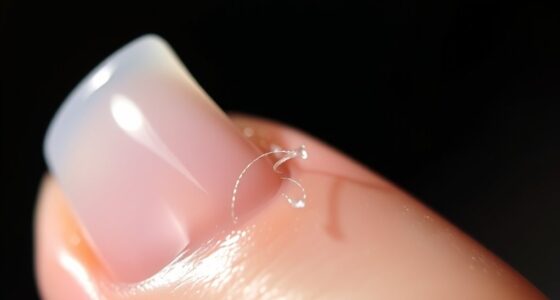
Maintenance tips are equally important once your gel extensions are in place. Regularly moisturizing your cuticles helps maintain healthy nail growth and prevents dryness that can cause lifting. Avoid exposing your nails to harsh chemicals or excessive water, which can weaken the gel’s grip. When doing chores or cleaning, wear gloves to protect your nails from damage. Additionally, avoid picking at or peeling the gel, as this can cause damage to your natural nail and lead to further lifting. If you notice any small lifts, don’t ignore them. Instead, gently file down the lifted edge and apply a fresh layer of gel or topcoat to seal the gap. Keeping your nails clean and dry is essential for prolonging the lifespan of your gel extensions and preventing premature lifting.
If lifting persists despite your efforts, it might be time to visit a professional. A nail technician can assess whether your cuticle health needs to be improved or if the application process needs adjustment. Proper maintenance, including good cuticle care and gentle handling, helps extend the life of your gel extensions and keeps them looking fresh. Remember, healthy cuticles and diligent care are your best allies in preventing early lifting and keeping your nails beautiful longer. Additionally, incorporating proper adhesion techniques into your routine can significantly reduce the likelihood of lifting.
Top picks for "extension lift early"
Open Amazon search results for this keyword.
As an affiliate, we earn on qualifying purchases.
Frequently Asked Questions
Can Diet Impact Gel Extension Longevity?
Your diet can definitely impact gel extension longevity. When you get enough essential dietary nutrients like biotin, zinc, and vitamins A, C, and E, it promotes healthy nail growth and strength. Poor nail health from nutrient deficiencies can lead to weaker nails that lift or chip sooner. Eating a balanced diet helps maintain strong, resilient nails, making your gel extensions last longer and reducing the risk of lifting or damage.
Are Certain Nail Shapes More Prone to Lifting?
You might notice some nail shapes are more prone to lifting because of their lifting tendency. For example, almond and coffin shapes can sometimes have adhesion issues due to their curves and edges, making them more susceptible. A well-executed nail design with proper prep helps reduce lifting, but understanding your chosen nail shape can guide you in choosing designs that minimize this problem and improve overall durability.
How Does Humidity Affect Gel Extension Adhesion?
Think of humidity levels as a sneaky artist, subtly altering the canvas of your gel extension adhesion. When humidity is high, moisture sneaks in, disrupting the delicate dance of adhesive bonding. This dampness can cause your gel to lift early, like a poorly glued puzzle piece. To keep your extensions intact, make certain a dry, controlled environment, and use products designed to resist humidity interference, so your nails stay flawless and strong.
Is It Safe to Remove Lifting Gel Extensions at Home?
You might wonder if home removal of lifting gel extensions is safe. While it’s possible, safety concerns arise if you don’t do it properly. Using harsh tools or forcing the gel off can damage your natural nails or cause pain. It’s best to be gentle, soak your nails in acetone, and avoid aggressive scraping. If you’re unsure, visiting a professional guarantees safe removal and keeps your nails healthy.
Can Using Cuticle Oil Prevent Early Lifting?
Imagine you notice your gel extensions lifting sooner than expected. Using cuticle oil can help maintain cuticle health, but it might interfere with adhesion if applied excessively or near the gel edge. To prevent early lifting, keep cuticle oil away from the gel base, and only use it on dry, healthy cuticles. Proper cuticle care supports overall nail health without compromising the longevity of your gel extensions.
Conclusion
If your gel extensions keep lifting early, don’t panic. Maintaining proper prep, avoiding harsh chemicals, and giving your nails enough time to cure can make a big difference. Is it worth risking damage just to skip a step? Taking these simple precautions helps guarantee your extensions stay beautiful and last longer. Remember, a little extra care now saves you from frequent fixes later. Are you ready to give your nails the attention they deserve?