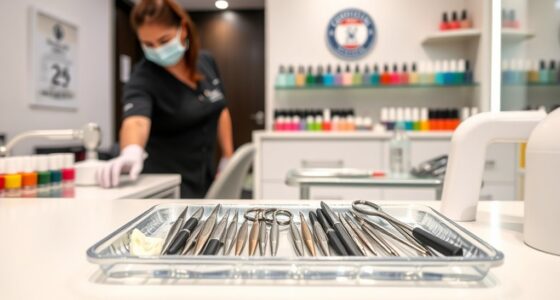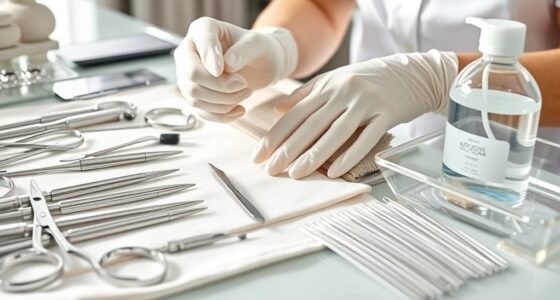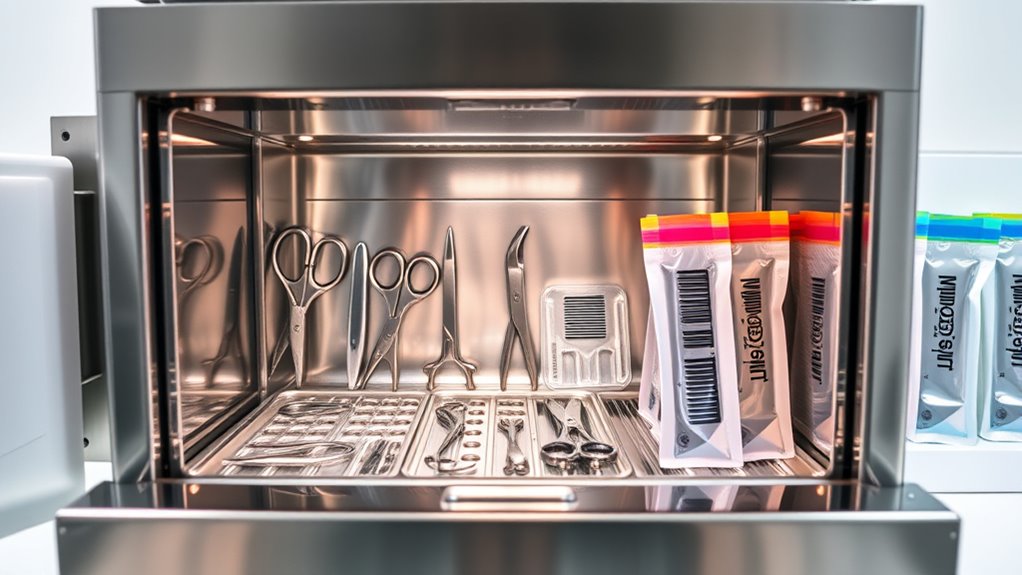

Sterilization in salons ensures your tools are free from harmful microbes, protecting client and staff health. Autoclaves use high-pressure steam to destroy bacteria, fungi, and viruses effectively, making them essential for metal tools. Other methods include chemical disinfectants and UV sterilization, which suit different tools and situations. Following proper procedures, maintenance, and adhering to health standards keeps your salon safe. Keep exploring to learn how to implement these practices correctly and maintain top hygiene standards.
Key Takeaways
- Autoclaves use high-pressure steam to effectively sterilize salon tools, eliminating bacteria, viruses, and spores.
- Proper sterilization ensures tools are safe, hygienic, and prevents cross-contamination between clients.
- Regular maintenance and correct procedures are essential for autoclaves to function effectively and reliably.
- Complementary sterilization methods include chemical disinfectants, UV sterilization, and surface wipes for various tools.
- Staff training and adherence to health regulations ensure consistent, professional hygiene standards in salons.

18L Autoclave Sterilizer – Tabletop Class N High Pressure Steam Sterilizer Autoclave Machine with Digital Control, Fast Cycle & Secure Door Lock – for Tattoo, Dental, Beauty Salon & Lab
EFFICIENT AUTOCLAVE STERILIZER – Efficient Steam Sterilization for Daily Use with preset programs: 121°C / 30 min and…
As an affiliate, we earn on qualifying purchases.
As an affiliate, we earn on qualifying purchases.
Understanding the Importance of Sterilization in Salons
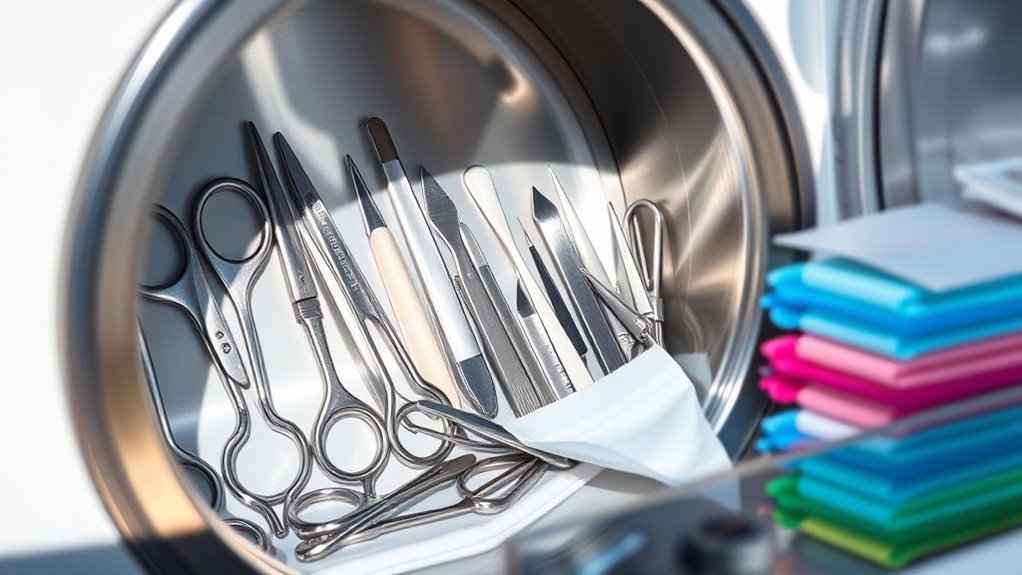
Sterilization plays a crucial role in maintaining a safe and hygienic salon environment. By following proper sterilization protocols, you prevent tool infection, safeguarding both clients and staff. When tools aren’t adequately sterilized, bacteria, viruses, and fungi can transfer easily, leading to infections and cross-contamination. Implementing strict sterilization procedures ensures that every tool is thoroughly disinfected, reducing health risks. It’s fundamental to understand that sterilization isn’t just an additional step; it’s a core part of professional salon practice. Proper sterilization protects your reputation and builds trust with clients, who expect a clean, safe space. Regularly reviewing and adhering to sterilization protocols helps maintain high standards of hygiene, ultimately supporting your salon’s success and commitment to client safety.

Lothee 10 Pack Cuticle Trimmer with Pusher 200 Count Self Sealing Sterilization Pouches, Professional Stainless Steel Cuticle Nipper Remover Cutter Manicure Pedicure Tools Kit for Home Salon Nail Care
Professional Nail Care Kit with Hygiene Protection: elevate your nail care routine with this comprehensive cuticle nippers set;…
As an affiliate, we earn on qualifying purchases.
As an affiliate, we earn on qualifying purchases.
Types of Tools That Require Proper Sterilization
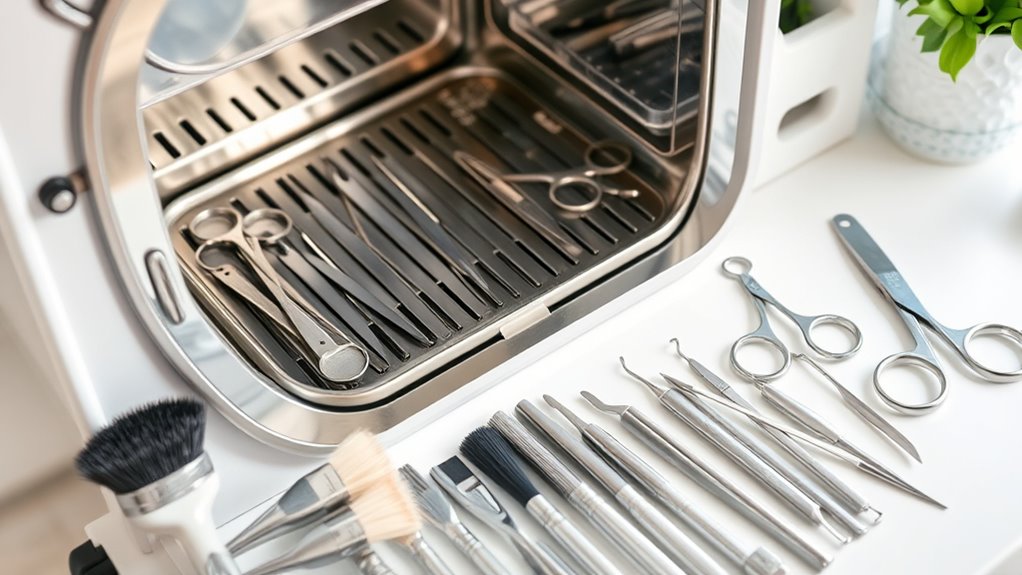
Maintaining proper sterilization routines means knowing which tools need thorough disinfection to prevent cross-contamination. Certain tools, like metal instruments such as scissors, clippers, and cuticle pushers, must follow strict sterilization protocols to eliminate all microorganisms. Non-porous tools made of glass or stainless steel are generally compatible with sterilization methods like autoclaving. However, some tools, like plastic or rubber items, may not withstand high temperatures and require chemical sterilants or disinfectants instead. It’s crucial to understand tool material compatibility to avoid damage and ensure effective sterilization. Properly identifying which tools need sterilization and selecting appropriate methods safeguards your clients’ health and maintains salon hygiene standards. Additionally, understanding the importance of educational toys in promoting awareness of safety and hygiene can help staff stay informed about best practices.
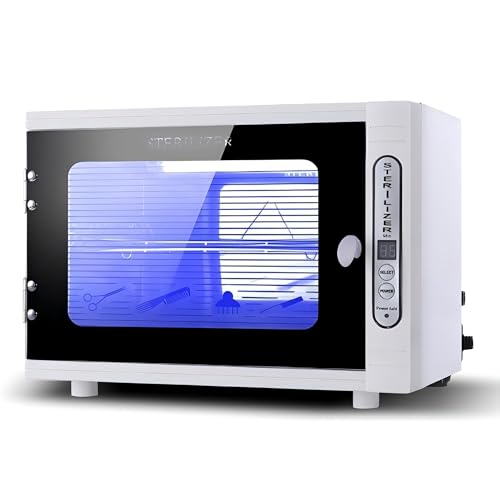
Smiledt Nail Tool Sterilizers UV 12L Lighting Autoclave Machine for Labs, Salons & Home
The Smiledt 12L Lighting Autoclave Machine uses 253nm lighting to Less 99.9%—no heat, no burns, no odors. Perfect…
As an affiliate, we earn on qualifying purchases.
As an affiliate, we earn on qualifying purchases.
How Autoclaves Work to Kill Microorganisms
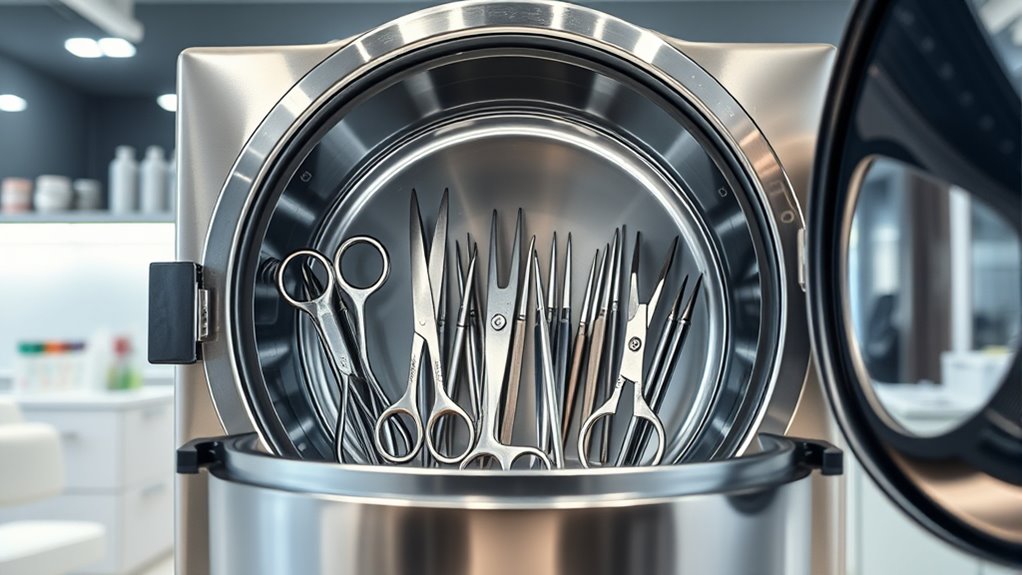
Autoclaves kill microorganisms using high-temperature steam, which denatures their proteins and destroys cell structures. The pressure inside the autoclave helps reach temperatures above boiling, ensuring thorough sterilization. This combination effectively eliminates all microbes, keeping your tools safe for salon use. Additionally, proper tool sanitizing practices are essential to maintain a sterile environment and prevent cross-contamination.
High-Temperature Steam Effect
When high-temperature steam is applied through an autoclave, it effectively destroys microorganisms by denaturing their proteins and cell membranes. This process, known as high temperature sterilization, guarantees your tools are safe and hygienic. The steam penetrates every crevice, reaching areas that other methods can’t, assuring thorough sterilization. The intense heat causes cellular damage, killing bacteria, fungi, and viruses instantly. Proper equipment maintenance ensures the autoclave functions effectively and prolongs its lifespan. Imagine the peace of mind knowing your tools are truly sanitized, protecting your clients and reputation.
Pressure’s Role in Sterilization
Pressure plays an essential role in sterilization by allowing steam to reach higher temperatures more efficiently. This is due to pressure dynamics that increase steam temperature, enhancing sterilization efficiency. When you operate an autoclave, the buildup of pressure raises the boiling point of water, enabling it to kill microorganisms more effectively. Here’s how pressure influences the process: 1. It elevates steam temperature beyond 100°C, crucial for thorough sterilization. 2. It speeds up heat transfer, ensuring all tools are exposed evenly. 3. It prevents condensation, maintaining consistent steam conditions. 4. It reduces sterilization cycle times, increasing efficiency without compromising safety. Additionally, understanding the importance of proper sterilization techniques ensures effective microbial elimination and safety.
Microorganism Elimination Process
Ever wondered how autoclaves effectively eliminate microorganisms? They use high-pressure steam and heat to disrupt microbial cells, overcoming resistance that some microbes develop. This process aligns with strict disinfection protocols, ensuring tools are thoroughly sterilized. Autoclaves reach temperatures of 121-134°C, destroying bacteria, viruses, and spores. The key is sustained heat and pressure, which penetrate all surfaces, killing even resistant microbes. Here’s a quick overview:
| Step | Purpose |
|---|---|
| Heating | Raises temperature to kill microbes |
| Steam Pressure | Ensures heat penetrates all surfaces |
| Exposure Time | Provides sufficient contact duration |
| Cool Down | Stabilizes tools for safe handling |
| Validation | Confirms sterilization effectiveness |
This process guarantees that tools are safe, even against microbial resistance. Proper sterilization techniques are essential to maintain safety standards in salons.

BARBICIDE Half Gallon Disinfectant Concentrate | EPA-Registered, Hospital-Grade Germicide for Salons & Barbershops | Anti-Rust Solution for Shears, Combs & Professional Tools | EPA-Registered
THE GOLD STANDARD SINCE 1947: Trust the iconic blue formula used by barbers, salons, and spas worldwide for…
As an affiliate, we earn on qualifying purchases.
As an affiliate, we earn on qualifying purchases.
Step-by-Step Process of Using an Autoclave
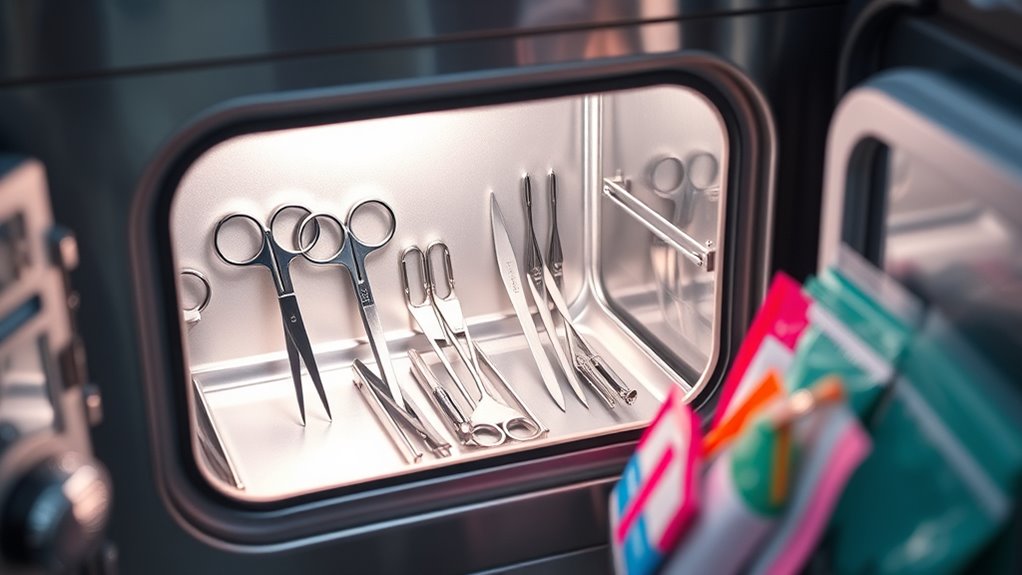
To start, you need to carefully prepare your tools by cleaning and arranging them properly inside the autoclave. Next, you’ll run the machine according to the manufacturer’s instructions, ensuring the correct temperature and cycle time. Following these steps helps guarantee that your tools are properly sterilized and ready for use. Regular maintenance and checking for autoclave functionality are also essential to ensure effective sterilization.
Preparing the Tools
Before placing tools in the autoclave, make certain they are thoroughly cleaned and dried. Proper preparation guarantees effective sterilization and extends tool lifespan. Here’s what you should do:
- Remove all visible debris and residue from tools using a brush or ultrasonic cleaner.
- Dry tools completely to prevent moisture from affecting sterilization.
- Store tools in designated, clean containers or trays, respecting your sanitization scheduling.
- Organize tools for easy loading into the autoclave, ensuring they don’t touch each other or the sides.
- Remember that good hygiene practices are essential for maintaining safety and preventing cross-contamination in your salon.
This process helps maintain proper tool storage habits and guarantees sterilization effectiveness. Properly prepared tools reduce contamination risks and ensure compliance with salon hygiene standards. Always double-check that tools are dry and correctly stored before autoclaving.
Running the Autoclave
Once your tools are thoroughly cleaned, dried, and properly stored, it’s time to load them into the autoclave. Place the tools in the sterilization pouch or tray, ensuring they aren’t overcrowded to allow steam circulation. Follow autoclave safety guidelines by wearing gloves and avoiding direct contact with hot surfaces. Close the lid securely and select the appropriate cycle based on your tools’ material and manufacturer instructions. Many sterilization myths suggest autoclaves are complicated, but proper operation is straightforward with clear steps. Run the cycle, and once complete, carefully unload the sterilized tools. Remember, effective sterilization depends on correct cycle settings and safety precautions, ensuring your tools are fully sanitized and safe for client use. Understanding the importance of proper sterilization techniques can help maintain a safe and hygienic salon environment.
Other Methods of Tool Sanitization and When to Use Them
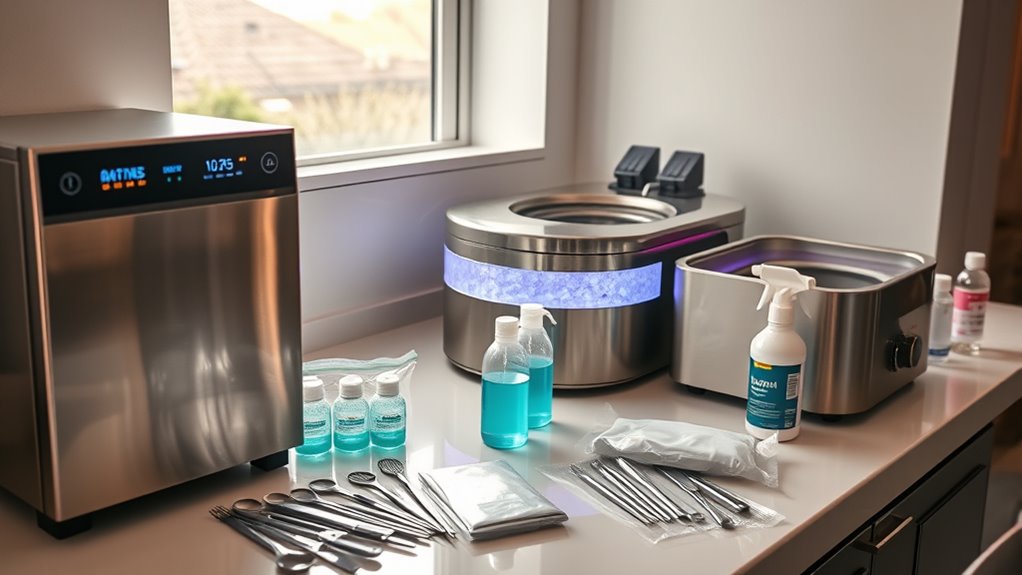
Aside from standard sterilization methods, there are several other techniques you can use to keep salon tools safe and hygienic. UV sterilization: Use UV light to quickly sanitize tools, especially for items that can’t withstand heat or chemicals. It’s effective for surface disinfection in a short time. Chemical disinfectants: Apply approved disinfectants for tools requiring a quick, cost-effective solution, such as brushes or combs. Follow manufacturer instructions carefully. Wipes and sprays: Use pre-moistened disinfectant wipes or sprays for spot cleaning between clients, especially on non-porous surfaces. Soaking solutions: Submerge tools in disinfectant solutions for the recommended time to ensure thorough sanitization when sterilization isn’t feasible. Incorporating diverse designs and materials can help tailor your sanitizing practices to different types of tools and their specific needs. Choose the right method based on tool material and use frequency.
Regulations and Standards for Salon Hygiene
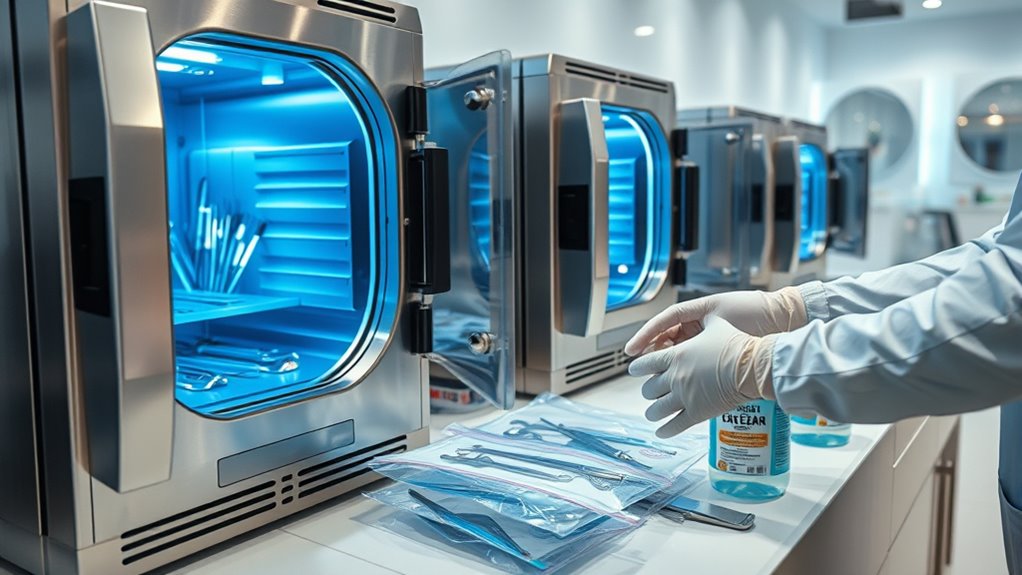
Maintaining high standards of hygiene in salons is governed by strict regulations and industry standards designed to protect clients and staff alike. You must guarantee legal compliance by following local health codes and sanitation laws that specify proper sterilization and cleaning procedures. Certification standards set the minimum requirements for hygiene practices, including autoclave use, tool sanitization, and facility cleanliness. Staying up-to-date with these regulations helps you avoid penalties and reassures clients about your commitment to safety. Regular staff training on hygiene protocols is essential to meet these standards consistently. By adhering to established regulations and certification standards, you create a safe environment, demonstrate professionalism, and foster trust with your clients, ultimately supporting your salon’s reputation and success. Proper sterilization techniques are crucial for ensuring the effectiveness of autoclaves and other sanitation methods.
Maintaining and Troubleshooting Autoclaves
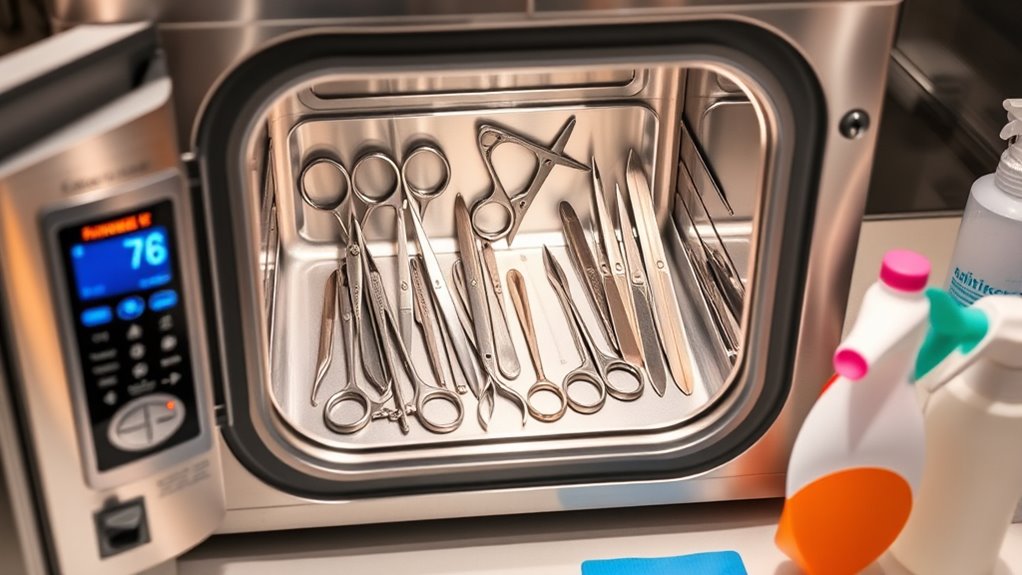
Autoclaves are essential for ensuring that salon tools are properly sterilized, but they require regular maintenance and troubleshooting to function effectively. To keep your autoclave in top shape, follow these steps:
- Check seals and gaskets regularly for wear and replace if damaged to maintain pressure.
- Clean the chamber and filters after each use to prevent buildup that could hinder performance.
- Verify the water level and quality, using distilled water to avoid mineral deposits.
- Inspect the pressure and temperature gauges to ensure accurate readings, and troubleshoot autoclave issues promptly if discrepancies arise.
Best Practices for Safe and Effective Tool Handling

To guarantee your salon tools are safe and effective for client use, it’s crucial to handle them with proper techniques every time. Follow strict disinfection protocols before and after each service to minimize contamination. Use sterilization equipment correctly, ensuring tools are thoroughly cleaned prior to sterilization to maximize effectiveness. Always wear gloves during handling to prevent cross-contamination and avoid touching sanitized surfaces unnecessarily. Store sterilized tools in clean, dry containers to maintain their cleanliness until use. Keep track of sterilization cycles and regularly maintain your sterilization equipment to ensure it functions properly. Consistent adherence to these best practices not only protects your clients but also upholds your salon’s reputation for safety and professionalism. Proper handling is essential for effective, hygienic service delivery.
Tips for Educating Staff and Clients About Sanitization
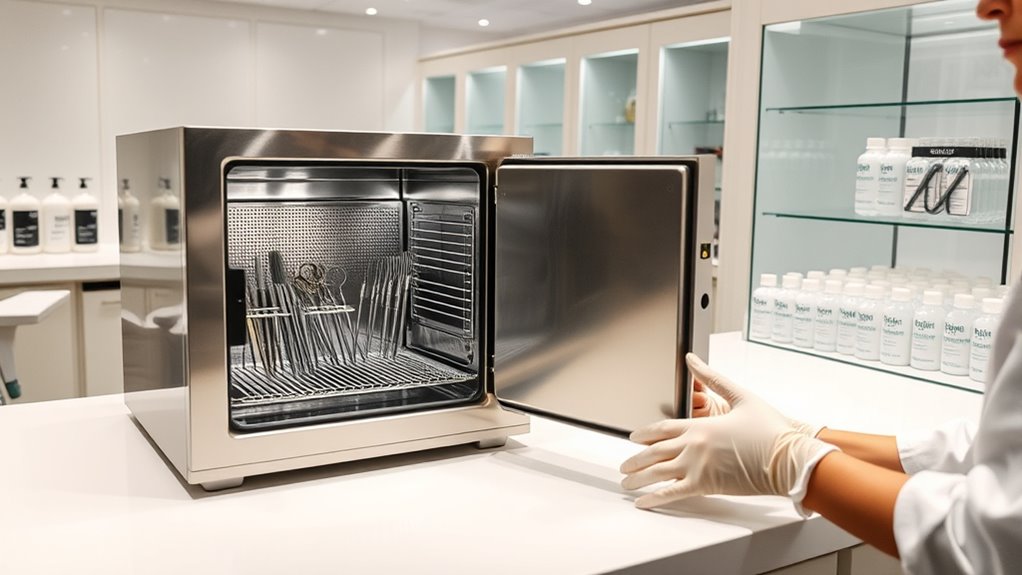
Educating your staff and clients about proper sanitization practices is essential for ensuring a safe and hygienic salon environment. Effective client education builds trust and encourages cooperation, while staff training guarantees consistent application of protocols. To do this:
- Demonstrate proper tool sanitizing techniques during staff training sessions.
- Use clear signage and visual aids to explain sanitization procedures to clients.
- Offer brief informational materials that outline the importance of sterilization.
- Regularly review and update training and educational materials to stay current with best practices.
Frequently Asked Questions
How Often Should Autoclaves Be Serviced or Inspected?
You should schedule autoclave maintenance and inspections at least once a year to meet sterilization standards. Regular servicing guarantees your autoclave functions properly, preventing contamination risks. Additionally, daily checks of gauges and seals are essential for safe operation. By adhering to these schedules, you maintain high sterilization standards, protect your clients, and extend the lifespan of your equipment. Always follow manufacturer guidelines for specific maintenance intervals and procedures.
Are There Specific Sterilization Protocols for Different Salon Environments?
Did you know that salons with diverse services often adopt customized sterilization protocols? Different salon types, such as nail salons or barbershops, require tailored procedures to guarantee safety and compliance. You should develop specific sterilization protocols for each environment, considering the tools used and clientele needs. This approach helps prevent cross-contamination and meets health regulations, keeping your clients safe and your salon reputable.
Can Different Sterilization Methods Be Combined Effectively?
Yes, you can combine sterilization methods effectively to enhance sterilization synergy. By integrating techniques like chemical disinfectants with autoclaving, you guarantee thorough sterilization, reducing risks of contamination. Combining methods allows you to target different microorganisms and surface types more thoroughly. Just make sure to follow proper protocols for each method and allow appropriate contact times to maximize effectiveness and keep your tools safe and sanitized for clients.
What Are the Signs of Autoclave Malfunction or Failure?
You notice your autoclave making unusual mechanical noises or alarm sounds unexpectedly. These signs often indicate malfunctions or failures. If the alarms activate or you hear irregular noises, it’s a cue to stop and inspect the device immediately. Such issues can mean problems with the heating element, pressure system, or sensors. Addressing these signs promptly helps guarantee proper sterilization and avoids compromising your tools’ safety and sanitation.
How Do Sterilization Practices Impact Client Safety and Satisfaction?
Sterilization practices directly boost client trust and enhance service quality. When you follow proper protocols, clients feel confident in your cleanliness and safety standards, leading to higher satisfaction. Consistently sanitized tools prevent infections and cross-contamination, showing you prioritize their well-being. As a result, clients are more likely to return and recommend your salon, reinforcing your reputation for professionalism and exceptional care.
Conclusion
By mastering sterilization methods like autoclaves, you’ll guarantee your salon remains a sanctuary of safety—no more risking the plague like in olden times. Consistently sanitizing your tools not only protects your clients and staff but also boosts your reputation. Keep up with regulations, educate your team, and stay vigilant. Remember, in this modern age, cleanliness is your best armor, so embrace the science behind sterilization and keep your salon shining like a knight’s armor in a medieval court.