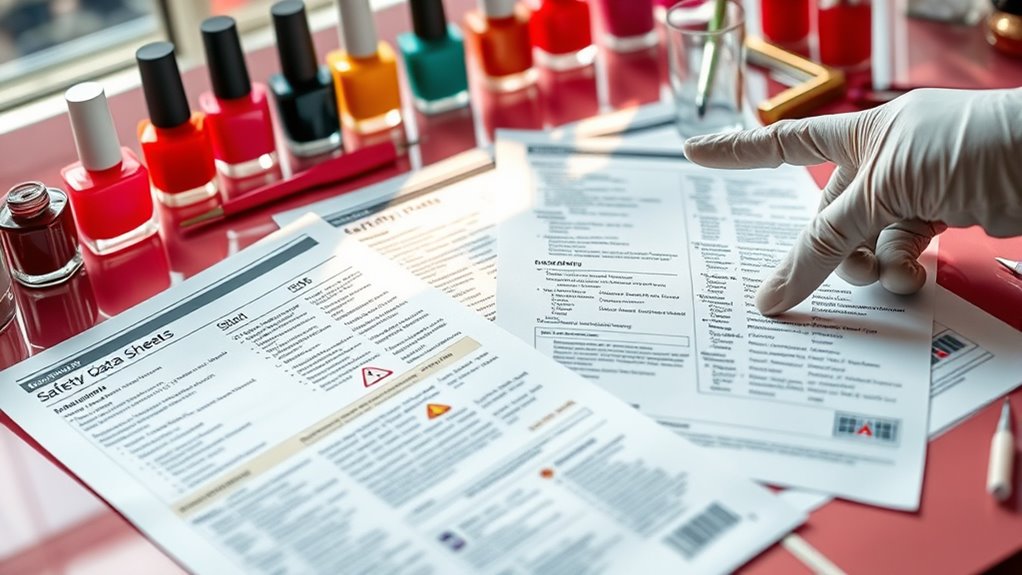

To understand MSDS or SDS for nail products, you need to check the safety data sheet for essential info on hazards, handling, safety measures, and emergency steps. Look for clear identification, hazard symbols, and labels that show risks like flammability or toxicity. Follow the safety instructions for storage, PPE, and first-aid. If you keep exploring further, you’ll gain detailed knowledge to keep yourself safe while working with these chemicals.
Key Takeaways
- Access SDS via product labels, QR codes, or manufacturer websites, and ensure you’re reviewing the most current version.
- Identify product details, chemical composition, hazards, and recommended safety precautions to understand potential risks.
- Recognize hazard symbols and labels to quickly assess flammability, toxicity, and corrosiveness of nail products.
- Follow SDS instructions for proper handling, storage, and use of PPE to prevent accidents and health hazards.
- Review emergency procedures and ensure correct storage and compatibility to maintain a safe work environment.
What Is a Safety Data Sheet and Why Is It Important?
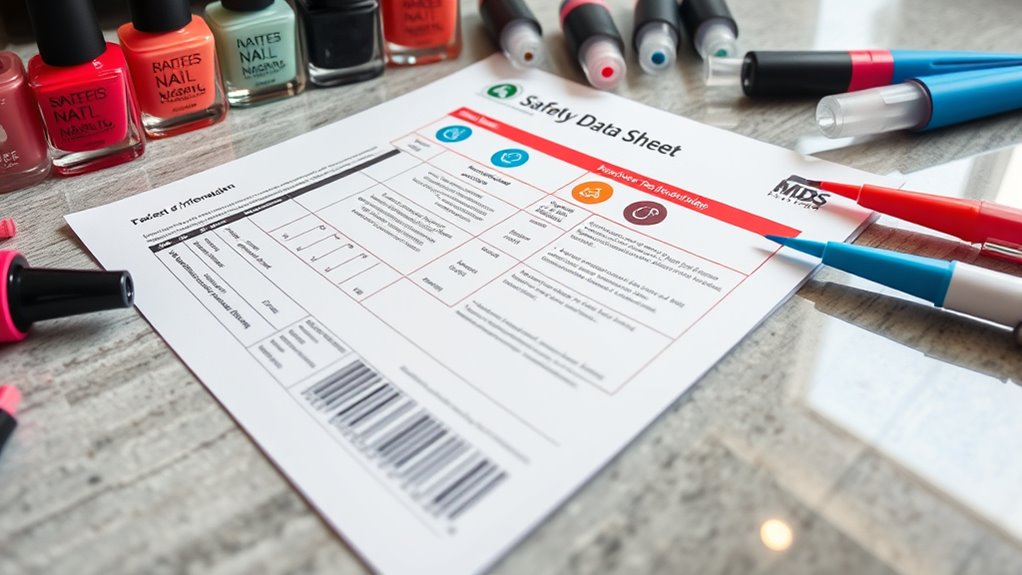
Have you ever wondered how workers stay safe when handling hazardous materials? That’s where a Safety Data Sheet (SDS) comes in. It provides vital information about chemical hazards, including how to recognize dangers and implement safety precautions. An SDS outlines the risks associated with a product, such as toxicity or flammability, so you understand what you’re dealing with. It also offers guidance on safe handling, storage, and emergency measures. By reviewing an SDS before working with nail products, you can prevent accidents and protect your health. Forsale 100 is an essential tool for maintaining a safe work environment. Essentially, an SDS is your go-to resource for understanding the hazards and safety precautions necessary to stay safe when managing potentially hazardous chemicals.
How to Locate and Access SDSs for Nail Products
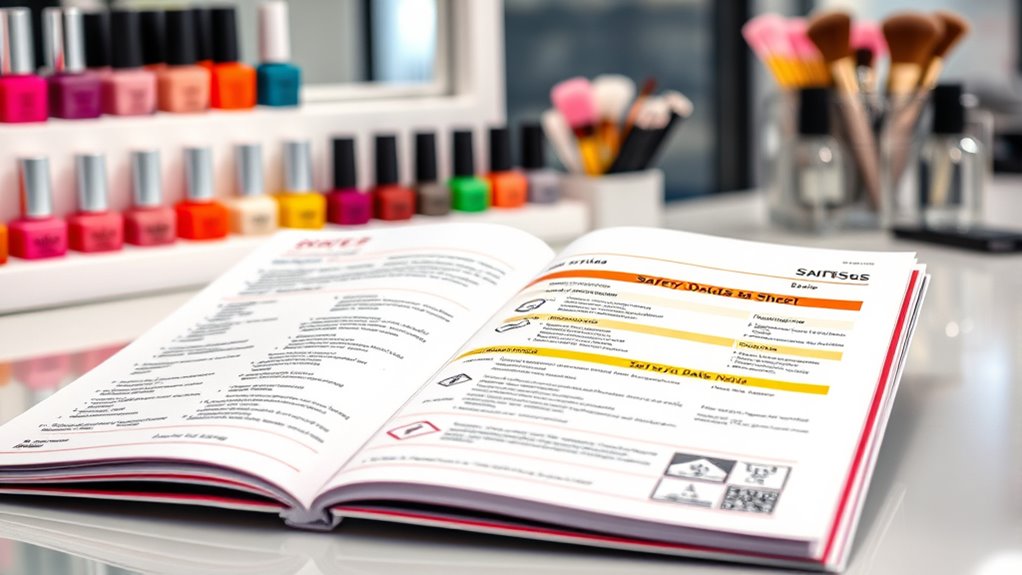
To find SDSs for nail products, start by checking the product packaging, as many manufacturers include a QR code or website link that directs you to the safety data sheet online. Look closely at the label’s product labeling section; it often provides contact information for the manufacturer. If you can’t locate the SDS through packaging, visit the manufacturer’s website directly—most companies host safety data sheets in their support or product information sections. You can also contact the manufacturer directly using the contact details provided on the label for assistance. Accessing SDSs is vital for understanding hazards and safety precautions. Always ensure you’re reviewing the most recent version to stay updated on safety guidelines for nail products. Additionally, understanding regulatory compliance associated with SDSs can help ensure you follow legal safety requirements.
Understanding the Section on Identification and Product Details

Ever wondered what information is most critical when reviewing an SDS? The section on identification and product details provides essential info like the product name, intended use, and supplier contact. You’ll find product identification details that clarify exactly which nail product you’re dealing with, helping you avoid mix-ups. Manufacturer details are also included, giving you the company’s name, address, and emergency contact info—vital if you need to report an incident or get additional safety guidance. This section guarantees you can quickly verify the product’s identity and reach out to the right contacts if necessary. Understanding the product’s chemical composition helps in assessing potential hazards and handling the product safely. By understanding this part of the SDS, you’re better equipped to handle nail products safely and respond appropriately in case of exposure or spills.
Recognizing Hazard Information and Precautionary Measures

Once you’ve identified the product and confirmed its details, the next step is to recognize the hazard information and precautionary measures listed on the SDS. Look for chemical labeling that highlights specific hazards, such as flammability or health risks. Hazard symbols play a key role, providing quick visual cues about potential dangers—like corrosive or toxic effects. These symbols and labels help you understand the risks associated with the nail products, guiding you to handle them safely. Pay close attention to precautionary statements, which offer instructions on safe storage, handling, and disposal. Recognizing these warning signs guarantees you take appropriate steps to protect yourself and others from potential harm while working with these products.
Interpreting First-Aid and Fire-Fighting Instructions
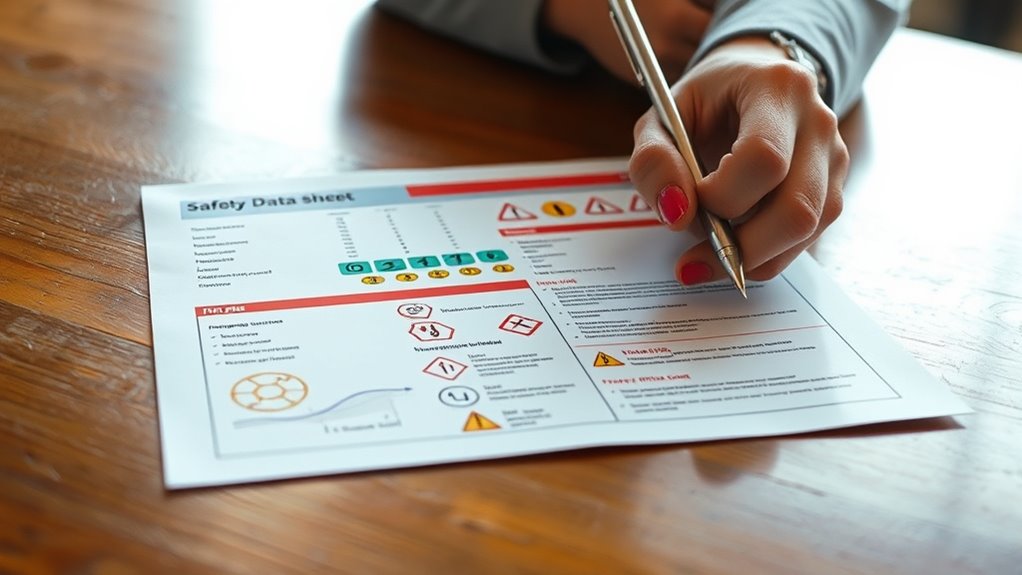
Are you confident in understanding the first-aid and fire-fighting instructions on an SDS? These instructions are critical during emergencies, guiding you on how to respond effectively to chemical reactions or accidents. First-aid measures detail immediate steps, such as rinsing eyes or removing contaminated clothing, to minimize harm. Fire-fighting instructions specify suitable extinguishing agents and precautions to prevent escalation, considering potential chemical reactions that could intensify flames or produce toxic fumes. Pay close attention to specific warnings about hazards like reactivity or toxicity. Knowing these instructions helps you act swiftly and safely, ensuring proper emergency procedures are followed to protect yourself, others, and the environment. Always review these sections thoroughly before working with any nail product. Additionally, understanding the potential hazards in a bedroom setting can help you recognize and mitigate risks related to various materials and decor items.
Reviewing Handling, Storage, and Disposal Guidelines

You need to follow proper storage procedures to keep yourself safe and prevent accidents. Make sure you understand the guidelines for waste disposal to avoid environmental harm. Reviewing these handling, storage, and disposal instructions is essential for responsible chemical management.
Proper Storage Procedures
Proper storage procedures are essential to maintain safety and prevent accidents when handling materials listed on an MSDS. To guarantee storage safety, always keep products in a cool, dry, well-ventilated area away from heat sources or open flames. Proper container labeling is vital; clearly mark each container with the product name, hazard warnings, and expiration date. Store incompatible substances separately to avoid dangerous reactions. Regularly inspect containers for leaks or damage, and promptly address any issues. Follow manufacturer instructions for storage conditions, and never store products in unmarked or unlabeled containers. Maintaining organized, labeled storage helps you quickly identify hazards and reduces the risk of accidental misuse or spills. Prioritizing these storage safety practices helps keep your workspace secure. Additionally, understanding the importance of data privacy challenges in related fields emphasizes the need for careful handling and secure storage of sensitive information.
Waste Disposal Guidelines
Handling, storing, and disposing of waste materials safely is essential for maintaining a secure and compliant workspace. Proper disposal minimizes environmental impact and promotes waste minimization. Always segregate hazardous from non-hazardous waste and use designated containers. Store waste in well-ventilated areas away from ignition sources. Dispose of waste according to local regulations, avoiding illegal dumping. Here’s a quick guide:
| Waste Material | Disposal Method |
|---|---|
| Nail polish remover | Hazardous waste container |
| Dried nail polish | Regular trash if permitted |
| Acrylic powders | Specialized waste disposal |
| Solvent residues | Certified waste disposal service |
| Old applicators | Recycle or trash if clean |
Following these steps helps protect the environment and keeps your workspace safe. Utilizing appropriate disposal methods can also prevent potential health hazards associated with improper handling of hazardous substances.
Tips for Safely Using Nail Products Based on SDS Information
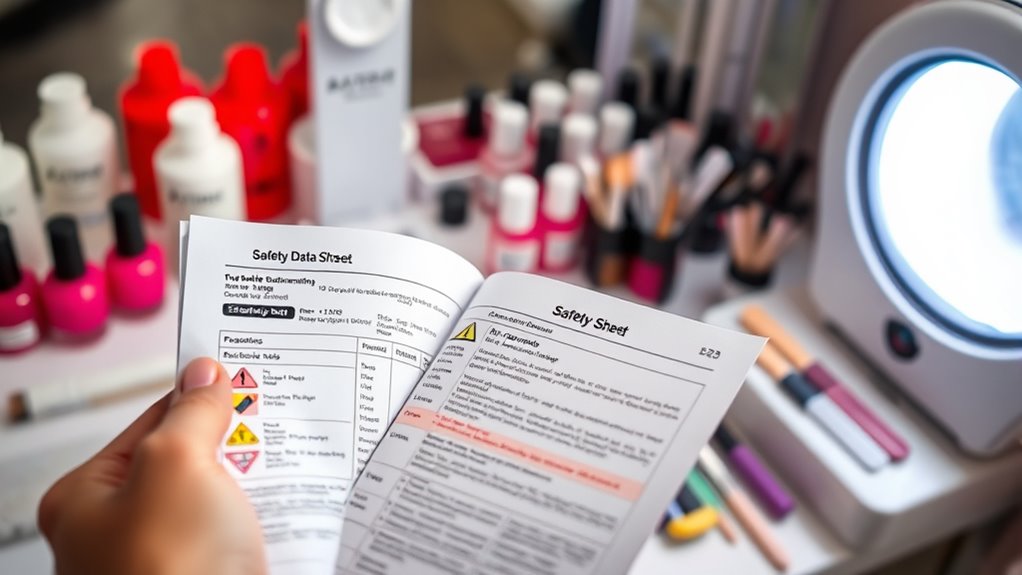
To use nail products safely, start by clearly recognizing hazard symbols on labels to understand the risks. Always follow proper handling guidelines to prevent accidents, and don’t forget to wear personal protective equipment like gloves and masks. These steps help protect you and make certain safe usage every time. Additionally, understanding industry trends can help you stay informed about safer product options and best practices.
Identify Hazard Symbols Clearly
Understanding hazard symbols on your SDS is essential for safely using nail products. These hazard symbols, also known as safety icons, quickly communicate the risks associated with a product. Recognizing these symbols helps you understand potential hazards like toxicity, flammability, or skin irritation. For example, a flame icon indicates flammability, while a skull and crossbones warn of poisoning. Pay close attention to these symbols on the SDS and the product packaging. They guide you in handling and storing nail products properly. By clearly identifying hazard symbols, you can take appropriate precautions and prevent accidents. Remember, these safety icons are designed to protect you, so always read and interpret them carefully before use. Understanding hazard symbols is crucial for safe handling and effective risk management.
Follow Proper Handling Guidelines
Have you ever wondered how to use nail products safely? Following proper handling guidelines is essential to prevent accidents and health issues. Your SDS provides vital information about chemical interactions, helping you understand which products can be safely mixed or stored together. Always pay attention to the labeling standards on each container; labels indicate hazards and proper handling procedures. When handling nail products, avoid creating spills or inhaling fumes, which can result from improper use. Store products in designated areas, away from incompatible substances. By adhering to these guidelines, you reduce risks and guarantee safe, effective application. Remember, understanding your SDS helps you make informed decisions about handling nail products responsibly. Additionally, chemical compatibility is crucial for preventing dangerous reactions when storing or mixing products.
Use Personal Protective Equipment
Since SDS information highlights potential hazards, it’s crucial to always wear the appropriate personal protective equipment (PPE) when working with nail products. PPE protects you from chemical exposure and skin irritation. Safety gloves are essential, especially when handling corrosive or irritating substances. Always inspect your PPE before use and replace damaged items. Use safety goggles to prevent eye contact and a mask if fumes are present. Proper PPE use minimizes risks and ensures safe handling. Additionally, understanding Reviews – Healthy Kid Play can help you select durable and safe gear for children during playtime, emphasizing the importance of safety and quality. Here’s a quick guide:
| PPE Type | Purpose | When to Use |
|---|---|---|
| Safety gloves | Protect skin from chemicals | During mixing or application |
| Safety goggles | Prevent eye contact | When working with liquids |
| Mask | Avoid inhalation of fumes | During sanding or fumes exposure |
| Apron | Keep clothes clean | During spills or splashes |
| Respirator | Filter harmful vapors | When working in poorly ventilated areas |
Frequently Asked Questions
How Often Should SDSS for Nail Products Be Updated?
You should update SDSs for nail products whenever there’s a change in ingredients, formulas, or safety information, ensuring product safety and regulatory compliance. Regular reviews, at least annually, are recommended to keep information current. Staying proactive helps you identify hazards, maintain safety standards, and meet legal requirements, so your team always has accurate, up-to-date data for proper handling and emergency response.
Are SDSS Mandatory for All Nail Salon Products?
Think of MSDS as the blueprint of safety for your salon; yes, they’re mandatory for all nail products. You need to pay close attention to product labeling and hazard classification to keep everyone safe. These sheets provide essential info about potential risks and proper handling. Without them, you’re steering a storm without a compass. So, always make certain your products have up-to-date MSDS to maintain a safe, compliant environment.
Can SDSS Indicate Allergen Information in Nail Products?
Yes, SDSS can indicate allergen information in nail products through allergen labeling. They provide details on chemical composition, including potential allergens that might trigger sensitivities. By reviewing the Safety Data Sheet, you can identify specific ingredients and allergens, helping you make informed choices and guarantee safety. Always check the SDSS for allergen labeling to protect yourself from possible allergic reactions and maintain a safe salon environment.
How Do I Interpret Symbols or Pictograms on SDSS?
You interpret symbols or pictograms on SDSs by knowing their meanings, which are hazard symbols or pictogram meanings. These symbols quickly communicate risks like toxicity, flammability, or health hazards. When you see hazard symbols, pay attention to their colors and images, as they tell you what precautions to take. Familiarizing yourself with these pictogram meanings helps you understand the hazards associated with nail products and stay safe during use.
Are There Language Requirements for SDSS in the Nail Industry?
Yes, there are language compliance requirements for SDSS in the nail industry. You need to guarantee safety data sheets are available in the official languages of your region, following translation standards. This helps you and your staff understand hazards and safety measures clearly. Always verify that the SDSS are accurately translated and meet local regulations to maintain safety and legal compliance in your workspace.
Conclusion
By mastering SDSs, you become both a cautious observer and an informed user. Think of the safety data sheet as your map—guiding you safely through the intricate landscape of nail products, much like a lighthouse illuminating treacherous waters. With this knowledge, you’re not just avoiding hazards; you’re confidently crafting beauty while keeping safety at the forefront. Remember, understanding what’s beneath the surface makes all the difference in creating a safe, stunning manicure.