You should wash or sanitize your hands at key moments during a nail appointment to stay hygienic. Do this before entering the salon, after removing jewelry or touching your face, and after any surface contact or sneezing. It’s also important to wash after nail prep and before polish application. Finally, sanitize again before leaving. These steps help prevent germs from spreading. If you keep going, you’ll discover even more tips for maintaining a safe, clean experience.
Key Takeaways
- Sanitize or wash hands upon entering the salon before starting the appointment.
- Rewash or sanitize hands after removing jewelry or touching face or hair.
- Wash or sanitize hands after filing or cuticle work before applying polish.
- Re-sanitize hands if sneezing, coughing, or touching masks during the appointment.
- Sanitize hands again before leaving the salon to prevent germ transfer outside.

Have you ever wondered when the most significant moments are to wash your hands during a nail appointment? It’s a good question, especially when hygiene plays such an essential role in preventing infections and ensuring a safe, clean experience. As a client, your awareness of key handwashing moments can help you feel more confident in the process. Nail technician hygiene is fundamental, but your own actions, like client hand sanitization, also matter. Knowing when to wash your hands or use hand sanitizer can make a big difference in maintaining a hygienic environment.
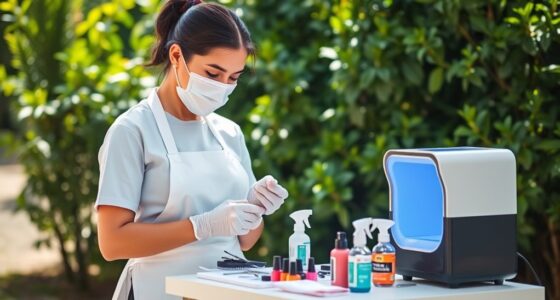
The first critical moment is right before the nail technician begins any work on your nails. When you arrive, take a moment to sanitize your hands. Many salons now encourage clients to use hand sanitizer upon entry, which helps reduce the transfer of germs from your hands to tools and surfaces. This step is simple but effective, setting a clean tone for the entire procedure. Once you’ve sanitized your hands, you can relax knowing that you’ve already taken a proactive step in protecting both yourself and the technician.
Another key point is after you’ve been asked to remove your jewelry or if you’ve touched your face, hair, or other surfaces during the appointment. Anything that could transfer bacteria or dirt onto your nails or tools should prompt you to wash or sanitize your hands again. This is especially important if you’ve sneezed, coughed, or touched your mask. Your technician’s focus on nail technician hygiene is essential, but your commitment to client hand sanitization reinforces a safe environment for everyone involved. Maintaining proper hygiene practices is crucial for preventing the spread of germs effectively, especially in settings where natural pools or other shared spaces are involved. Being aware of common causes for heat pump failure can also help you understand the importance of consistent hygiene—regular cleaning and proper maintenance are key to avoiding issues.
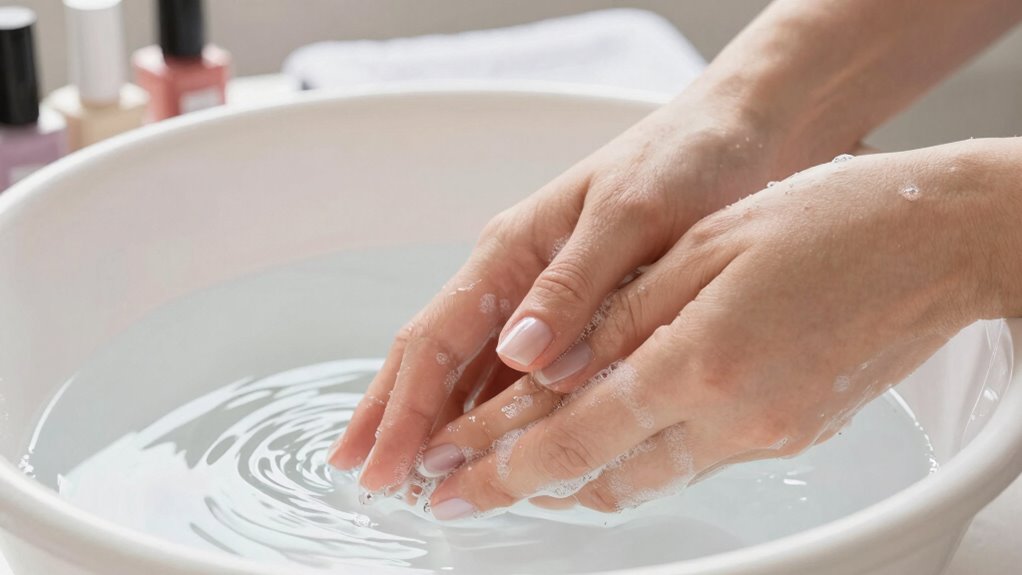
Additionally, after the technician has completed the nail prep, such as filing or cuticle work, it’s wise to wash your hands before the polish application. This ensures no residual debris or oils interfere with the polish’s adhesion, but it also maintains hygiene standards. Incorporating proper hand hygiene into your routine can further enhance overall cleanliness during your visit. If you’re uncomfortable washing your hands in the sink, using hand sanitizer with at least 60% alcohol is an acceptable alternative, especially if you’re in a busy salon where water access might be limited. Practicing proper hygiene during your appointment helps prevent the spread of germs and keeps everyone safer.
Finally, after the appointment concludes, consider sanitizing your hands again before leaving. This extra step is a final safeguard, ensuring you leave with clean hands and minimizing the risk of spreading germs outside the salon. While nail technician hygiene is meticulously maintained in reputable salons, your proactive effort in client hand sanitization amplifies overall safety. Paying attention to these moments keeps your experience both beautiful and hygienic, giving you peace of mind every step of the way.

PURELL SINGLES Advanced Hand Sanitizer Gel, Fragrance Free, 125 Count Single-Use Travel-Size Packets – 9620-12-125EC (Pack of 1)
It's PURELL IN-A-PINCH – an easy, compact way to sanitize your hands. Just bend the pack and squirt…
As an affiliate, we earn on qualifying purchases.
As an affiliate, we earn on qualifying purchases.
Frequently Asked Questions
How Often Should I Wash My Hands During a Nail Appointment?
You should wash your hands frequently during your nail appointment to maintain nail hygiene and guarantee hand cleanliness. Make sure to wash your hands before the appointment, after touching any surfaces, and if you feel any dirt or residue. Proper handwashing minimizes bacteria transfer and keeps the process sanitary. Use soap and water, scrub well, and dry thoroughly. Regular handwashing during your appointment protects both your health and the technician’s.
What Handwashing Products Are Best for Nail Salons?
Think of handwashing products as guardians of nail hygiene. Opt for gentle, antibacterial soaps with added moisturizers to protect cuticle care while ensuring cleanliness. Foaming hand sanitizers with natural ingredients can be effective between washes. Avoid harsh chemicals that could damage nails. By choosing the right products, you create a shield of cleanliness, preserving the health of your clients’ cuticles and maintaining impeccable nail hygiene throughout the appointment.
Is Hand Sanitizer Effective Enough During Nail Appointments?
Hand sanitizer can be effective during nail appointments, especially when soap and water aren’t available. It kills most germs quickly, but its effectiveness comparison to handwashing with soap and water shows it’s slightly less thorough, especially against certain bacteria and viruses. You should use hand sanitizer for quick disinfecting moments, but always prioritize proper handwashing when possible, as it provides a more complete clean and removes dirt and grease better.
Should I Wash My Hands Before or After Nail Polish Application?
Imagine your hands as a blank canvas. You should wash them before your nail polish application as part of your pre-application routine, ensuring they’re clean and free of oils or dirt. After the polish dries, practice good post-application hygiene by washing your hands to remove any residual chemicals. This way, your nails stay fresh, and your manicure lasts longer. Proper handwashing enhances both hygiene and the beauty of your nails.
How Long Should Each Handwashing Moment Last?
You should wash your hands for at least 20 seconds each time to guarantee proper nail hygiene and maintain hand cleanliness. This duration is enough to remove dirt, oils, and germs effectively. During a nail appointment, wash your hands before starting to prep your nails and after finishing to prevent contamination. Proper handwashing helps keep your nails healthy, reduces infection risk, and ensures a clean, safe manicure process.

Artist hand Shampoo Stations for Salons Hair washing station Bowl and Drawer, Salon Sink Backwash Salon Station with USB, 110V Outlets, Hair Dryer Holes, and P Trap, Salon Equipment for Spa Beauty
Multifunctional shampoo station the function of shampoo, hairstyling, storage and charging. It features a deep ABS shampoo bowl,…
As an affiliate, we earn on qualifying purchases.
As an affiliate, we earn on qualifying purchases.
Conclusion
By paying attention to these handwashing moments during your nail appointment, you’re not just protecting your nails—you’re shielding your entire life from microscopic invaders. Imagine bacteria and germs fleeing in terror every time you wash your hands, realizing they stand no chance against your vigilant routine. It’s like having an invisible army defending your health, turning a simple handwash into a powerful act of self-care. So, wash like your life depends on it—because, honestly, it does!

Johnson's Baby Disposable Hand & Face Cleansing Wipes, Pre-Moistened Wipes Gently Remove 99% of Germs & Dirt from Delicate Skin, Paraben-, Phthalate- & Alcohol-Free, Hypoallergenic, 25 Count
25-count pack of Johnson's Baby Hand and Face Gentle Cleansing Wipes for quick & easy cleaning of your…
As an affiliate, we earn on qualifying purchases.
As an affiliate, we earn on qualifying purchases.

Dial Antibacterial Defense Liquid Hand Soap + Aloe, White Tea Scent, 11 Fl Oz (Pack of 4), Dermatologist-Tested Hand Wash, Gentle Formula
Gentle Formula: Dial up your handwashing routine with this antibacterial liquid hand soap that kills more than 99.9%…
As an affiliate, we earn on qualifying purchases.
As an affiliate, we earn on qualifying purchases.