After a gel or acrylic allergy, gently remove any remaining products using acetone-free solutions and give your nails time to recover by avoiding harsh chemicals and artificial nails. Moisturize regularly with nourishing oils, like cuticle oil or vitamin E, and protect your nails from environmental damage by wearing gloves and applying sunscreen. Incorporate nail strengthening and healing products, and consider nutrient supplements like biotin. For detailed tips on caring for sensitive nails, continue exploring how to support your nail health safely.
Key Takeaways
- Allow nails to rest and recover by avoiding polish, gels, or acrylics during healing periods.
- Keep nails moisturized with nourishing oils like cuticle oil or vitamin E to promote healing.
- Use gentle, acetone-free nail removers and avoid forceful removal techniques to prevent further damage.
- Protect nails from environmental stressors by wearing gloves and applying hand creams regularly.
- Support recovery with a balanced diet, including biotin, collagen, and zinc supplements to strengthen nails.
Recognizing and Managing Allergic Reactions
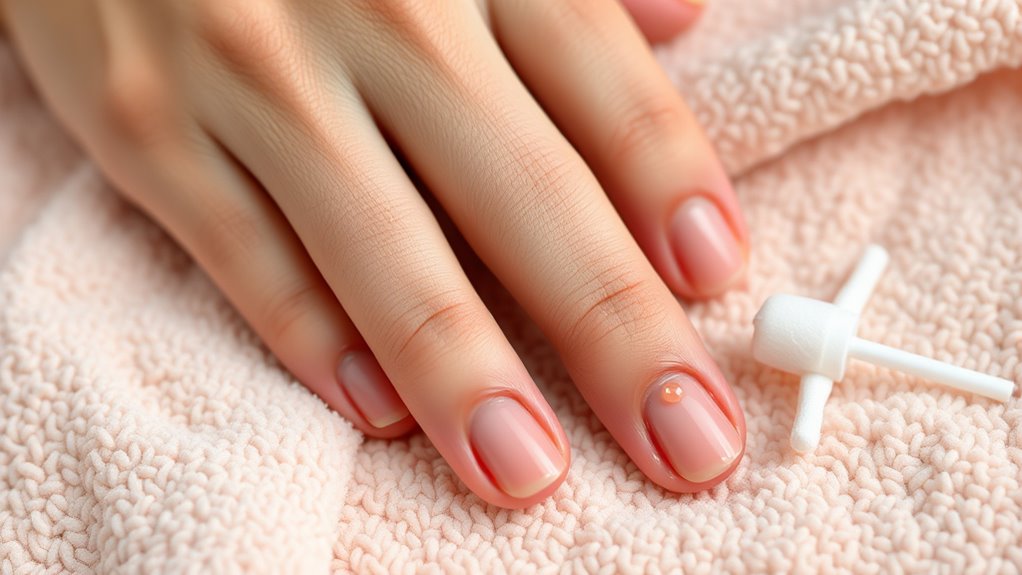
If you notice redness, swelling, itching, or blisters around your nails after a gel or acrylic manicure, these could be signs of an allergic reaction. Recognizing allergy symptoms early helps you take appropriate steps to protect your skin. If you suspect an allergy, consider patch testing with a dermatologist to identify the specific allergen. Patch testing involves applying small amounts of common nail product ingredients to your skin to see if a reaction occurs. This process helps confirm whether your symptoms are due to an allergy and guides you in choosing safer alternatives. Don’t ignore persistent or worsening symptoms; timely identification and management can prevent more severe reactions and long-term damage. Always consult a healthcare professional for proper diagnosis and personalized advice.
Removing Gel or Acrylic Nails Safely
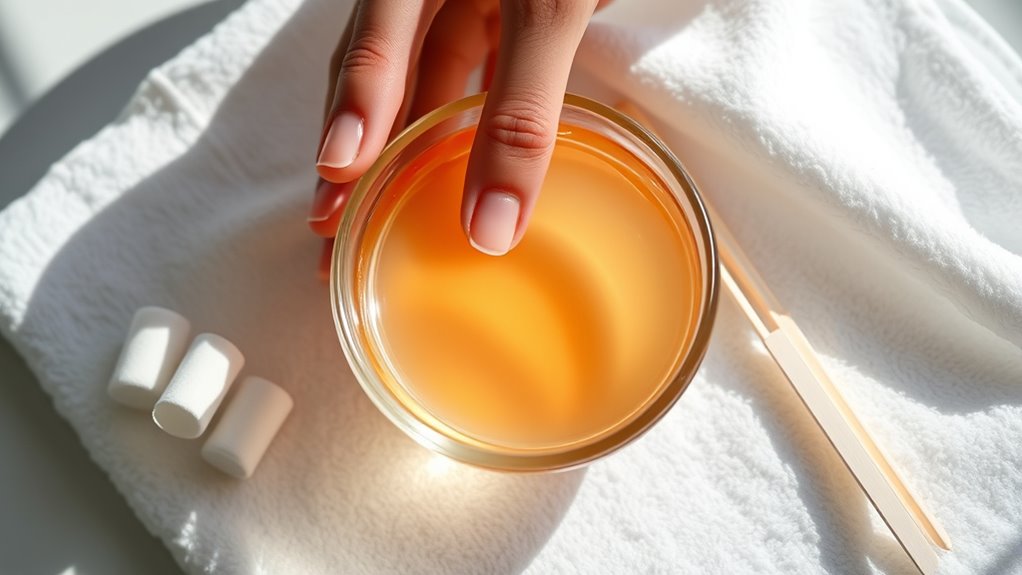
To remove gel or acrylic nails safely, you need to use gentle techniques that minimize damage to your natural nails. Be cautious with acetone, applying it carefully and avoiding excessive soaking. After removal, focus on nourishing your nails with proper care to promote healing and strength. Incorporating nourishing products that support skin and nail recovery can enhance your nail health post-removal nail care.
Gentle Removal Techniques
Removing gel or acrylic nails safely is essential to prevent further irritation or damage to your sensitive nails. Use gentle techniques to minimize trauma, starting with soaking your nails in warm, acetone-free solutions that promote cuticle hydration. Avoid forceful prying, which can weaken your nails and cause peeling. Instead, gently file the surface to break the seal, then carefully lift the edges. After removal, focus on nail strengthening and nourishing your cuticles. Incorporate nourishing oils and serums to promote recovery and hydration, supporting healthy regrowth. Paying attention to the Pimple Patch ingredients can also help protect your skin from irritation during the healing process.
Use of Acetone Safely
Using acetone carefully is key to minimizing damage when removing gel or acrylic nails. To protect your nails and prevent allergies, follow these tips:
- Soak cotton balls in acetone and place them on your nails, then wrap with aluminum foil for 10-15 minutes. This ensures gentle removal without excessive rubbing.
- Avoid overuse of acetone, which can weaken nails. After removal, apply a nail strengthening treatment to rebuild resilience.
- Keep your nails moisturized and avoid harsh scrubbing to prevent irritation and allergy flare-ups. Proper use of acetone helps avert damage and supports overall nail health.
- Be aware that nail health can be significantly affected by frequent use of harsh chemicals like acetone, so moderation is essential.
Post-Removal Nail Care
After your gel or acrylic nails are gone, it’s important to give your natural nails proper care to restore their health. Focus on gentle cleaning, moisturizing, and avoiding harsh chemicals. This helps improve nail health and reduces irritation, supporting allergy management. Be patient—your nails need time to recover from removal. Use nourishing oils like cuticle oil or vitamin E to strengthen nails and prevent dryness. Limit exposure to strong detergents or solvents that can further weaken your nails. Remember, consistent care promotes healthier nails and reduces allergy flare-ups. Incorporating proper nail hygiene can significantly aid in the recovery process.
Giving Your Nails a Break From Chemical Products
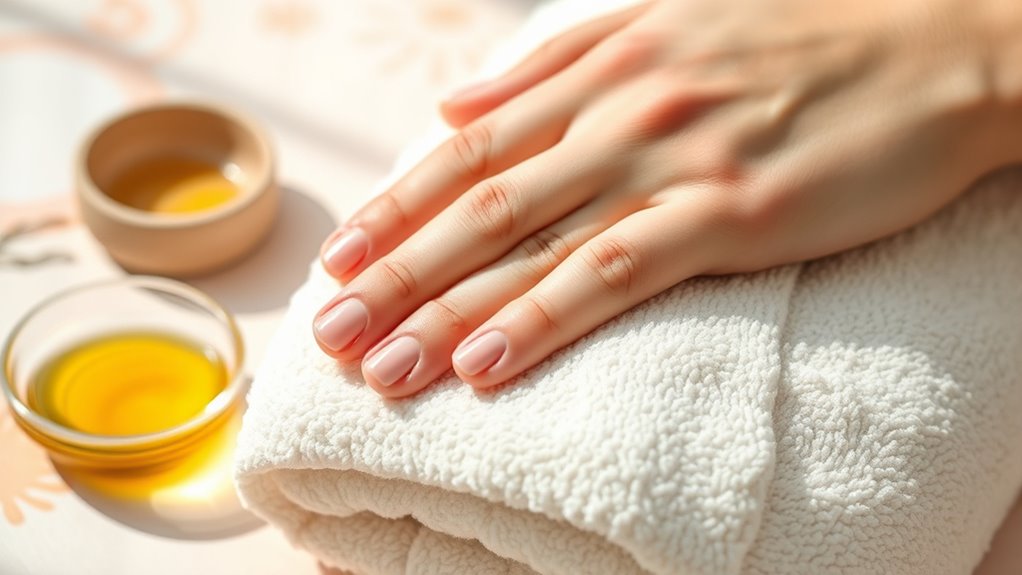
Giving your nails a break from chemical products is essential for recovery. During this time, focus on natural nail rest periods and gentle care to strengthen your nails. Simple tips like moisturizing and avoiding harsh polish can make a big difference. Incorporating proper nail preparation techniques can also promote healthier nail growth and prevent future reactions.
Natural Nail Rest Periods
Taking a break from chemical products is essential for restoring your natural nails‘ health and strength. During this period, focus on nurturing your nails by promoting cuticle hydration and nail strengthening. Giving your nails time off helps repair damage caused by gels or acrylics and prevents further issues. Additionally, allowing your nails a rest period for natural growth can help them recover from the stress of artificial enhancements and promote healthier, stronger nails over time.
Gentle Nail Care Tips
To help your nails recover from chemical exposure, adopt gentle nail care habits that minimize stress and damage. When removing nail polish, choose acetone-free remover to avoid further dryness. Be gentle during nail polish removal—soak a cotton ball and press lightly rather than scraping. Focus on cuticle care techniques: regularly moisturize your cuticles with nourishing oils to boost healing and prevent cracking. Avoid harsh scrubbing or cutting cuticles, as this can cause injury. Instead, gently push back cuticles with a soft tool after softening them with oil or warm water. Give your nails a break from chemical products, and keep your routine simple—hydration and gentle handling promote stronger, healthier nails over time. Monitoring your digital literacy can also help you better understand and manage your nail and skin health.
Incorporating Nourishing Nail Care Products

Incorporating nourishing nail care products into your routine is essential for restoring health after a gel or acrylic allergy. These products help promote nail strengthening and cuticle hydration, speeding up recovery. To get started, consider these three key items:
- Nail Strengthening Base Coats: Use a strengthening base coat daily to reinforce your nails and prevent breakage.
- Cuticle Oils: Apply hydrating cuticle oils regularly to promote healthy cuticle growth and prevent dryness.
- Moisturizing Hand Creams: Keep your hands and nails hydrated with rich creams that support overall nail health. Regular use of nail health products can also aid in repairing damage caused by allergies.
Maintaining Proper Nail Hygiene
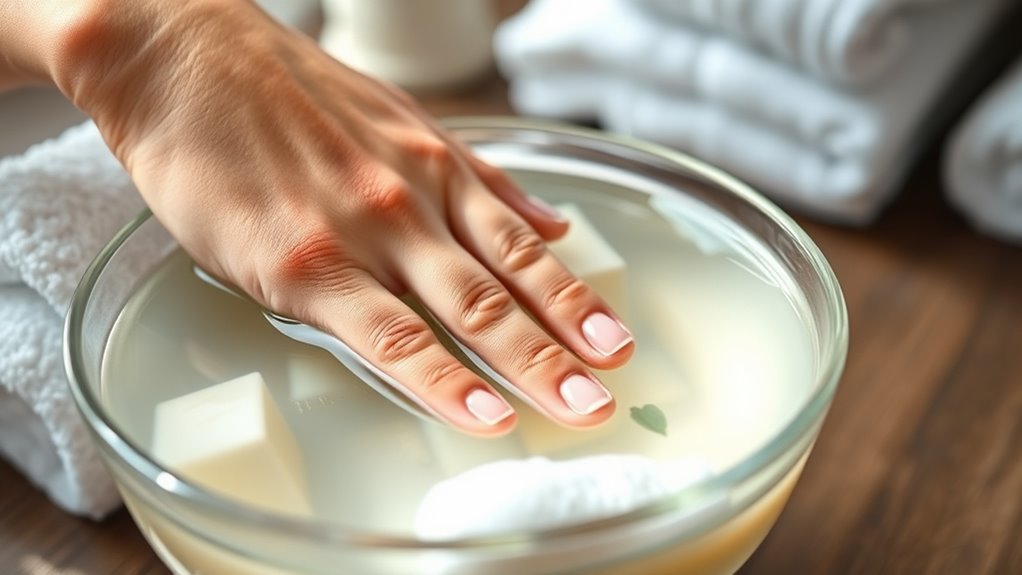
After nourishing your nails and cuticles with the right products, maintaining proper nail hygiene becomes essential to support their recovery. Focus on keeping your nails clean and dry to prevent infection and promote healthy growth. Regularly wash your hands with gentle soap, ensuring you remove dirt and debris from beneath the nails. Avoid sharing nail tools or using harsh chemicals that could cause allergen exposure. Pay attention to allergen avoidance by choosing hypoallergenic products and avoiding known irritants. Trim your nails regularly to prevent buildup of dirt and bacteria, but don’t cut them too short. Protect your nails from excessive moisture and harsh substances, which can weaken them and trigger sensitivities. Good nail hygiene is key to healing and preventing future allergic reactions. Additionally, vetting skin-safe products can help minimize the risk of further irritation and support your nail health.
Protecting Your Nails From Environmental Damage
Protecting your nails from environmental damage is essential for their healing and long-term health. UV exposure can weaken your nails and cause discoloration, so always wear gloves or sunscreen on your hands when outdoors. Additionally, environmental factors like harsh weather and pollutants can dry out your nails. To combat this, prioritize nail hydration by applying moisturizing oils or creams regularly. Here are three ways to protect your nails:
Protect nails from UV rays and pollutants with gloves, sunscreen, and regular hydration.
- Wear gloves during outdoor activities to shield against UV rays and pollutants.
- Keep nails hydrated with nourishing cuticle oils and hand creams.
- Avoid excessive exposure to direct sunlight without protection, as UV rays can damage your nail bed and hinder recovery.
- Incorporate nail strengthening products that can help repair and fortify your nails against environmental stressors.
Staying vigilant helps your nails recover faster and stay strong.
Adjusting Your Nail Care Routine for Sensitive Nails
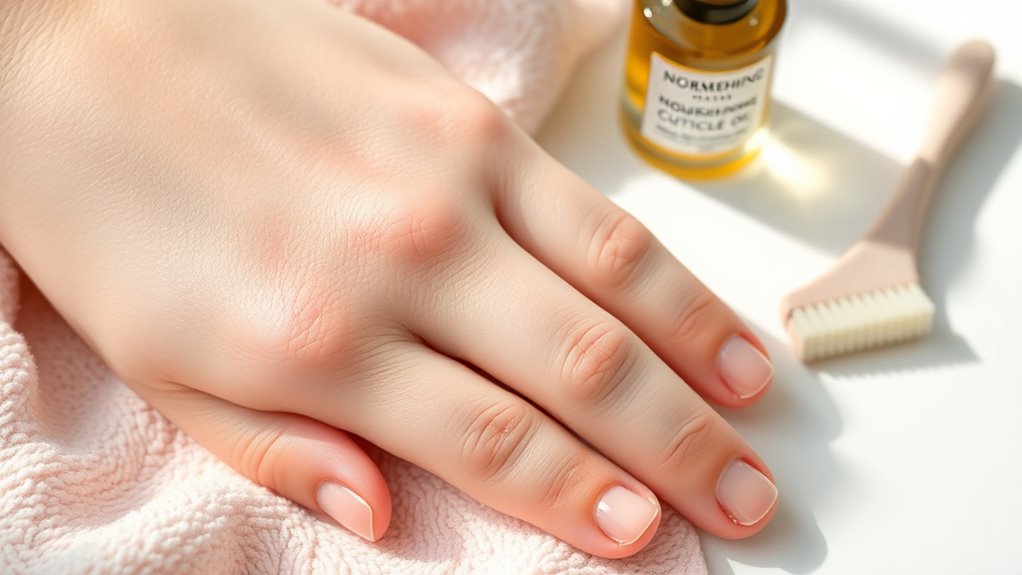
When caring for sensitive nails, it’s important to adjust your routine to minimize irritation and promote healing. Focus on maintaining cuticle hydration by applying nourishing oils regularly to keep your skin soft and prevent cracking. Avoid harsh chemicals and abrasive files that can further weaken or irritate your nails. Incorporate gentle, nail-strengthening treatments to reinforce your nails’ structure without causing additional stress. Opt for acetone-free removers and fragrance-free products to reduce chemical exposure. Be cautious with manicures and limit the use of heavy polish or artificial nails until your nails recover. Consistency is key; gentle care will help your nails regain strength and resilience over time, reducing the risk of future allergic reactions.
Incorporating Dietary and Supplement Support
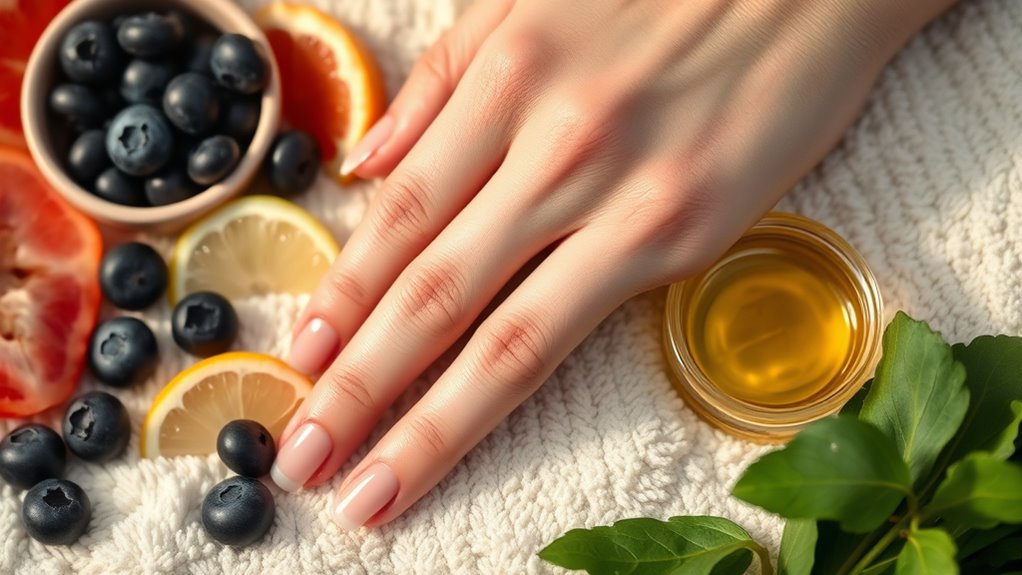
Supporting your nails from the inside out can make a significant difference in their recovery. Incorporating dietary supplements and nutritional support can strengthen your nails and promote healing. Consider adding these to your routine:
- Biotin: Known for boosting keratin production, biotin supports nail strength and growth.
- Collagen: This supplement helps improve nail elasticity and reduces brittleness.
- Zinc: Essential for cell growth and repair, zinc aids in healing damaged nails and preventing infection.
Consulting a Dermatologist or Nail Specialist
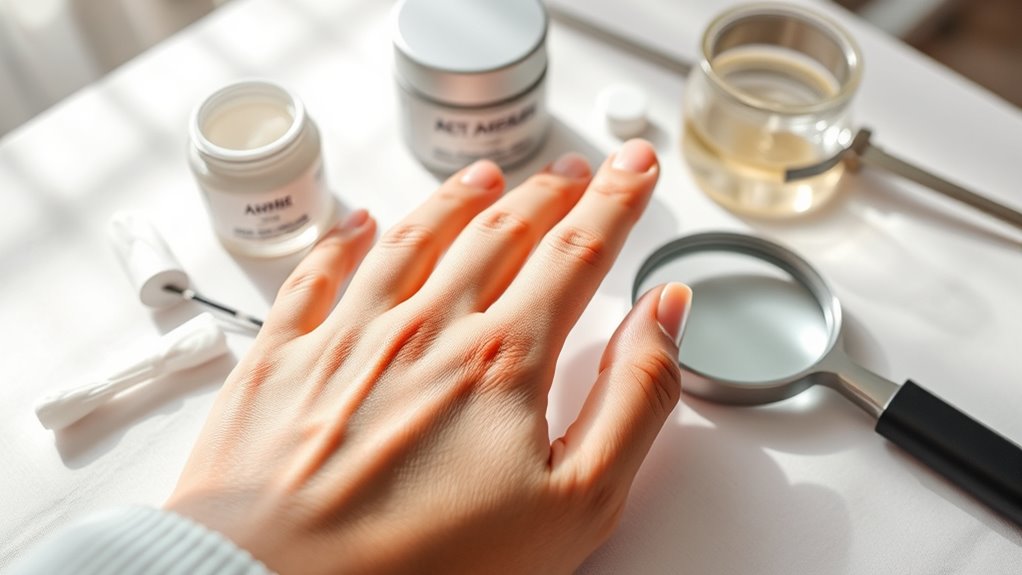
Consulting a dermatologist or nail specialist is an essential step in managing your nail health after an allergy to gel or acrylic nails. These professionals can accurately assess your condition and identify specific allergy triggers that may be causing ongoing irritation or damage. They can recommend targeted treatments to soothe your nails and prevent further reactions, such as topical medications or specialized care routines. A specialist’s expertise helps you understand the underlying causes of your allergy and guides you toward safer alternatives. By seeking professional advice, you guarantee your nail health improves and that you avoid worsening your condition. Remember, early consultation with a dermatologist or nail specialist can save you from long-term damage and promote healthier nails in the future.
Preventing Future Allergic Reactions and Choosing Safer Alternatives

To prevent future allergic reactions, it’s important to choose safer nail products and techniques that minimize allergen exposure. Being aware of allergy triggers helps you select products less likely to cause a reaction. Safer alternatives include hypoallergenic polishes, formaldehyde-free gels, and acrylics made without common irritants.
Consider these options:
- Use nail polishes labeled “hypoallergenic” or “free from harsh chemicals.”
- Opt for gel or acrylic products that specify they are free from allergy triggers.
- Ask your nail technician about safer application techniques to reduce allergen contact.
Frequently Asked Questions
Can I Use Regular Polish on Sensitive or Allergic Nails?
Yes, you can try regular nail polish on sensitive or allergic nails, but make sure to verify for nail polish compatibility. Use formulas labeled hypoallergenic or free from common irritants. Before applying, watch for allergic reaction signs like redness, swelling, or itching. Conduct a patch test first to ensure your nails tolerate the polish. If any irritation occurs, remove it immediately and consult a dermatologist.
How Long Should I Wait Before Applying New Nail Products After an Allergy?
Patience is your best friend after an allergy. Wait at least two weeks before trying new nail products, giving your nails time to recover. During this period, consider allergy testing and patch monitoring to identify safe options. Rushing in too soon could lead to irritation or a flare-up. Take your time, follow professional advice, and give your nails the chance to heal fully before experimenting again.
Are There Specific Ingredients I Should Avoid in Nail Care Products?
You should avoid nail care products containing allergenic ingredients like formaldehyde, toluene, and dibutyl phthalate, as well as irritant chemicals such as acetone and certain fragrances. Always read labels carefully and choose hypoallergenic or dermatologist-tested options. By steering clear of these ingredients, you reduce the risk of further allergic reactions and irritation, helping your nails recover faster and stay healthy after an allergy.
What Natural Remedies Can Help Soothe Allergic Nail Reactions?
Irony strikes again—who knew that nature’s own remedies could soothe allergic nail reactions? You can try herbal remedies like chamomile or calendula to reduce inflammation and calm your skin. Moisturizing treatments with aloe vera or coconut oil help restore moisture and soothe irritation. These natural options are gentle yet effective, giving your nails the relief they need without exposing you to harsh chemicals.
How Can I Tell if My Nail Allergy Is Improving Over Time?
You can tell if your nail allergy is improving by closely monitoring allergy symptoms and nail health over time. Keep allergy symptom tracking to note reductions in redness, swelling, or itching. Regular nail health monitoring helps you see if your nails are healing, showing fewer signs of irritation or damage. If symptoms decrease and your nails look healthier, it’s a good sign your allergy is improving. Stay consistent with your observations for the best results.
Conclusion
Caring for your nails after an allergy is like tending a delicate garden—you need patience, gentle care, and the right nourishment. I once watched a friend transform her damaged nails by giving them time and care, and they blossomed again. Remember, small consistent steps—like switching to hypoallergenic products and seeking professional guidance—can turn your nail health around. With gentle attention, you’ll soon see your nails flourish like a resilient garden in full bloom.