
If you have a sore, swollen hangnail or infected cuticle, start by rinsing the area with warm saltwater for 10-15 minutes to reduce bacteria. Gently apply antiseptic ointments like hydrogen peroxide or rubbing alcohol using a cotton swab, and keep the area clean and dry. Use over-the-counter pain relievers if needed, and avoid picking at your nails. Proper care can help, and you’ll find more tips to speed up healing if you continue exploring.
Key Takeaways
- Rinse the affected finger with warm saltwater for 10-15 minutes to reduce swelling and infection.
- Apply antiseptic ointments like hydrogen peroxide or rubbing alcohol carefully, 2-3 times daily.
- Keep the area dry, elevate the hand, and avoid picking or cutting the cuticle to prevent worsening.
- Use over-the-counter pain relievers such as ibuprofen to manage pain and inflammation temporarily.
- Maintain proper hand hygiene and disinfect nail tools regularly to prevent and control infection.
Top picks for "hangnail infection paronychia"
Open Amazon search results for this keyword.
As an affiliate, we earn on qualifying purchases.
Recognizing the Signs of a Hangnail Infection
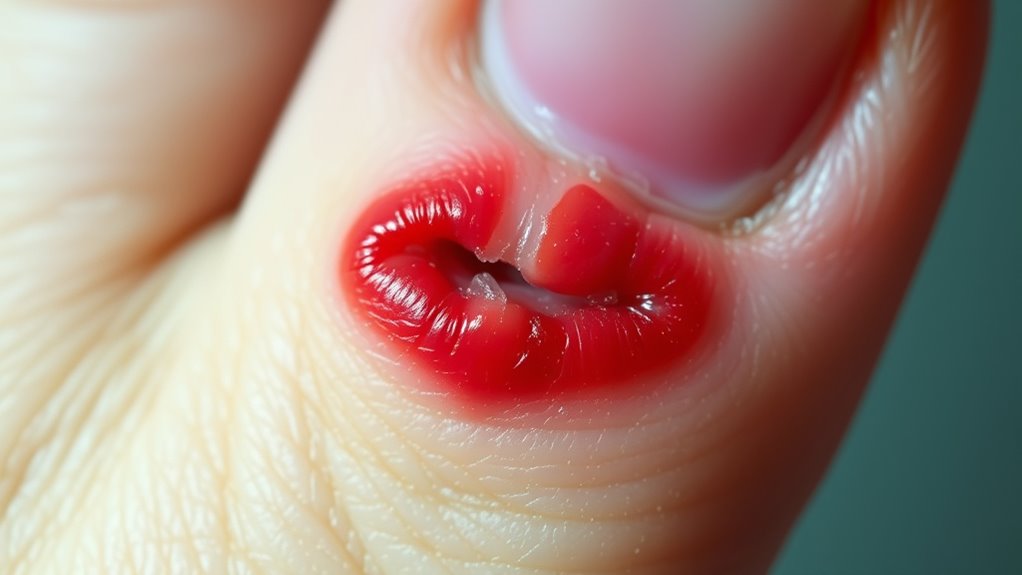
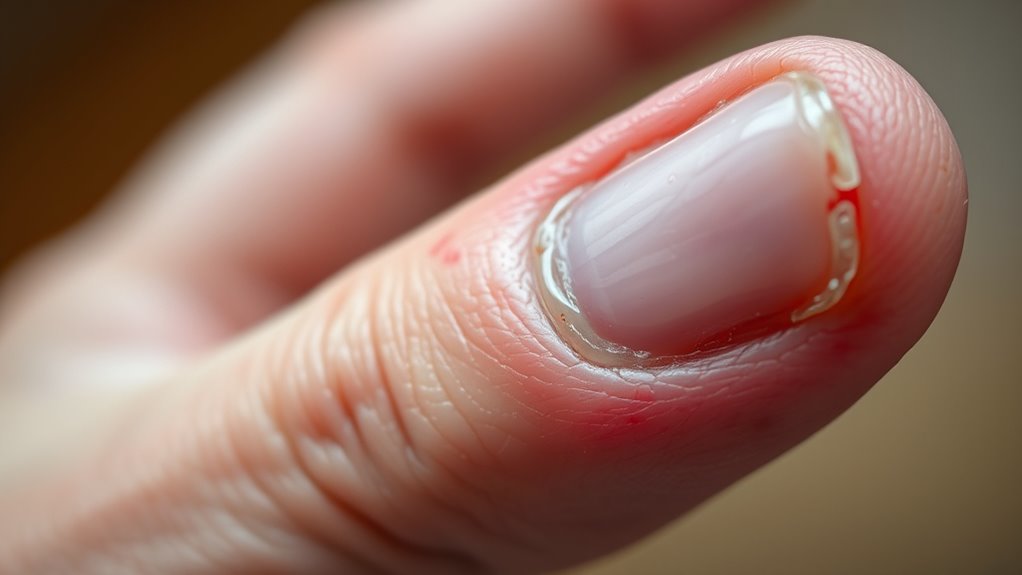
A hangnail infection often begins subtly but can quickly become uncomfortable if left unchecked. You might notice redness, swelling, or tenderness around your cuticle, signaling a problem with your nail health. Keep an eye out for pus or discharge, which indicates infection. The area may feel warm or painful when touched. Poor cuticle hygiene can worsen the situation by allowing bacteria to enter through small tears or breaks in the skin. Early signs include a rough or ragged hangnail, along with slight discoloration near the affected area. Recognizing these symptoms promptly helps prevent the infection from spreading or worsening. Maintaining good nail health and practicing proper cuticle hygiene are key steps to catching problems early and avoiding more serious complications. Regular use of exfoliating acids like glycolic acid can help in controlling oil production around the cuticle, reducing the risk of bacterial buildup and infection.
Immediate Steps to Alleviate Discomfort
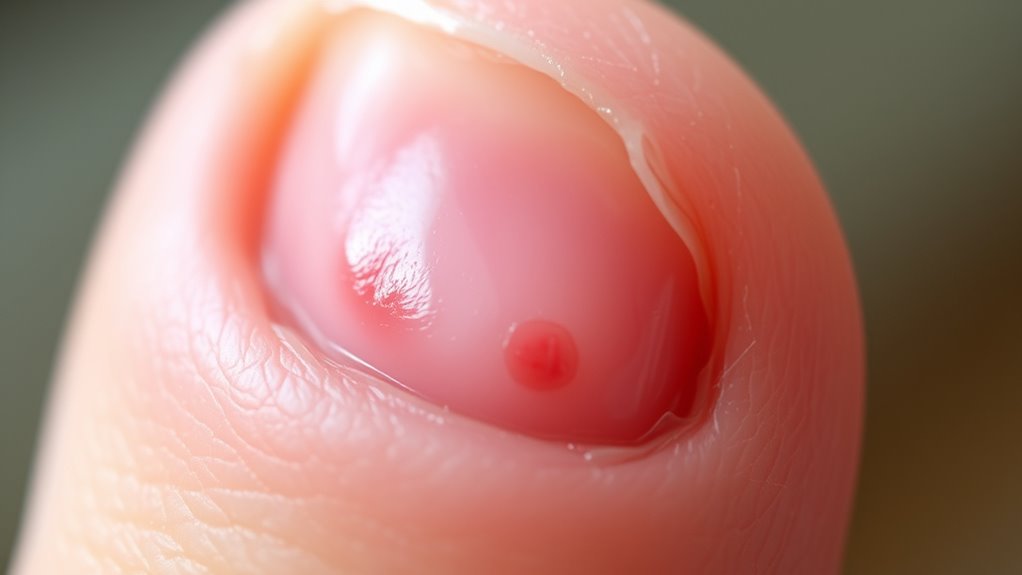
To ease your discomfort quickly, start by rinsing the affected area with warm saltwater to reduce infection. Applying an antiseptic ointment can help prevent further bacteria from entering the wound, and over-the-counter pain relievers can provide additional relief. These simple steps can make a noticeable difference until you can seek more advanced treatment.
Rinse With Warm Saltwater
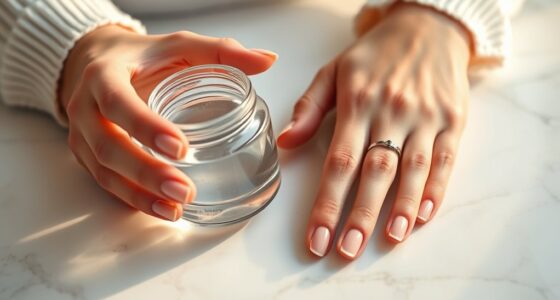
Rinsing your hangnail with warm saltwater can help reduce infection and soothe discomfort. The saltwater works as a natural disinfectant, promoting better nail health and aiding cuticle care. To do this, mix about a teaspoon of salt in a cup of warm water until dissolved. Soak your finger for 10-15 minutes, ensuring the solution covers the affected area. This simple step helps clean out bacteria and reduces swelling, making it easier to manage the pain. Regular rinses can prevent the infection from worsening and support your body’s healing process. Proper cuticle care is essential to avoid future hangnail problems, and maintaining good nail hygiene can significantly reduce the risk of infection. This gentle approach provides immediate relief while supporting your overall nail wellness.
Apply Antiseptic Ointment
Wondering how to quickly ease the pain from a hangnail? Applying antiseptic ointment is a simple, effective step. Use clean hands to perform antiseptic ointment application carefully around the affected area. Gently dab a small amount of the ointment onto the sore or swollen cuticle, ensuring full coverage to prevent infection. Follow topical treatment techniques by keeping the area dry afterward and applying the ointment two to three times daily. This helps create a protective barrier, reducing bacteria and promoting healing. Be consistent with this step; it’s essential for preventing further infection and alleviating discomfort. Proper color accuracy in treatment can also improve healing visibility, making it easier to monitor progress. Remember, using antiseptic ointment correctly supports your efforts to treat the hangnail at home quickly and effectively.
Use Pain Relievers
If you’re feeling sharp pain from a hangnail, using over-the-counter pain relievers can provide quick relief. Medications like ibuprofen or acetaminophen help with pain management by reducing inflammation and numbing discomfort. Follow the recommended dosage instructions carefully to avoid side effects. Taking these medications allows you to manage pain while you work on healing the infected area. Keep in mind that pain relievers are a temporary solution; they don’t treat the infection itself but make it easier to care for your finger. For ongoing relief, combine pain management with other home remedies like soaking or antiseptic ointments. Additionally, using AI-driven security systems can help protect your personal health data online. Always consult a healthcare professional if pain persists or worsens, to ensure proper treatment and avoid complications.
Best Practices for Cleaning and Sanitizing the Affected Area
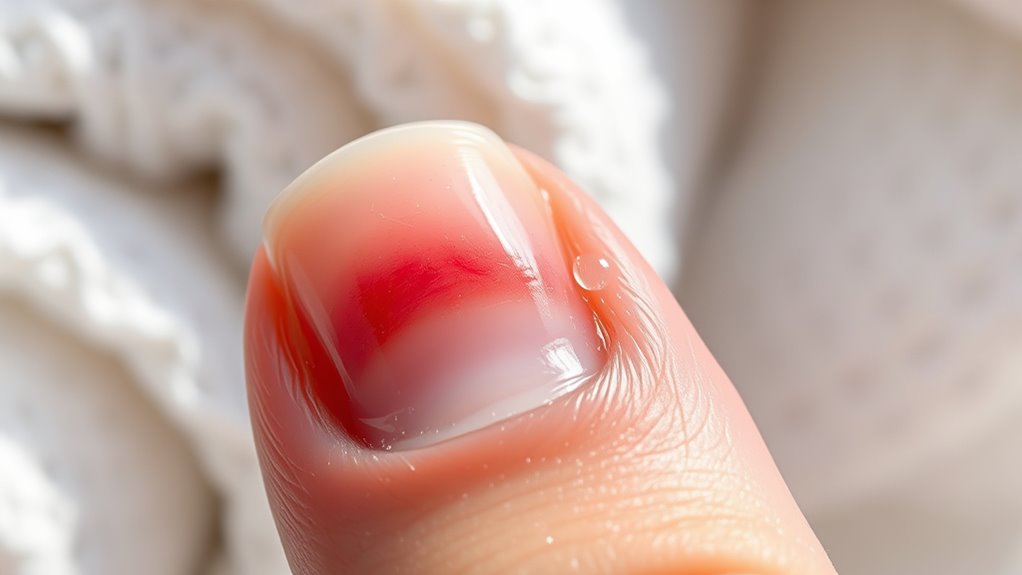
To effectively clean and sanitize a hangnail, start by washing your hands thoroughly with soap and water. Next, apply an antiseptic solution to the affected area to kill germs and prevent infection. Finally, keep the area dry and clean to promote healing and reduce the risk of further infection. Incorporating proper hygiene practices, such as using antimicrobial agents, can further enhance protection against bacterial invasion.
Proper Hand Washing Techniques
Proper hand washing is essential for preventing infection and promoting healing of a hangnail. Effective hand hygiene minimizes bacteria and other germs that could worsen the infection. To do this, wet your hands with clean, running water and apply soap. Rub your hands together thoroughly, covering all surfaces including nails and cuticles, for at least 20 seconds. Be sure to clean under your nails and around the affected area. Rinse well with water, then dry your hands completely with a clean towel or air dry. Proper hand washing is a simple yet crucial step in infection control, helping to reduce the risk of spreading bacteria and supporting your body’s healing process. Always wash your hands before touching or tending to your hangnail. Consistent hygiene practices are vital for preventing the spread of infection and promoting faster healing.
Using Antiseptic Solutions
Using antiseptic solutions is a key step in preventing infection and promoting healing of a hangnail. When caring for your affected area, apply an antiseptic solution like hydrogen peroxide or rubbing alcohol to thoroughly disinfect the cuticle and surrounding skin. This helps eliminate bacteria and reduces the risk of infection. Be sure to clean the area gently but completely, ensuring that no debris or dirt remains. Use a clean cotton swab or gauze to apply the antiseptic, avoiding direct contact with contaminated surfaces. Regular use of antiseptic solutions creates a barrier against infection, supporting faster healing. Remember, consistent disinfection is essential in preventing complications and ensuring your hangnail heals properly. Fostering the father-daughter bond can also provide emotional support during recovery and healing.
Maintaining Dryness and Cleanliness
Keeping the affected area dry and clean is essential for preventing infection and promoting healing. Good nail hygiene and proper cuticle maintenance help keep bacteria and dirt away from the sore. After cleaning the area, gently pat it dry with a clean towel or tissue, avoiding excess moisture that can encourage infection. Use gentle soap and water to wash your hands regularly, especially before touching the affected finger. When caring for your cuticles, avoid aggressive trimming or picking, which can worsen the condition. Keep your nails trimmed short to prevent further trauma. Wearing gloves during household chores or when in contact with dirt and water also helps maintain dryness and cleanliness. Consistently practicing these habits supports faster recovery and reduces the risk of recurrence.
Home Remedies to Reduce Swelling and Promote Healing
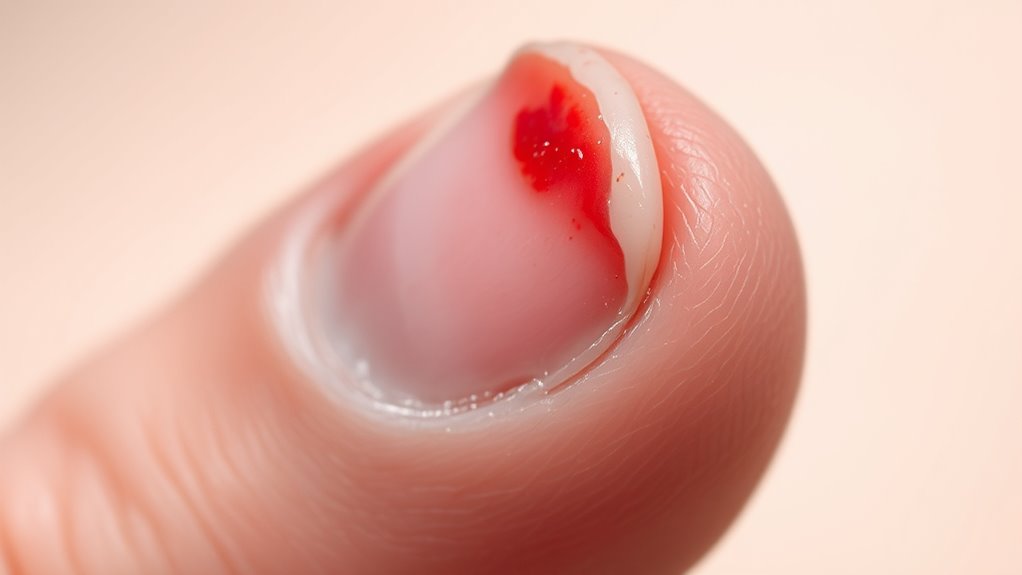
To reduce swelling and promote healing of a hangnail infection, there are simple home remedies you can try. Start by gently trimming the nail and removing any loose hangnails to prevent further irritation. Proper cuticle maintenance is essential; soak your finger in warm water to soften the skin, making it easier to clean and trim safely. Applying a warm saltwater soak can help reduce swelling and draw out infection. You can also use natural anti-inflammatory remedies like aloe vera or honey to soothe the area. Keep your hand elevated when resting to minimize swelling. Regularly moisturizing the cuticle area with petroleum jelly or a nourishing oil helps support healing and prevents new hangnails. Incorporating proper hygiene practices can further reduce the risk of infection and promote faster recovery. These steps can ease discomfort and promote faster healing.
When to Apply Topical Antibiotics or Antifungal Treatments
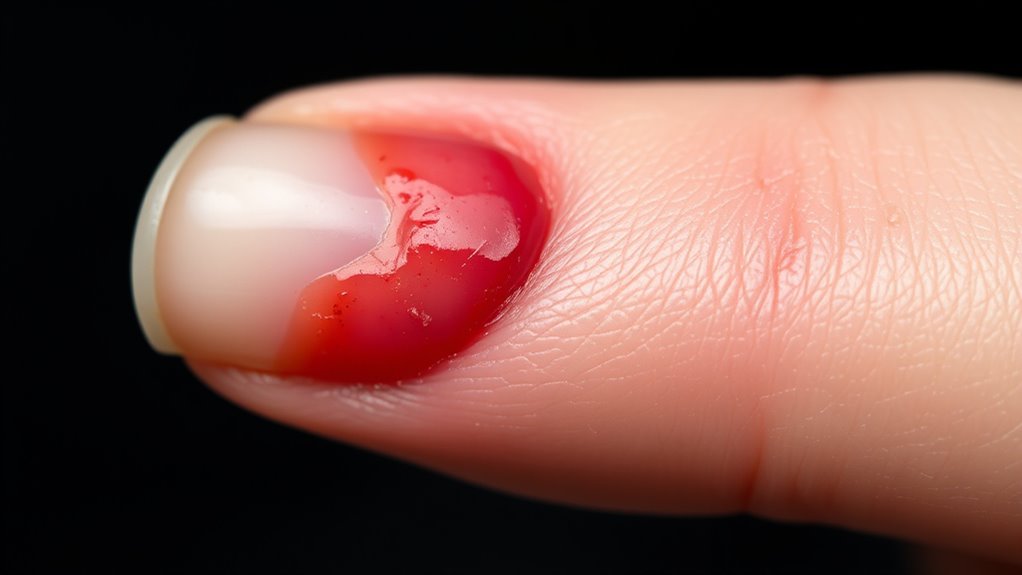
You should consider applying topical antibiotics or antifungal treatments when you notice signs of infection, like increased redness, swelling, or pus. It’s important to start treatment promptly to prevent the infection from worsening. If you’re unsure whether your hangnail needs medication, consult a healthcare professional for guidance.
Signs of Infection
Recognizing the signs of infection is essential for determining when to apply topical antibiotics or antifungal treatments. If you notice increased redness, swelling, or warmth around your cuticle, it signals that the infection may be worsening. Pus or cloudy discharge is a clear sign that bacteria or fungi are active, and you should take action. Persistent pain or tenderness also indicates the infection isn’t healing on its own. Keep an eye on your nail health—if the area becomes more inflamed or the skin cracks, it’s time to treat it. Early detection helps prevent the infection from spreading or worsening. By monitoring these signs, you can better manage your hangnail and support infection prevention.
Appropriate Treatment Timing
Applying topical antibiotics or antifungal treatments should happen promptly when signs of infection appear, but not before. If you notice nail fungus or persistent swelling around the cuticle, it’s time to treat. Avoid applying treatments immediately after cuticle trimming unless there are clear signs of infection, such as redness or pus. Waiting until symptoms develop ensures you target the problem effectively, preventing unnecessary medication use. If the infection is confined to the cuticle area, topical antifungals or antibiotics can be effective when applied at the right time. Early treatment helps prevent the infection from worsening or spreading. Remember, applying treatment too early or too late can reduce effectiveness, so wait for clear symptoms before starting your regimen. Additionally, choosing appropriate formulations can improve healing outcomes and minimize irritation.
Tips for Preventing Future Hangnail and Paronychia Issues
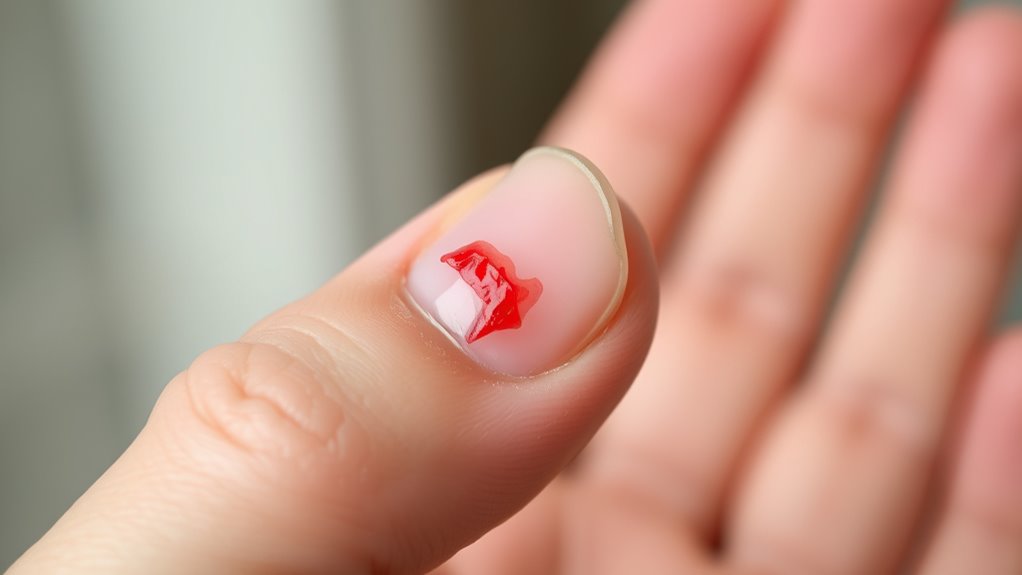
Preventing hangnails and paronychia starts with good nail care habits. Prioritize nail health by keeping your nails clean and moisturized. Proper cuticle care prevents tears and infections. Here are some tips to help you avoid future issues:
Maintaining clean, moisturized nails and gentle cuticle care prevents hangnails and infections.
- Gently push back cuticles with a soft tool, avoiding cutting them.
- Moisturize hands and nails regularly to prevent dryness.
- Wear gloves when doing household chores or working with chemicals.
- Avoid biting or picking at your nails and cuticles, which can cause tears and entry points for bacteria.
- Incorporate nail and cuticle care products into your routine to maintain healthy, resilient nails.
Consistent nail and cuticle care minimizes the risk of hangnail formation and infection. Focus on gentle maintenance and hydration to keep your nails healthy and resilient.
The Importance of Proper Nail and Cuticle Care
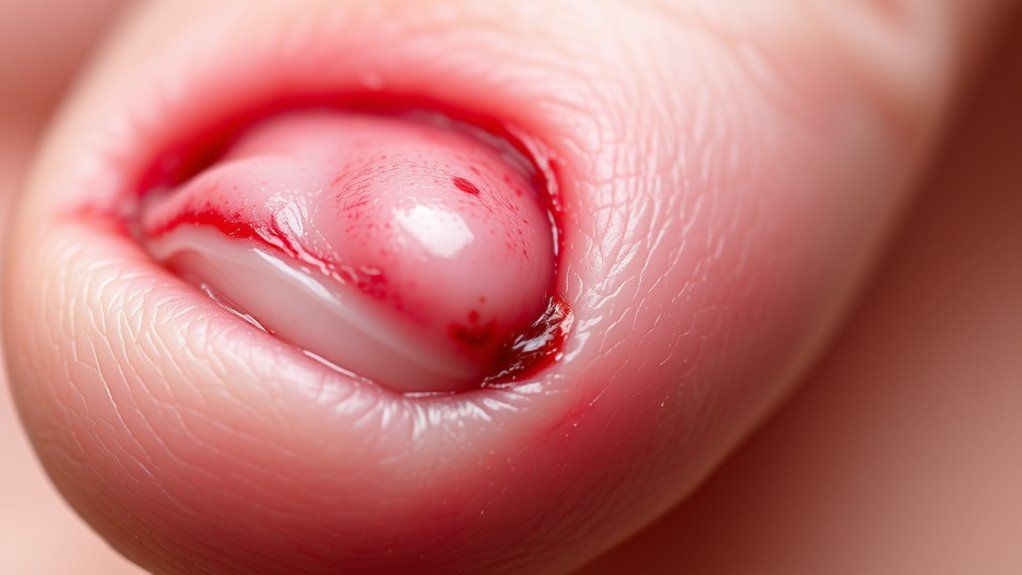
Proper nail and cuticle care is essential for maintaining healthy, infection-free nails. When you prioritize nail health, you reduce the risk of hangnails and paronychia. Regular cuticle maintenance keeps your nails and surrounding skin strong and less prone to damage. Gently pushing back or moisturizing your cuticles prevents them from becoming dry or torn, which can lead to infections. Avoid biting or picking at your nails and cuticles, as this can introduce bacteria. Use quality tools and disinfect them regularly to prevent contamination. Keeping your nails clean and moisturized supports overall nail health, helping you avoid painful hangnails and infections. Consistent care not only improves appearance but also forms a crucial part of preventing issues before they start.
Common Mistakes to Avoid During Home Treatment
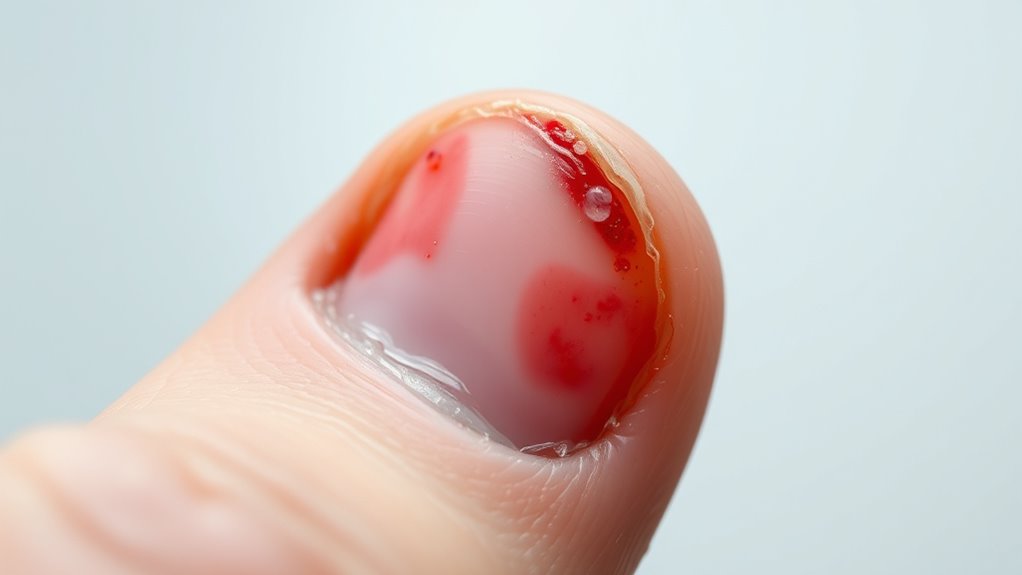
When treating hangnails at home, one common mistake is picking or tearing the affected skin, which can worsen the infection and delay healing. To protect your nail health and guarantee proper cuticle care, avoid these pitfalls:
- Ignoring signs of infection or worsening symptoms.
- Using unclean tools that can introduce bacteria.
- Applying harsh chemicals or alcohol on the area.
- Overly trimming or cutting the cuticle, which weakens the nail and risks future hangnails.
Instead, focus on gentle care, keeping the area clean, and moisturizing to support healing. Proper cuticle care promotes nail health and prevents further issues. Remember, patience and gentle treatment are key to resolving hangnails effectively at home.
Natural Alternatives for Soothing Infected Cuticles
If you’re looking for gentle ways to soothe infected cuticles, natural remedies can be effective options. Herbal remedies like chamomile and calendula have anti-inflammatory properties that help reduce swelling and discomfort. You can create soothing soaks with these herbs or apply compresses to the affected area. Essential oils such as tea tree, lavender, or eucalyptus also offer antimicrobial benefits and promote healing. Dilute a few drops of essential oil in a carrier oil like coconut or jojoba before applying to avoid irritation. These natural alternatives can calm inflammation, fight infection, and provide relief without harsh chemicals. Remember to patch-test any new remedy and use them consistently for best results. Natural options can complement your home care routine effectively.
Knowing When to Seek Professional Medical Help
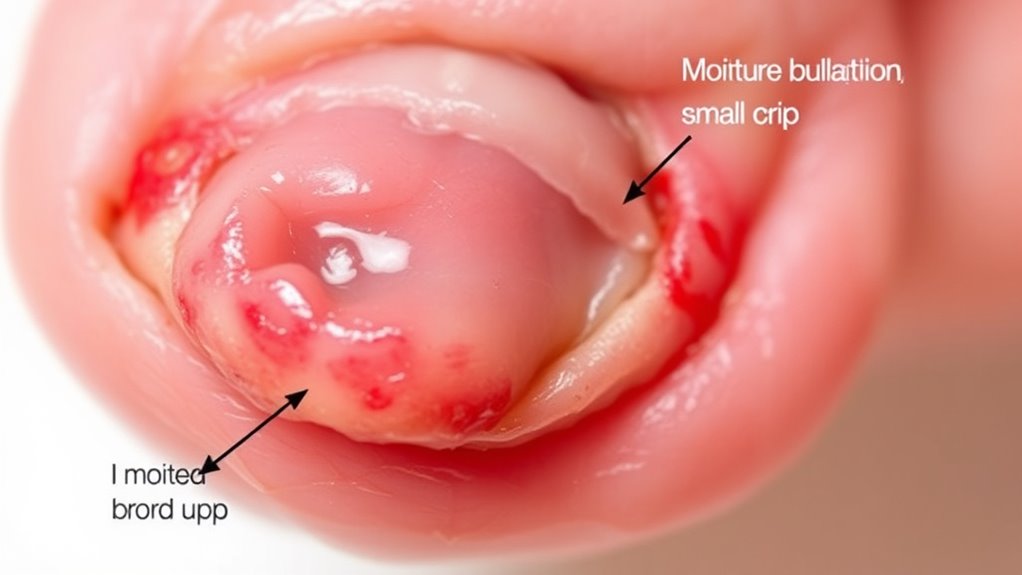
While natural remedies can often help manage mild hangnail infections, there are times when professional medical help is necessary. If you notice worsening symptoms or signs of infection, it’s time to seek a professional consultation. Consider these situations:
- The swelling or pain worsens despite home care.
- Pus or drainage appears, indicating a possible abscess.
- Fever develops or the infection spreads beyond the cuticle.
- You suspect an antibiotic necessity to clear the infection effectively.
In such cases, a healthcare provider can evaluate your condition, prescribe antibiotics if needed, and prevent complications. Ignoring serious symptoms can lead to more severe infections. Knowing when to seek professional help ensures proper treatment and faster healing.
Frequently Asked Questions
Can Hangnail Infections Cause Systemic Illness or Fever?
Hangnail infections can cause systemic symptoms and increase the risk of fever if the bacteria or fungi spread beyond the local area. You might notice signs like fever, chills, or swollen lymph nodes if the infection becomes severe. It’s important to monitor your symptoms and seek medical attention if you develop systemic symptoms, as untreated infections can lead to more serious health issues. Take care of your hand to prevent complications.
Are There Specific Signs That Indicate a Need for Antibiotics?
Think of your infected cuticle as a tiny battlefield—sometimes, the infection’s severity calls for backup. If you notice increasing redness, swelling, warmth, or pus, it’s a sign that antibiotic necessity might be needed. Also, if pain worsens or spreads, don’t ignore it. These signs indicate the infection could be taking hold beyond a minor issue, so seeing a healthcare professional for antibiotics is the smart move.
How Long Does It Typically Take for a Hangnail Infection to Heal?
You can expect a hangnail infection to heal within about 3 to 7 days with proper care. Healing timeframes vary depending on how quickly your immune system fights the infection and how well you keep the area clean. If you notice increased swelling, redness, or pus, the infection duration might extend, and you should seek medical attention. Consistently applying antiseptic and keeping the area dry helps speed up recovery.
Can Frequent Hand Washing Worsen or Prevent Hangnail Infections?
Frequent hand washing can both worsen and prevent hangnail infections. Proper hand hygiene helps remove bacteria, reducing infection risk, but over-washing strips natural oils, drying out skin, and making cuticles more prone to hangnails. To balance this, wash hands gently with moisturizer afterward. Maintain good infection prevention by keeping your hands clean without overdoing it, and avoid harsh soaps that can damage your skin.
Are There Any Underlying Health Conditions That Increase Infection Risk?
If you have immune suppression or diabetes, you’re at higher risk for infections like paronychia. Your immune system’s reduced ability to fight off bacteria makes it easier for infections to develop and worsen. Managing your blood sugar levels and consulting your healthcare provider can help lower this risk. Practice good hand hygiene, avoid nail trauma, and watch for signs of infection to stay ahead of potential issues.
Conclusion
Taking care of a hangnail infection at home can be effective if you act quickly and follow proper steps. Remember, about 10% of paronychia cases become chronic without proper treatment, so don’t overlook persistent symptoms. By recognizing signs early, keeping the area clean, and avoiding common mistakes, you can promote healing and prevent complications. If your condition worsens or doesn’t improve within a few days, seek professional help to ensure proper care.