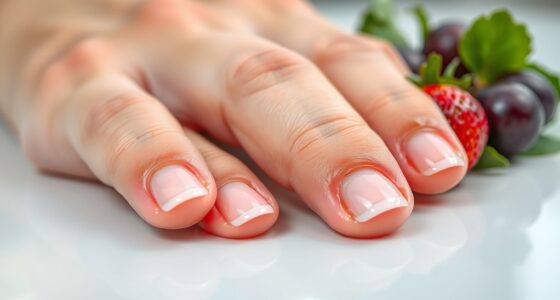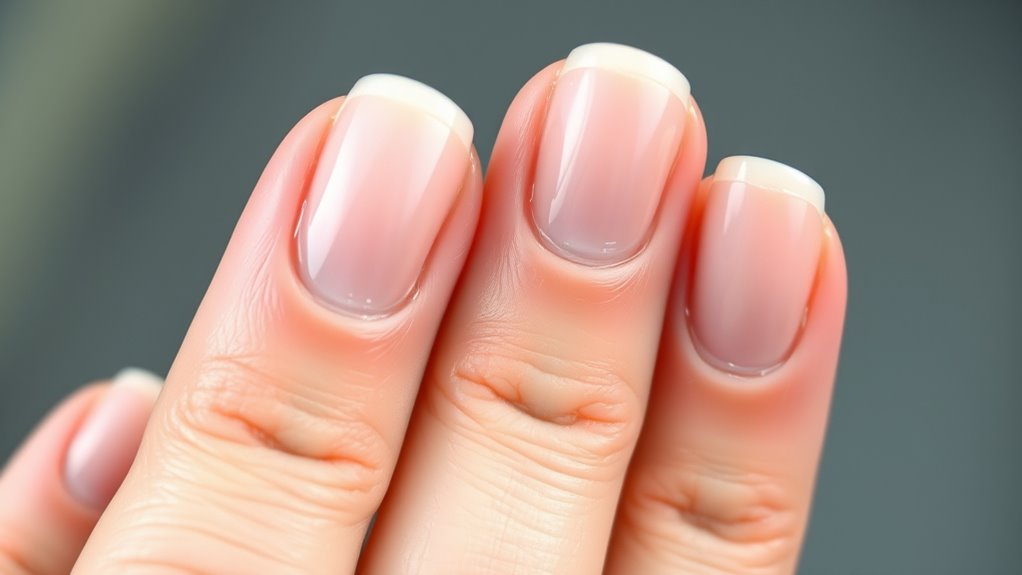

Your nail growth speed varies due to factors like genetics, hormones, age, and nutrition. If you’re younger or have hormonal surges like during puberty, your nails may grow faster. Poor diet, health issues, or exposure to harsh chemicals can slow growth or weaken nails. Age, stress, and medications also influence how quickly your nails grow. To discover more about how you can support healthy nail growth, keep exploring the details below.
Key Takeaways
- Genetic factors largely determine individual nail growth rates and overall nail health.
- Hormonal fluctuations, such as during puberty or aging, influence how quickly nails grow.
- Nutritional deficiencies (biotin, iron, zinc) and hydration levels affect nail growth speed.
- External factors like harsh chemicals, temperature, and nail care routines can either hinder or promote growth.
- Underlying health conditions and medications may slow or alter nail growth patterns.
The Basic Science of Nail Growth
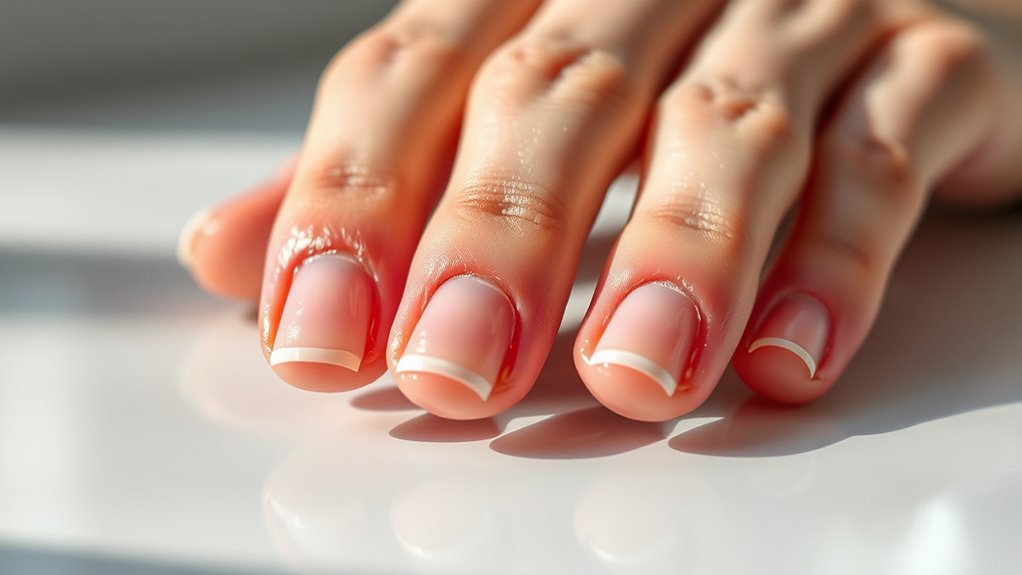
Nail growth begins deep within the nail matrix, a specialized zone of living cells beneath your cuticle. Here, the nail bed anatomy plays a vital role, providing the foundation for nail development. As new cells form in this area, they undergo the keratin production process, where keratin proteins are synthesized and assembled. This process creates the tough, protective layer that becomes your visible nail. The cells gradually push outward as they harden, creating the growth you see at your fingertip. Your nail’s growth rate depends on how efficiently the matrix produces keratin and how well the nail bed supports this process. Understanding this basic science helps you appreciate how your nails grow and what factors might influence their speed.
Genetic Influences on Nail Speed
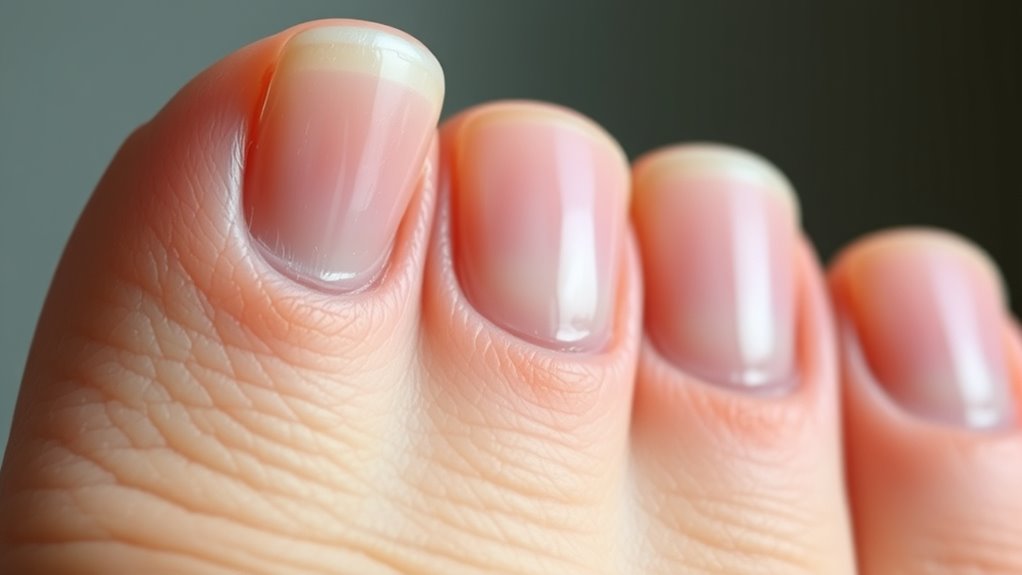
Genetics play a significant role in determining how quickly your nails grow, influencing both the rate and overall health of your nails. Your nail growth rate is shaped by genetic inheritance and familial traits passed down through generations. These genetic factors can explain why you might have faster-growing nails than someone else. They also affect nail strength, texture, and susceptibility to issues like brittleness. Understanding these influences helps you recognize that some aspects of nail growth are beyond your control.
- Your family’s nail growth patterns can predict your own
- Faster nail growth may run in your genetic line
- Genetic inheritance impacts nail strength and resilience
- Familial traits influence how your nails respond to damage
- Your genetic makeup plays a key role in overall nail health
The Role of Age and Hormones
As you age, your hormone levels change, which can slow down or speed up nail growth. During puberty, hormone fluctuations often lead to faster nail growth, while older adults may notice a slowdown. Understanding these hormonal shifts helps explain why nail growth varies at different life stages. Additionally, hormonal fluctuations, such as those caused by stress or medical conditions, can also impact nail growth rates.
Hormonal Changes With Age
Hormonal fluctuations that occur with age considerably influence nail growth rates. As you age, your hormone levels, like estrogen and testosterone, experience significant changes that can slow down or speed up nail growth. These age-related changes impact the nutrients and circulation needed for healthy nails. Understanding this, you can better anticipate variations in your nail growth over time. Additionally, exposure to pollutants and environmental toxins can further impair nail health and growth patterns affecting overall health. Consider these key points:
- Decreased hormone production often leads to slower nail growth.
- Hormonal imbalances can cause brittle or weak nails.
- Fluctuations may alter nail thickness and texture.
- Age-related changes affect nutrient absorption, impacting nail health.
- Hormonal shifts can influence nail growth cycles unpredictably.
Puberty and Nail Growth
During puberty, your body undergoes significant hormonal changes that directly influence nail growth. These hormonal shifts cause your nails to grow faster as your body increases production of growth-related hormones like estrogen and testosterone. During this time, many teens notice their nails becoming longer and stronger due to enhanced cell production in the nail matrix. The surge of hormones also affects blood circulation, providing more nutrients to your nail beds. This accelerated nail growth is temporary and varies from person to person, often peaking during mid-puberty. As hormone levels stabilize after puberty, nail growth rates tend to level out, returning to a more consistent pace. Increased awareness of hormonal fluctuations can help you understand the variability in nail growth rates during different life stages. Understanding these hormonal shifts helps explain why your nails may grow faster during adolescence.
Nutritional Factors and Nail Health

Your nails reflect your nutritional health, so deficiencies in vitamins like biotin, iron, or zinc can cause brittleness and slow growth. Staying well-hydrated keeps your nails strong and prevents them from becoming brittle or splitting. Pay attention to your diet and hydration to support healthier, faster-growing nails.
Vitamin Deficiencies Impact
Vitamin deficiencies can markedly affect nail health, often manifesting as slow growth, brittleness, or ridges. When your body lacks essential vitamins, your nails show signs of nutritional imbalance. These deficiencies can disrupt cell production and weaken the nail structure. Mineral imbalances, such as low zinc or iron, further impair nail growth and durability. To maintain healthy nails, consider the following:
- Ensure adequate intake of B vitamins, especially biotin
- Monitor iron levels to prevent anemia-related nail issues
- Balance zinc levels for nail strength and growth
- Address vitamin A deficiencies to promote cell renewal
- Avoid excessive intake of certain minerals that cause imbalance
Addressing vitamin deficiencies and mineral imbalances helps restore healthy nail growth and overall nail integrity.
Hydration and Nail Strength
Hydration plays a crucial role in maintaining strong, healthy nails because water keeps the nail cells hydrated and flexible. When your hydration levels are adequate, your nails are less prone to brittleness and breakage. Proper nail hydration ensures your nails stay resilient and less prone to damage. To boost nail strength, drink enough water daily and use moisturizing treatments. Here’s a quick look at how hydration impacts your nails:
| Hydration Level | Nail Appearance | Result |
|---|---|---|
| Well-hydrated | Smooth, shiny nails | Stronger, less brittle |
| Dehydrated | Dull, brittle nails | Increased breakage |
| Optimal | Healthy, flexible nails | Better growth |
Maintaining good hydration levels is essential for healthy, resilient nails. Adequate hydration supports overall nail health and prevents common issues like splitting and peeling.
Lifestyle and External Habits

External factors like lifestyle choices and habits considerably influence nail growth rates. Your daily routine, including nail care routines, can either promote healthy growth or hinder it. External environmental factors, such as exposure to harsh chemicals or extreme temperatures, also play a role. To optimize growth, consider these points:
- Regularly moisturizing nails to prevent dryness
- Avoiding biting or picking at nails
- Using protective gloves during cleaning or in cold weather
- Limiting exposure to strong chemicals or pollutants
- Maintaining a balanced diet rich in vitamins and minerals
- Ensuring proper color accuracy in your environment can also impact nail health by reducing stress on the body.
Impact of Health Conditions and Medications

Health conditions and medications can considerably affect how quickly your nails grow. Medication side effects, such as those from chemotherapy or certain antibiotics, often slow nail growth or cause nails to become brittle. Chronic illness impacts, like hypothyroidism or psoriasis, can also hinder nail development, making nails grow more slowly or become damaged. Conversely, some conditions, like hyperthyroidism, may cause nails to grow faster than normal. If you’re managing a health issue, it’s essential to understand how these factors influence your nails. Medications prescribed for various conditions can alter nail growth patterns, sometimes leading to discoloration or ridges. Recognizing these impacts helps you better understand why your nails may not be growing at a typical rate and highlights the importance of addressing underlying health concerns. Additionally, AI-driven diagnostics are increasingly used to detect and monitor health conditions that affect nail health.
Tips to Promote Healthy Nail Growth
To promote healthy nail growth, focus on maintaining a balanced diet rich in essential nutrients like biotin, vitamin E, and zinc. Proper nutrition supports nail strength and speed. Be mindful of nail polish effects; frequent use of harsh chemicals can weaken nails, so opt for gentle formulas and give your nails breaks from polish. Incorporate consistent manicure routines that include nourishing cuticle oils and moisturizing hand creams to prevent dryness. Avoid biting or picking at your nails, which can cause damage. Remember, regular maintenance encourages healthy growth.
- Use nourishing base coats to protect nails during polish application
- Limit exposure to harsh chemicals in nail polish removers
- Keep nails and cuticles moisturized daily
- Schedule regular breaks from manicures to allow nails to breathe
- Incorporate supplements if needed for extra support
Frequently Asked Questions
How Does Nail Growth Vary Across Different Climates?
Climate effects and seasonal variations influence how your nails grow. In warmer, humid climates, your nails tend to grow faster due to increased blood flow and moisture. Conversely, colder, drier seasons slow down growth as circulation decreases and nails become brittle. You may notice these changes more during seasonal shifts, making it normal for your nail growth rate to fluctuate throughout the year based on climate conditions.
Can Nail Polish or Treatments Affect Growth Rates?
Nail polish effects and treatments can influence your nail growth, but the impact varies. Studies show that regular use of certain nourishing treatments, like biotin or keratin-based products, can boost growth by up to 10%. Nail polish effects are usually temporary, but some formulas with strengthening ingredients may support healthier, faster-growing nails. So, choosing the right treatments can make a noticeable difference in your nail growth over time.
Do Certain Professions Influence Nail Growth Speed?
Certain professions can influence your nail growth speed, especially if they involve frequent professional grooming or exposure to harsh chemicals. For example, nail technicians or those in beauty industries often maintain regular nail care routines, which might promote healthier growth. Additionally, staying updated with nail art trends can motivate you to keep your nails strong and healthy, potentially encouraging faster growth. However, constant exposure to damaging substances can also slow down growth.
How Does Stress Impact Nail Growth?
Think of your nails as tiny flags waving in the wind; when stress hits, it’s like a storm that hampers their growth. Stress can weaken nail health, slowing down growth and causing brittleness. To keep your nails flourishing like calm flags, practice stress management techniques. Reducing stress helps your nails grow stronger and faster, so prioritize relaxation to support healthy nail development and maintain their natural shine.
Are There Any Natural Supplements Proven to Speed up Nails?
Yes, some herbal remedies and nutritional supplements may help accelerate your nail growth. Biotin, a popular supplement, is known to strengthen nails and promote growth. You might also try herbal remedies like horsetail or nettle, which are rich in silica and nutrients that support nail health. Remember, consistency is key, and consulting with a healthcare provider can ensure you choose the right supplements for your needs.
Conclusion
Understanding why your nails grow faster or slower helps you nurture their health. Think of your nails as tiny trees, rooted in your body’s unique story. With patience and care, you can nourish these roots, allowing your personal forest to flourish. Each healthy nail is a confirmation of your well-being, a silent symbol of your body’s resilience. Embrace this journey, and watch your nails become a reflection of your vitality and strength.